

Explore cordless power tools, kits, batteries, chargers, accessories and related equipment available to Canadian shoppers. Compare product options and follow useful buying guides before you buy.


![LASFIT TK1 Tire Inflator Portable Air Compressor [Fit Pickup Truck & Large Tires] Air Pump for Car Tires w/Digital Pressure Gauge, Auto Stop, 150PSI Electric 12000mAh Cordless 12V Corded Dual-Use](https://m.media-amazon.com/images/I/61mX+psSnsL._AC_UL320_.jpg)




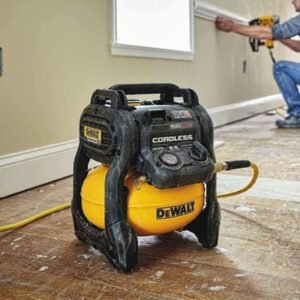
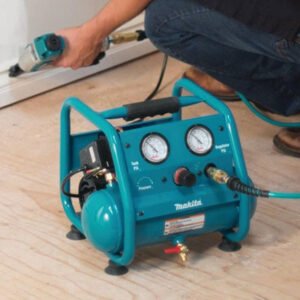
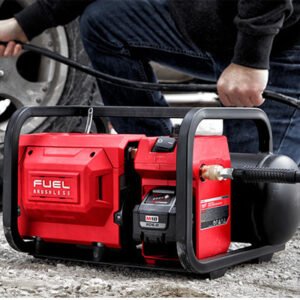
A cordless air compressor can be useful when portability matters more than the continuous output of a large workshop compressor. For Canadian buyers, the right choice depends on more than battery voltage or maximum pressure. Air delivery, tank capacity, recharge time, duty cycle, noise, cold-weather performance, portability and compatibility with your existing cordless-tool batteries can all affect whether a compressor is genuinely suitable for the job.
The most important distinction is between a compact cordless inflator and a true portable cordless air compressor. Compact inflators are generally intended for tires, sports equipment and small pneumatic tasks, while higher-output compressors are designed to supply compressed air to tools or equipment that require a sustained air supply. Before comparing models, identify the type of work you expect to perform and the air requirements of the equipment you plan to connect.
Maximum pressure is often the easiest specification to notice, but it does not tell you how quickly a compressor can perform useful work. A compressor may reach a high pressure while still having limited airflow. For applications such as inflating tires, pressure capability is important, but for pneumatic tools, airflow and recovery performance can become much more important.
When comparing products, look for the stated maximum PSI alongside CFM or another airflow specification. Where a manufacturer provides airflow figures at different pressures, compare the figures at the pressure relevant to your intended application rather than relying on the highest advertised number.
CFM, or cubic feet per minute, indicates the volume of air a compressor can deliver under specified conditions. It is particularly important when selecting a compressor for pneumatic tools such as nailers, staplers, blow guns or other equipment that consumes air continuously or repeatedly.
Do not compare CFM numbers without checking the conditions under which they were measured. Free-air delivery, displacement figures and airflow measured at a particular pressure are not necessarily interchangeable. If a pneumatic tool specifies a minimum CFM requirement, choose a compressor with sufficient capacity rather than selecting a model solely because its maximum PSI is higher.
A tank stores compressed air and can provide a reserve when the tool's immediate demand is higher than the compressor's continuous output. Larger tanks can reduce how frequently the motor starts during intermittent tasks, but they also add weight and bulk.
A larger tank does not automatically make a compressor more powerful. Tank size and pump output should be evaluated together.
Battery compatibility can be one of the strongest reasons to choose one cordless compressor over another. If you already own compatible cordless tools, staying within the same battery platform can reduce the need to maintain another battery and charger system.
Major cordless-tool ecosystems include Milwaukee M18, DEWALT 20V MAX, Makita 18V LXT and Bosch Professional 18V. Battery capacity also matters. A higher-capacity battery can provide longer operating time, but it may increase the overall weight of the compressor.
Runtime should not be treated as a universal number because actual battery life varies with pressure, airflow demand, ambient temperature, battery condition, compressor cycling and the task being performed. Check manufacturer specifications and consider the workload rather than assuming a particular battery size guarantees a particular number of inflation cycles.
These are designed primarily for portability and inflation rather than powering conventional pneumatic tools. They can be particularly useful for topping up car, SUV, motorcycle, bicycle and recreational equipment tires.
Their strengths are small size, low storage requirements and convenient operation away from a mains outlet. Their limitations become apparent when the job requires large volumes of air or continuous pneumatic-tool operation.
A tank-equipped compressor is a more versatile option when you need compressed air rather than simply inflation. Depending on its output and specifications, it may be appropriate for pneumatic fastening tools and other intermittent applications.
For these models, pay close attention to tank capacity, pump recovery, airflow, duty cycle and the manufacturer's recommended applications.
Some portable compressors can operate from a rechargeable battery while also accepting another power source. This type can be attractive for users who want cordless portability at a jobsite but prefer an alternative power source when working near an electrical outlet.
When comparing hybrid models, check whether the stated performance differs between power sources and whether batteries, adapters or other accessories are included.
For tire inflation, a compact cordless inflator can be more convenient than carrying a conventional compressor. Check that the unit supports the pressure required by your vehicle and has a hose or chuck suitable for the valve system you use.
Always use the vehicle manufacturer's recommended tire pressure rather than the maximum pressure printed on the tire sidewall as your everyday inflation target.
Bicycle tires can require a very different pressure range from passenger vehicles. A compressor or inflator should therefore provide sufficiently precise pressure control for the type of bicycle equipment you maintain. Compatibility with Presta or Schrader valves may also matter.
Framing nailers, finish nailers and staplers can have different airflow requirements. A compressor intended for occasional fastening work should be evaluated against the tool manufacturer's stated CFM and pressure requirements.
For intermittent fastening, a tank can help supply short bursts of air while the pump recovers. For sustained operation, however, recovery rate and delivered airflow become increasingly important.
Blow guns can consume substantial quantities of air when operated continuously. A small cordless compressor may be suitable for short bursts but frustrating for prolonged cleaning tasks. Consider the compressor's delivered airflow and duty cycle before selecting it for this purpose.
Pool accessories, sports equipment, camping equipment and other inflatables usually do not require the same pressure characteristics as vehicle tires. A compressor with appropriate low-pressure control and a suitable nozzle can be more useful than simply choosing the highest-PSI model.
Noise can be an important consideration in residential garages, workshops and enclosed spaces. Compressor noise is influenced by motor design, pump construction, operating pressure and the surrounding environment.
If you regularly work around occupied homes or shared workspaces, look for manufacturer-provided noise information where available. Do not assume that a cordless compressor is automatically quiet simply because it does not use a power cord.
The principal advantage of cordless equipment is mobility, but that advantage decreases when the compressor becomes too heavy or awkward to carry. Evaluate the complete operating weight, including the battery.
Canadian conditions make temperature a more relevant consideration than it may be in warmer climates. Batteries generally perform differently in very cold conditions, and compressor components can also be affected by temperature.
Before relying on a cordless compressor during winter work, review the manufacturer's operating and storage temperature guidance. Avoid assuming that the advertised battery runtime under normal conditions will be identical in freezing weather.
If equipment is stored in a cold vehicle or unheated garage, allow it to reach an appropriate operating temperature when the manufacturer's instructions call for it. Battery care is particularly important because charging some lithium-ion batteries outside their specified temperature range can be inappropriate.
Many portable compressors use oil-free pump designs because they can simplify maintenance and make the equipment easier to transport. Oil-lubricated compressors can have different characteristics, including potentially different durability and maintenance requirements depending on the design.
For a portable cordless model, an oil-free design may be attractive because there is less concern about carrying a lubricant reservoir or maintaining oil levels. However, the specific pump construction and manufacturer's maintenance instructions are more important than the label alone.
Duty cycle describes how long a compressor can operate within a specified period before requiring a cooling interval. This is particularly important for repeated or demanding work.
A compressor with a modest duty cycle can still be an excellent choice for occasional tire inflation or intermittent fastening. Problems arise when a user selects a compact unit for an application that requires extended continuous operation.
Always follow the manufacturer's duty-cycle instructions. Repeatedly operating a compressor beyond its recommended limits can increase heat buildup and may shorten component life.
Automatic shut-off can make inflation and intermittent compressor use more convenient by stopping the motor when a preset pressure is reached. A readable pressure gauge and practical control layout can also reduce the likelihood of overinflation.
Digital displays can make target-pressure selection convenient, while traditional gauges can provide a simple visual indication. The best interface depends on the application and personal preference, but controls should be easy to understand while wearing work gloves.
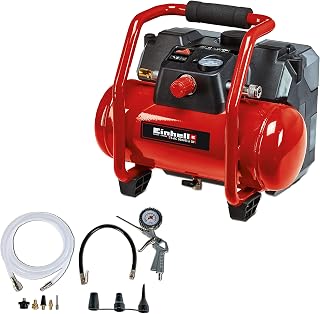
A compressor's usefulness can be affected by the accessories supplied with it. Examine the hose length, fitting type, tire chuck, inflation needles, adapters and any other included accessories.
For pneumatic tools, verify the connector and coupler standard before purchasing. A compressor can have adequate pressure and airflow but still require additional fittings before it can be connected to existing equipment.
Do not assume that every pictured accessory is included in the package. Product descriptions can differ between configurations, so verify the current contents before ordering.
Cordless tools are frequently sold in more than one configuration. A bare-tool package may contain the compressor but exclude the battery and charger, while a kit may include one or both.
This distinction is particularly important when comparing apparent bargains. If you do not already own the compatible battery system, calculate the complete cost of obtaining the compressor, battery and charger rather than comparing the compressor-only prices.
Brand ecosystems can simplify battery ownership, but brand familiarity should not replace specification-based comparison. Milwaukee, DEWALT, Makita and Bosch all have established cordless tool platforms, while other manufacturers may offer compressors designed for different battery ecosystems or standalone use.
When comparing a branded cordless compressor, examine the exact model rather than assuming that all tools in a battery family have equivalent performance. Battery compatibility, maximum pressure, airflow, tank size, dimensions and included accessories can vary substantially between models.
When two products appear similar, use a consistent comparison method rather than focusing on one headline specification.
High PSI does not necessarily mean high air delivery. For pneumatic tools, insufficient CFM can be a greater limitation than maximum pressure.
A low advertised tool price may represent a bare-tool package. Include the cost and availability of a compatible battery and charger when evaluating the overall purchase.
A portable tire inflator and a tank-equipped compressor serve different purposes. Determine whether you need inflation or a sustained compressed-air supply before comparing models.
A compact compressor can be excellent for short tasks but unsuitable for prolonged operation. Match the duty cycle to the actual workload.
A compressor that looks portable on paper may become cumbersome once a high-capacity battery and accessories are attached. Consider how often you will carry it.
Battery capacity, age, temperature and workload influence runtime. Compare the manufacturer's recommended battery options and consider the demands of your particular application.
Compressed air can be hazardous when misused. Follow the compressor and pneumatic-tool manufacturer's instructions and use appropriate eye protection when working with compressed air.
Maintenance requirements vary by design, so the manufacturer's instructions should take priority. A practical inspection routine can nevertheless help identify problems before they become more serious.
Customer reviews can provide useful information about usability, packaging, controls and recurring problems, but they should be interpreted alongside manufacturer specifications. A review describing poor performance may reflect an application that exceeded the product's intended capabilities.
Look for patterns rather than relying on one exceptionally positive or negative comment. Reviews that repeatedly mention the same issue across different users can warrant closer examination, especially when the issue relates to battery compatibility, noise, fittings, controls or durability.
Verified purchase indicators can add useful context, but verification alone does not guarantee that a review accurately represents every user's experience. Specifications and manufacturer documentation remain essential when making a technical comparison.
Prioritize portability, reliable pressure control, battery runtime and compatibility with your vehicle's tire valves. A compact inflator can be preferable to a larger tank compressor when the primary goal is emergency or routine tire inflation.
If you use pneumatic nailers or staplers, prioritize airflow, recovery performance, duty cycle and tank capacity. Battery compatibility becomes especially useful when the compressor is used alongside other cordless tools.
Look for a balanced combination of output, weight, durability, controls and battery compatibility. A slightly heavier model may be worthwhile if its capabilities better match your tools.
A garage user should consider whether cordless operation is genuinely necessary. If the compressor will remain near a dependable electrical supply, a corded compressor may offer higher sustained output for the money. Cordless models make more sense when portability and convenience are priorities.
For occasional inflation and light DIY work, avoid paying for capabilities you are unlikely to use. A compact model with straightforward controls can be more practical than a heavier professional-oriented compressor.
The principal advantage of cordless operation is freedom from a mains outlet. This can be valuable on construction sites, driveways, remote locations and unfinished areas where electrical access is inconvenient.
Corded compressors, however, can be preferable for prolonged workshop use because they can draw continuous electrical power without relying on battery capacity. They may also provide more sustained airflow in larger formats.
The best choice therefore depends on where the compressor will be used. Portability should be treated as a functional requirement, not simply as a feature that sounds convenient.
There is no single best model for every Canadian buyer. The right choice depends on whether you need tire inflation, pneumatic-tool operation, jobsite portability, workshop use or occasional household tasks. Compare pressure, airflow, tank capacity, duty cycle, battery compatibility and weight against your intended application.
Some are, particularly for intermittent-use pneumatic tools such as certain nailers and staplers. The deciding factor is whether the compressor's delivered airflow and pressure meet the tool manufacturer's requirements. A high maximum PSI figure by itself is not enough.
Yes, many portable cordless inflators are specifically suited to tire inflation. Check the required pressure range, valve compatibility, hose or chuck design and expected battery runtime before choosing a model.
No. A larger tank provides a greater compressed-air reserve but also adds size and weight. Tank capacity should be balanced against pump output, portability and the type of work you perform.
If you already own compatible batteries and chargers, a bare tool can make sense. If you do not own the relevant battery platform, a kit may be more practical because it provides the required power components. Always compare the complete ownership cost.
The best platform is generally the one that fits your existing cordless-tool ecosystem while providing the battery capacity and performance required by the compressor. Milwaukee M18, DEWALT 20V MAX, Makita 18V LXT and Bosch Professional 18V are examples of established ecosystems, but compatibility should be confirmed for the exact compressor model.
Storage conditions depend on the specific compressor and battery. Check the manufacturer's temperature and storage recommendations rather than assuming that any cordless tool can safely remain in freezing conditions indefinitely.
The required pressure depends on the application. Vehicle tires, bicycle tires, inflatables and pneumatic tools can have very different requirements. Choose a compressor that comfortably meets the pressure specified for the equipment you intend to use.
Use the pneumatic tool manufacturer's stated airflow requirement as the starting point. Ideally, the compressor should provide adequate airflow under the same pressure conditions specified by the tool. For intermittent applications, tank storage can help with short bursts, while continuous applications demand stronger sustained airflow.
They can be worthwhile when portability, rapid deployment and battery convenience are important. They are less compelling when the compressor will remain permanently in a workshop and continuous high-volume airflow is the primary requirement. Compare the cordless convenience against the output and operating characteristics of suitable corded alternatives.
The strongest cordless air compressor choice is not necessarily the model with the highest PSI, largest battery or most compact dimensions. It is the model whose complete specification matches the work you actually intend to perform.
For tire inflation, prioritize pressure control, portability and practical runtime. For pneumatic tools, give greater weight to CFM, recovery and duty cycle. For mobile jobsites, evaluate the complete carrying weight, battery ecosystem and durability. For garage use, compare cordless convenience against the sustained output available from corded alternatives.
Before purchasing, compare the exact model specifications, package contents, current manufacturer documentation and recent verified customer feedback. Canadian buyers should also pay particular attention to operating and storage temperatures, battery requirements and the practical realities of transporting and storing the equipment throughout the year.