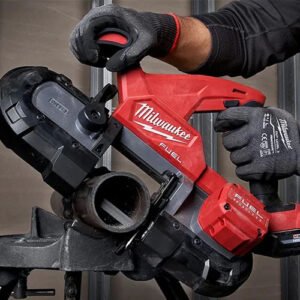


Explore cordless power tools, kits, batteries, chargers, accessories and related equipment available to Canadian shoppers. Compare product options and follow useful buying guides before you buy.
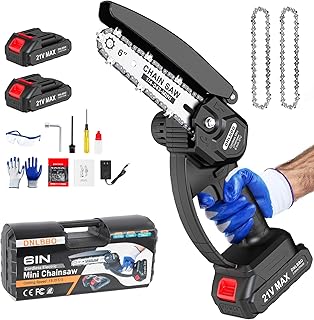


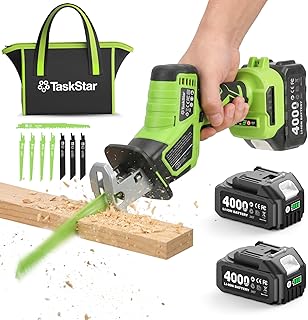


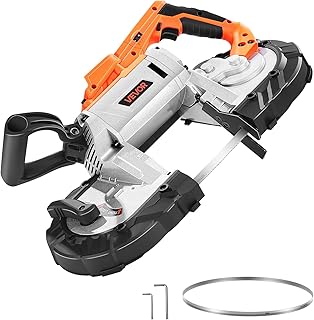


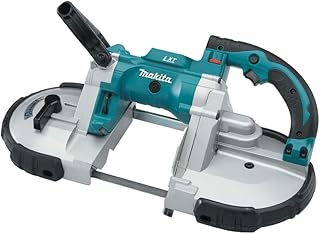


A cordless band saw can be one of the most useful portable cutting tools for electrical, plumbing, HVAC, fabrication, construction, maintenance and metalworking applications. Unlike an angle grinder or reciprocating saw, a band saw removes material with a continuous looped blade, producing a controlled cutting action with comparatively little sparking and less aggressive vibration. The cordless design also eliminates the need to position an extension cord around the workpiece.
The right model, however, depends heavily on the size and type of material being cut. A compact band saw designed for conduit and small tubing is not a substitute for a deep-cut model intended for large pipe, structural steel or heavier fabrication. Before comparing brands or ratings, determine the maximum material dimensions you regularly expect to cut, the material itself, the required portability and the battery platform you already own.
For Canadian buyers, battery-platform compatibility deserves particular attention. A tool-only band saw can make financial sense when you already own compatible batteries and a charger, while a kit containing a battery and charger may be the better overall purchase for someone entering a new cordless system. The apparent price difference between two saws can therefore be misleading when the required battery ecosystem is taken into account.
A portable band saw uses a continuous blade that travels around two wheels. The blade teeth progressively remove material as the operator guides the saw through the workpiece. Because the cutting action is continuous rather than a back-and-forth stroke, band saws are particularly useful for making relatively clean cuts through metal stock, tubing, conduit, threaded rod and similar materials.
The cordless format adds portability. There is no mains cable to route around scaffolding, ladders, machinery or a partially completed installation. This is especially valuable for service technicians and tradespeople who frequently make individual cuts at different locations rather than performing repetitive stationary cutting.
Portability should not be confused with unlimited capability. A battery-powered band saw still has mechanical and thermal limits. Large blades, high cutting loads and repeated cuts through thick material require more power and battery capacity than occasional cuts through thin-wall tubing. Choosing a saw based solely on battery voltage is therefore a common mistake.
Compact models are designed around portability and maneuverability. They are particularly useful when working overhead, inside mechanical rooms, between framing members or in locations where a larger saw would be awkward.
The principal advantage is control. A smaller saw is easier to position around conduit, small pipe, threaded rod and narrow metal stock. Reduced size can also make it more practical for service work where the operator may need to carry several tools simultaneously.
The trade-off is cutting capacity. Compact models should not be selected for frequent large-diameter pipe or substantial structural material simply because they are easier to carry.
Mid-size models occupy the practical middle ground for many professional users. They generally offer more cutting capacity than compact saws while remaining portable enough for jobsite work.
This category can be particularly attractive to electricians, plumbers, installers and general contractors who cut a mixture of conduit, pipe, strut, threaded rod and tubing. A mid-size design may provide enough capacity for demanding work without the bulk of the largest deep-cut machines.
Deep-cut models are intended for larger workpieces and heavier cutting duties. Their larger blade loops and greater throat capacity allow the operator to cut substantially larger rectangular or round material than compact machines.
Deep-cut capacity can be valuable for fabrication, structural work, pipe installation and industrial maintenance. The downside is additional size and weight. If most of your cuts involve small conduit or thin tubing, paying for maximum capacity can result in a tool that is unnecessarily cumbersome.
One of the most misleading ways to compare cordless band saws is to assume that a higher battery voltage automatically means a better saw. Voltage is only one part of the system. Motor design, gearing, blade dimensions, electronic control, battery output, blade speed and mechanical efficiency all influence cutting performance.
Start with the manufacturer's stated cutting capacity. Look for both round and rectangular capacities where applicable. A saw may accommodate a large rectangular workpiece but have a different practical limit for round pipe, so both measurements matter.
Consider your normal material rather than the largest item you might cut once every few years. If most of your work involves small electrical conduit, a compact model may be substantially easier to use. If your routine includes large steel tubing, a deep-cut machine is more appropriate.
Round capacity is important for pipe, tubing, conduit and similar stock. Check the specified maximum diameter and consider whether that measurement reflects the material you actually use.
Rectangular capacity matters when cutting square tubing, rectangular tubing, channel, strut and fabricated components. Pay attention to both dimensions rather than relying on a single headline capacity figure.
The published capacity does not necessarily tell you whether the saw will be comfortable to use in a confined location. Blade clearance, guard dimensions, handle position and battery placement can affect how easily the tool reaches the workpiece.
Blade speed influences how aggressively the saw cuts and how suitable it is for different materials. A high blade speed can be advantageous for appropriate applications, while slower control can provide better management when cutting materials that benefit from a more deliberate cutting rate.
Variable-speed control is therefore more useful than simply chasing the highest published speed. A trigger combined with a speed selector or dial can make it easier to match the tool to the material and cutting conditions.
Do not assume that maximum speed should always be used. Blade selection, material thickness, tooth pitch and cutting pressure all work together. The manufacturer's instructions should take priority when determining appropriate blade speed and operating technique.
Brushless motors are common in premium cordless band saws because they can provide efficient power delivery without conventional motor brushes. For buyers, the most meaningful question is not simply whether a model says brushless, but how the complete tool performs within the manufacturer's intended application.
A brushless motor can be especially attractive for users who make frequent cuts or depend on the same saw throughout a working day. Electronic motor management can also form part of a broader system designed to protect the tool and battery from excessive loads.
For occasional home use, however, brushless construction should be evaluated alongside cutting capacity, ergonomics, blade availability and battery compatibility. Paying more for a feature that does not address your actual cutting requirements may not provide the best value.
Battery compatibility is one of the strongest reasons to choose a particular cordless band saw. If you already use a cordless tool ecosystem, staying within that platform can eliminate the need to purchase another charger and multiple batteries.
Major professional platforms from brands such as Milwaukee, DEWALT, Makita, Bosch and RIDGID offer broad cordless tool ranges, although compatibility is specific to each manufacturer's battery system and sometimes to particular voltage families.
Never assume that batteries with similar voltage ratings are interchangeable. The physical connection, electronics, communication system and charging requirements can differ substantially between platforms.
A tool-only package can be the economical choice for an existing battery-platform user. It is also useful when you already have several high-capacity batteries available for other tools.
A kit containing a battery and charger may be more appropriate for a first-time buyer. Compare the complete package rather than comparing the advertised tool-only price against another manufacturer's complete kit.
Amp-hour rating can help indicate the amount of stored energy in a battery, but it should not be treated as a direct prediction of the number of cuts you will obtain. Material thickness, blade condition, cutting pressure, battery temperature and motor load all influence runtime.
For demanding work, a higher-capacity battery can make sense if its additional size and weight do not interfere with handling. For overhead work or repeated short cuts, a lighter battery may produce a better overall balance.
A high-quality band saw cannot compensate for an inappropriate blade. Blade tooth configuration, tooth pitch, material construction and blade dimensions should all match the intended application.
Bi-metal blades are widely used for cutting metal because they combine a durable tooth material with a flexible backing. Other blade constructions may be appropriate for particular applications, but the manufacturer's compatibility recommendations should always be checked.
Tooth pitch determines how many teeth engage with the material. Coarser pitches can be useful for thicker sections, while finer pitches are generally more appropriate for thinner material.
The objective is to maintain appropriate tooth engagement throughout the cut. Too few teeth contacting the workpiece can create an aggressive cutting action and increase the likelihood of tooth damage. Excessively fine teeth can reduce cutting efficiency when used on thick material.
Replacement blades must match the saw's specified dimensions. A blade that is too long, too short or otherwise incompatible should not be improvised into service.
Before purchasing replacement blades, record the manufacturer's specified blade length, width and tooth configuration. Keeping commonly used replacement blades available can prevent an otherwise functional cordless saw from becoming unusable during a job.
Blade tracking determines how accurately the blade remains positioned on the wheels. Poor tracking can contribute to uneven cuts, premature blade wear and other operating problems.
Some band saws provide an adjustment for tracking, while blade tensioning systems may differ between models. Tool-free or simplified blade-change mechanisms can save time, but convenience should never replace proper installation.
Follow the manufacturer's instructions for blade installation and tension. Do not attempt to compensate for an incorrectly installed blade by applying excessive tension or altering adjustments beyond their intended range.
Ergonomics become particularly important with portable band saws because the operator often supports the tool while guiding it through the workpiece. Weight alone does not determine comfort. Handle placement, battery location, trigger position, grip shape and the relationship between the blade and the user's hands all influence balance.
A well-balanced saw can feel easier to control than a lighter tool with an awkward centre of gravity. This becomes increasingly important during overhead cutting or when making repeated cuts over several hours.
If possible, compare the physical dimensions and balance of competing models before buying. Pay particular attention to how the battery changes the tool's centre of gravity.
Some compact band saws are designed around applications where one-handed operation is possible. This can be useful when the other hand must stabilize the workpiece or when access is limited.
However, one-handed capability should not be interpreted as permission to operate a saw in an unsafe manner. The workpiece should be properly supported whenever possible, and the operator should maintain a stable position and follow the manufacturer's safety instructions.
Larger band saws may emphasize two-handed control. That arrangement can improve handling and provide greater stability when the saw is working through larger material.
Eye protection should be considered essential when cutting metal or other materials that can produce chips and debris. Additional protective equipment depends on the application, material and workplace requirements.
Gloves require particular judgment around rotating machinery. They should not be treated as a substitute for safe technique, and loose clothing, jewelry or other items that could become caught should be kept away from moving components.
Band saws are often selected for metal cutting because their cutting action can produce less aggressive sparks than abrasive cutting methods. That does not mean a band saw is automatically suitable for every environment. The material being cut, blade condition and surrounding conditions still determine the hazards present.
When working in occupied buildings, workshops or service areas, consider how the tool's noise, debris and physical footprint will affect the surrounding environment. Battery operation can be particularly convenient when electrical access is limited, but it does not eliminate the need to control the work area.
Steel can place substantial demands on a band saw, especially when the material is thick. Blade selection and tooth pitch should match the section being cut. Avoid excessive downward pressure and allow the blade to perform the cutting rather than forcing it through the material.
Stainless steel requires appropriate blade selection and cutting technique because incorrect speed, excessive pressure or a dull blade can make cutting unnecessarily difficult. Follow the blade manufacturer's recommendations for the particular grade and thickness.
Aluminum behaves differently from steel and can load cutting teeth if the blade and cutting conditions are unsuitable. Select a blade intended for the material and keep the cutting process controlled.
Soft metals can create their own blade-selection challenges. A blade that performs well on structural steel should not automatically be assumed to be ideal for every non-ferrous material.
These are common applications for compact and mid-size portable band saws. The primary benefits are controlled cutting and portability, particularly when many individual pieces need to be trimmed at an installation site.
A reciprocating saw is typically more versatile because it can accept blades for a wide variety of materials and can handle demolition-oriented work. A band saw is more specialized but can provide a smoother and more controlled cutting action for suitable stock.
An angle grinder can cut metal quickly and is highly versatile, but abrasive cutting produces sparks and a different type of debris. A band saw can be preferable when controlled cold cutting and reduced spark production are priorities.
Neither tool replaces the other completely. Fabricators and tradespeople may benefit from having both because they address different cutting requirements.
A corded band saw can make sense in a workshop where electrical power is readily available and the tool remains in one location. A cordless model has a significant portability advantage for field work and installations.
The decision should account for the frequency of use, access to power, required cutting capacity, battery investment and expected duty cycle. A stationary workshop user may gain little from cordless operation, while a mobile service technician may find the absence of a power cord extremely valuable.
Brand comparison is most useful when it is based on the complete cordless ecosystem rather than brand reputation alone. DEWALT, Milwaukee, Makita, Bosch and RIDGID all have established cordless tool platforms, but the best choice depends on the batteries, chargers and other tools already in your collection.
For an existing DEWALT 20V MAX user, a compatible DEWALT band saw can reduce the need for another battery ecosystem. A Milwaukee M18 user may similarly find an M18 band saw more convenient. The same principle applies to other manufacturers.
Compare the actual saw before assuming that two models occupying the same category are equivalent. Cutting capacity, blade size, speed control, trigger arrangement, weight, battery position and included accessories can differ substantially.
A deep-cut model can look attractive because its specifications appear superior, but additional capacity can mean additional weight and bulk. If your work rarely exceeds small conduit or tubing, a compact model may be more practical.
The opposite mistake is choosing a compact model for heavy fabrication. Repeatedly pushing a small saw beyond its intended capacity can create unnecessary strain on the tool, battery and blade.
A seemingly inexpensive tool-only model may become expensive if you need to purchase a battery and charger separately. Conversely, buying a kit when you already own several compatible batteries can add unnecessary cost.
The saw is only useful when suitable replacement blades are readily obtainable. Check blade dimensions and compatible tooth configurations before committing to a model.
Customer ratings can provide useful information, but reviews should be interpreted in context. A homeowner making occasional cuts may evaluate a tool differently from an electrician using it every day. Look for comments relevant to your own material, workload, ergonomics and battery platform.
When evaluating verified customer feedback, prioritize specific comments over vague statements such as “great tool” or “poor quality.” Useful reviews often identify the material being cut, the frequency of use, battery configuration, blade performance and any recurring handling concerns.
The purchase price is only one component of the long-term cost of a cordless band saw. Replacement blades, batteries, chargers and other consumables can affect the actual cost of ownership.
A more expensive saw can provide better value if it fits an existing battery platform and application perfectly. Conversely, a premium model may be poor value if its capacity and features are unnecessary for your workload.
Routine maintenance helps preserve cutting performance and reduces avoidable wear. Always disconnect the battery before performing maintenance, changing the blade or working around the cutting mechanism.
Metal chips and debris can accumulate around the blade, wheels and guides. Clean the tool according to the manufacturer's instructions rather than allowing debris to build up.
A dull, damaged or improperly installed blade can reduce cutting quality and increase the effort required from the operator. Replace blades when their condition indicates that continued use is no longer appropriate.
If the blade begins behaving differently, inspect tracking and installation before assuming that the motor or gearbox has developed a problem. Use only the adjustment procedure specified for the particular saw.
Store batteries according to the manufacturer's recommendations and avoid exposing them to conditions outside their specified operating and storage ranges. Extreme temperatures can affect battery performance and charging behavior.
Blade life depends on more than blade quality. Correct tooth pitch, appropriate speed, controlled feed pressure and proper material support all matter.
Do not force the saw aggressively through a workpiece. Excessive pressure can damage teeth and may cause the blade to track poorly. Let the cutting system do the work while maintaining stable control.
Secure the workpiece whenever the application permits. Material movement can cause poor cuts and place unnecessary stress on the blade.
Electricians commonly value portability, compact dimensions and the ability to make controlled cuts through conduit, strut, threaded rod and other installation materials.
A compact saw may be the most convenient option when working in finished spaces or overhead. A larger model may be justified when the electrical work routinely involves larger strut or heavier stock.
Battery compatibility can be especially important for electricians already carrying drills, impact drivers, reciprocating saws and other cordless tools from the same platform.
Plumbing and HVAC applications can involve copper, steel, stainless components, threaded rod, pipe and other materials. The best saw depends on the typical pipe dimensions rather than the trade label alone.
For service work, weight and accessibility can be more important than maximum capacity. For fabrication or installation teams cutting larger pipe and structural components, greater capacity and sustained performance may justify a heavier machine.
Fabrication users should focus on cutting capacity, blade availability, speed control, durability and battery runtime. A saw that performs well for occasional installation cuts may not be appropriate for continuous production-style work.
If most cutting is performed at a bench, also consider whether a stationary bandsaw would provide better control and productivity. Portable cordless band saws are strongest when mobility is an important part of the job.
DIY buyers should first identify whether a portable band saw is actually the most suitable tool for their projects. If metal cutting is occasional, a compact model may provide sufficient capability without taking up excessive storage space.
Buyers who already own a compatible cordless platform should generally consider that ecosystem first. The ability to use existing batteries can simplify storage and reduce duplicated equipment.
Canadian buyers should compare the exact model number offered in Canada rather than relying on specifications from another country. Product configurations, included batteries, regional model numbers and availability can differ between markets.
When comparing today's prices, check whether the listing is for a tool-only package or a complete kit. Also confirm what is actually included before comparing one retailer's advertised price with another.
Canadian users working outdoors should also pay attention to temperature conditions. Battery-powered tools can behave differently in cold weather, so the manufacturer's operating and charging guidance should be followed rather than assuming that normal indoor performance will be identical in winter conditions.
Use the following sequence when narrowing down a shortlist of cordless band saws:
Not every cutting job calls for a band saw. If you primarily cut wood, a circular saw, jigsaw or other woodworking tool may be more appropriate depending on the project. If your work involves heavy demolition, a reciprocating saw may offer greater versatility.
If almost all cutting happens in a dedicated workshop and power is readily available, a corded or stationary bandsaw may offer advantages in capacity, sustained operation and setup.
The best cordless band saw is therefore not necessarily the one with the largest capacity or the longest specification sheet. It is the model whose capabilities align with the work you actually perform.
A strong candidate for a Canadian cordless band saw buying guide should demonstrate a useful combination of cutting capability, control, durability considerations, battery compatibility and practical ergonomics. No single specification should determine the ranking by itself.
A “top 10” list is most useful when the products are not treated as interchangeable. Instead, each position should communicate who the model is best suited to. A compact saw can be an excellent choice for overhead service work while being a poor choice for large structural tubing. Likewise, a deep-cut professional saw may be outstanding for fabrication while being excessive for occasional DIY use.
When reviewing the shortlisted models, compare their specifications against the same criteria: cutting capacity, blade speed, blade dimensions, motor type, weight, battery platform, controls, included accessories and intended applications. This makes the ranking more meaningful than simply sorting products by star rating.
The best cordless band saw in Canada for 2026 depends on the intersection of cutting capacity, portability, battery ecosystem and workload. Start with the material and dimensions you actually cut, then work backward toward the appropriate saw category.
For light-duty and service applications, compact models can provide excellent portability. For mixed professional work, mid-size machines offer a useful balance of capacity and maneuverability. For large pipe, structural material and demanding fabrication, deep-cut models are generally the more logical category.
Before making a purchase, compare current specifications, package contents, compatible batteries, replacement blades and verified customer feedback. Check today's prices separately because pricing and retailer availability can change. The goal is not simply to find the most powerful cordless band saw, but to select a machine that matches your work without paying for capacity you will rarely use.
There is no single best model for every Canadian buyer. The right choice depends on the material, maximum cutting dimensions, frequency of use, required portability and cordless battery platform. A compact model may be preferable for conduit and small tubing, while a deep-cut machine is more appropriate for larger pipe and structural material.
Many professional-grade cordless band saws are designed specifically for demanding trade and jobsite applications. The important consideration is whether the particular model has sufficient capacity and performance for your material and workload.
A brushless model can be attractive for frequent users because brushless motor technology can support efficient power delivery and advanced electronic control. Whether the additional cost is worthwhile depends on your workload and the other specifications of the saw.
Choose compact when portability and access are more important than maximum capacity. Choose deep-cut when your regular work involves substantially larger material. Do not choose based solely on occasional maximum requirements.
No single blade and operating setup should be assumed to be ideal for every metal. Blade selection, tooth pitch, speed and cutting technique need to be appropriate for the material and thickness.
Not necessarily. Higher-capacity batteries can be useful for demanding or extended work, but they can also add weight. A smaller battery may be preferable when portability and low tool weight are more important.
They can be excellent value when you already own compatible batteries and chargers. For someone without the required battery platform, a complete kit may offer a more useful comparison.
There is no universal replacement interval. Blade life varies with material, thickness, tooth selection, cutting frequency, technique and blade quality. Replace the blade when it becomes damaged, excessively dull or otherwise unsuitable for safe and effective cutting.
Not completely. A band saw is particularly useful for controlled cutting of suitable metal stock, while an angle grinder offers broader abrasive cutting and grinding capabilities. They are complementary tools rather than direct replacements.
Not in every application. A reciprocating saw is generally more versatile for demolition and irregular cutting, while a band saw can be advantageous for repeated controlled cuts through suitable metal stock.
Check the exact blade length, width, tooth configuration and material compatibility specified for your saw. Do not assume that blades with similar-looking dimensions are interchangeable.
Focus on cutting capacity, blade dimensions, speed control, weight, balance, battery compatibility, blade-change design, safety features and the manufacturer's intended applications. These factors generally tell you more than brand reputation or headline voltage alone.
No. Ratings can be useful as one part of the research process, but they should be combined with specifications and application-specific feedback. A product that receives excellent feedback from occasional DIY users may not be the best option for a professional making hundreds of cuts.
The most common mistake is selecting a saw before defining the actual cutting requirements. Determine material, dimensions, workload and battery platform first. Then compare products that genuinely meet those requirements.