

Explore cordless power tools, kits, batteries, chargers, accessories and related equipment available to Canadian shoppers. Compare product options and follow useful buying guides before you buy.
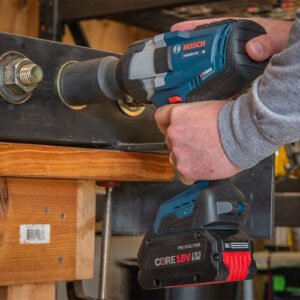
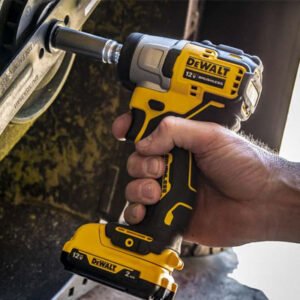
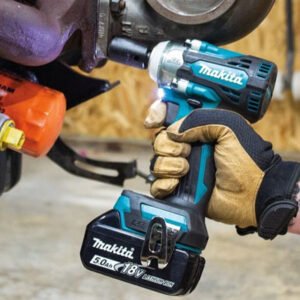
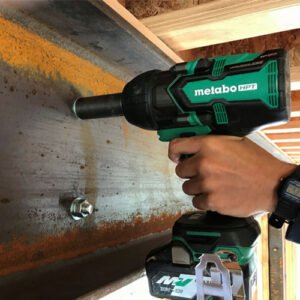
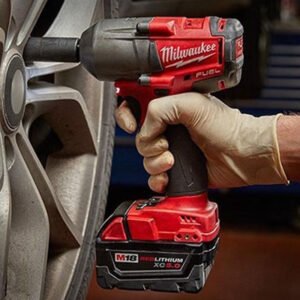


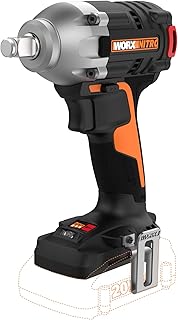


Choosing the best cordless impact wrench in Canada is about more than comparing advertised torque figures. The right tool depends on the type of fasteners you work with, the socket sizes you use, how often you need an impact wrench, whether you already own batteries from a compatible platform, and the conditions in which you work. A compact model may be ideal for automotive repairs and maintenance, while a high-torque model can be more appropriate for demanding suspension, equipment, construction, agricultural and heavy-duty applications.
This buying guide focuses on the characteristics that matter when comparing cordless impact wrenches available to Canadian buyers in 2026. Product specifications can vary by model and configuration, so check the current manufacturer specifications and retailer information before making a purchase.
A cordless impact wrench is a battery-powered fastening tool designed to install and remove nuts and bolts. Unlike a conventional drill or impact driver, an impact wrench typically uses a square drive that accepts sockets. Its internal hammer-and-anvil mechanism delivers repeated impacts to the drive mechanism, allowing the tool to produce high rotational force without requiring a cord or pneumatic compressor.
Cordless impact wrenches are particularly useful where mobility matters. You can move around a vehicle, work outdoors, perform repairs away from a power outlet, or use the same battery platform across several compatible tools. Modern brushless motors and lithium-ion battery systems have also made cordless models increasingly capable of handling applications that traditionally relied on pneumatic or corded equipment.
Canadian users can encounter a wide range of working conditions, from heated home garages to outdoor construction sites and equipment maintenance areas. A cordless tool eliminates the need to manage an electrical extension cord or compressor hose, which can be especially convenient when working around vehicles or in locations without convenient mains power.
Impact wrench specifications can be confusing because manufacturers may publish several different torque measurements. Instead of choosing a tool solely because it has the largest number on the box, consider how the torque rating relates to your intended work.
Maximum torque indicates the highest rotational force a manufacturer attributes to the tool under specified conditions. A higher figure can provide more capability for stubborn fasteners, but it does not automatically make a wrench better for every user.
Excessive power can be unnecessary for light-duty fastening and may increase the risk of over-tightening when the operator does not control the final torque with an appropriate torque wrench. For automotive wheel installation, for example, an impact wrench can be useful for removing fasteners and initially seating them, but final tightening should follow the vehicle manufacturer's specified torque procedure.
Breakaway torque refers to the tool's ability to overcome resistance when loosening a fastener. It is often particularly relevant when comparing impact wrenches for automotive repair, where corrosion, previous over-tightening and environmental exposure can make fasteners difficult to remove.
Do not assume that maximum fastening torque and breakaway capability are interchangeable specifications. Compare the manufacturer's terminology carefully and consider the actual application rather than relying on one headline number.
Fastening torque describes the tool's output while driving a fastener. A model with adjustable power levels can be more useful than an extremely powerful single-speed wrench because different jobs require different levels of control.
Multiple speed or power settings can help reduce over-tightening and improve control. Some advanced cordless impact wrenches offer electronic modes designed to change speed, impact behavior or stopping characteristics. These features can be valuable when switching between delicate fastening and high-resistance removal.
The square-drive size determines which sockets the impact wrench accepts and gives an indication of the type of work for which the tool is intended.
A 1/4-inch impact wrench is generally associated with compact fastening applications and smaller fasteners. It can be attractive where access, low weight and maneuverability matter more than maximum torque.
A 3/8-inch cordless impact wrench is a useful middle-ground option for many mechanical and automotive tasks. It can provide a balance between compact dimensions and useful torque, particularly for users who frequently work in confined spaces.
The 1/2-inch drive is one of the most useful formats for automotive work. It accommodates a broad selection of common impact sockets and is available across compact, mid-torque and high-torque cordless models.
A 3/4-inch impact wrench is intended for substantially larger fasteners and demanding applications. It is generally more specialized and may be unnecessary for homeowners or users whose work is limited to passenger vehicles and routine maintenance.
Compact models prioritize accessibility and reduced size. They are useful when working inside engine bays, around suspension components or anywhere a larger housing could interfere with surrounding components.
Mid-torque models are often a strong choice for buyers who want one versatile cordless impact wrench rather than separate tools for light and heavy applications. They can offer a useful compromise between physical size, power and portability.
High-torque models are designed for demanding fastening and removal work. They can be appropriate for heavy automotive repairs, larger machinery and professional applications where stubborn fasteners are common.
Brushless motors are common in higher-end cordless power tools because they eliminate traditional motor brushes and can offer efficient operation, reduced mechanical wear and improved electronic control. Many premium tool platforms, including Milwaukee, DeWalt, Makita and Bosch, offer brushless cordless impact wrench ranges.
That does not mean every brushed model is unsuitable. For occasional use, the total cost, battery compatibility, ergonomics and required performance may matter more than the motor type alone. Brushless technology becomes especially attractive for frequent users who value efficiency, durability and advanced electronic control.
Battery voltage should be considered alongside the complete tool platform rather than treated as a direct measure of torque. A higher-voltage system may support larger motors and high-output applications, while compact platforms can provide excellent portability for lighter work.
Amp-hour capacity affects how much energy a battery stores. A larger-capacity battery can extend runtime, but it may also add weight and increase the overall size of the tool. If you frequently work overhead or in confined areas, the lightest suitable battery may be preferable to the largest available pack.
Battery compatibility can significantly affect the real cost of ownership. If you already use cordless tools from a platform such as Milwaukee M18, DeWalt 20V MAX, Makita 18V LXT or Bosch Professional 18V, staying within that ecosystem may allow you to share compatible batteries and chargers.
Always verify exact battery compatibility for the specific impact wrench model. Voltage labels, physical connectors and platform generations are not necessarily interchangeable simply because two products carry the same brand name.
A bare tool normally makes the most sense when you already own compatible batteries and a charger. It can reduce duplication and allow you to add an impact wrench to an existing cordless-tool collection.
A complete kit can be more convenient for a first-time buyer because it typically provides the tool, battery and charger in one package. Compare the battery capacity included in the kit rather than assuming every bundle provides the same battery.
A friction-ring anvil uses a retaining ring to hold sockets securely while allowing relatively straightforward socket changes. It is a common configuration for automotive and general mechanical applications.
The terms friction ring and hog ring are often used in product descriptions for similar socket-retention arrangements. Buyers should inspect the manufacturer's specific design because terminology can vary between brands.
A pin-detent system mechanically retains the socket with a retaining pin. It can provide secure socket retention but may take longer to change sockets than a friction-ring design.
Socket retention becomes important when working under a vehicle or in awkward positions. A secure retention system reduces the likelihood of the socket falling away from the anvil, while a mechanism that is easy to operate can make repeated socket changes less frustrating.
Consider whether you routinely switch between socket sizes. For high-volume mechanical work, socket-change convenience can be more important than a minor difference in headline torque.
No-load speed describes how quickly the tool rotates without a fastening load, while impacts per minute describes the frequency of hammer impacts. These specifications can help explain how a tool behaves, but they should not be interpreted independently of torque.
A fast tool can be convenient for repetitive fastening, whereas a high-torque model may prioritize force over compactness and speed. Electronic speed control can also improve usability by allowing the operator to adapt the tool to different jobs.
Advanced cordless impact wrenches may include selectable modes for different fastening situations. Depending on the model, electronic controls can manage speed, power delivery, stopping behavior or fastening sequences.
These features are particularly useful when the same tool is used for multiple tasks. A controlled mode can help prevent unnecessary impact action during light fastening, while a higher setting can provide additional capacity for difficult removal work.
Do not treat an automatic mode as a substitute for correct torque procedures. Critical fasteners should always be tightened according to the applicable manufacturer's specifications and checked with an appropriate calibrated torque tool when required.
Torque is only one part of a tool's usability. A powerful impact wrench that is difficult to hold for extended periods may be less practical than a slightly less powerful model with better balance.
Maximum torque figures are easy to compare, but head length can determine whether the wrench physically fits into the work area. Automotive repairs frequently involve components surrounded by brackets, suspension members, body panels and other obstacles.
If your primary work involves passenger cars, compare compactness and access alongside torque. A mid-torque model with a relatively short head can sometimes be a more practical everyday choice than a much larger high-torque wrench.
When shopping for a cordless impact wrench in Canada, compare the complete package rather than only the tool body. The included battery, charger, carrying case, warranty terms, voltage platform and socket compatibility can all affect the overall value.
Brand selection can be useful when comparing cordless tools because each manufacturer tends to build its products around particular battery ecosystems, ergonomics and performance categories. The most appropriate brand is often the one whose platform best matches the tools and batteries you already use.
Milwaukee's M18 cordless ecosystem includes impact wrenches ranging from compact models to high-torque options. Its lineup is worth comparing when power, professional-oriented features and battery-platform breadth are priorities.
DeWalt offers cordless impact wrenches across its 20V MAX platform, including compact and high-output models. Buyers should compare the exact model designation because torque, size and electronic features can differ considerably between products in the same platform.
Makita's cordless range includes multiple 18V LXT impact wrench configurations. Its products can be particularly relevant to buyers already invested in the Makita battery ecosystem.
Bosch offers cordless professional power tools and compact impact wrench options. When comparing Bosch models, check the exact battery system and specifications because different tool families can have different compatibility requirements.
Ryobi's ONE+ ecosystem can be attractive to homeowners and DIY users who already own compatible tools. The value proposition should be considered as part of the wider battery platform rather than based solely on the impact wrench's advertised torque.
For automotive work, a 1/2-inch drive is a particularly versatile format because it supports many commonly used impact sockets. However, the ideal torque class depends on whether you perform basic maintenance, suspension repairs, tire-related work or heavier mechanical repairs.
An impact wrench can make wheel removal and installation much faster, but it should not be used carelessly. Lug nuts require the torque specified by the vehicle manufacturer, and the final tightening procedure should be performed with a suitable torque wrench where required.
A practical workflow is to use the impact wrench for removal and controlled initial fastening, then complete final tightening with a calibrated torque wrench according to the vehicle manufacturer's specifications. Avoid assuming that a particular impact-wrench power setting automatically corresponds to a specific torque value.
Standard chrome sockets are not interchangeable with impact-rated sockets simply because they fit the same square drive. Impact sockets are designed for the repeated shock loads produced by impact tools.
When buying an impact wrench, budget for an appropriate set of impact sockets if you do not already own them. Check both metric and SAE requirements according to the vehicles, machinery and fasteners you work on.
Metric fasteners are common in modern vehicles and equipment, but SAE sizes remain relevant for certain machinery, older vehicles, imported equipment and specialized applications. The correct socket set depends on your specific work.
Battery-powered tools can behave differently in cold conditions. Lithium-ion battery performance can be affected by low temperatures, so Canadian users who work outdoors or in unheated garages should pay attention to battery storage and operating guidance provided by the manufacturer.
Avoid exposing batteries to conditions outside the manufacturer's recommended operating and charging ranges. Follow the battery manufacturer's instructions for storage, charging and temperature management, particularly during winter.
Proper battery care can help preserve the usefulness of a cordless tool system. Use the manufacturer's approved charger and follow its recommendations for storage and charging. Do not use visibly damaged batteries or chargers, and inspect packs periodically for signs of physical damage.
Cordless impact wrenches generally require less routine infrastructure than pneumatic tools, but they still benefit from basic care.
Maximum torque is useful, but buying the most powerful model available can result in unnecessary weight, cost and bulk. Match the torque class to your actual fasteners and workload.
A tool can have excellent specifications and still be inconvenient if it cannot fit between the components you need to reach.
A bare tool may look inexpensive until the cost of a compatible battery and charger is added. Compare complete ownership cost.
A 3/8-inch tool is not a direct replacement for a 1/2-inch tool when your existing sockets and fasteners require a different drive. Select the drive size around your actual socket requirements.
Impact tools should be paired with sockets and accessories designed for impact applications. Ordinary chrome sockets are not the appropriate default choice for repeated impact loading.
Electronic modes and power settings can help with control, but they should not be treated as a substitute for a calibrated torque wrench when a precise fastening torque is required.
For occasional home use, prioritize versatility, manageable size and compatibility with a useful battery ecosystem. A compact or mid-torque 1/2-inch model can be a sensible starting point for users who expect to perform automotive maintenance without regularly dealing with very large fasteners.
Consider how frequently the tool will be used. If it will spend most of the year in a toolbox and only be used for occasional repairs, paying a substantial premium for extreme output may not provide meaningful additional value.
Professional users should evaluate the tool as part of a working system. Runtime, charging speed, ergonomics, durability, service support, battery availability, socket compatibility and access to replacement batteries can matter as much as raw torque.
For high-volume work, consider whether the platform offers multiple battery capacities and whether other tools in the ecosystem can use the same batteries. A well-established platform can reduce duplication when building a larger cordless-tool collection.
When two products appear similar on paper, compare the details that are easy to overlook.
Product listings can contain a mixture of technical specifications, marketing terminology and different testing conditions. Before comparing two models, identify the same measurement category on both product pages.
The best value cordless impact wrench is not necessarily the least expensive model. Value comes from obtaining the capabilities you actually need without paying for features or performance that will rarely be used.
For a homeowner, platform compatibility and versatility may be more important than maximum torque. For a professional mechanic, runtime, ergonomics and repeated high-load performance may justify a more expensive tool. For heavy-equipment maintenance, torque capacity and drive size can become much more important.
A good long-term purchase should fit your current work while leaving enough capacity for foreseeable jobs. Battery-platform longevity is also worth considering because the battery and charger can represent a significant portion of the overall cordless-tool investment.
Look for a tool that matches your socket collection, has enough power for your common fasteners, feels manageable in the hand and belongs to a battery ecosystem that supports the other tools you expect to use.
Read the manufacturer's operating instructions before using an impact wrench. Wear appropriate eye protection and use impact-rated accessories that match the application.
There is no single best model for every Canadian buyer. The right choice depends on the intended application, required torque, drive size, physical access, battery platform, budget and frequency of use. Compare current specifications from manufacturers and current retailer listings before deciding.
Yes, a 1/2-inch drive is a versatile format for many automotive applications. The appropriate torque class depends on the fasteners and repairs you perform.
No. Higher torque can be useful for stubborn fasteners, but a very powerful tool may be heavier, larger and less convenient for light-duty applications. Choose enough capacity for your actual work.
Not necessarily. Brushless models can offer useful advantages in efficiency, motor design and electronic control, particularly for frequent users. Occasional DIY users should also compare price, battery compatibility, ergonomics and actual performance requirements.
Impact-rated sockets are the appropriate choice for impact wrenches because they are designed for repeated shock loading. Use accessories that are specifically suitable for impact applications.
The answer depends on how the tool will be used. Larger-capacity batteries can provide greater runtime but generally add weight. A smaller battery may be preferable for short jobs and overhead work, while a larger pack can make sense for sustained professional use.
A bare tool can offer good value if you already own compatible batteries and a charger. If you are starting from scratch, compare the cost of a complete kit against buying the components separately.
No. An impact wrench is primarily designed for rapid fastening and loosening, while a torque wrench is used when controlled final torque is required. Follow the applicable manufacturer's torque specifications.
All three brands have broad cordless tool ecosystems, but the best choice depends heavily on the battery platform you already use and the specific impact wrench model. Compare the exact specifications, dimensions, battery options and intended application rather than selecting a brand based solely on reputation.
They can be used in cold environments when the specific tool and battery are operated within the manufacturer's stated conditions. Cold temperatures can affect lithium-ion battery performance, so follow the manufacturer's storage, charging and operating guidance.
The best cordless impact wrench for your needs is the model that delivers an appropriate combination of torque, size, control, battery life, ergonomics and compatibility. A compact wrench can be the smarter choice for tight automotive spaces, while a mid-torque model can provide an excellent balance for general mechanical work. High-torque tools are better suited to users who regularly encounter large or stubborn fasteners.
For Canadian buyers in 2026, the battery ecosystem deserves particular attention. A tool that works with batteries you already own can provide considerably better practical value than a technically impressive model that requires an entirely new charging system. Before purchasing, compare the exact model specifications, included accessories, battery configuration, current Canadian availability and applicable manufacturer information.
Most importantly, do not select an impact wrench on maximum torque alone. Consider the jobs you actually perform, the socket sizes you need, the spaces you work in, how long you hold the tool at a time and whether you need a compact everyday wrench or a high-output specialist. That approach makes it much easier to narrow the market and choose a cordless impact wrench that remains useful well beyond the first few jobs.