
Explore cordless power tools, kits, batteries, chargers, accessories and related equipment available to Canadian shoppers. Compare product options and follow useful buying guides before you buy.




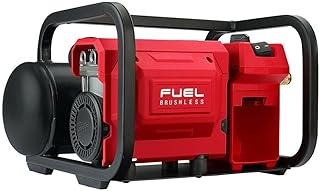
Choosing the best Milwaukee air compressor in Canada requires more than comparing tank size or motor power. The right compressor depends on the tools you intend to operate, how often you will use it, the amount of compressed air required, portability, power availability, noise tolerance, and the type of work you perform.
Milwaukee is particularly well known for cordless jobsite equipment, but its air-compressor lineup should still be evaluated according to the same technical principles used for any compressor. A compact unit can be an excellent choice for inflation, finish nailing, trim work, and occasional fastening, while demanding pneumatic tools may require substantially greater airflow and a different compressor configuration.
This guide is designed for Canadian shoppers comparing Milwaukee air compressors and similar alternatives. Before purchasing, compare the manufacturer's specifications for the exact model, confirm electrical requirements, review current customer feedback, and check the retailer's current price, availability, warranty terms, and return policy.
A useful compressor comparison should focus on real-world performance rather than one headline specification. Tank capacity alone does not tell you whether a compressor can continuously operate a pneumatic tool. Likewise, a high maximum pressure does not automatically mean that a unit produces enough airflow for demanding applications.
One of the most common mistakes when shopping for an air compressor is choosing primarily by tank capacity. A large tank can store more compressed air, but the compressor still needs to replenish that air quickly enough for the application.
CFM, or cubic feet per minute, describes airflow. When comparing compressors, pay attention to the stated CFM at a specified PSI rather than relying on a maximum or ambiguous airflow figure. Tool manufacturers commonly provide recommended air-consumption figures, so compare those requirements with the compressor's published output.
For intermittent applications such as brad nailing or stapling, air consumption can be relatively modest because the tool uses short bursts. Continuous-use equipment, such as some grinders, sanders, spray equipment, and air hammers, can place much greater demands on the compressor.
For this reason, a smaller Milwaukee compressor may be highly practical for one buyer and completely unsuitable for another. Always begin with the pneumatic tools you plan to operate.
PSI and CFM answer different questions. PSI refers to pressure, while CFM concerns the volume of air being delivered.
Suppose a pneumatic tool requires a particular pressure and airflow. A compressor that reaches the required PSI but cannot provide enough CFM may struggle to keep the tool operating at its intended performance level. Conversely, simply selecting a compressor with a very high PSI rating does not guarantee superior performance for every application.
When comparing a Milwaukee compressor with models from brands such as Makita, DEWALT, RIDGID, Metabo HPT, or California Air Tools, compare equivalent measurements at the same pressure whenever possible.
Tank size should be treated as one part of the overall specification rather than the primary buying criterion.
A larger tank can reduce how frequently the motor needs to start during intermittent use. However, it also generally increases the size and weight of the machine. For a mobile construction crew, a compact compressor that can be carried easily may be more useful than a larger stationary unit.
Battery-powered compressors can be particularly attractive on jobsites where access to electrical outlets is limited. Cordless operation can reduce the need for extension cords and make setup faster when moving between locations.
The trade-off is that runtime depends on the battery platform, battery capacity, workload, ambient conditions, and how frequently the compressor cycles. Heavy use can consume battery capacity much faster than occasional inflation or intermittent fastening.
Before choosing a cordless Milwaukee compressor, check whether you already own compatible Milwaukee batteries. If you do, platform compatibility may be an important consideration. If you do not, include the cost and practical requirements of the necessary batteries and charger when comparing the complete setup with corded alternatives.
A corded compressor can make more sense for a workshop, garage, service area, or other location with dependable electrical power. You do not need to manage battery runtime, and the compressor can remain available for longer work sessions.
The disadvantage is reduced mobility. Extension cords may also introduce additional setup requirements and should be selected and used according to the compressor's electrical requirements and applicable safety guidance.
For tire inflation, sports equipment, recreational equipment, and general household inflation, portability and ease of use can be more important than a large tank. A compact compressor may be sufficient when air demand is intermittent.
Finish carpentry often involves short bursts of compressed air. Compressor selection should still account for the nailer's specified operating pressure and air consumption, but portability and quick recovery can be especially useful on a jobsite.
Framing nailers can demand more air during intensive work than small finish nailers. If multiple fasteners are being driven rapidly, pay close attention to compressor recovery and delivered airflow.
Pneumatic staplers often use air intermittently, making compact compressors practical for many applications. Check the exact air requirement of the stapler before choosing a compressor.
Compressed air can be useful for clearing debris from suitable work areas, but blow-off applications can consume considerable air when used continuously. A compressor with adequate airflow and an appropriately sized tank may be preferable for repeated cleaning.
Automotive tools can have substantially different air requirements. An impact wrench may require considerably more airflow during repeated operation than an inflation task. Check both the recommended PSI and air consumption of the exact tool.
Continuous-use pneumatic tools can be demanding. This is where choosing solely by tank size can lead to disappointment. Pay close attention to the manufacturer's CFM requirement and the compressor's delivered-air specification.
Spray equipment can require a steady supply of clean, appropriately regulated compressed air. Compressor selection should account for the spray gun's airflow requirements, duty cycle, moisture management, and the desired finish.
Many portable compressors use oil-free designs because they can reduce maintenance requirements and simplify transportation. Oil-free construction can be particularly convenient for occasional users and mobile applications.
Oil-lubricated compressors can have different operating characteristics and may be preferred for certain workshop environments. They require appropriate maintenance and oil management.
Neither design should automatically be considered superior for every buyer. The best choice depends on intended use, maintenance preferences, noise requirements, portability, and the manufacturer's specifications.
Noise can be an overlooked factor when buying an air compressor. A compressor used occasionally outdoors may have different requirements from one operating regularly in a garage, workshop, basement, or occupied building.
Where noise is important, compare the manufacturer's published sound information when available. Do not assume that a compact compressor is automatically quiet. Motor design, operating speed, enclosure construction, and workload can all influence perceived noise.
A compressor's listed weight does not tell the entire portability story. Handle placement, wheel configuration, footprint, balance, and hose storage can make a meaningful difference when carrying equipment around a jobsite.
Canadian buyers should confirm the electrical requirements of any corded compressor before purchase. Check the manufacturer's specifications for voltage, amperage, plug configuration, and recommended electrical setup.
Do not assume that every compressor can be used safely with any extension cord or household outlet. Follow the manufacturer's electrical instructions and applicable Canadian electrical safety requirements. If you are unsure about the installation or electrical supply, consult a qualified professional.
Canadian working conditions can vary considerably. Compressors used in colder environments may require additional attention to starting conditions, lubrication, condensation, storage, and manufacturer operating-temperature guidance.
Moisture is another important consideration. As compressed air cools, water can condense inside the system and tank. Regularly draining the tank according to the manufacturer's instructions can help manage accumulated moisture.
When storing equipment during freezing conditions, follow the manufacturer's recommendations. Avoid exposing components to conditions outside their specified operating or storage limits.
Compressed-air equipment should always be treated as pressurized machinery. Read the owner's manual before operating a new compressor and follow all safety warnings.
Maximum PSI is easy to compare, but it does not tell you how much air the compressor can continuously deliver. Always evaluate PSI together with CFM and the tool's requirements.
A larger tank does not automatically make a compressor more powerful. It provides additional stored air. Compressor output remains essential for sustained applications.
Compressors are not necessarily designed to run continuously. Check the manufacturer's duty-cycle information and match the machine to your workload.
A compressor that looks excellent on paper may become inconvenient if it is too heavy or awkward to transport. Think about how frequently you will move it.
With cordless models, evaluate the complete system rather than the bare tool alone. Battery and charger requirements can affect the overall purchase decision.
Some applications require cleaner or drier air than others. Spray finishing and certain specialty tools may require additional filtration or moisture-control equipment.
Milwaukee should be compared with other established power-tool manufacturers rather than evaluated in isolation. Depending on your application, brands such as Makita, DEWALT, RIDGID, Metabo HPT, Bostitch, Campbell Hausfeld, and California Air Tools may offer configurations worth considering.
The comparison should focus on specifications and application fit instead of brand reputation alone. Look at airflow at the relevant pressure, tank size, power source, portability, noise, maintenance requirements, included accessories, and the compatibility of the compressor with your existing tool ecosystem.
For buyers already invested in a cordless tool platform, battery compatibility can be a major factor. Compare the exact compressor specifications and the batteries required rather than assuming one brand is automatically better.
Makita has a broad range of professional power tools and cordless equipment. Buyers should compare compressor dimensions, output, battery requirements, portability, and intended applications on a model-by-model basis.
California Air Tools is known for compressors designed around workshop and low-noise considerations. For a buyer prioritizing quiet operation or stationary workshop use, this type of product can be worth comparing with a portable Milwaukee option.
If you are deciding between two models, use a consistent comparison process.
Not every premium feature is valuable to every buyer. Spend more when a feature directly solves a problem you regularly encounter.
Buyers can also overspend by purchasing specifications they will never use. If your primary applications are occasional inflation and intermittent fastening, a very large tank or high-output workshop compressor may add unnecessary weight and cost.
Similarly, if the compressor will remain in one workshop, extreme portability may not be as important as low noise, convenient controls, and suitable airflow.
Customer reviews can provide useful information, but they should be interpreted carefully. Look for patterns rather than relying on one unusually positive or negative comment.
Always distinguish between a complaint caused by an unsuitable application and a genuine product issue. A small compressor struggling with a high-CFM pneumatic grinder does not necessarily indicate a defective compressor.
Correct setup can have a significant effect on pneumatic-tool performance.
Air leaks are particularly easy to overlook. A leaking fitting can cause the compressor to cycle more often, reducing efficiency and potentially increasing wear.
Prioritize simplicity, portability, storage requirements, and enough airflow for your actual projects. If your primary needs involve inflation and occasional fastening, avoid paying for capacity you are unlikely to use.
Consider the requirements of nailers, staplers, blow-off tools, and any other pneumatic equipment you use. Portability and noise can be important in a home workshop.
Recovery performance, durability, portability, battery compatibility, and jobsite practicality become more important when the compressor is used regularly. Compare the complete system rather than the compressor alone.
Automotive applications can vary from simple inflation to impact tools, ratchets, blow guns, and grinders. Determine the highest air demand in your tool collection before selecting a compressor.
Workshop buyers can often prioritize airflow, tank capacity, noise, duty cycle, and maintenance over extreme portability. A stationary compressor may be more practical if mobility is rarely required.
The best Milwaukee air compressor depends on the intended application. A compact cordless model may be preferable for mobile fastening and inflation, while a higher-output compressor may be more appropriate for demanding pneumatic tools. Compare CFM, PSI, tank capacity, power source, and portability against your specific requirements.
A cordless compressor can be worthwhile when mobility and quick setup are priorities. It can be especially convenient where electrical power is unavailable or where extension cords would interfere with the work. Battery requirements and expected runtime should be considered before purchase.
There is no single CFM requirement for every application. Check the pneumatic tool manufacturer's specification and select a compressor capable of delivering the required airflow at the relevant pressure. Continuous-use tools generally require more careful compressor matching than intermittent tools.
No. A larger compressor can provide more capacity, but it may also be heavier, less portable, noisier, or more expensive. The best compressor is one that provides sufficient performance for the intended work without unnecessary capacity.
Yes, but it should be evaluated alongside airflow. Tank capacity determines how much compressed air can be stored, while compressor output determines how quickly that supply can be replenished.
It depends on the specific impact wrench and compressor. Check the impact wrench's required airflow and pressure and compare those figures with the compressor's delivered-air specifications. Intermittent use may be possible with some combinations, while intensive use can require substantially more airflow.
Use the compressor only within the operating conditions specified by its manufacturer. Cold temperatures can affect starting, lubrication, condensation, battery performance, and other components. Follow the product's operating and storage instructions.
Follow the manufacturer's maintenance schedule. Many compressors require accumulated moisture to be drained regularly because compressed air can produce condensation inside the tank. The exact procedure and frequency depend on the compressor and operating conditions.
Compare airflow, pressure, tank capacity, power source, portability, duty cycle, noise, maintenance requirements, included accessories, battery compatibility, warranty terms, and verified customer feedback. The cheapest compressor may not be the most economical choice if it cannot operate your tools effectively.
Suitability depends on the exact compressor and professional application. Contractors should compare the model's specifications with their actual workload, pneumatic tools, operating environment, and expected duty cycle rather than relying on the brand name alone.
The best Milwaukee air compressor in Canada is not necessarily the largest, most powerful, or most expensive model. The strongest choice is the one that matches your pneumatic tools, workload, workspace, mobility requirements, and power source.
Start with your highest-demand tool. Determine its required PSI and CFM. Then compare compressors based on delivered airflow, tank capacity, recovery, duty cycle, portability, noise, and maintenance. If you are already using Milwaukee cordless tools, battery-platform compatibility can further simplify the decision.
Before buying, verify the exact model specifications because configurations, included accessories, prices, availability, and retailer terms can change. Compare current Canadian listings and recent verified customer reviews, then select the compressor that provides the right balance of performance, portability, reliability, and overall value for your work.