

Explore cordless power tools, kits, batteries, chargers, accessories and related equipment available to Canadian shoppers. Compare product options and follow useful buying guides before you buy.


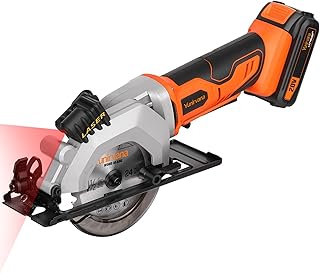


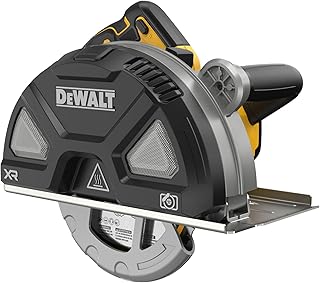


A cordless metal cutting saw can be an excellent choice when you need clean, repeatable cuts without managing an extension cord around a fabrication area, jobsite, garage, renovation project or outdoor work area. The best choice is not necessarily the saw with the highest advertised speed or the largest battery. Cutting capacity, blade compatibility, motor performance, ergonomics, battery platform, safety features and the type of metal being cut all have a direct effect on whether a particular model is suitable for your work.
For Canadian buyers, it is also worth considering the availability of compatible batteries, chargers and replacement blades, particularly if you already own cordless tools from a major platform. A bare-tool saw may look less expensive than a kit, but the overall cost can be substantially different if you still need to purchase batteries and a charger.
Metal cutting saws are designed around particular cutting applications. Before comparing models, identify the materials you expect to cut most frequently. Mild steel tubing, angle iron, sheet metal, threaded rod, stainless steel, aluminum and other non-ferrous metals can place different demands on the blade and motor.
The blade is one of the most important components of a metal-cutting saw. A powerful cordless motor cannot compensate for an unsuitable blade. Check the permitted blade diameter, arbor size, maximum rated RPM and the materials for which the blade is designed before purchasing replacement blades.
Some saws are designed around abrasive wheels, while others are intended for toothed carbide-tipped blades. These approaches can produce very different cutting characteristics. Abrasive wheels can be useful for certain demanding metal-cutting applications, whereas carbide-tipped metal-cutting blades can provide a different cutting experience with appropriate materials and operating conditions.
Never assume that a blade marketed for one type of metal is appropriate for every metal. Follow the saw manufacturer's instructions and the blade manufacturer's material and speed specifications.
Blade diameter affects the maximum cutting depth and the overall size of the saw. A larger blade can provide greater cutting capacity, but it can also increase tool size and weight. When comparing cordless metal cutting saws, look beyond diameter alone and check the manufacturer's stated cutting capacities for the actual profiles you plan to cut.
Cutting capacity is more useful than blade diameter when deciding whether a saw can handle a particular project. Manufacturers may specify capacities for different shapes and materials, such as round stock, rectangular tubing, square tubing or angle sections.
Do not treat one published capacity figure as universal. The maximum capacity can vary according to material, blade type, orientation and application. If your regular work involves large tubing, compare the exact dimensions against the manufacturer's specifications before buying.
No-load speed describes how quickly the blade or wheel rotates without cutting a workpiece. It can help with comparisons, but it should not be treated as a standalone measure of cutting performance. The appropriate operating speed depends on the blade, material and tool design.
For metal cutting, the interaction between motor control, blade design and load handling is often more meaningful than simply choosing the model with the highest RPM figure.
Modern cordless saws can provide substantial cutting performance, but motor specifications are not always directly comparable between brands. Brushless motors are common in higher-end cordless tools and can offer efficiency, durability and electronic control advantages, although the exact performance depends on the complete tool system.
When evaluating motor performance, consider whether the saw is intended for occasional fabrication work or repeated professional cutting. A tool that is comfortable for short jobs may not be the best fit for long production sessions.
Battery voltage is only one part of the equation. A high-capacity battery can provide more runtime, but it can also add weight. Smaller batteries may make a compact saw easier to handle, while larger packs can be advantageous when making numerous cuts away from a charger.
If you already use a cordless platform such as DEWALT, Milwaukee, Makita, Bosch, RIDGID or another established system, platform compatibility may be one of the most important purchasing factors. A bare tool can make sense when you already have suitable batteries and chargers, provided the battery platform is compatible with the specific saw.
Runtime varies substantially according to the material, blade condition, cutting technique, battery capacity and number of cuts. Manufacturers' runtime claims should therefore be treated as application-dependent rather than as a guaranteed number of cuts for every job.
For heavy cutting, having two compatible battery packs can be more useful than relying on a single oversized battery. One battery can be charging while the other is in use, assuming your charger and work setup allow this workflow.
Brushless motors are widely used in modern cordless power tools. They eliminate conventional motor brushes and can work efficiently with electronic controls. For users who regularly cut metal, a brushless model may be attractive because of its combination of motor design, power management and compatibility with advanced cordless platforms.
However, brushless does not automatically mean that one saw will outperform every brushed model in every application. Compare cutting capacity, blade system, ergonomics and manufacturer specifications as a complete package.
Brushed cordless tools can still be practical for lighter or occasional use. They may be worth considering when initial tool cost is a priority and the saw will not be subjected to demanding daily workloads.
Abrasive wheels remove material through abrasion and can be suitable for certain metal-cutting applications. They can generate considerable heat, sparks and debris, so the work area and personal protective equipment need to be appropriate for the operation.
Carbide-tipped blades use cutting teeth rather than relying primarily on abrasive action. They are available in designs intended for specific metals and applications. When used within the manufacturer's specified limits, they can provide controlled cuts and may be particularly attractive for repetitive fabrication work.
Tooth configuration affects how a blade interacts with the workpiece. A blade intended for thick structural steel is not necessarily the ideal choice for thin material or non-ferrous metals. Always select the blade based on the material, thickness and saw manufacturer's compatibility requirements.
A properly functioning blade guard is essential. Inspect the guard regularly and make sure it moves as designed. Do not operate a saw with a damaged, modified or improperly functioning guard.
Depending on the model, cordless saws may include trigger-lock mechanisms, electronic braking, overload protection, variable-speed controls or other electronic safety and performance features. These can improve control, but they do not replace proper workholding and safe operating practices.
An electric brake can help bring a rotating blade to a stop after the trigger is released. The stopping behaviour varies by tool and operating conditions. It is a useful convenience and control feature, particularly when making repeated cuts.
Metal cutting can create hot particles, sharp chips and significant debris. Consider the direction in which sparks and particles are discharged when positioning the workpiece. Remove flammable materials from the immediate area and follow the manufacturer's recommendations for protective equipment and operating conditions.
Weight becomes increasingly important during repetitive cutting. A heavier saw may feel stable during a single cut but become tiring during extended use. Battery weight should be included when assessing the actual working weight of a cordless tool.
A comfortable primary handle and appropriately positioned auxiliary grip can improve control. Look for a grip arrangement that allows you to maintain a stable stance while keeping your hands away from the cutting path.
Two saws with similar weights can feel very different because of motor, battery and blade placement. If possible, consider how the battery location affects balance. A rear-heavy or front-heavy design may influence comfort during repetitive work.
Metal cutting is different from cutting wood. The primary concern is not simply dust extraction. Depending on the cutting system, the operation can generate sparks, hot chips, sharp fragments and substantial heat.
Keep the work area clear, use appropriate eye and face protection, wear suitable hearing protection and follow the manufacturer's instructions. Gloves may be appropriate for handling certain workpieces, but they should never interfere with safe control of the saw or place material near moving components.
Allow hot material and cutoffs to cool before handling them. Remember that a freshly cut metal edge can be extremely sharp even when the workpiece itself does not appear dangerous.
A cordless metal cutting saw should not be expected to compensate for an unstable workpiece. Secure the material using an appropriate vise, clamp or other approved workholding method whenever required by the tool's instructions.
A loose piece of tubing or angle iron can move as the blade exits the cut. That movement can compromise cut quality and increase the risk of kickback, blade damage or loss of control. Proper support also reduces vibration and makes it easier to produce square, repeatable cuts.
Long pieces of metal need appropriate support on both sides of the cutting area when necessary. Unsupported stock can shift or sag, changing the loading on the blade. For repetitive fabrication, a dedicated workbench, fabrication table or suitable support system can significantly improve consistency.
A cordless handheld metal cutting saw is primarily about mobility. It can be useful when the material cannot conveniently be brought to a stationary machine or when working at different locations.
Stationary equipment may be preferable for high-volume cutting where repeatability, dedicated workholding and production speed are more important than portability. A buyer should therefore determine whether cordless portability solves a genuine workflow problem rather than assuming that a cordless model is automatically the better option.
Battery-platform compatibility can influence the long-term value of a cordless metal cutting saw. If you already have several tools from DEWALT, Milwaukee, Makita, Bosch, RIDGID or another established ecosystem, staying within that platform may allow you to share batteries and chargers.
Before purchasing a bare tool, verify the exact battery family rather than relying on the brand name alone. Different voltage classes and generations are not necessarily interchangeable.
Also consider the availability of replacement batteries several years from now. A cordless tool can remain mechanically useful long after its original battery has reached the end of its service life, so battery ecosystem longevity matters when evaluating the total ownership proposition.
A bare tool can be a logical choice for buyers who already own compatible batteries and chargers. It generally avoids paying for duplicate charging equipment and additional battery packs.
A kit can make more sense when entering a new battery platform. Compare the included battery capacity, charger type and number of batteries rather than judging the kit only by its headline price.
For heavy metal cutting, a kit containing a suitable high-capacity battery may provide a more practical starting point than a package with a smaller battery intended primarily for lighter cordless tools.
A high no-load speed does not automatically make a saw the best metal cutter. Blade design, motor control, cutting capacity and material compatibility all matter.
A saw can become inconvenient if compatible replacement blades are difficult to obtain. Before committing to a model, identify the blade size, arbor configuration and types of replacement blades that the manufacturer permits.
Comparing the price of a bare tool with the price of a complete kit can produce a misleading result. Include the cost of the batteries and charger you actually need.
A professional-grade saw can be unnecessary for occasional light fabrication. Excess weight and size can make a tool less convenient for short jobs.
The opposite mistake is purchasing a compact saw and discovering that the regular workpieces exceed its specified cutting capacity. Measure your typical material before selecting the tool.
Do not select a blade simply because its diameter fits. Verify its intended material, maximum RPM, arbor requirements and compatibility with the saw.
A cordless saw may be portable, but the cutting environment still needs adequate clearance, stable workholding and appropriate protection from sparks, chips and hot material.
When comparing models, use the same criteria for every saw instead of focusing on isolated marketing specifications.
If your work includes frames, brackets, railings or fabrication assemblies, adjustable cutting angles can be important. A saw that provides an appropriate miter or angle adjustment can reduce the need to reposition the workpiece for every angled cut.
Check the actual adjustment range and how the mechanism is locked. A readable scale is helpful, but secure clamping is equally important because movement during cutting can affect both accuracy and safety.
For fabrication work, cutting speed is only one measure of usefulness. The ability to make square, repeatable cuts can be more important when pieces need to fit together.
Cut quality is affected by blade selection, material support, cutting technique, blade condition and the rigidity of the saw. A worn blade can change the way the tool tracks through material and can increase the effort required to complete a cut.
Secure the workpiece firmly and use the saw's guide or base as intended. Avoid forcing the tool through the material. Let the appropriate blade and motor system do the cutting at the rate recommended by the manufacturer.
A consistent setup is usually more valuable than simply choosing the fastest saw. Use repeatable workpiece positioning and adequate material support. For larger batches, a dedicated fabrication setup may provide greater consistency than repeatedly measuring each piece by hand.
Check the blade before use for damage, excessive wear or other conditions identified in the manufacturer's instructions. Replace blades that no longer meet the required condition.
Metal chips can accumulate around moving and ventilation areas. Clean the saw according to the manufacturer's maintenance instructions and avoid allowing debris to interfere with guards, switches or ventilation openings.
Periodically inspect accessible fasteners, guards and adjustment mechanisms. A loose guide or poorly secured component can affect cutting accuracy and tool control.
Use and store lithium-ion batteries according to the manufacturer's instructions. Avoid exposing batteries to conditions outside their specified operating and storage ranges, and inspect packs for damage before use.
Start with a fully charged, compatible battery and an appropriate blade in good condition. Mark the cut clearly, secure the material, establish a stable stance and position the saw according to the manufacturer's instructions.
Allow the blade to reach its intended operating condition before beginning the cut where applicable, and maintain controlled pressure throughout the operation. Excessive force can increase heat, reduce blade life and make the tool harder to control.
After completing the cut, be aware that both the workpiece and blade can remain hot. Handle cut material carefully and inspect the resulting edge before further fabrication.
Occasional users may prioritize affordability, compact size, simple controls and compatibility with batteries they already own. If metal cutting is an infrequent task, a smaller cordless saw may provide enough capability without the additional weight of a heavy-duty professional model.
Contractors often need a balance of portability, runtime, durability and rapid setup. Battery compatibility can be particularly valuable when a jobsite already uses a common cordless platform.
Frequent fabrication places greater emphasis on cutting capacity, repeatability, blade cost, thermal management, ergonomics and long-term tool support. In high-volume applications, the most portable saw is not necessarily the most productive solution.
Canadian buyers will encounter several established cordless platforms when researching metal-cutting saws. DEWALT, Milwaukee, Makita, Bosch and RIDGID are among the brands commonly associated with professional and serious DIY cordless equipment. The right platform depends on the tools, batteries, chargers and accessories already present in your workshop.
Do not choose a platform solely because it has the largest selection of tools. Compare the specific metal-cutting saw, battery technology, blade compatibility, ergonomics and Canadian support terms that matter for your application.
Customer reviews can provide useful information about day-to-day ownership, but they should not replace technical specifications. Look for recurring comments about battery life, balance, blade changes, trigger operation, cutting performance and durability rather than relying on a single enthusiastic or negative review.
Pay particular attention to reviews from users performing work similar to yours. A homeowner making a few cuts of thin tubing has a very different definition of adequate performance from a professional fabricator making dozens or hundreds of cuts.
Also distinguish comments about the tool from comments about packaging, shipping or an individual seller. Those issues may not accurately represent the underlying saw.
There is no single best model for every Canadian buyer. The right choice depends on the metal and dimensions you cut, required capacity, preferred blade type, battery platform, workload, portability and budget. Compare the exact specifications of the models on your shortlist rather than selecting solely by brand or advertised power.
Many purpose-designed cordless metal-cutting saws are intended for steel applications. However, suitability depends on the particular model, blade, material thickness and manufacturer's specifications. Always confirm that the exact saw and blade combination is rated for the steel you intend to cut.
A brushless motor can offer advantages in efficiency, electronic control and motor design, making brushless models attractive for demanding cordless applications. It should still be evaluated alongside cutting capacity, battery system, blade compatibility and ergonomics.
The best battery size depends on the workload. Larger batteries can provide greater energy capacity but add weight. For occasional work, a smaller compatible pack may be easier to handle. For repeated cutting, a higher-capacity pack or multiple batteries may be more practical.
No. Physical fit is not enough. The blade must meet the saw's diameter, arbor, RPM and material-compatibility requirements. Follow both the saw manufacturer's and blade manufacturer's specifications.
Some models and blades are suitable for stainless steel, but not every metal-cutting saw or blade is designed for it. Stainless steel can behave differently from mild steel, so verify the specific manufacturer's recommendations before cutting.
Some saws can be used for aluminum when paired with an appropriate blade. Aluminum is a non-ferrous metal, so use a blade specifically designed and approved for the application rather than assuming a steel-cutting blade is suitable.
No. A larger blade can increase cutting capacity, but it can also increase tool size and weight. Choose the blade and saw size according to the dimensions of the material you actually need to cut.
If you already own compatible batteries and a charger, a bare tool may be the more practical option. If you are entering a new battery platform, compare the complete kit contents and total cost with buying the components separately.
It can be extremely important for cordless-tool users. Sharing batteries across compatible tools can reduce the number of chargers and battery families in your workshop. Verify exact compatibility because battery platforms and voltage classes are not universally interchangeable.
There is no universal replacement interval. Blade life depends on the material, thickness, blade design, cutting volume and technique. Replace the blade when it becomes damaged or worn beyond the manufacturer's acceptable condition.
Sometimes, but not in every workflow. A handheld cordless saw offers mobility and flexibility, while a stationary chop saw can provide a more dedicated setup for repetitive cutting. Your material size, production volume and workspace should determine which configuration is appropriate.
The best cordless metal cutting saw for a Canadian buyer in 2026 is the model that matches the material, cutting capacity, workload and cordless ecosystem you actually use. A compact saw can be the smarter choice for occasional fabrication and installation work, while a heavier-duty model may be justified for frequent steel cutting and demanding professional applications.
Before making a purchase, compare the complete specification rather than focusing on one headline feature. Blade compatibility, cutting capacity, battery requirements, ergonomics, safety provisions and long-term availability of consumables can have a greater effect on ownership than a small difference in advertised speed or power. Check current Canadian product specifications, compare today's pricing from trusted retailers and read verified customer feedback before choosing the model that best fits your work.