

Explore cordless power tools, kits, batteries, chargers, accessories and related equipment available to Canadian shoppers. Compare product options and follow useful buying guides before you buy.


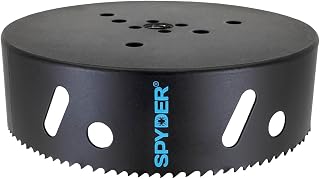
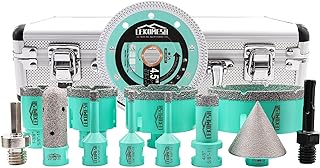


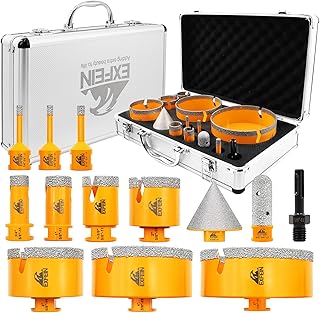


Choosing the best hole saw in Canada depends on more than the number of pieces in a kit. The right option should match the material you plan to cut, the diameter of the holes you need, the drill or driver you already own, and the frequency of use. A homeowner making occasional holes in wood has different requirements from an electrician cutting openings for cable installations or a plumber working through cabinets and building materials.
A good hole saw should cut cleanly, maintain its shape, work securely with a compatible arbor, and provide a practical service life for the materials involved. Tooth design, cutting material, pilot-bit quality, body construction, and size range all influence performance. For Canadian buyers, it is also useful to consider metric and imperial sizing, since both measurement systems appear commonly in tools and building products.
This guide focuses on the factors that matter when comparing hole saws in Canada in 2026. Product specifications, compatibility, construction, intended materials, and user requirements should be checked before purchasing because individual kits can differ considerably.
A hole saw is a cylindrical cutting attachment designed to produce circular openings. Unlike a standard drill bit, which removes material across the entire diameter of a hole, a hole saw cuts around the perimeter and leaves a central plug. This design makes it practical for creating relatively large openings without removing as much material as a conventional solid drill bit would.
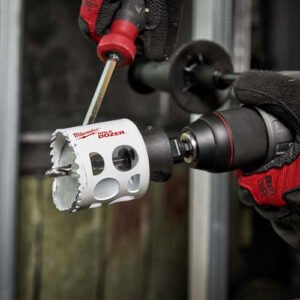
Most hole saw assemblies include a cylindrical saw body, an arbor, and a pilot drill bit. The arbor connects the cutting attachment to a drill or compatible power tool. The pilot bit helps position the cutter and keeps the hole saw aligned as the cut begins.
Different hole saw designs are intended for different materials. Some are optimized for wood and plastic, while others are designed for metal. Multi-material products may be useful for general-purpose work, but the manufacturer's stated application should always be checked before cutting unfamiliar materials.
The construction of the cutting edge is one of the most important factors. Common options include carbon steel, bi-metal, carbide-tipped designs, and specialist cutting configurations.
Carbon steel hole saws can be suitable for softer materials and occasional applications. Bi-metal designs generally provide a more versatile option for users who work with several common materials. Carbide-tipped hole saws can be appropriate for harder or abrasive materials when the specific product is designed for that application.
Do not assume that a premium-looking cutting material is automatically better for every job. A cutter designed for metal may not be the best choice for wood, and a wood-focused cutter may be unsuitable for steel.
Consider the actual hole sizes required before choosing a kit. A large assortment can look attractive, but unused sizes add cost and storage requirements without improving your work.
Common applications include openings for pipes, electrical components, plumbing fittings, recessed fixtures, cable routing, and hardware. Measure the required opening carefully rather than selecting a hole saw based only on the approximate size of the object passing through it.
When comparing Canadian listings, pay attention to whether measurements are given in inches or millimetres. A small difference in diameter can matter when a component must fit accurately.
The arrangement and shape of the teeth influence how efficiently a hole saw removes material. Different tooth patterns are engineered for different cutting conditions.
Fine teeth can be useful when a cleaner cut and controlled material removal are important. More aggressive tooth configurations can help with faster cutting in suitable materials. For metal applications, tooth geometry and spacing are particularly important because excessive heat and friction can shorten cutter life.
A hole saw is only useful if its arbor is compatible with the cutter and your power tool. Some kits use interchangeable arbors that accept several hole saw sizes, while others use dedicated combinations.
Check the arbor connection, thread system, pilot-bit arrangement, and drill chuck compatibility before purchasing. A kit containing many hole saws may still be inconvenient if the arbor does not suit your existing equipment.
The pilot drill bit starts the hole and helps stabilize the cutter. A worn, bent, or unsuitable pilot bit can make an otherwise capable hole saw difficult to control.
For frequent users, replaceable pilot bits can be a useful feature. They allow the cutting assembly to remain useful when the central drill becomes worn. Check whether replacement bits are readily compatible with the arbor before choosing a system.
Bi-metal hole saws are popular because their construction can provide a useful balance between cutting ability, durability, and versatility. They are often considered for applications involving wood, plastic, and suitable light-gauge metals, depending on the manufacturer's specifications.
The benefit of a bi-metal design is not simply the material name. Tooth geometry, manufacturing quality, backing construction, and heat management also affect real-world usefulness. When comparing products, look at the complete specification rather than choosing solely because a listing contains the phrase “bi-metal.”
Brands such as Milwaukee, DEWALT, Bosch, Lenox, and Makita offer hole saw systems across different tool categories. Availability and individual product specifications can vary, so verify the exact model and intended application before buying.
Carbide-tipped hole saws are designed for applications where conventional high-speed steel or general-purpose cutters may not be the ideal solution. They can be useful for selected hard, abrasive, or demanding materials when the product is specifically rated for them.
However, carbide construction does not mean that a cutter should be used on every hard material. Some applications require specialist cutting tools, appropriate speeds, lubrication, or different equipment altogether. Always follow the manufacturer's material compatibility and operating instructions.
Woodworking often requires clean circular openings for plumbing, wiring, ventilation, hardware, and furniture projects. A hole saw designed for wood should provide controlled cutting while clearing chips effectively.
For timber, plywood, MDF, and similar sheet materials, consider the tooth configuration, cutting depth, and size range. A deep hole saw can be useful for thicker stock, but a deeper body does not automatically mean better performance.
When appearance matters, cutting technique is just as important as the tool. Excessive pressure can increase the chance of splintering or producing an uneven opening. Supporting the workpiece and using a suitable speed can help produce a more controlled result.
Metal cutting places greater demands on a hole saw. Heat generation, tooth wear, friction, and chip removal all become important considerations.
For metalwork, select a product specifically rated for the type and thickness of metal being cut. Bi-metal hole saws can be suitable for various metal applications, while specialist carbide products may be intended for particular harder materials.
Cutting speed should follow the manufacturer's guidance. Using excessive speed can create unnecessary heat and accelerate tooth wear. Depending on the material and product instructions, cutting lubricant may also be appropriate.
Plastic can appear easy to cut, but an unsuitable hole saw can generate heat, melt the material, or produce a rough opening. The appropriate cutter depends on the type and thickness of plastic.
When cutting plastic panels or fittings, a sharp cutter and controlled feed are important. Avoid forcing the saw through the material. If the plastic becomes excessively hot, reassess the selected tool, speed, and cutting technique.
Cutting depth is often overlooked during product comparisons. A hole saw must be deep enough for the material being cut, particularly when working with thick timber, stacked boards, doors, worktops, or other substantial materials.
Some hole saw bodies are relatively shallow and are intended for sheet materials. Others offer greater cutting depth. Before purchasing, compare the stated cutting depth with the thickness of the material you expect to encounter.
Buying a single cutter makes sense when you repeatedly need one specific diameter. It avoids paying for sizes that may never be used.
A complete kit is more practical when your projects require several diameters. Electricians, plumbers, installers, maintenance workers, and serious DIY users may benefit from having several sizes available.
When comparing kits, do not count pieces without checking what those pieces actually are. A kit may include multiple arbors, pilot bits, storage components, or adapters alongside the hole saws. Compare the usable cutting sizes rather than relying only on the advertised piece count.
Canadian buyers may encounter both imperial and metric measurements. Hole saw diameters are frequently listed in inches, while many construction components and technical specifications use millimetres.
Before ordering, confirm the exact diameter required and determine whether the product provides the measurement system you need. If a fitting requires a particular opening size, do not rely on a nominal description alone.
A kit with a broad size selection can reduce the need for separate purchases, but only when its included dimensions match your applications.
The arbor is the connection between the hole saw and drill. Its design can affect setup time, compatibility, and convenience.
Always confirm compatibility with your drill or driver. A cordless drill with a standard chuck may have different requirements from a dedicated installation tool.
A cordless drill can be a convenient choice for many hole saw applications, particularly when working away from a mains power source. The suitability of the drill depends on the hole saw diameter, material, cutting conditions, and the drill's capabilities.
Larger cutters place greater demands on the drill. High torque can be more important than simply having a high maximum speed. Some cordless drills also offer adjustable speed settings and clutch controls that can improve control during setup and light-duty work.
Check the drill manufacturer's recommendations and the hole saw manufacturer's requirements before using a large cutter. Do not assume that every cordless drill is appropriate for every hole saw diameter.
Corded drills can provide consistent access to mains power, which can be useful during longer projects. They may be suitable for repeated hole cutting when portability is less important.
Regardless of the power source, the correct speed, arbor compatibility, cutter specification, and material rating remain essential. A more powerful drill cannot compensate for an incorrectly selected hole saw.
The least expensive kit is not necessarily the most economical option. If the cutter wears quickly or the included sizes do not match your projects, the initial saving may provide little practical value.
A large kit can be useful, but excessive variety can increase cost and storage requirements. Identify your most common hole diameters before comparing larger assortments.
Never select a cutter solely because its diameter is correct. Verify whether it is intended for wood, metal, plastic, composite materials, or another application.
A hole saw that cannot pass through the material is unsuitable regardless of tooth quality. Check the stated cutting depth before buying.
A hole saw kit may contain the correct cutter but still be inconvenient if the arbor is incompatible with your drill or does not support the included sizes as expected.
Two kits with the same number of pieces can differ substantially in tooth design, body construction, arbor quality, pilot bits, storage, and intended materials. Compare specifications rather than piece count alone.
Brand recognition can help narrow the search, but the exact model matters more than the logo on the package. Milwaukee, DEWALT, Bosch, Lenox, and Makita are established names commonly associated with power-tool accessories and cutting systems.
When comparing brands, evaluate the specific product's construction, diameter range, material compatibility, arbor system, replacement parts, cutting depth, and manufacturer instructions. A professional-oriented product may offer features that are unnecessary for occasional DIY work, while a basic kit may not provide enough durability for frequent trade use.
Not every premium feature provides value for every project. A professional quick-change system may be unnecessary for someone making two or three holes during a home renovation. Likewise, an extensive assortment may be excessive when one diameter is used repeatedly.
Consider how frequently you will use the tool, what materials you cut, and how important speed and convenience are. The best purchase is the one that fits the actual workload rather than the one with the longest feature list.
Proper maintenance can help preserve cutting performance. After use, remove accumulated debris and inspect the teeth for damage. Metal-cutting applications deserve particular attention because heat and chips can affect the cutter and arbor.
Store hole saws where the teeth will not strike other tools. A dedicated case can make it easier to locate individual diameters and reduce accidental damage. Keep pilot bits and compatible arbors together with their corresponding systems.
If a cutter becomes visibly damaged, excessively worn, or unsuitable for the intended application, replace it rather than attempting to force it through difficult material.
Begin with the correct cutter for the material and confirm that the arbor is securely installed. Mark the hole location accurately and keep the drill aligned with the surface.
Allow the tool to perform the cutting instead of applying excessive force. Excessive pressure can increase heat, reduce control, and accelerate wear. For materials where splintering is a concern, supporting the workpiece and using an appropriate cutting approach can improve the finished opening.
For metal, follow the manufacturer's recommended speed and lubrication guidance. For wood, pay attention to chip clearance and avoid allowing the cutter to become packed with debris.
Hole saws remove material quickly and can generate substantial torque, particularly at larger diameters. Secure the workpiece before cutting and maintain a stable grip on the drill.
For general DIY work, versatility is often more valuable than specialized cutting performance. A reasonably sized kit with commonly used diameters can handle many projects involving wood, plastic, and other compatible materials.
Prioritize easy arbor setup, useful sizes, dependable pilot-bit alignment, and clear compatibility information. If your projects are limited to timber or drywall-type applications, there may be little reason to pay for a specialized metal-cutting system.
Electricians frequently need accurately positioned openings for cable routing, electrical boxes, fittings, and installation work. A useful kit should offer the diameters commonly required for the installations being performed.
Fast accessory changes can be valuable when several hole sizes are needed during one job. Durability also becomes more important with frequent use, so compare tooth construction, arbor design, replacement pilot bits, and manufacturer specifications.
Plumbing work can involve wood, composite panels, plastic, and other building materials. The correct cutter depends on the specific material and fitting being installed.
Measure the required opening carefully. A hole that is too small can prevent installation, while an unnecessarily large opening can reduce support around a fitting. A kit with a practical selection of diameters can be especially useful for varied installation work.
Professionals should place greater emphasis on repeatability, durability, accessory compatibility, replacement components, and productivity. A cutter used frequently needs to maintain useful performance across repeated jobs.
Consider whether the manufacturer's product range provides replacement pilot bits, additional diameters, compatible arbors, and other accessories. A coherent system can be more convenient than mixing unrelated cutters and arbor types.
Start with the component that needs to pass through the opening. Measure its required clearance and compare that dimension with the hole saw specifications. For installations where a precise fit is important, follow the component manufacturer's recommended opening size rather than estimating.
For cable and pipe penetrations, consider whether additional clearance, protective fittings, or movement requirements apply. The correct hole diameter is determined by the application, not simply by the apparent size of the object.
A spade bit removes material across the full diameter of the hole and is commonly used for relatively fast drilling in wood. A hole saw cuts around the circumference and can create substantially larger openings while leaving a central plug.
Choose a spade bit when its cutting characteristics suit the required hole. Choose a hole saw when a larger circular opening, cleaner perimeter, or specific diameter is needed.
Forstner bits are particularly useful when woodworking requires controlled, flat-bottomed holes or clean openings. Hole saws are better suited to applications where a larger through-hole is needed and the central plug is not a problem.
The two tools solve different problems. Choosing between them should be based on the required hole geometry, diameter, depth, and material.
Step drill bits are designed to create and enlarge holes through progressively larger diameters, especially in suitable thin sheet materials. Hole saws are better suited when a particular larger circular opening must be produced efficiently.
For sheet metal and installation work, compare the thickness limits and material ratings of both options before choosing.
Durability is influenced by cutting material, tooth design, body construction, heat management, operating technique, and the materials being cut. Even a high-quality cutter can wear prematurely if it is used outside its intended application.
For frequent use, look for a system with replacement components and clear technical guidance. The ability to replace a worn pilot bit can be more useful than purchasing an entirely new assembly.
There is no universal replacement interval because service life depends on material, hole diameter, cutting speed, pressure, frequency of use, and maintenance.
Replace a cutter when the teeth are excessively worn or damaged, cutting performance has deteriorated significantly, or the product is no longer suitable for the required material. Do not continue using visibly damaged accessories simply because they can still rotate.
Customer reviews can provide useful information, but they should not be treated as a substitute for technical specifications. Look for repeated comments concerning tooth durability, arbor fit, cutting performance, pilot-bit quality, and suitability for the materials you intend to cut.
Pay attention to reviews describing the actual application. A homeowner cutting occasional holes in softwood has a different use case from a professional repeatedly cutting metal. Review context is therefore more useful than a star rating considered in isolation.
Price should be evaluated against the useful contents of the kit. Compare the number of practical diameters, cutter construction, arbor system, pilot bits, storage, and intended applications.
When checking current Canadian prices, compare the exact model number rather than relying only on product names. Different sizes or generations of the same product family may have different specifications.
Because prices and availability can change, verify the current listing, shipping terms, retailer information, and return conditions before making a purchase.
There is no single hole saw that is ideal for every Canadian buyer. A homeowner may value versatility and affordability. A professional electrician may prioritize quick size changes and repeatable cutting. A plumber may need particular diameters for installation work. A metalworker may place greater importance on tooth construction and heat management.
The strongest buying decision therefore starts with the application. Identify the material, required diameter, thickness, drill compatibility, and expected frequency of use. Then compare products that satisfy those requirements.
The best hole saw depends on the material, diameter, cutting depth, drill compatibility, and frequency of use. A versatile bi-metal kit can suit many general applications, while specialist cutters may be preferable for particular materials.
Bi-metal hole saws can be a practical choice for many DIY applications when the specific model is rated for the material being cut. Check the manufacturer's specifications before use.
Many hole saws can be used with compatible cordless drills. However, the drill must have suitable chuck compatibility and enough capability for the selected cutter and material. Larger diameters can place greater demands on the drill.
A hole saw specifically designed for wood is generally the appropriate starting point. Consider tooth design, diameter range, cutting depth, and the type of wood or sheet material involved.
Yes, some hole saws are specifically designed for metal. Select a product rated for the particular metal and thickness you intend to cut, and follow its recommended operating procedure.
No. Price alone does not determine suitability. A more expensive professional system may be unnecessary for occasional DIY work, while an inexpensive general-purpose kit may not be appropriate for frequent trade applications.
Many hole saws are available in metric sizes, while others use imperial measurements. Canadian buyers should check the exact diameter specifications before purchasing.
Stop and assess the cutting conditions. Excessive heat can result from unsuitable speed, excessive pressure, an incorrect cutter, insufficient chip clearance, or cutting a material outside the product's intended application. Follow the manufacturer's instructions and allow the accessory to cool before handling it.
Use the cutter only on compatible materials, follow the recommended speed, avoid excessive pressure, keep chips clear, use suitable lubrication where instructed, and store the cutter so its teeth are protected.
Choose a kit when you regularly need several diameters. Individual cutters are often more practical when you repeatedly use only one or two sizes.
Milwaukee, DEWALT, Bosch, Lenox, and Makita are established brands worth including in a comparison. Evaluate the exact model rather than choosing solely by brand reputation.
This guide is intended for the 2026 buying season and is structured around product-selection factors relevant to Canadian shoppers. Because specifications, models, prices, and availability can change, always verify current product information before purchasing.