

♥ Wishlist
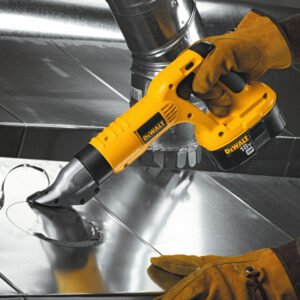
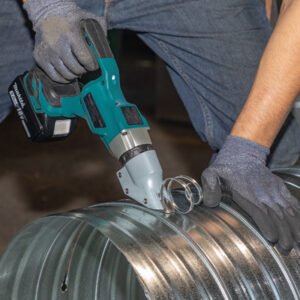
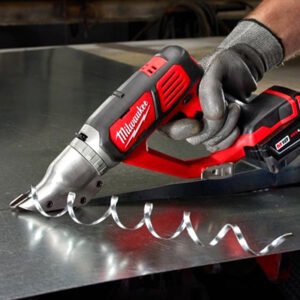

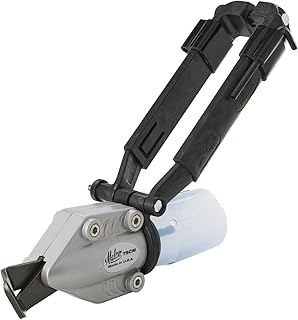
Cordless metal shears are powered cutting tools designed to make sheet-metal work faster and less physically demanding than relying entirely on manual snips. For Canadian shoppers, they can be especially useful on installation sites, renovation projects, roofing jobs, HVAC work, mobile repairs and fabrication tasks where access to mains power is inconvenient. Because different models are designed around different cutting mechanisms and material capacities, choosing the right tool starts with understanding the work you actually need to perform.
One of the most important specifications is maximum cutting capacity. However, a capacity rating should never be treated as a universal thickness limit for every type of metal. Manufacturers may specify different capacities for mild steel, stainless steel and aluminium. Stainless steel can be more demanding than ordinary sheet steel, while aluminium has its own cutting characteristics. Before purchasing, identify the materials and thicknesses you encounter most often and compare the manufacturer's rating for that specific material.
If your normal workload is close to a tool's maximum rating, consider choosing a model with additional capacity rather than operating continuously at the stated limit. This can provide a more practical margin for demanding jobs and help ensure the tool is appropriate for your regular workload rather than only occasional cuts.
The geometry of your work should influence your choice. Cordless shears can be useful for long and relatively clean sheet-metal cuts, but not every powered metal-cutting tool performs the same way. If you frequently make curved cuts, notches or intricate openings, examine the tool's minimum cutting radius, cutting-head design and visibility around the workpiece.
For applications involving particularly tight curves or complex shapes, a cordless nibbler may be a better alternative. Nibblers use a punch-and-die action and can provide useful manoeuvrability, although the cutting process removes small pieces of metal. Angle grinders and cut-off tools are another option, but their abrasive cutting action, heat and material removal differ substantially from dedicated shears.
A cordless metal shear is part of a larger battery ecosystem, so compatibility can be just as important as cutting performance. Popular professional platforms include Milwaukee M18, DeWalt 20V MAX, Makita 18V LXT and Bosch 18V. If you already own compatible batteries and chargers, a bare-tool configuration may reduce the need to purchase duplicate equipment.
Always verify the exact battery family and model compatibility before ordering. Battery voltage alone does not tell you whether a particular pack will work with a tool. Also compare the complete operating weight with the battery installed. A larger battery can provide additional runtime but may make prolonged overhead or repetitive work more tiring.
Cutting speed is useful when productivity matters, particularly for longer runs, but a higher advertised speed does not automatically make one shear better than another. Real-world performance depends on material thickness, hardness, blade condition, battery charge, operator technique and cutting geometry.
Pay attention to grip design, balance, trigger placement and visibility around the cutting head. A compact and well-balanced tool can be easier to control in awkward locations, while a heavier professional model may be more appropriate for intensive shop or trade use. For roofing and HVAC applications, manageable weight can be particularly valuable when working overhead or from ladders.
Replacement blades and cutting components should be included in your buying decision. Before choosing a model, check whether replacement parts are readily available for the exact tool, whether different blades are required for different materials and how straightforward replacement is according to the manufacturer's instructions. A lower purchase price may not represent good long-term value if consumables are difficult to source or wear quickly under your normal workload.
Also compare whether the product is sold as a bare tool or complete kit. A kit may include a battery and charger, while a bare tool can be more economical for shoppers already invested in a compatible platform. Comparing the total cost of ownership provides a more useful picture than comparing tool-only prices.
Canadian users may encounter significant seasonal temperature changes. Lithium-ion battery performance can be affected by very cold conditions, so follow the manufacturer's recommendations for operation, charging and storage. Avoid assuming that a professional cordless tool can be charged or operated safely at every outdoor temperature.
For regular outdoor work, consider how batteries will be transported, stored and charged between jobs. Having a second compatible battery can also be more practical than selecting a tool solely on the basis of a theoretical runtime figure.
The best cordless metal shears are not necessarily the fastest, most powerful or most expensive models. The right choice is the one whose cutting capacity, mechanism, battery platform, ergonomics and consumable availability align with your actual work. Start by identifying the metal types and thicknesses you cut most frequently, then compare models against those requirements.
Whether you need a cordless shear for sheet-metal installation, roofing, HVAC ductwork, fabrication, automotive work or occasional DIY projects, comparing specifications consistently can make the buying process easier. Check current product details, included accessories, battery requirements and manufacturer ratings before purchasing so you can choose equipment suited to your Canadian work environment.
Find cordless metal shears designed to make sheet-metal cutting more convenient, controlled and portable. Whether you work in roofing, HVAC, fabrication, automotive repair or DIY projects, the right cordless shear can eliminate extension-cord management while giving you the freedom to work where the job takes you. Compare models by cutting capacity, material compatibility, battery platform, cutting speed, weight and ergonomics before choosing the option that best matches your workload.