

Explore cordless power tools, kits, batteries, chargers, accessories and related equipment available to Canadian shoppers. Compare product options and follow useful buying guides before you buy.


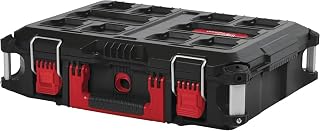


Choosing the best Milwaukee tool box in Canada involves more than selecting the largest storage option or the model with the most compartments. Milwaukee offers several storage formats designed for different working environments, including compact organisers, modular tool storage, rolling units, jobsite boxes and larger workshop-oriented solutions. The right choice depends on the tools you own, how frequently you transport them, the conditions of the jobsite and how much room you have for storage.
For Canadian buyers, durability and mobility deserve particular attention. A tool box may be used in a heated garage, an unheated workshop, a service vehicle or an outdoor construction environment. Cold temperatures, snow, moisture, dirt and repeated transportation can all influence how practical a storage system is. A well-chosen Milwaukee storage solution should therefore protect your tools while remaining convenient to carry, stack, organise and access.
Milwaukee tool storage is not limited to one traditional box design. Its storage ecosystem includes several formats that address different needs. Understanding these categories makes it easier to compare products without focusing only on appearance or advertised capacity.
One of the most important considerations when comparing Milwaukee storage products is compatibility with the Milwaukee PACKOUT ecosystem. Modular storage can be particularly useful for professionals who want to build a storage arrangement gradually rather than purchasing one large container at once.
Before buying, check exactly how the selected case connects to other storage components. Not every Milwaukee storage product has identical mounting, stacking or attachment capabilities. A modular system is most useful when the individual pieces work together in the configuration you actually need.
Think about your complete storage workflow. For example, an electrician may want separate compartments for meters, hand tools, connectors and small electrical components. A carpenter may prioritise space for measuring tools, fasteners, blades and compact power tools. A mechanic may need a different arrangement because sockets, ratchets and larger hand tools require deeper storage.
The construction of a tool box directly affects how well it handles regular use. Look beyond the brand name and examine the materials, hinges, latches, handle design, wheels and connection points.
Rigid plastic construction can provide a useful combination of relatively low weight and resistance to common jobsite conditions. Reinforced sections are particularly valuable around handles, hinges and attachment points because these areas can experience repeated stress.
Metal storage can provide a different combination of durability, weight and appearance. However, buyers should consider the total weight of the loaded box rather than evaluating the empty product alone. A heavy container filled with tools can become difficult to transport.
For outdoor and workshop use, examine whether the design provides protection against dust and water exposure. Avoid assuming that a storage box is completely waterproof simply because its lid closes tightly. Look for the manufacturer's stated level of environmental protection and use that information when comparing models.
A common buying mistake is choosing storage based solely on advertised capacity. More space is not automatically better. An oversized box can become difficult to carry, difficult to organise and unnecessarily bulky inside a vehicle.
Instead, estimate the tools you regularly take to a job. Consider drills, impact drivers, chargers, batteries, pliers, screwdrivers, measuring equipment, blades, sockets, fasteners and personal protective equipment. Then allow some additional room for future purchases.
Internal dimensions are often more useful than external dimensions. A box may look large from the outside but provide less usable room because of internal dividers, structural reinforcement or a complicated lid design.
Storage layout can make a significant difference to productivity. A large open compartment is convenient for bulky equipment, while smaller compartments are better for accessories and components.
Look for storage that allows you to separate frequently used tools from less frequently used equipment. Transparent organiser sections can also make small items easier to identify without opening multiple containers.
Removable dividers can be especially valuable because tool collections change over time. Fixed compartments may be convenient initially but can become restrictive if your equipment changes.
Mobility becomes increasingly important as the weight of a tool collection grows. Carrying a heavily loaded box across a construction site can be inconvenient, while a rolling unit can reduce the amount of lifting required.
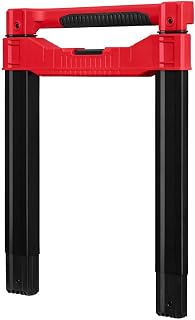
When comparing rolling Milwaukee tool storage, examine wheel size, wheel placement, handle construction and overall balance. Larger wheels may be more practical on uneven surfaces than very small wheels. A telescoping handle can also improve manoeuvrability when transporting the storage system over longer distances.
Remember that mobility depends on the loaded system rather than the empty box. A container that feels easy to move without tools may behave differently after batteries, drills, hand tools and accessories are added.
For portable tool boxes, the handle deserves as much attention as the storage compartment. A comfortable handle can make frequent transportation considerably easier.
Check whether the handle is positioned to keep the box balanced when loaded. A poorly balanced case may tilt or place excessive pressure on the wrist. If the box is intended for frequent lifting, compare its empty weight with the expected tool load.
For tradespeople who move between vehicles and worksites throughout the day, several smaller connected storage units can sometimes be more practical than one extremely large container.
Latches are small components, but they have an important role in everyday storage. A secure closure helps prevent the lid from opening accidentally while the box is being transported.
Inspect the latch design and consider how easy it is to operate while wearing work gloves. Hinges should also be evaluated because repeated opening and closing can place stress on these components.
If the box will remain in a vehicle or jobsite environment, do not confuse a sturdy latch with theft protection. A standard tool box is not necessarily a substitute for a dedicated security system. Consider the manufacturer's stated security features and your actual storage environment before relying on a particular design.
Canadian working conditions can change quickly. A storage box may encounter rain, snow, road spray, dust or damp workshop floors. Protection against these conditions can therefore be an important purchasing criterion.
Check the manufacturer's specifications for any stated ingress protection or sealing information. If no specific rating is provided, avoid assuming that the product is designed for prolonged exposure to water.
Even a well-designed storage case should not be treated as a guarantee that tools will remain dry under every condition. Wet tools should be dried before long-term storage, and moisture-sensitive equipment should be stored appropriately.
Cold Canadian weather can affect the practicality of tool storage. Materials may behave differently at low temperatures, and snow or ice can interfere with latches and moving components.
If a Milwaukee tool box is kept in an unheated garage or vehicle, consider how often it will be exposed to freezing temperatures. Avoid forcing frozen latches or components. Remove ice carefully and allow moisture to evaporate before storing tools for extended periods.
Battery-powered equipment deserves additional consideration. Tool storage and battery storage are related but not identical concerns. Follow the battery manufacturer's instructions for temperature, charging and storage rather than assuming that the tool box itself provides environmental protection.
Weight is easy to overlook when comparing storage products online. A heavier construction may offer advantages, but the final weight becomes much more significant after tools are added.
For a portable box, calculate the approximate total load. A case containing a drill, impact driver, several batteries, chargers and hand tools can become substantially heavier than expected.
For a rolling system, weight is less of a concern while moving across smooth surfaces but can become important on stairs, vehicle ramps or rough terrain. If you frequently work in locations without easy vehicle access, prioritise a configuration that you can realistically transport.
Electricians often need a mixture of hand tools, testing equipment, small components and power tools. A modular storage system can make it easier to separate these categories.
Prioritise compartments for screwdrivers, pliers, wire-related tools, meters, connectors and fasteners. Small-item organisation is particularly useful because electrical accessories can quickly become mixed together in a large open box.
For service work, portability may be more valuable than maximum capacity. A compact case or smaller modular combination can keep essential equipment accessible without requiring the entire tool collection to travel to every job.
Carpenters commonly carry a combination of power tools, hand tools, measuring equipment, blades and consumables. Storage should therefore accommodate both larger equipment and smaller accessories.
Consider a configuration with open space for drills and drivers alongside organisers for bits, screws and blades. A rolling solution can make sense when the tool collection includes several heavy power tools.
Mechanics often need dense storage because sockets, ratchets, extensions, pliers, screwdrivers and specialty tools can quickly occupy substantial space.
When comparing storage options, examine compartment depth and the ability to keep tool types separated. A system that makes it easy to identify the correct socket or accessory can save time compared with a deep compartment where smaller tools become mixed together.
Homeowners typically need a more flexible storage solution rather than a professional-sized mobile system. If your collection consists of a drill, screwdrivers, pliers, measuring tools, a hammer and basic accessories, a compact tool box may be sufficient.
Do not purchase a large professional storage system simply because it has greater capacity. Consider where the box will be stored, how often you will move it and whether you expect your tool collection to expand.
A hard tool box generally provides more rigid protection and structured organisation, while a tool bag can be lighter and easier to carry. The better option depends on how the tools are used.
A modular Milwaukee storage system can be more suitable for mobile jobsites, while a traditional metal chest may be preferable for a fixed workshop. The decision depends largely on mobility.
Metal chests can provide extensive drawer storage and are often designed to remain in one location. Modular plastic systems can be easier to transport and configure around changing work requirements.
For a garage workshop, consider drawer access, footprint and long-term storage capacity. For mobile trades, prioritise portability, stacking and vehicle compatibility.
Always compare the product dimensions with the intended storage location. Measure shelves, vehicle compartments, garage areas and workshop cabinets before purchasing.
Estimate the weight of the tools you intend to carry. The empty product specification does not tell you how manageable the box will be when fully loaded.
Check the specific model's compatibility rather than assuming that all Milwaukee storage products connect to the same system.
Extra capacity can be useful, but excessive unused space can increase cost, size and weight. Match storage to your current equipment and realistic future needs.
A large compartment is not always efficient. If your work involves many screws, bits, connectors or other small accessories, dedicated organisation can be more valuable than additional open capacity.
When comparing ten Milwaukee storage options, use the same criteria for every model. This creates a more meaningful evaluation than relying on product appearance or a single headline specification.
Product specifications should be evaluated as a group rather than individually. A box with impressive capacity may not be the most practical option if it is too heavy or difficult to transport.
Start with external dimensions to confirm that the product fits the intended location. Then examine internal capacity and layout. Next, evaluate weight, mobility and modular compatibility. Finally, check environmental and security-related specifications that are relevant to your working conditions.
When two models appear similar, the difference often comes down to workflow. One may provide better organisation, while another offers more open capacity or easier transportation.
Milwaukee is a major name in professional tool storage, but independent buyers may also compare alternatives from other established manufacturers. Comparing competing systems can help identify the features that matter most for your budget and working environment.
The best choice is not necessarily the brand with the largest ecosystem. It is the system that fits your tools, transportation requirements, workspace and long-term workflow.
Modular storage can be approached as a long-term system rather than a single purchase. Start with the storage type that solves your immediate problem and expand only when there is a clear need.
For example, a user might begin with a compact organiser for small accessories, add a tool box for frequently used equipment and later introduce rolling storage for heavier items. This approach can reduce unnecessary purchases and allow the storage arrangement to evolve with the tool collection.
If your tool box regularly travels in a vehicle, dimensions and stability become especially important. Measure the available cargo area before choosing a large rolling or modular system.
Consider how the box will be secured during transportation. A storage system should not be allowed to move freely in a vehicle where sudden braking or sharp turns could cause the load to shift.
Temperature exposure is another consideration. Vehicles can become extremely cold during winter and very hot during summer. Follow the manufacturer's storage instructions for tools, batteries and accessories rather than relying solely on the tool box for protection.
The most effective storage system is one that supports the way you actually work. Keep frequently used tools in the easiest-to-access section and reserve deeper compartments for less frequently needed equipment.
Regular maintenance can help preserve the usability of a tool box. Remove dust, sawdust, metal particles and other debris before they accumulate around latches, hinges and connection points.
Keep wheels and moving components clear of material that could interfere with movement. Inspect handles and attachment points periodically, especially when the storage system is transported frequently.
Do not overload compartments beyond the manufacturer's stated limits. Excessive weight can place additional stress on handles, wheels, hinges and mounting components.
If the box becomes wet, allow it to dry properly before long-term storage. Moisture trapped around tools and accessories can contribute to corrosion even when the storage container itself remains in good condition.
Budget should be evaluated alongside expected use. A basic storage box can be perfectly adequate for occasional household projects, while a professional who transports tools every day may benefit from investing in a more comprehensive modular system.
Instead of choosing the cheapest option, compare the features that directly affect your workflow. If mobility is critical, prioritise wheels and handle design. If organisation is important, prioritise compartments and organisers. If expansion matters, prioritise system compatibility.
Also compare the total cost of building a storage ecosystem. A low-cost starting box may become more expensive if additional organisers, cases and accessories are required later. Conversely, purchasing a large system immediately may result in unused capacity.
The best Milwaukee tool box in Canada is ultimately the one that matches your tools and working conditions rather than simply the largest or most expensive model. Professional users may prioritise modularity, durability and jobsite mobility, while DIY users may prefer compact storage that fits neatly in a garage or vehicle.
Before choosing from the top ten options, compare dimensions, usable capacity, weight, organisation, mobility, compatibility and environmental protection. Check the manufacturer's current specifications because product configurations can change over time.
For an informed purchase, compare verified customer feedback with technical specifications and consider the way you will use the storage system every day. A good tool box should make your tools easier to protect, transport and organise without becoming an unnecessary burden.
There is no single best model for every user. The ideal option depends on tool quantity, portability requirements, workspace, vehicle storage and whether modular expansion is important.
PACKOUT is worth considering when modular storage and the ability to build a connected storage system are important. Buyers should still verify compatibility between the specific components they intend to combine.
Water resistance varies by product. Do not assume that every Milwaukee storage product is waterproof. Check the specifications for the exact model and consider the environmental conditions in which it will be used.
Choose a size based on the tools you regularly carry rather than maximum theoretical capacity. Leave reasonable room for future additions while avoiding unnecessary bulk and weight.
Rolling storage is generally more practical for heavier tool collections, while portable boxes can be preferable when lifting and carrying are frequent. The right choice depends on the distance and surfaces over which the box will be transported.
Some Milwaukee storage products are designed as part of modular systems, but compatibility depends on the specific product. Check the manufacturer's specifications before combining different storage components.
Organisers are particularly useful for small items such as screws, drill bits, fasteners, connectors and other accessories that are difficult to manage in a large open compartment.
It can be used in Canadian conditions when the product is appropriate for the environment, but buyers should consider freezing temperatures, moisture and vehicle exposure. Follow the manufacturer's storage and maintenance guidance.
A Milwaukee storage system can be useful in a home garage, particularly if you own several power tools and accessories. For smaller collections, a compact box or organiser may provide better value and use less space.
Clean the storage system whenever dust, sawdust, dirt or metal particles accumulate. Frequent users should also inspect latches, hinges, wheels and connection points periodically.