

Explore cordless power tools, kits, batteries, chargers, accessories and related equipment available to Canadian shoppers. Compare product options and follow useful buying guides before you buy.


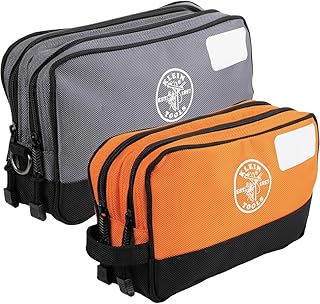


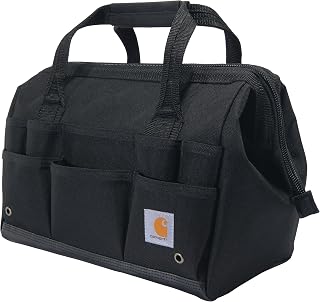
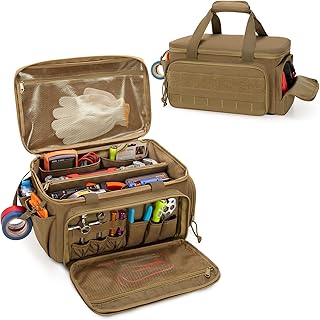


Choosing the best tool bag in Canada is about more than finding a large container for your tools. The right bag should protect equipment, keep frequently used items accessible, remain comfortable when carried, and fit the type of work you actually perform. A professional electrician, contractor, plumber, mechanic, renovator, and DIY user can have very different requirements.
This 2026 buying guide focuses on the practical features that matter when comparing tool bags in the Canadian market. Capacity, construction, pocket layout, carrying comfort, weather resistance, base design, tool accessibility, portability, and compatibility with cordless tools all deserve attention before making a purchase.
Well-established tool brands such as DEWALT, Milwaukee, Klein Tools, Makita, Bosch, Stanley, Husky, CLC Work Gear, and ToughBuilt offer different approaches to tool storage. Brand reputation can be useful, but the best choice still depends on the tools you carry and the environment in which you work.
A good tool bag balances storage capacity with portability. A bag that holds everything you own may become too heavy to carry comfortably. Conversely, a compact bag may be convenient but leave you without enough room for essential tools and accessories.
The most useful designs provide a combination of open compartments, internal pockets, external pockets, tool loops, and dedicated spaces for smaller accessories. This makes it easier to separate hand tools from fasteners, measuring equipment, electrical accessories, batteries, and other frequently used items.
Construction quality is equally important. Heavy-duty fabric, reinforced stitching, strong handles, reliable zippers, durable buckles, and a reinforced base can significantly influence how well a tool bag handles regular use.
Capacity should match your normal tool load rather than the maximum number of tools you could possibly fit inside. A small technician may need only a compact bag, while a contractor carrying drills, drivers, hand tools, batteries, chargers, and accessories may require considerably more storage.
Look beyond the advertised overall dimensions. Interior layout matters because two bags with similar external dimensions can offer very different usable storage.
Pocket design can have a greater effect on everyday usability than total capacity. A bag with numerous pockets allows tools to remain organized and visible rather than accumulating in one large compartment.
External pockets are particularly useful for tools you reach for repeatedly. Internal compartments can be better for sensitive accessories or equipment that should remain protected from impacts.
When comparing models, consider whether the pockets are deep enough to retain tools while moving and whether their openings remain accessible when the bag is placed on the floor.
Tool bags are exposed to abrasion, dirt, moisture, sharp tool edges, and considerable weight. Material selection therefore deserves close attention.
Common construction materials include polyester, nylon, canvas, synthetic fabrics, and combinations of reinforced textiles. Heavier fabrics may provide greater resistance to wear, although construction quality also depends on stitching, reinforcement, seams, and the design of stress points.
Look closely at areas where handles attach to the main body. These locations experience significant loads when the bag is full. Reinforced stitching and broad attachment points can be valuable for users who regularly carry heavy tools.
Canadian users may encounter rain, snow, wet work areas, muddy construction sites, and changing temperatures. However, water resistance and waterproofing are not necessarily the same thing.
A water-resistant exterior may help protect tools from light moisture or brief exposure to rain. A genuinely waterproof design requires a much higher level of protection. Unless a manufacturer specifically states the level of protection provided, it is better not to assume that a tool bag is suitable for prolonged exposure to water.
A water-resistant base can still be valuable because tool bags are often placed on concrete, pavement, soil, or other damp surfaces.
The bottom of a tool bag receives considerable abuse. Users frequently place bags on floors, truck beds, workshop surfaces, pavement, and construction sites.
A reinforced or molded base can help keep the bag upright and provide additional separation between tools and the surface beneath it. A structured base can also make loading and unloading easier because the bag is less likely to collapse.
When comparing bags, check whether the base is flexible fabric, reinforced textile, molded plastic, rubberized material, or another structured construction. Each approach has advantages depending on portability and intended use.
Open-top designs prioritize accessibility. You can usually see and reach tools without opening a zipper or lid. This can be particularly useful for professionals who repeatedly use the same collection of hand tools throughout the day.
The disadvantage is that tools and accessories may be less protected from dust, rain, and accidental spills. Open designs also make it easier for small items to fall out when the bag is moved.
Zippered bags offer a more enclosed storage environment. They can help keep tools contained during transportation and may provide better protection against environmental exposure.
The trade-off is slower access. If you constantly need to reach into the bag, repeatedly opening and closing the main compartment can become inconvenient.
Rigid-frame designs provide another approach. The structured opening can make it easier to identify tools and prevent the main compartment from collapsing.
These bags may be particularly useful for technicians who want easy access while working from a vehicle or jobsite. However, additional structure can increase weight and reduce how easily the bag can be compressed for storage.
Tool bags and tool boxes solve similar storage problems but behave differently.
A tool bag is often the better choice when mobility and quick access are priorities. A tool box can make more sense when impact protection and rigid organization are more important.
A tool backpack can be especially useful when both hands need to remain free while walking. Weight is distributed through shoulder straps rather than being concentrated in one hand.
This can make backpacks attractive to electricians, technicians, installers, maintenance workers, and professionals who frequently move between a vehicle and a work area.
Traditional tool bags remain advantageous when you need rapid access to tools from the top or sides. The decision should therefore be based on movement, accessibility, and the type of equipment being transported.
Modern cordless tools introduce additional storage requirements. A single cordless drill or impact driver may need to be carried alongside batteries, a charger, bits, sockets, fasteners, and hand tools.
Before buying a bag for cordless equipment, measure the tools you intend to carry. Pay particular attention to battery size and tool height because bulky battery packs can consume substantial interior space.
Users carrying several cordless tools should consider whether the bag provides enough structure to prevent equipment from striking against one another. Dedicated compartments or dividers can help separate heavier equipment from smaller accessories.
Brands such as Milwaukee, DEWALT, Makita, Bosch, and other major power-tool manufacturers offer storage solutions designed around cordless equipment. Compatibility should still be checked rather than assumed based solely on brand.
Electricians often need a combination of hand tools, measuring equipment, testers, screwdrivers, pliers, cutters, electrical accessories, and cordless equipment.
A suitable electrician's tool bag should provide many organized vertical pockets. This arrangement makes long hand tools easier to identify and retrieve.
Look for dedicated spaces for:
Klein Tools is particularly well known for electrical and professional hand-tool storage, while DEWALT, Milwaukee, CLC Work Gear, and ToughBuilt provide various designs suitable for broader professional applications.
Plumbing work can require a mixture of hand tools, fittings, consumables, measuring equipment, and specialized equipment. A plumber may also encounter damp environments where the bag's base and exterior construction become particularly important.
A practical plumbing tool bag should provide strong compartments for heavier tools and enough open storage for irregularly shaped accessories. A reinforced bottom can be useful when the bag is placed on wet or dirty surfaces.
Consider how the bag handles sharp tools and whether internal organization prevents tools from becoming tangled together.
Mechanics may carry sockets, ratchets, wrenches, screwdrivers, pliers, inspection tools, measuring equipment, and specialty tools. These collections can become heavy quickly.
A mechanic should therefore consider both capacity and load distribution. A huge bag may technically accommodate more equipment but become difficult to transport when filled.
For heavier collections, compare reinforced handles, padded shoulder straps, structured compartments, and rolling designs. If the bag will mainly stay in a garage or vehicle, weight may matter less than organization and durability.
Contractors often need flexible storage because the tool load changes from one job to another. A modular or medium-to-large tool bag can provide a useful balance between capacity and portability.
Think about the tools that remain in the bag every day and those that are only needed for particular projects. A bag should not be selected based entirely on occasional equipment.
For frequent transportation, a comfortable shoulder strap and reinforced handles can be more valuable than several additional pockets.
DIY users generally benefit from choosing a bag based on their actual tool collection rather than professional-grade capacity. A compact or medium-sized model may provide sufficient room for common household tools.
A practical DIY setup might include screwdrivers, pliers, a hammer, measuring tape, utility knife, adjustable wrench, hex keys, bits, and selected cordless tools.
Buying an oversized bag can encourage unnecessary tool accumulation and make the bag heavier than needed. Start with your existing tools and determine how much additional storage you realistically require.
Comfort becomes increasingly important as tool weight increases. A fully loaded bag can place significant pressure on the hand, shoulder, or back.
Look for padded handles when carrying the bag by hand. A padded shoulder strap can improve comfort for longer carrying distances. If the tool collection is particularly heavy, a backpack or rolling configuration may be more practical.
Strap adjustability also matters. A shoulder strap that cannot be positioned comfortably may reduce the benefits of an otherwise well-designed bag.
Two bags with the same capacity can feel very different when loaded. The position of heavy tools affects balance and carrying comfort.
Heavier tools should ideally sit in a stable position rather than causing the bag to lean heavily to one side. Multiple compartments can help distribute weight more effectively.
When comparing products, consider not only empty-bag weight but also the likely loaded weight. A lightweight bag can be convenient, but a stronger structure may be worthwhile if it regularly carries heavy equipment.
Canadian working conditions can vary considerably between regions and seasons. Tool bags may be exposed to cold temperatures, snow, rain, mud, dust, and temperature changes.
For outdoor work, prioritize durable construction and sensible moisture protection. For indoor renovation, dust resistance and easy cleaning may be more important.
Users working from vehicles should consider how easily the bag fits into a truck, van, trunk, storage compartment, or workshop cabinet.
Cold temperatures can affect materials and the flexibility of certain components. If a tool bag will regularly remain in an unheated vehicle during winter, avoid assuming that every material will behave identically in low temperatures.
Check manufacturer information when cold-weather performance is important. Also consider whether zippers, plastic components, and synthetic materials remain practical for your working conditions.
Durability cannot be determined from fabric thickness alone. Examine the complete construction.
A bag designed with reinforced stress points may outlast a similarly sized bag that relies on lightweight construction throughout.
More capacity is not automatically better. A large bag filled with unnecessary equipment becomes heavy and harder to organize.
Two bags with similar storage capacity can have noticeably different empty weights. This matters when the bag is carried frequently.
Colour, branding, and appearance may influence a purchase, but pocket arrangement directly affects everyday usability.
A weak or poorly designed base can become a major inconvenience when the bag is repeatedly placed on rough or wet surfaces.
Power tools with large batteries can occupy considerably more space than expected. Measure your equipment before selecting a compact bag.
These terms should not be treated as interchangeable. Check the manufacturer's stated protection level.
A simple way to select the appropriate size is to divide your tools into three groups: everyday tools, occasional tools, and specialized equipment.
Everyday tools should receive the easiest-to-access storage. Occasional tools can occupy internal compartments, while specialized equipment may be better carried separately.
If your current tool collection is already overcrowded, consider whether a second specialized bag would be more practical than replacing everything with one enormous model.
Not every premium feature provides equal value. Spending more can make sense when the upgrade improves durability, comfort, organization, or protection in a way that matches your use.
Some users do not need every premium feature. If the bag stays primarily in a workshop, advanced carrying systems may offer little practical advantage.
Likewise, a professional-sized bag may be unnecessary for occasional household repairs. The goal is not to buy the most elaborate tool bag but to select the model that solves your storage problem efficiently.
Organization should reflect frequency of use. Put the tools you reach for most often in exterior or upper compartments. Store heavier equipment where it creates a stable centre of gravity.
Small accessories should have dedicated spaces where possible. Bits, fasteners, blades, electrical connectors, and other small components can quickly become difficult to locate if they are placed together in one open compartment.
Periodically remove tools that you no longer need. A tool bag is easier to carry and use when its contents remain relevant to the job.
Regular cleaning can help extend the useful life of a tool bag. Remove tools and shake out loose dirt before cleaning the exterior according to the manufacturer's instructions.
Avoid using aggressive cleaning chemicals unless the manufacturer specifically states that they are suitable. Some solvents or harsh cleaners can affect synthetic materials, coatings, adhesives, or printed surfaces.
Keep zippers free from excessive dirt and inspect seams, handles, and attachment points periodically. Addressing visible wear early can help prevent a small problem from becoming a larger failure.
Customer reviews can provide useful information, but they should be interpreted carefully. Focus on reviews that explain how the product was used rather than relying only on star ratings.
Look for recurring comments about pocket accessibility, zipper durability, handle strength, capacity, comfort, base construction, and real-world organization.
Pay attention to whether a reviewer is describing professional daily use or occasional household use. A feature that is sufficient for light DIY work may not satisfy someone carrying heavy tools every working day.
When comparing several tool bags, create a consistent checklist. Look at dimensions, weight, material, pocket count, compartment design, carrying options, base construction, closure type, and stated load-related information.
Do not compare products solely by the number of pockets. A bag with fewer but better-designed compartments may be easier to use than one with dozens of small pockets.
Brand familiarity can help narrow the field, especially when a manufacturer has an established range of tools and storage products. However, brand name alone should not determine the purchase.
DEWALT, Milwaukee, Klein Tools, Makita, Bosch, Stanley, Husky, CLC Work Gear, and ToughBuilt each offer different tool-storage approaches. Compare the actual model specifications, construction, storage layout, and intended application rather than assuming that every bag from a particular brand offers the same level of performance.
A matching bag can make sense when you already use a particular cordless-tool platform. Consistent storage dimensions and compartment arrangements may simplify organization.
However, compatibility with a tool brand does not necessarily mean the bag is the best option for your needs. An independent bag from another manufacturer may provide better pocket organization, carrying comfort, or capacity.
If most work begins and ends at a vehicle, consider how the bag fits into your transportation setup. A rigid-bottom bag can be useful when it needs to remain upright in a truck or van.
Consider whether the bag can be quickly identified among other equipment. Multiple bags may benefit from different sizes or clearly distinguishable designs for specific categories of tools.
Mobile technicians often prioritize compact organization and fast access. Carrying excessive equipment can reduce efficiency, especially when travelling between service locations.
A compact structured bag or tool backpack can work well when the tool list is relatively predictable. The best choice depends on whether the technician spends more time walking, carrying, or accessing tools from a vehicle.
Construction environments can be demanding. Bags may encounter dust, debris, rough surfaces, heavy tools, and frequent movement.
For this application, construction quality should take priority over cosmetic features. Reinforced stress points, a durable base, strong carrying components, and sensible compartment design are important considerations.
For electricians: prioritize vertical pockets, screwdriver storage, tester compartments, and organized access to small electrical accessories.
For plumbers: look for durable construction, a practical base, flexible storage, and enough room for irregularly shaped equipment.
For mechanics: focus on load capacity, reinforced carrying points, organization for sockets and hand tools, and comfortable transportation.
For contractors: choose a versatile design with sufficient capacity for changing tool loads and frequent movement.
For DIY users: a compact or medium bag with practical organization is often more sensible than an oversized professional model.
For mobile technicians: prioritize accessibility, portability, and efficient organization.
For cordless-tool users: measure tool and battery dimensions and look for compartments capable of accommodating the equipment safely.
There is no universal price point that defines a good tool bag. Cost should be evaluated against construction, capacity, organization, comfort, and expected frequency of use.
An occasional DIY user may have little reason to invest heavily in a large professional storage system. A tradesperson carrying expensive tools every working day may place greater value on reinforced construction and ergonomic carrying features.
Rather than choosing purely by price, compare what each model provides for your specific workload.
A premium model can be justified when the bag is used frequently, carries expensive tools, travels between jobsites, or needs to withstand demanding conditions.
In these situations, stronger materials, reinforced load points, better organization, improved carrying comfort, and a durable base can provide practical value.
If a bag is used only occasionally, however, some professional features may provide little additional benefit.
There is no single best tool bag for every Canadian user. The right model depends on tool collection, capacity requirements, carrying distance, work environment, organization preferences, and budget. Compare models based on the features that directly affect your use.
Choose a size based on the tools you normally carry rather than the largest collection you might need someday. Measure bulky cordless tools and batteries before purchasing.
Not necessarily. Tool backpacks are useful when hands-free carrying and weight distribution are important. Traditional bags can provide faster access and easier visibility of tools.
They can be worthwhile for frequent professional use, heavy loads, demanding jobsites, or users who value advanced organization and durability. Occasional users may not need premium construction.
There is no single best material. Nylon, polyester, canvas, and reinforced synthetic fabrics can all be suitable. Look at the complete construction, including stitching, handles, seams, base, and stress-point reinforcement.
Check the manufacturer's exact claims about water protection. Do not assume that a water-resistant fabric makes the entire bag waterproof. Consider sealed construction, closure design, base protection, and the intended exposure level.
Many can, but dimensions vary considerably. Measure your drill, impact driver, batteries, charger, and accessories before selecting the bag. Dedicated compartments can make cordless equipment easier to organize.
Open bags provide rapid access and visibility, while zippered models offer more enclosed storage. Choose according to whether accessibility or containment is more important for your work.
Avoid overloading it, keep tools organized, clean dirt from the fabric and zippers, follow the manufacturer's cleaning instructions, and regularly inspect handles, seams, and other high-stress areas.
It can be convenient, particularly when the storage system is designed around the same tool platform. However, compare actual capacity, organization, construction, and portability before deciding.
The best tool bag is ultimately the one that makes your existing tools easier to carry, protect, locate, and use. Start with your actual workload instead of choosing based solely on brand reputation, appearance, pocket count, or advertised capacity.
For professional users, durability, load management, organization, and carrying comfort should receive significant attention. For DIY users, practical capacity and affordability may matter more. For mobile workers, portability and accessibility can be decisive.
Before purchasing, compare specifications from several models, check the dimensions of your largest tools, read detailed customer feedback, and review current pricing from trusted Canadian retailers. Remember that prices, inventory, product configurations, and retailer policies can change, so verify the latest information before completing a purchase.
A carefully selected tool bag can become an important part of an efficient tool-storage system. The objective is not simply to carry more equipment. It is to carry the right equipment in a way that keeps your tools organized, accessible, protected, and manageable throughout the working day.