

Explore cordless power tools, kits, batteries, chargers, accessories and related equipment available to Canadian shoppers. Compare product options and follow useful buying guides before you buy.


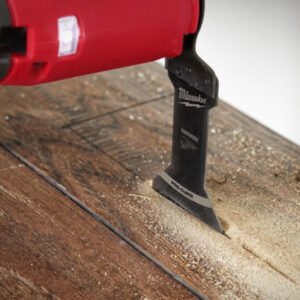
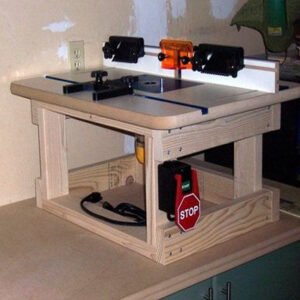
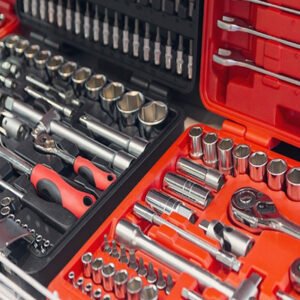
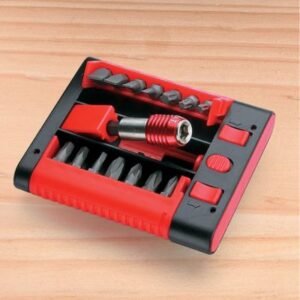




Choosing the right tools and accessories in Canada involves more than comparing prices or selecting products with the highest rating. The best choice depends on the type of work, compatibility, power requirements, material quality, ergonomics, durability and the accessories included with the product. A tool that performs well for occasional household repairs may not be the right choice for renovation work, construction, woodworking, automotive maintenance or demanding professional use.
This guide focuses on the factors that matter when comparing power tools, hand tools and related accessories in the Canadian market in 2026. Use it to evaluate specifications, compare competing products, identify useful features and avoid common purchasing mistakes. Always verify the latest product specifications, customer feedback, retailer information and current pricing before making a purchase.
There is no single tool set or accessory collection that suits every Canadian buyer. A homeowner building a basic workshop has different requirements from a contractor, electrician, mechanic, carpenter or tradesperson. Start by identifying the work you actually expect to perform.
Buying according to the job rather than the product category alone helps prevent unnecessary spending. A powerful tool can be useful, but excessive power may add weight, cost and complexity when a smaller model would complete the task more effectively.
Cordless tools are increasingly useful for mobile work because they eliminate the need for a nearby electrical outlet. They are particularly convenient for construction sites, outdoor projects, repairs and jobs where extension cords would become inconvenient. Brands such as DeWalt, Milwaukee, Makita, Bosch and Ryobi offer broad cordless ecosystems, although compatibility between brands should never be assumed.
Corded tools remain relevant when consistent electrical power is more important than mobility. They can be particularly practical for workshop equipment, stationary applications and extended tasks where battery changes would interrupt the workflow.
When comparing cordless products, do not look only at voltage. Battery capacity, motor design, tool efficiency, charger speed, total weight and the availability of compatible batteries can have a major effect on practical performance.
One of the most important considerations when building a cordless tool collection is the battery platform. Batteries are generally designed for a specific manufacturer's system and should not be treated as universally interchangeable.
Staying within one established platform can reduce the need to purchase multiple chargers and battery types. It can also make it easier to expand a workshop because one battery family may operate many compatible tools.
Before buying a bare tool, check whether batteries and a charger are included. A lower-priced bare tool may appear attractive until the additional cost of compatible batteries and charging equipment is considered.
Voltage is commonly used to describe the electrical system of a cordless tool, but it does not tell the complete story about performance. Battery capacity is often expressed in ampere-hours, while modern tools also depend on motor efficiency, workload and electronic controls.
For frequent heavy-duty work, it can be useful to compare the complete battery and charger ecosystem rather than evaluating the tool alone.
Brushless motors have become common across modern cordless power tools. They use electronic control instead of traditional mechanical brushes, which can reduce some sources of wear and support efficient operation.
Brushed tools can still be appropriate for occasional users and simpler applications. Their lower purchase price may make sense when a tool will only be used periodically.
If you expect frequent use, a brushless model may be worth considering because efficiency, operating characteristics and durability can become more important over the life of the tool. However, motor type should be evaluated alongside the complete specification rather than treated as the only measure of quality.
Power tools are useful, but a reliable workshop also needs basic hand tools. These products often perform everyday tasks that do not justify setting up a powered tool.
When buying hand tools, inspect the handle design, grip, finish, size range and material. A large set is not automatically better if it contains many pieces that rarely match your actual projects.
A cordless drill or drill driver is one of the most versatile tools for a home workshop. It can handle drilling and fastening tasks across wood, plastic and, with the appropriate bit, various metals.
Key specifications include chuck size, torque settings, speed ranges, battery platform, overall weight and included accessories. A two-speed transmission can provide greater control by allowing the user to select a slower range for higher torque and a faster range for drilling applications.
Impact drivers serve a different purpose. Their impact mechanism is particularly useful for driving longer screws and fasteners where conventional drill drivers may struggle. However, they are not a universal replacement for a drill because the operating characteristics and bit system differ.
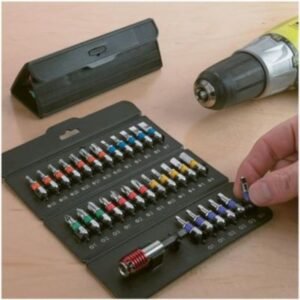
A quality power tool can still perform poorly when paired with the wrong accessory. Drill bits should be selected according to the material being drilled.
Check the accessory's stated material compatibility and maximum operating requirements. Never assume that a general-purpose bit is suitable for every surface.
For automotive maintenance, an impact wrench can make repetitive fastening and loosening tasks considerably easier. Buyers should compare torque specifications carefully, but peak torque figures should not be interpreted as a complete representation of real-world performance.
Consider the drive size, battery platform, tool weight, speed settings, control modes and compatibility with the sockets you already own. A compact impact wrench may be preferable when working in confined areas, while a larger model may be more suitable for demanding fastening applications.
For safety-critical fasteners, use the appropriate procedure and a calibrated torque wrench where the manufacturer's or vehicle manufacturer's specified torque is required. An impact wrench should not automatically be treated as a precision torque-setting tool.
A socket set should match the fasteners you expect to encounter. Compare metric and imperial coverage, drive sizes, socket depth, ratchet mechanism and accessory selection.
Do not select a socket set solely because it contains a large number of pieces. A smaller set with the sizes you regularly use can provide greater practical value.
Angle grinders are versatile tools used for grinding, cutting, polishing and surface preparation when the tool and accessory are appropriate for the application. The correct disc is essential because accessories are designed for specific materials and tasks.
Compare disc diameter, motor power, speed, guard design, spindle configuration, handle positions and electronic safety features. Cordless grinders provide greater mobility, while corded models can be practical for prolonged workshop use.
Always check the accessory's rated speed against the tool's operating speed. Protective equipment and appropriate operating procedures are essential when using abrasive cutting or grinding products.
For woodworking and surface preparation, the sanding accessory can be as important as the sander itself. Orbital, random-orbit and detail sanders are designed for different applications.
When comparing sanders, examine sanding-pad size, variable-speed control, dust collection, vibration management and paper availability. A tool with an effective dust collection system can be more practical for indoor workshop work, although no dust collection arrangement should be assumed to eliminate airborne particles completely.
Choose abrasive discs or sheets according to the material and desired finish. Coarser abrasives remove material faster, while finer abrasives are generally used for finishing and smoothing.
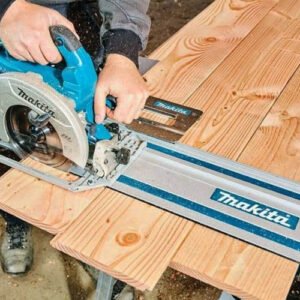
Different saw designs serve different cutting requirements. A circular saw is useful for straight cuts in suitable sheet and timber materials, while a reciprocating saw is more suited to demolition and irregular cutting applications. A jigsaw is useful when curved or detailed cuts are required.
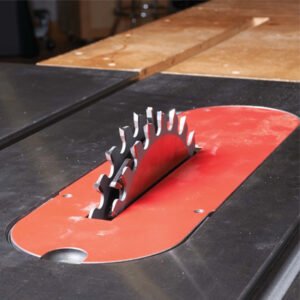
Blade selection matters. Compare tooth configuration, blade material, cutting capacity and compatibility with the intended material. Using an inappropriate blade can reduce cutting quality and may increase the risk of binding or overheating.
Accurate measurement is one of the simplest ways to improve project quality. A basic workshop should have reliable measuring and marking equipment.
For precision work, check the measurement range, resolution, readability and construction quality of the instrument. Digital displays can be convenient, but accuracy should remain the priority.
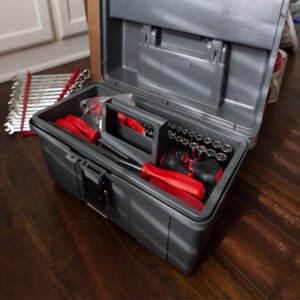
Good storage protects tools and reduces wasted time. Toolboxes, modular cases, rolling cabinets, wall-mounted storage and organisers each suit different workshop environments.
For portable work, stackable cases can make transportation easier. For a permanent workshop, drawers and wall storage can provide faster access to frequently used tools.
Keep batteries, accessories and consumables organised by platform or application. Labeling storage compartments can be particularly helpful when a collection grows over time.
Material selection affects both durability and usability. Hand tools commonly use hardened steel or alloy steels, while power-tool housings often combine engineered plastics with metal components.
For sockets and wrenches, examine the stated material and manufacturing specifications. For power tools, look at the construction of the chuck, gearbox housing, trigger, switches, work light and adjustment mechanisms.
Premium materials do not automatically guarantee that a product is the best choice. Build quality should be considered together with design, intended use, compatibility and price.
A tool can have impressive specifications and still be uncomfortable to use. Weight distribution, handle shape, grip material, trigger position and vibration can significantly affect long sessions.
For overhead work, lower weight can be particularly valuable. For high-torque applications, a secure grip and balanced design can help maintain control. If possible, compare the tool's physical dimensions as well as its headline specifications.
Combo kits can be an efficient way to build a workshop, particularly when several tools use the same battery platform. However, the number of pieces should not be the only comparison point.
Check exactly what is included. A kit described as a multi-tool package may contain several bare tools but only one battery and charger. Another package may contain fewer tools but more useful accessories.
Compare the individual tools, battery capacities, charger type, case or storage system and included accessories. Also consider whether you genuinely need every tool in the package.
Budget tools can be sensible for occasional household work, while premium products may offer additional features, stronger construction or a broader professional ecosystem. The right decision depends on frequency of use and the consequences of tool failure.
For occasional DIY work, paying substantially more for professional specifications may not provide meaningful value. For frequent trade work, reliability, ergonomics, battery availability and long-term compatibility may justify a higher initial investment.
Rather than categorising tools as simply cheap or expensive, compare the total value provided for your specific workload.
Several established manufacturers offer extensive ranges of power tools, hand tools and accessories. Commonly encountered names include DeWalt, Milwaukee, Makita, Bosch, Ryobi, Metabo HPT, RIDGID, Craftsman, Stanley, Klein Tools, Wera, Knipex and Irwin.
Brand reputation can be useful when evaluating a tool ecosystem, but it should not replace product-level comparison. Different ranges within the same manufacturer may target different users, applications and budgets.
Customer reviews can provide useful information that is difficult to understand from specifications alone. Look for recurring comments rather than relying on one unusually positive or negative review.
Reviews should complement, not replace, manufacturer specifications and independent product information.
Safe tool selection includes more than choosing the correct machine. Appropriate protective equipment and working practices are essential. Depending on the task, this may include safety glasses, hearing protection, suitable gloves, respiratory protection, protective footwear and appropriate work clothing.
Read the manufacturer's operating instructions before using unfamiliar equipment. Inspect accessories for damage, use guards where provided and make sure cutting or grinding accessories are rated for the intended tool. Disconnect or remove the battery when appropriate before changing accessories or performing maintenance.
Regular maintenance can help keep tools in usable condition. Keep ventilation openings clear, inspect cords and batteries, clean dust from appropriate areas and examine moving components for unusual wear.
Accessories also require attention. Damaged cutting discs, worn drill bits, cracked sockets and excessively worn sanding products should not be treated as normal consumables that can simply continue to be used indefinitely.
Follow the manufacturer's maintenance instructions for lubrication, cleaning, storage and battery care. Do not modify safety components or operate tools outside their intended specifications.
Canada's climate can influence how tools are transported and stored. Extreme cold can affect battery performance, while moisture and condensation can contribute to corrosion or electrical problems when equipment is not stored correctly.
Allow equipment that has been exposed to significant temperature changes to reach appropriate conditions before use when condensation may be present. Store tools and accessories in a dry environment and follow the manufacturer's recommendations for battery temperature and storage.
For outdoor projects, also consider whether the tool is suitable for the working environment and whether an appropriate power source is available.
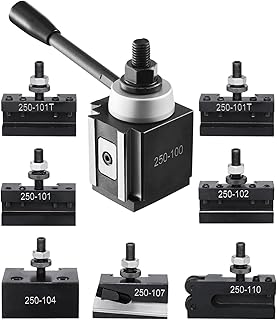
A useful accessory should solve a specific problem, fit the tool correctly and provide appropriate performance for the intended material. Accessories that sit unused in a large kit add little practical value.
Before buying, ask whether the accessory is compatible, whether the size is appropriate, how frequently you expect to use it and whether replacement components are readily obtainable. Consumables deserve particular attention because ongoing operating costs can exceed the initial purchase price for heavily used tools.
If you are starting from scratch, avoid purchasing every possible tool at once. Build your collection around common tasks and expand it as new requirements arise.
This approach can provide better value than buying an oversized collection that contains tools you rarely use.
A practical starter collection can include a drill driver, screwdriver set, pliers, adjustable wrench, socket set, hammer, tape measure, level, utility knife and suitable safety equipment. Add specialised power tools according to the projects you actually perform.
Neither is universally better. Cordless tools provide mobility and convenience, while corded models can provide continuous electrical operation without battery changes. Your work environment should determine which format is more suitable.
It can be worthwhile for frequent users who value efficiency, modern electronic controls and the characteristics of brushless motor systems. Occasional users may find a conventional brushed model sufficient for simpler applications.
A kit can be useful when several included tools match your needs and share a battery system. Individual purchases may provide better value when you only require one or two specialised tools.
It can be extremely important when building a cordless collection. A compatible platform can allow multiple tools to share batteries and chargers, reducing duplication and simplifying storage.
No. Higher-priced products may offer additional features, construction quality or professional-oriented capabilities, but the best value depends on the intended workload. Compare specifications, ergonomics, compatibility and user feedback before deciding.
Check the material you intend to drill, bit type, size, shank compatibility and the operating requirements of your tool. Using the correct bit for the application is more important than simply buying the largest accessory set.
There is no universal replacement interval. Replace or discontinue accessories when they become damaged, excessively worn or unsuitable for safe operation. Follow the accessory manufacturer's instructions for specific limitations.
Professional users should consider durability, ergonomics, workload capability, serviceability, battery ecosystem, accessory availability and long-term compatibility. The best professional tool is the one that fits the actual demands of the job.
No single product suits every user. Climate, project type, frequency of use, workshop space, budget, battery platform and preferred brands can all influence the best choice. Compare the specifications and current product information before purchasing.
The best tools and accessories for Canadian buyers are not necessarily the products with the most features or the highest advertised specifications. A better approach is to match the tool to the job, compare complete specifications, consider compatibility and evaluate long-term usability.
For cordless equipment, pay particular attention to the battery ecosystem. For hand tools, focus on material quality, design and the sizes you actually need. For accessories, prioritise correct application and compatibility. For every purchase, consider ergonomics, safety, storage and replacement requirements alongside the initial cost.
Before buying, compare current specifications from the manufacturer, read verified customer reviews, check retailer information and confirm that the product configuration available in Canada matches your requirements. Product versions, included accessories, prices and availability can change, so current information should always take priority over older buying advice.