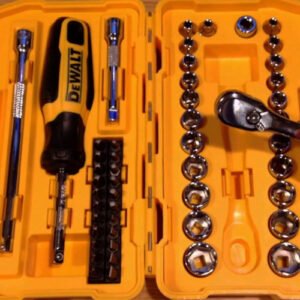
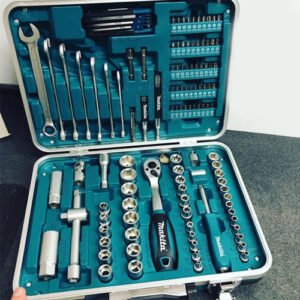


Explore cordless power tools, kits, batteries, chargers, accessories and related equipment available to Canadian shoppers. Compare product options and follow useful buying guides before you buy.


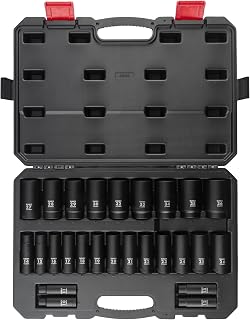


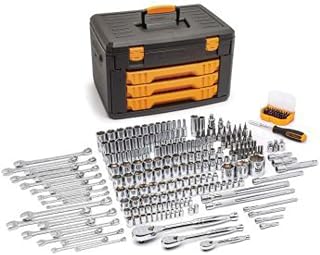


Choosing the best socket in Canada depends on more than the number of pieces included in a set. Socket size range, drive size, construction, fit, finish, storage, compatibility and intended use can all affect how useful a socket set will be in a Canadian garage, workshop or jobsite. A compact set may be ideal for routine automotive maintenance, while a larger professional kit may be more appropriate for frequent mechanical work.
This guide is designed to help Canadian buyers compare socket options by the features that matter most. Instead of focusing only on piece counts or marketing claims, consider the type of fasteners you work with, the tools you already own and the conditions in which the sockets will be used.
A socket is a removable tool head designed to fit over a nut or bolt head. It connects to a compatible ratchet, breaker bar, torque wrench, extension or other drive tool. The socket transfers turning force from the drive tool to the fastener, making it easier to install or remove nuts and bolts.
Socket tools are widely used for automotive repairs, vehicle maintenance, machinery servicing, home improvement, construction, assembly work and general mechanical tasks. Their usefulness comes from the ability to quickly change socket sizes without replacing the entire handle or drive tool.
Socket sets are commonly organized by drive size. The most familiar categories include 1/4-inch, 3/8-inch and 1/2-inch drives. Larger drives are also available for applications requiring greater torque.
A useful comparison should look beyond the headline number of pieces. Two socket sets containing a similar number of components can be designed for very different purposes. One may emphasize shallow sockets and compact storage, while another may include deep sockets, multiple drive sizes, extensions and specialty pieces.
Size coverage is one of the first specifications to examine. A set that contains many duplicate or rarely used sizes may be less useful than a smaller kit containing the sizes you regularly need.
For Canadian automotive and mechanical applications, metric sockets deserve particular attention. Before purchasing, identify the fastener sizes found on your vehicle, machinery or equipment. If you routinely work with both measurement systems, a set containing both metric and SAE sizes can provide additional flexibility.
The drive determines which ratchet or other compatible tool can be connected to the socket. A smaller drive is generally convenient for compact fasteners and restricted spaces. Larger drives are suited to applications where greater torque and larger sockets are required.
Common choices include 1/4-inch, 3/8-inch and 1/2-inch drives. The right choice depends on the work rather than simply selecting the largest drive available.
Shallow sockets are compact and useful where clearance is limited. Deep sockets extend farther over the fastener and can be useful when a nut sits on a long threaded stud.
A versatile socket collection may benefit from having both types. Buyers should check whether a particular set includes deep sockets or only standard shallow versions before comparing piece counts.
Six-point sockets contact the six flat sides of a compatible hexagonal fastener. They are often preferred when secure engagement and reduced risk of rounding are important, particularly on stubborn fasteners.
Twelve-point sockets provide more engagement positions and can be convenient when working in restricted spaces. However, the appropriate design depends on the fastener and application. A buyer should not assume that one style is automatically better for every job.
Socket construction affects durability, fit and suitability for different applications. Many quality sockets are manufactured from alloy steel and treated to withstand repeated mechanical loads.
Chrome vanadium steel is widely associated with hand-tool sockets and ratchets. It can provide a useful balance of strength, durability and corrosion resistance when properly manufactured and finished.
Chrome molybdenum steel is commonly associated with impact sockets. Impact tools produce different loading conditions from manually operated ratchets, so impact-rated sockets are designed specifically for those applications.
Do not substitute ordinary chrome hand sockets for impact-rated sockets when using an impact wrench unless the manufacturer specifically states that the socket is suitable for that application.
This distinction is important when choosing sockets for a power tool. Standard hand sockets are generally intended for manual tools such as ratchets and breaker bars. Impact sockets are engineered for use with compatible impact drivers and impact wrenches.
Impact sockets are commonly recognizable by their darker finish, although appearance alone should never be treated as proof that a socket is impact-rated. Always verify the manufacturer's stated application.
If your workshop includes an impact wrench from brands such as Milwaukee, DEWALT, Makita or Bosch, check the tool documentation and choose compatible impact-rated sockets for high-impact applications.
Metric sockets use millimetre-based sizes, while SAE sockets are based on fractional-inch measurements. The better choice depends on the fasteners you expect to encounter.
For many modern vehicles and equipment, metric sizes are especially important. However, older vehicles, imported equipment, machinery and certain household applications can still use SAE fasteners.
A combined metric and SAE set can therefore be practical for buyers who want one collection for a broad range of maintenance tasks. If you already own one system, buying a second set only makes sense when your work requires the additional sizes.
A properly fitting socket should engage the fastener securely. Poor fit can make removal more difficult and can increase the possibility of damaging the fastener, particularly when significant torque is applied.
Before applying substantial force, make sure the socket is fully seated. Remove dirt, rust or debris that prevents proper engagement where appropriate. Selecting the correct socket size is usually more important than simply using a larger or more powerful tool.
Automotive maintenance is one of the most common reasons people purchase socket sets. Tasks can include removing fasteners during brake work, servicing engine components, replacing accessories, working on suspension components and performing routine maintenance.
A useful automotive collection should be selected around the vehicle rather than around the advertised piece count. Check the vehicle's service information and identify the socket sizes and drive types required for the work you intend to perform.
Deep sockets can be valuable where threaded studs extend through nuts. Extensions can help reach recessed fasteners, while universal joints may help with awkward angles when used appropriately.
Home users often do not need an oversized professional socket collection. A compact set containing commonly used metric sizes, a reliable ratchet and a few extensions may handle furniture assembly, equipment maintenance, bicycle-related work and many household repairs.
Storage is particularly important for occasional users. A well-organized case makes it easier to identify missing pieces and reduces the time spent searching for the correct size.
Professional users generally place greater emphasis on durability, size coverage and compatibility. A mechanic may need several drive sizes, shallow and deep sockets, impact sockets, extensions and specialty sockets.
Professional buyers should also consider whether individual replacement sockets are readily available. Losing one frequently used size can make an otherwise complete set less convenient.
Brands such as GearWrench, Craftsman, Stanley, Husky, DEWALT, Milwaukee, Makita, Mastercraft and Tekton offer different tool collections and configurations. The best choice depends on the specific set rather than the brand name alone, so compare the included sizes and intended application before buying.
Clear markings make it easier to identify sockets, especially when working quickly or in dim workshop conditions. Compare how the sizes are marked and whether the markings are positioned where they can be seen easily.
Workshop tools can be exposed to moisture, dirt and changing temperatures. A suitable protective finish can help reduce corrosion, but proper storage and maintenance remain important.
Some sockets include external knurling that can make hand adjustment easier when the socket is not under significant load. It is a convenience feature rather than a substitute for a properly fitted ratchet.
The connection between the socket and drive tool matters. Depending on the design, a socket may use a detent mechanism or other retention system. Buyers should make sure the socket and ratchet are compatible with the intended drive system.
Extensions can increase reach and help access recessed fasteners. Adapters can allow compatible sockets and drive tools to be used across different drive sizes, although adapters should be selected carefully for the intended load.
When comparing products, create a simple priority list before looking at individual models. Start with the application, then determine the required drive size and socket sizes. After that, compare construction, socket profile, included accessories and storage.
Check the complete manufacturer's specification rather than relying solely on marketplace titles. Product configurations can change, and the same product family may be sold in different combinations.
Focus on useful size coverage, comfortable handling, clear markings and straightforward storage. A smaller set can be preferable when it includes the sizes you actually use.
Prioritize metric coverage, deep sockets, appropriate drive sizes and extensions. If you plan to use an impact wrench, add an impact-rated socket set rather than assuming a conventional hand-tool set will be suitable.
Look closely at drive size, construction, impact compatibility and the manufacturer's application guidance. Heavy-duty work can place substantially greater loads on sockets, making correct tool selection particularly important.
Consider a broader system that provides multiple drive sizes, replacement availability, organized storage and specialty options. Consistency across a tool collection can also simplify maintenance and organization.
Brand reputation can be useful when narrowing a large selection, but it should not replace specification-level comparison. Different brands may offer several socket ranges aimed at different users.
When comparing these brands, examine the exact product configuration. Brand recognition alone does not establish that a particular socket set is the right choice for your application.
The appropriate budget depends on how frequently you use the tools and how demanding the work is. Occasional users may get more value from a carefully selected compact set than from an extensive professional collection.
Frequent users should consider the long-term cost of ownership. A slightly more expensive set may be more useful if it provides better size coverage, stronger construction, clearer markings and a practical storage solution.
Rather than selecting a budget first and then choosing whatever fits it, identify your required specifications and compare products within that category. Always check current Canadian pricing because prices and promotions can change.
Online listings can make it easy to compare many socket sets, but buyers should carefully inspect the product details before ordering. Product titles do not always communicate the complete configuration.
Good maintenance can help keep sockets functional and easy to identify. Wipe away dirt, grease and moisture after use. If a socket becomes contaminated with corrosive material, clean it according to the manufacturer's recommendations.
Keep sockets organized by drive size and dimension. A dedicated case or tray can prevent pieces from becoming scattered around a workshop. It also makes it easier to notice when a commonly used socket is missing.
Inspect sockets periodically for visible damage, deformation, cracks or other signs that they should no longer be used. Damaged tools should not be relied upon for demanding work.
Always select the correct socket for the fastener and application. Make sure the socket is fully seated before applying force. Use the appropriate drive tool and stay within the manufacturer's intended application.
When using an impact wrench, use compatible impact-rated sockets and accessories. Do not use damaged sockets. When tightening fasteners to a specified torque, use a suitable calibrated torque wrench and follow the vehicle, equipment or fastener manufacturer's instructions.
Protective equipment may also be appropriate depending on the task. Eye protection is particularly important when mechanical work creates the possibility of flying debris.
Buying a complete set is convenient when starting a workshop or expanding your basic tools. It provides multiple sizes in one purchase and generally simplifies organization.
Individual sockets can be more efficient when you already have a comprehensive collection and only need a replacement or specialty size. Professional users may also prefer individual additions when their work regularly requires specific sizes.
The right approach depends on what you already own. Avoid purchasing a large duplicate set simply because the piece count looks attractive.
A complete mechanics tool set can be useful for buyers who need sockets, ratchets, extensions and other hand tools at the same time. However, buyers who already own quality ratchets or screwdrivers may find that a dedicated socket set offers better control over what they purchase.
Compare the actual tools included rather than assuming a larger kit automatically provides greater value. Some large kits contain accessories that may rarely be used in your particular workshop.
A strong long-term choice combines useful size coverage with appropriate construction and application compatibility. The set should fit the work you perform today while leaving reasonable room for future maintenance tasks.
Replacement availability can also matter. A single lost or damaged socket should not necessarily make an otherwise useful collection incomplete for years. Before committing to a particular tool system, consider whether replacement components are available through established retailers.
There is no single best socket set for everyone. For general-purpose use, prioritize a practical metric range, an appropriate drive size, reliable construction and useful accessories. Automotive users may need deeper coverage and additional drive sizes.
Neither system is universally better. Metric sockets are often especially useful for modern vehicles and equipment, while SAE sizes remain relevant for certain vehicles, machinery and other applications. Choose based on the fasteners you actually work with.
A 3/8-inch drive is a versatile option for many automotive maintenance tasks. However, the required drive size depends on the fastener, available clearance and amount of torque involved. Larger drives may be more appropriate for demanding applications.
Deep sockets can be valuable when nuts are positioned on long studs or when additional socket depth is needed. If your work regularly involves these fasteners, adding deep sockets can make a noticeable difference in versatility.
Do not assume that standard hand sockets are suitable for impact tools. Use sockets specifically rated for the intended impact application and follow the manufacturer's instructions.
Six-point sockets can provide strong engagement with compatible hexagonal fasteners and are commonly preferred for applications where secure contact is important. Correct sizing and full seating remain essential.
For many general-purpose users, 3/8-inch is a versatile starting point. Smaller 1/4-inch drives can be useful for compact fasteners, while 1/2-inch drives are valuable for higher-torque applications. Your intended work should determine the final choice.
There is no universal number. Start with the sizes you regularly encounter and expand the collection when a specific job requires additional coverage. A well-selected set is usually more useful than a large set filled with rarely used sizes.
DEWALT, Milwaukee, GearWrench, Craftsman, Stanley, Husky, Mastercraft, Tekton and Makita are among the brands Canadian buyers may encounter. Compare the exact set specifications, intended use and current retailer information rather than choosing solely by brand.
Check the drive size, metric or SAE measurement system, socket depth, point configuration, material, impact compatibility, included accessories, storage and the exact current product contents. Recent verified customer reviews can provide additional information about recurring practical issues.
The best socket in Canada is the one that matches your fasteners, tools and working conditions rather than the one with the largest advertised piece count. Begin by identifying whether you need metric, SAE or both. Then choose the appropriate drive size and determine whether shallow, deep, standard or impact-rated sockets are required.
For general home maintenance, a compact and well-organized set can be enough. Automotive enthusiasts may benefit from broader metric coverage, deep sockets and extensions. Professional mechanics and heavy-duty users should place greater emphasis on construction, impact compatibility, drive strength, replacement availability and long-term organization.
Before purchasing, compare the exact specifications of the products under consideration, read verified customer feedback, check the current Canadian price and confirm that the included sizes match your requirements. Taking a few minutes to compare these details can prevent the most common socket-buying mistakes and help you build a more useful tool collection for 2026 and beyond.