

♥ Wishlist


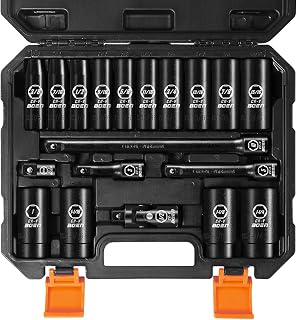


A Makita socket can be a useful addition to a cordless impact wrench, ratchet, driver, or other compatible fastening setup. Sockets are designed to fit over nuts and bolts, helping transfer torque from the tool to the fastener while providing a secure connection. Whether you are working in a home garage, maintaining equipment, completing construction tasks, or handling professional mechanical work, choosing the appropriate socket can make fastening jobs faster and more controlled.
When shopping for a Makita socket in Canada, compatibility should be one of the first considerations. Socket products can differ by drive size, socket size, construction, depth, and intended application. The socket must be appropriate for both the tool and the fastener. Checking the drive specification of your tool and the required socket size before ordering helps reduce the risk of selecting an incompatible accessory.
Socket size refers to the opening that fits over the nut or bolt head, while drive size refers to the square connection between the socket and the tool or adapter. These are separate specifications, so both should be checked before purchasing. Common drive sizes include 1/4-inch, 3/8-inch, and 1/2-inch, although availability varies by product and application.
For Canadian users, socket measurements may be expressed in either metric or imperial sizing. Metric sockets are commonly used with metric fasteners, while imperial sockets are intended for compatible SAE fasteners. Using the correct size provides a closer fit and helps reduce unwanted movement between the socket and fastener. If you regularly work with both systems, a selection covering the sizes you use most often can be a practical choice.
Before selecting a socket, identify whether your fastener requires a metric or imperial measurement. A socket that appears close in size may not provide the correct fit. Matching the socket to the fastener is especially important when higher torque is involved.
The type of socket you need depends heavily on the tool being used. Standard sockets are commonly intended for hand-operated ratchets and compatible low-torque applications. Impact sockets are specifically designed for use with impact tools and are generally manufactured to withstand the repeated shock and torque produced during impact operation.
If you plan to use a socket with a cordless impact wrench or another impact-rated fastening tool, verify that the socket is designed for impact use. Using an accessory outside its intended application can lead to premature wear or damage. Always follow the manufacturer's recommendations for compatible accessories and operating conditions.
Socket depth can also affect which product is best for a particular job. Standard-depth sockets are useful for many accessible fasteners, while deep sockets can provide additional reach when a nut is positioned farther along a threaded stud or inside a recessed area. The right choice depends on the geometry of the fastener and the available clearance around it.
Consider the working environment as well as the fastener itself. Tight engine bays, machinery components, vehicle assemblies, and construction applications can require different socket profiles or lengths. Selecting a socket that provides adequate access without unnecessary bulk can make positioning the tool easier.
Start by confirming the socket size, drive size, and intended tool. Next, consider whether you need a standard or impact socket and whether a shallow or deep profile is more appropriate. Construction and material quality are also worth considering, particularly for sockets that will be exposed to frequent high-torque work.
For occasional household repairs, a socket selected for the fasteners you commonly encounter may be sufficient. For professional maintenance, automotive work, construction, or workshop use, it can make sense to prioritize durable accessories and a broader selection of commonly used sizes. Keeping compatibility at the centre of the buying decision helps ensure the socket performs as intended.
A good socket should match the fastener, tool, drive connection, and application. Before ordering, review the product specifications carefully and compare them with your existing Makita equipment. Pay particular attention to metric versus imperial sizing and impact compatibility when relevant.
Whether you need a single replacement socket or an accessory for regular fastening work, selecting the correct specification can improve efficiency and help protect both the fastener and tool. Canadian shoppers can use the category to compare suitable Makita socket options and identify the accessory that best fits their particular workshop, maintenance, construction, or repair requirements.
Find the right Makita socket for fastening, tightening, and everyday workshop tasks. This category is designed for Canadian shoppers looking for dependable socket options that match their tool, drive size, fastener, and application.