

Explore cordless power tools, kits, batteries, chargers, accessories and related equipment available to Canadian shoppers. Compare product options and follow useful buying guides before you buy.


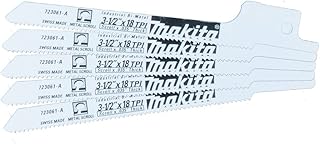

Choosing a Makita cordless reciprocating saw in Canada involves more than comparing cutting speed or battery voltage. The right model depends on the type of material you cut, how frequently you use the tool, whether you already own Makita batteries, how much control you need in tight spaces, and how much weight you are comfortable carrying.
Makita offers cordless reciprocating saws across its battery platforms, including the widely used 18V LXT system and higher-output 40V XGT platform. Within these ranges, saws can differ significantly in stroke length, variable-speed control, vibration management, tool size, blade-changing systems, and overall cutting performance. This guide explains the differences that matter when comparing the best Makita cordless reciprocating saws available to Canadian buyers in 2026.
A reciprocating saw is designed for fast, aggressive cutting rather than the smooth finish associated with a circular saw or jigsaw. It is particularly useful for demolition, renovation, plumbing, electrical work, framing, landscaping and cutting materials that are difficult to position on a conventional saw.
Before choosing a model, consider the following factors:
Battery platform is one of the most important decisions because it determines which batteries and chargers you can use. Makita's 18V LXT ecosystem is particularly attractive to users who already own compatible cordless tools. A bare-tool reciprocating saw can make sense when a suitable battery and charger are already part of the user's workshop.
The 40V XGT platform is aimed at applications where higher output and demanding cordless performance are priorities. It can be particularly interesting for professionals who regularly perform heavy cutting and want to reduce dependence on corded equipment.
Voltage alone should not determine your purchase. A higher-voltage platform does not automatically make every saw the better choice for every user. Tool weight, ergonomics, cutting control, blade selection and the demands of the application can be equally important.
Stroke length describes how far the blade travels during each reciprocating cycle. A longer stroke can help remove more material during each cycle and may contribute to faster cutting in suitable applications. However, longer is not automatically better.
A shorter or more controlled stroke can be advantageous when precision, handling and reduced movement are more important. If you regularly work in confined spaces, around installed plumbing or inside wall cavities, the physical dimensions and controllability of the saw may matter more than maximum cutting aggression.
When comparing two Makita reciprocating saws, examine stroke length alongside speed, motor characteristics, vibration control and the intended application rather than treating one specification as the deciding factor.
Variable-speed operation allows the user to adjust blade movement according to the material and cutting situation. Lower speeds can provide greater control during the beginning of a cut, while higher speeds can be useful when the application permits faster material removal.
Speed control is especially useful when moving between materials. Wood, metal, plastic, pipe and demolition materials do not necessarily respond best to the same cutting technique.
A saw with a high maximum speed but limited practical control may be less useful than a model that allows the operator to regulate the cutting action comfortably. For professional users, a responsive trigger and predictable speed control can be more valuable than a specification sheet focused only on maximum strokes per minute.
Some reciprocating saws provide orbital action. This changes the blade movement so that the blade follows a more elliptical path during operation. In appropriate wood-cutting applications, orbital movement can help increase aggressive material removal.
However, orbital action is not universally desirable. Metal cutting often benefits from a different approach, and applications requiring controlled cuts may call for reduced aggression.
If a model provides selectable or adjustable orbital action, it can offer greater versatility. The important point is to understand when the feature should be used rather than assuming that maximum orbital movement is always advantageous.
Reciprocating saws naturally generate substantial movement because the blade rapidly travels back and forth. Vibration can affect comfort, control and fatigue, particularly during prolonged demolition or cutting sessions.
Makita models can differ in their approaches to vibration management. When comparing saws, look for designs that incorporate counterbalance or other vibration-reduction technologies where applicable to the specific model.
Reduced vibration does not mean the tool will feel completely motionless. A reciprocating saw remains an aggressive cutting tool. Instead, effective vibration management can make demanding work easier to control and may reduce the physical strain associated with repeated cutting.
Weight is particularly important with reciprocating saws because many cuts are performed while holding the tool away from the body. A heavier saw can provide a substantial feel, but it can also become tiring during overhead or extended work.
Do not evaluate weight without considering battery size. The battery contributes to the complete working weight, and larger-capacity batteries can change the balance of the tool.
Try to consider how the saw will be used rather than simply choosing the lightest model. A compact saw may be preferable for overhead installation work, while a more substantial model may feel appropriate for demanding demolition.
Fast blade changes are valuable when a project involves several materials or when blades become worn during demolition. A tool-free blade clamp can make changes considerably more convenient than systems requiring additional tools.
The shoe is another important component. A well-designed shoe helps stabilize the saw against the workpiece and can improve cutting control. Some reciprocating saws provide an adjustable or pivoting shoe that can maintain contact as the blade enters different materials or cutting positions.
When comparing models, consider the combination of blade clamp accessibility, shoe movement and overall front-end design. These features can have a noticeable impact on everyday usability.
Demolition is one of the most demanding uses for a reciprocating saw. Cutting nails, screws, wood, drywall, plastic and metal components can require very different blade choices during the same project.
For demolition work, prioritize:
For heavy demolition, blade selection is just as important as saw selection. A powerful saw fitted with an inappropriate blade can still perform poorly.
Plumbers often use reciprocating saws for cutting pipe, framing materials and components inside restricted spaces. Compactness and controllability can therefore become major priorities.
For plumbing applications, look for a saw that provides good access around pipework and allows controlled starts. A compact design can be particularly useful when working between studs, inside cabinets or near existing installations.
Choose blades specifically intended for the material being cut. Metal pipe normally requires a different blade design and tooth configuration than wood framing.
Electrical installation can involve cutting openings in wood, plastic, drywall and other construction materials. A reciprocating saw can be useful when access is limited, but control should remain a priority.
Before cutting into an existing structure, confirm that the cutting area is clear of hidden wiring, plumbing and other services. A cordless saw does not eliminate the hazards associated with cutting into an occupied wall or structure.
The blade is effectively the cutting interface between the saw and the material. Buyers should therefore consider blades when comparing reciprocating saws instead of focusing entirely on the bare tool.
Important blade characteristics include:
Wood blades are designed differently from metal-cutting blades. Bi-metal blades are commonly used where durability and versatility are important, while specialized carbide-tooth blades can be appropriate for certain demanding materials.
A blade should generally provide enough usable length to complete the cut while maintaining reasonable control. Excessively long blades can flex more and may be harder to control in some situations.
Shorter blades can be advantageous for controlled cuts and restricted spaces. Longer blades may be useful when cutting through thicker materials or when additional reach is required.
Instead of purchasing one blade length for every application, consider keeping a selection of suitable blades for the materials and thicknesses you regularly encounter.
Battery capacity affects how long a cordless reciprocating saw can operate between charges, but a larger battery also adds weight. This creates an important trade-off.
For short installation tasks, a smaller compatible battery may offer better handling. For repeated demolition or prolonged cutting, a higher-capacity battery can reduce the frequency of battery changes.
Battery runtime is also influenced by material hardness, blade condition, cutting technique, speed, pressure and the amount of work performed. Published runtime figures should therefore be treated as application-dependent rather than a guarantee for every project.
Brushless motors are a major feature across modern cordless power tools. Compared with traditional brushed motor designs, brushless systems can provide advantages in efficiency, durability and electronic control.
For frequent professional use, a brushless Makita reciprocating saw can be an attractive long-term choice. Occasional users, however, should still evaluate the complete tool rather than assuming that the motor type alone determines value.
Consider the motor technology together with battery compatibility, ergonomics, cutting performance, vibration management and the features you actually need.
Model availability and configurations can change, so Canadian buyers should verify the exact SKU, included accessories and current specifications before purchasing. The following Makita model families and examples are useful starting points for comparison rather than a claim that one model is universally best.
The XRJ05 family is associated with Makita's 18V LXT cordless reciprocating saw range and is worth considering for users who already have an LXT battery collection. Buyers should check the exact Canadian configuration because kits, bare-tool versions and included accessories can differ.
The XRJ06 range is another 18V LXT option aimed at users who want cordless cutting performance within the LXT ecosystem. When comparing versions, pay attention to the precise model suffix, included features and Canadian specification rather than relying on the family name alone.
The XRJ04 family represents an established Makita cordless reciprocating saw design. It can be relevant to buyers comparing older and newer LXT configurations, particularly where existing batteries and overall value are more important than having the newest platform generation.
The XRJ07 family is another model designation buyers may encounter when researching Makita reciprocating saws. Verify the exact product version and specifications before comparing it with another model because suffixes and regional configurations can affect the equipment included.
Makita's 40V XGT platform expands the company's cordless range for demanding applications. These models deserve consideration when high-output cordless equipment is a priority and the buyer is prepared to invest in the XGT battery ecosystem.
The best choice between XGT and LXT should be based on the complete tool ecosystem, not simply the voltage printed on the battery.
Makita is not the only major manufacturer worth considering. Buyers may also compare models from Milwaukee, DeWalt, Bosch and other established power-tool brands.
Milwaukee reciprocating saws are often considered by professionals who already use the M18 or M12 ecosystem. DeWalt is another important competitor for users invested in its 20V MAX or FLEXVOLT platforms. Bosch offers cordless cutting tools that may appeal to buyers prioritizing its broader professional tool ecosystem.
The best brand is not necessarily the one with the highest headline specification. Existing batteries, charger compatibility, local blade availability, ergonomics, service considerations and the type of work performed can have greater practical importance.
Voltage provides useful information about the battery platform, but it does not tell you everything about the saw's performance. Motor design, electronics, gearing, blade speed, stroke characteristics and ergonomics also matter.
A bare tool can appear attractive because it excludes the cost of a battery and charger. However, buyers who are new to a battery platform must calculate the complete system cost.
A heavy-duty saw can be unnecessary for occasional cutting. If most of your work involves small installation tasks, a more compact and controllable model may be a better fit.
Even a high-quality reciprocating saw can produce poor results with a worn or unsuitable blade. Always match the blade to the material and cutting objective.
High cutting performance is useful, but excessive vibration can make prolonged work uncomfortable and harder to control. Vibration management should be part of the comparison.
Manufacturers and retailers may sell bare-tool, battery-and-charger kits or bundles with different accessories. Always verify exactly what is included with the Canadian SKU you intend to purchase.
When two models appear similar, compare them in a fixed order:
For general home renovation, versatility is usually more valuable than maximum cutting aggression. A cordless LXT model can be particularly practical for users who already own compatible Makita tools.
Look for comfortable handling, variable speed, convenient blade changes and a good selection of compatible blades. Renovation work can involve wood, plastic, drywall and occasional metal, so flexibility matters.
Professional users should place greater emphasis on durability, workload capability, ergonomics and battery management. The right model should fit naturally into the contractor's existing cordless platform.
If the saw is used throughout the day, vibration control and balance can become just as important as cutting speed. A model that feels comfortable during repeated cuts can be more useful than a heavier tool chosen purely for its maximum output.
Demolition generally benefits from a combination of cutting power, durability, vibration management and aggressive blade options. The user should also consider battery capacity because demolition can consume significant energy during continuous cutting.
For demolition, keep several blade types available. A single blade is rarely ideal for every material encountered during a renovation or tear-out project.
Metal cutting requires appropriate tooth geometry, blade material and cutting technique. A metal-cutting blade with the correct tooth count can make a significant difference to both cutting speed and blade life.
Do not select a reciprocating saw solely because it is marketed as powerful. For metal work, controlled speed, suitable blades and stable contact with the workpiece are essential.
Regular maintenance helps keep a reciprocating saw ready for demanding work.
Technique has a major influence on reciprocating saw performance. Allow the blade to perform the cutting rather than forcing the tool excessively into the material.
Keep the shoe positioned securely against the workpiece whenever the application allows. This can improve stability and reduce unnecessary movement.
Start the cut with appropriate control and increase speed as the blade establishes the cutting path. Forcing a dull blade often creates more heat, vibration and resistance without producing better results.
A cordless saw eliminates the power cord but does not eliminate cutting hazards. Always use suitable eye protection and other protective equipment appropriate to the work environment.
Online product listings can contain several versions of what appears to be the same tool. Before purchasing, verify the exact model number and Canadian configuration.
Check whether the listing is for a bare tool or a complete kit. Confirm the battery platform, included battery capacity, charger, case and accessories. Also verify that the product specification corresponds to the Canadian market rather than relying on a specification copied from another region.
When comparing current prices, consider the complete purchase rather than the advertised tool-only price. A slightly more expensive kit may provide better overall value if it includes a battery and charger that you otherwise need to purchase separately.
There is no single model that is best for every Canadian buyer. The right choice depends on battery platform, cutting application, workload, desired tool size, vibration control and budget. Compare the exact model specifications and choose the saw that best matches your work.
Yes, reciprocating saws are widely suited to demolition because their narrow blade can reach areas that are difficult to access with larger saws. Makita offers cordless models intended for demanding cutting applications. Blade selection remains critical for successful demolition work.
For many renovation, maintenance and general cutting applications, an 18V LXT reciprocating saw can be a practical choice. The appropriate platform depends on the material, workload and required cutting performance.
Not necessarily for every user. The 40V XGT platform is designed for higher-output applications, while 18V LXT offers a large cordless ecosystem and may be sufficient for many tasks. Existing batteries and the type of work you perform should influence the decision.
Yes, when equipped with an appropriate metal-cutting reciprocating saw blade. Select the blade according to the type and thickness of metal, and use a suitable cutting technique.
Yes. Reciprocating saws are commonly used for cutting timber, framing materials and wood during construction and demolition. Wood-cutting blades with appropriate tooth designs should be selected for the particular application.
Consider overall tool length, balance, blade access, shoe design and controllability. A compact model can be easier to maneuver where access is restricted.
If you already own compatible batteries and a charger, a bare tool can be convenient. If you are entering the Makita cordless ecosystem, compare the complete cost of a kit against buying the battery and charger separately.
Brushless motors can provide advantages in efficiency, durability and electronic control. They are especially worth considering for frequent use, although the complete tool specification should still determine the purchase.
Not always. Larger batteries can extend working time but also add weight. Choose capacity according to workload and whether portability or runtime is the higher priority.
The best Makita cordless reciprocating saw for a Canadian buyer is the one that fits the actual work rather than simply the model with the most impressive specification. Start with the battery ecosystem, then evaluate cutting performance, stroke characteristics, speed control, vibration management, ergonomics and blade compatibility.
For existing Makita users, battery compatibility can make an 18V LXT model particularly practical. For professionals seeking a higher-output cordless platform, the 40V XGT range deserves consideration. For occasional DIY users, a compact and manageable saw may provide more practical value than an oversized heavy-duty model.
Before making a purchase in 2026, check the exact Canadian model number, current manufacturer specifications, included accessories and current retailer information. Product configurations can change, and the same model family may be offered in different packages.
Most importantly, match the saw to the material, workload and working environment. A suitable blade, appropriate battery and controlled cutting technique can make as much difference to the finished result as the saw itself.