

Explore cordless power tools, kits, batteries, chargers, accessories and related equipment available to Canadian shoppers. Compare product options and follow useful buying guides before you buy.




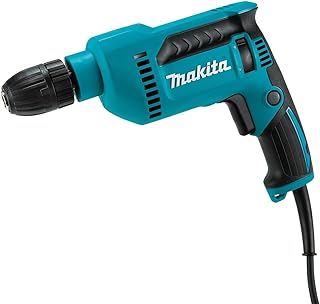


Choosing the right Makita angle drill is less about finding the most powerful model and more about matching the tool to the space, material, fastening task and frequency of use. An angle drill is designed for applications where a conventional drill cannot easily fit. Its compact right-angle head can make a significant difference when working between studs, inside cabinets, beneath sinks, around plumbing, or in other confined areas.
For Canadian buyers, the comparison should also consider battery platform, voltage, chuck design, speed control, torque, tool size, ergonomics and the type of work the drill will perform. A model that is ideal for repetitive construction work may be unnecessarily large for cabinet installation or light renovation tasks. Likewise, a compact drill intended for delicate work may not be the right choice for demanding drilling in structural materials.
This guide focuses on the characteristics that matter when comparing Makita angle drills in Canada in 2026. Before purchasing, compare the exact model specifications, included accessories, battery configuration and current retailer information because package contents and availability can change.
Makita has a broad power-tool range covering cordless and corded equipment, making its angle drills relevant to tradespeople, contractors, installers, maintenance workers, remodelers and serious DIY users. The brand's angle-drill designs generally focus on combining access, controllability and drilling performance in situations where a conventional drill is awkward to position.
The biggest advantage is access. A traditional drill requires enough clearance behind the chuck and motor to position the tool correctly. An angle drill changes that geometry. The shorter head configuration allows the operator to work in spaces where a standard drill may collide with surrounding surfaces.
Cordless angle drills are often the most flexible choice for modern job sites. Without a power cord, the operator can move around framing, cabinets, workbenches and unfinished spaces without searching for an electrical outlet. The main consideration is the battery platform. Buyers who already own compatible Makita batteries may find a bare-tool configuration particularly attractive, while first-time users need to account for the cost of the battery and charger.
Cordless models can vary considerably in size and performance. Compact versions prioritize maneuverability, while higher-voltage designs may provide greater capability for demanding drilling. Do not assume that the highest voltage automatically represents the best purchase. Tool size, balance and access can matter more when the primary reason for buying an angle drill is confined-space work.
Corded angle drills can make sense for users who work in a fixed workshop or near reliable electrical power. Their operation does not depend on battery capacity, making them useful for extended work sessions where uninterrupted runtime is important.
The trade-off is mobility. A cord can become inconvenient when working on construction sites, ladders, unfinished buildings or locations where power access is limited. The best configuration depends on how and where the drill will be used rather than on the power source alone.
Some angle drills are designed around maximum access rather than maximum drilling capacity. These tools can be particularly useful for installers and tradespeople who regularly encounter narrow gaps. A compact head can make it easier to position the bit accurately without moving surrounding components.
When comparing compact models, pay close attention to the published chuck capacity, speed range and recommended applications. Small dimensions are useful only if the drill still provides enough capability for the materials and bits you intend to use.
Voltage provides a useful starting point when comparing cordless drills, but it should not be treated as a standalone measure of performance. Battery chemistry, motor design, gearing and overall tool construction also influence how a drill behaves under load.
For light installation work, a compact battery system may be sufficient. For larger holes, tougher materials and repetitive professional use, a higher-capacity platform can provide a more suitable combination of power and runtime.
Rotational speed affects drilling efficiency and bit selection. Higher speeds can be useful for smaller bits and appropriate materials, while lower speeds provide greater control for larger drilling operations.
A variable-speed trigger is particularly valuable because it allows the operator to start slowly, establish the hole accurately and then increase speed as appropriate. Always follow the bit manufacturer's recommended operating speed for the material being drilled.
Torque is important when a drill encounters resistance. Higher torque can be beneficial for larger holes and demanding applications, but maximum torque alone does not determine whether a tool is suitable for a particular job.
For an angle drill, controllability is equally important. Excessive force can make a tool harder to manage in confined areas. Consider the relationship between torque, speed, gearing and ergonomics rather than choosing solely from a single specification.
The chuck determines which drill-bit shanks the tool can accommodate. Common chuck sizes are designed around different ranges of accessories, so check the manufacturer's specification before buying.
A larger chuck capacity can provide greater flexibility, but it can also influence the physical dimensions of the tool. If the primary objective is reaching extremely restricted areas, a compact chuck and head may be more valuable than maximum accessory capacity.
A keyed chuck uses a chuck key to tighten the jaws around the bit. A keyless chuck can normally be tightened by hand, which can speed up bit changes and eliminate the need to keep track of a separate key.
Neither design should automatically be considered superior. The better option depends on the work environment, bit changes, personal preference and the manufacturer's intended use for the tool.
Multiple mechanical speed ranges can make an angle drill more versatile. A lower range can be useful for controlled, high-resistance applications, while a higher range can be appropriate for faster drilling with suitable accessories.
When comparing models, look at the complete speed range rather than focusing only on the highest RPM figure.
Size is one of the most important buying criteria because an angle drill is specifically intended for restricted access. A powerful tool that cannot fit between the surrounding surfaces has little practical value.
Check the dimensions of the drill head and the overall tool profile. Consider the amount of clearance required to insert a bit, operate the trigger and maintain a comfortable grip. A few millimetres of additional clearance can sometimes determine whether a tool is practical in a particular installation.
Weight also matters. Repeated overhead or awkward-position drilling can become tiring with a heavier tool. For professional users who spend many hours drilling, balance may be more important than a small difference in headline power.
A good angle drill should be manageable in the position where it will actually be used. Look for a comfortable grip, logical control placement and a shape that allows the operator to keep the tool aligned with the hole.
If you are buying a cordless Makita angle drill, battery compatibility deserves careful attention. Makita has developed several battery-powered tool platforms, and compatibility is not universal across every voltage family or tool generation.
Before ordering a bare tool, confirm that your existing battery is specifically compatible with the selected model. Do not assume that two Makita batteries are interchangeable simply because they carry the same brand name.
Buyers starting from scratch should compare the complete system cost. A tool-only listing can appear less expensive than a kit, but the total investment changes once a compatible battery and charger are added.
Battery capacity affects how long a cordless drill can operate before recharging, although actual runtime varies according to load, material, bit size, drilling technique and battery condition.
A higher-capacity battery can increase runtime but may also add weight. For confined-space work, a smaller battery may improve maneuverability. For repetitive drilling on a construction project, additional capacity may be more useful.
If you already use several compatible cordless tools, owning multiple batteries can be more practical than selecting a single very large battery. It allows one battery to charge while another is being used.
Angle drills are particularly useful for wood framing, cabinetry and installation work. The correct bit, speed and drilling technique are still essential. Large-diameter holes create more resistance than small pilot holes, so the drill should be selected according to the largest and most demanding holes you expect to make.
Metal drilling requires greater attention to speed, bit selection and heat management. Use drill bits designed for the specific metal and follow appropriate cutting-speed guidance. Excessive speed can generate heat and shorten bit life.
For frequent metal drilling, compare the drill's speed control and torque characteristics rather than choosing solely on compact dimensions.
Not every angle drill is intended for masonry drilling. A conventional drill or dedicated hammer drill may be more appropriate where impact action is required. Always verify the manufacturer's intended applications before attempting to drill concrete, brick or masonry.
Electronic control can improve consistency by helping the operator manage speed through changing loads. It can be especially useful when working with different materials and bit sizes.
An integrated LED can illuminate the immediate drilling area. This feature is useful in cabinets, framing cavities and other poorly lit spaces. It is convenient rather than a substitute for proper work lighting.
A side handle can improve control when drilling applications require additional force. However, a handle can also increase the clearance needed around the tool. Check how the handle is positioned and whether it can be used effectively in your intended workspace.
Forward and reverse operation is useful for backing bits out of holes and removing fasteners where the tool is designed for that purpose. It also gives the operator greater control during certain installation tasks.
Brushless motor designs are widely used in modern cordless power tools. They can provide an efficient motor architecture and reduce the need for traditional motor brushes. However, the presence of a brushless motor should not be treated as the only indicator of tool quality.
DIY users should first identify the type of work they actually perform. If the drill will be used occasionally for cabinets, shelving, furniture or home renovation, a compact and manageable model may be preferable to a larger professional-oriented tool.
Consider the bits you already own, your existing battery platform and the amount of clearance available in your most common applications. Buying excessive capacity can increase cost and weight without providing a meaningful benefit for occasional users.
Professional users should take a broader view. Runtime, durability, ergonomics, accessory compatibility and serviceability can become more important when a tool is used repeatedly throughout the working week.
Tradespeople should also consider whether the angle drill complements their existing equipment. A compact angle drill can fill an important gap in a tool collection even when a conventional drill already handles most everyday drilling tasks.
A standard drill is generally more versatile for everyday drilling and fastening because of its conventional shape. An angle drill becomes valuable when access is the limiting factor.
For many users, the two tools are complementary rather than competing products. A standard drill can handle routine tasks while an angle drill solves access problems.
An impact driver is primarily designed around fastening and high-torque driving applications, while an angle drill is fundamentally a drilling tool. Some models can handle fastening with suitable accessories, but the two tools should not be considered identical.
If your main task is drilling accurately in restricted locations, an angle drill is the more appropriate category to investigate. If your work consists largely of driving screws and bolts, an impact driver may better match the application.
Makita competes in a market that includes established manufacturers such as DeWalt, Milwaukee, Bosch and Metabo HPT. The right choice depends on the complete tool ecosystem rather than brand recognition alone.
Battery-platform compatibility is one of the strongest reasons to stay within an existing ecosystem. If your workshop already contains several compatible tools and batteries, adding an angle drill from the same platform can reduce the need to purchase additional power equipment.
When comparing brands, evaluate the specific models rather than assuming one manufacturer is automatically better in every category. Compare published specifications, ergonomics, accessory compatibility, warranty terms and current retailer information.
Maximum power does not automatically mean maximum usefulness. In confined spaces, a compact tool with good control can be more practical than a larger high-output model.
This is one of the biggest mistakes when purchasing an angle drill. Measure the area where the tool will be used and compare those measurements with the manufacturer's published dimensions.
A bare tool is not a complete cordless system. If you do not already own compatible batteries and a charger, calculate the total system cost before comparing prices.
The drill cannot compensate for an unsuitable accessory. Match the bit to the material, hole size and intended speed.
A drill that feels manageable for a few minutes may become tiring during repeated overhead work. Consider how long you normally work with the tool.
Always verify the manufacturer's intended applications. A tool designed for wood and metal drilling should not automatically be treated as suitable for concrete or masonry.
When narrowing a shortlist, use the same criteria for every model. This prevents a low price or impressive single specification from dominating the decision.
Specifications are most useful when interpreted together. For example, a high maximum RPM figure does not tell you how well the drill performs at low speed. Similarly, a high torque specification does not tell you whether the tool is comfortable to use in a narrow cavity.
Start with the application, identify the required hole sizes, determine the materials involved and then compare the models against those requirements. This approach produces a more useful shortlist than beginning with price or a single headline specification.
Wear appropriate eye protection when drilling. Use hearing protection when the working environment and exposure level require it. Secure the workpiece whenever practical and use the correct bit for the material.
Before drilling into walls, framing or finished surfaces, identify potential electrical wiring, plumbing and other concealed services. In renovation work, do not assume that an empty-looking drilling location is free of hidden hazards.
Keep hands away from rotating accessories and allow the bit to stop before making adjustments. Remove the battery or disconnect the power source when changing accessories if the manufacturer's instructions call for it.
Follow the operating, maintenance and safety instructions supplied with the specific Makita model. The manufacturer's manual takes precedence over general buying-guide advice.
Regular care can help keep a power tool in suitable working condition. After use, remove accumulated dust and debris from accessible surfaces. Keep ventilation openings clear and inspect the power cord, battery connection, chuck and other components for visible damage.
A bare-tool package can be economical for buyers who already own compatible Makita batteries and chargers. A kit can be more convenient for someone entering a particular cordless platform for the first time.
Compare the complete package rather than comparing sticker prices alone. Check the exact battery capacity, charger model, carrying case and included accessories. Two listings for the same basic drill can represent significantly different packages.
Online product listings can change, so verify the exact model number before completing a purchase. Product titles can sometimes describe several configurations while the actual package contains different accessories or excludes the battery.
If restricted access is your primary concern, prioritize compact dimensions and balance. A model that can be positioned between framing members or inside cabinetry without excessive clearance can provide more practical value than one with substantially greater power.
Look at the head profile, chuck arrangement, grip position and battery size. The battery can be particularly important because a large pack may extend the tool's overall footprint.
Construction users should prioritize a suitable combination of drilling capacity, durability, runtime and operator control. Repetitive drilling through framing can place greater demands on the tool than occasional household work.
Consider the largest holes you regularly drill rather than selecting a tool around your smallest tasks. Also consider how easily the drill can be carried, stored and accessed throughout a working day.
Cabinet and installation work often rewards compact dimensions and precise control. The ability to approach a drilling location without striking adjacent surfaces can be more important than raw torque.
A variable-speed trigger can also help when positioning the bit and starting a clean hole. Choose accessories appropriate for finished materials and use suitable techniques to reduce the risk of damaging visible surfaces.
Occasional users should avoid paying for specifications they are unlikely to use. A compact model compatible with an existing battery platform may provide the most sensible balance.
If you do not already own cordless Makita tools, compare the cost of the complete battery system. If your drilling needs are infrequent and you work mainly in a workshop, a corded option may also be worth considering where appropriate.
There is no single price point that represents the best value for every Canadian buyer. Pricing varies by model, configuration, battery inclusion, retailer and promotions. Instead of setting a budget around the cheapest available option, identify the features that directly affect your work.
For professional use, paying more for the correct ergonomics, capacity and battery ecosystem may make sense. For occasional projects, a simpler model can be the better value if it satisfies the required applications.
Always compare the total cost of ownership, including batteries, chargers and accessories when they are not already available.
Customer reviews can provide useful information, but they should be interpreted carefully. Focus on reviews that describe the same type of work you intend to perform. A homeowner using an angle drill for occasional cabinetry may have very different expectations from a contractor drilling framing holes every day.
Look for recurring comments about ergonomics, battery compatibility, handling, chuck operation and suitability for particular applications. Give greater weight to detailed reviews that explain the circumstances of use than to ratings without supporting information.
Makita product families can contain closely related tools with different specifications or package configurations. The exact model number is therefore essential when comparing products.
Before relying on a specification, match it to the precise model being considered. This is particularly important for battery kits, regional configurations and bare-tool listings.
Canadian shoppers should verify that the selected product is intended for the Canadian market and that the listing provides the correct electrical, battery and package information. Retail availability can vary between provinces and retailers, particularly for specialized professional tools.
When comparing online offers, consider the final delivered cost, retailer policies and the availability of compatible batteries and accessories in Canada. A tool that is easy to integrate into an existing local tool ecosystem can be more practical than an otherwise similar product with difficult accessory availability.
A Makita angle drill is designed for drilling applications where the restricted profile of a right-angle tool provides better access than a conventional drill. Common uses include framing, cabinetry, plumbing-related work, installation and maintenance.
Makita offers cordless power-tool systems as well as corded tools across its product range. Check the exact model specification because the power source, battery requirements and package contents differ between models.
No. Higher voltage can be useful for demanding applications, but the best model depends on the required drilling capacity, tool size, weight, battery system and working environment.
Not necessarily. An angle drill excels in restricted areas, while a conventional drill is usually more convenient for general-purpose work. Many users can benefit from having both types available.
Some models are suitable for metal drilling when used with appropriate accessories and within the manufacturer's specified applications. Check the exact model documentation before drilling metal.
Do not assume that an angle drill is suitable for concrete simply because it can drill other materials. Masonry applications may require a tool with an appropriate hammering function and a compatible masonry accessory.
A bare tool can make sense if you already own compatible Makita batteries and a charger. If you do not, compare the total cost of the tool, battery and charger against complete kits.
Access, dimensions, weight, speed control, chuck capacity, power system, battery compatibility and intended application are among the most important criteria. The correct priorities depend on your specific work.
The appropriate Makita model can be considered for professional applications, but suitability depends on the exact tool, workload, materials, drilling requirements and working conditions. Compare specifications and manufacturer guidance for the model you are considering.
Compare the exact model numbers, dimensions, weight, speed range, chuck configuration, battery platform, included accessories and intended applications. Then choose the model that better matches your actual work rather than the one with the most impressive single specification.
The most useful comparison is not simply a ranking based on a single specification. Angle drills serve different users and applications, so the evaluation should consider access, drilling capability, ergonomics, battery compatibility, configuration and intended workload together.
Use the information in this guide as a framework for comparing the exact Makita models currently available to you. Product specifications, package contents, customer ratings, prices and retailer availability can change during 2026, so verify those details immediately before purchasing.
For the best buying decision, prioritize the tool that solves your actual access and drilling requirements. A compact, well-matched angle drill can be far more useful than a larger model with specifications you never need, while professional users may benefit from additional capacity, runtime and durability-oriented features.