
Explore cordless power tools, kits, batteries, chargers, accessories and related equipment available to Canadian shoppers. Compare product options and follow useful buying guides before you buy.



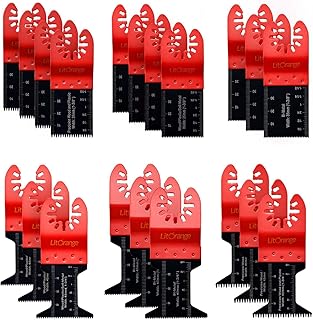


Choosing the right oscillating multi-tool blade can make a significant difference to cutting speed, control, finish quality and blade life. A multi-tool can handle many different jobs, but no single blade is equally effective on every material. Wood, hardwood, nails, screws, plastic, drywall, grout, cement board and metal each place different demands on the cutting edge.
For Canadian buyers, the first priority should be compatibility with the multi-tool already in your workshop. Blade shape, mounting system, tooth design, material and cutting width are equally important. A premium blade can perform poorly if it is designed for a different application or does not properly match the tool interface.
This 2026 buying guide focuses on the factors that matter when comparing multi-tool blades, including blade materials, tooth patterns, mounting systems, cutting depth, width, durability, precision and value. Brands commonly encountered in this category include Bosch, FEIN, Milwaukee, Diablo and Imperial Blades.
Rather than assuming one blade is best for every user, it is more useful to compare blades according to their intended application. The right choice for a renovation contractor may be very different from the right choice for someone completing occasional DIY repairs.
A general-purpose blade is usually the most practical starting point for homeowners and DIY users who need one accessory for several common jobs. These blades are intended to handle everyday cutting tasks rather than specialising in one unusually hard material.
Look for a balanced tooth design, adequate cutting depth and a blade material suited to the materials you normally encounter. A bi-metal blade can be particularly useful when a project involves wood and occasional embedded nails or other fasteners.
General-purpose blades are useful for trimming timber, cutting openings, modifying cabinets, removing damaged sections and completing repair work where access is limited. They are not necessarily the fastest option for every application, but versatility can make them more useful than buying several highly specialised blades.
Bi-metal blades are among the most versatile choices for renovation and maintenance work. Their construction is designed to provide a useful balance between cutting performance and resistance to wear.
They are especially attractive when wood may contain nails, screws or other unexpected fasteners. Using a basic high-carbon steel blade against metal can lead to rapid wear, while a suitable bi-metal blade is better suited to mixed-material situations.
For example, a blade intended for wood with nails can be useful when cutting through old framing, trim or renovation materials where the exact contents of the workpiece are not completely predictable.
Bosch offers Starlock bi-metal options in several widths and configurations, while Milwaukee provides Universal Fit bi-metal alternatives for compatible non-Starlock tools. Always confirm the interface before ordering.
Hardwood requires a blade that can maintain an effective cutting edge while producing controlled cuts. Tooth geometry is particularly important because hardwood can place greater resistance on the blade than ordinary softwood.
Fine or specialised tooth patterns can provide cleaner results where appearance matters. They can be useful for cabinet modifications, flooring adjustments, trim work and detailed carpentry.
Do not automatically choose the widest blade available. A narrower blade can provide better access in confined spaces, while a wider blade can offer greater stability for certain straight cuts. Your priority should be matching blade width and tooth configuration to the job.
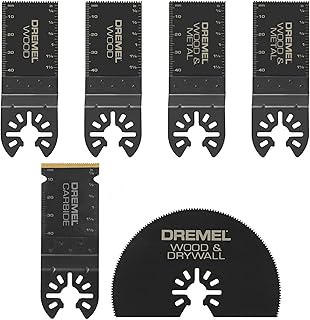
Carbide blades are designed for applications where ordinary steel or bi-metal blades may wear too quickly. They are particularly relevant to demanding metal and abrasive-material cutting tasks.
Carbide should not simply be selected because it sounds more durable. It is a specialist solution, and the additional capability may be unnecessary for routine wood cutting. If most of your projects involve timber, plastic or drywall, a quality HCS or bi-metal blade may be a more sensible choice.
For difficult metal work, however, carbide teeth can offer a major advantage. Bosch, for example, offers carbide Starlock blades intended for sheet metal and abrasive applications. Always follow the manufacturer's stated material recommendations before cutting.
Segmented blades have a partially circular cutting profile that can be particularly useful for straight cuts, flush cuts and work along an edge. They are often easier to control for certain trimming applications than a conventional plunge-cut blade.
A segmented blade can be valuable when removing sections of flooring, trimming door jambs, cutting through trim or making a controlled cut along a surface. The open profile can also make positioning easier when you need to start a cut at a specific point.
Choose the diameter and tooth configuration according to the size of the cut and the material. Larger blades are not automatically better. A compact blade may provide better visibility and control in tight areas.
Drywall, insulation-related materials and certain plastics generally require a different approach from hardwood or metal. A blade with an appropriate tooth pattern can make these materials easier to cut while reducing unnecessary resistance.
For renovation projects, a multi-tool can be particularly useful when creating small openings around electrical boxes, plumbing penetrations, vents or damaged wall sections. A narrow blade can provide better control when working close to finished surfaces.
Take extra care when cutting inside existing walls. The blade may encounter electrical wiring, plumbing or structural components that are not visible from the surface. A multi-tool should not be treated as a substitute for locating hidden services before cutting.
Plastic and PVC can melt, deform or produce rough edges when the wrong blade or cutting technique is used. Tooth configuration and cutting speed both influence the result.
A blade suitable for plastic should be selected according to the manufacturer's recommended applications. Avoid forcing the tool through the material. Excessive pressure can increase heat and reduce control.
For plumbing and maintenance work, consider whether the blade needs to handle only clean PVC or a combination of PVC, wood, nails and other materials. A multi-material blade can be more convenient for mixed jobs, while a dedicated blade can provide better results when the material is consistent.
Metal cutting is one of the areas where blade selection matters most. Thin sheet metal, nails, screws and heavier metal components do not necessarily require the same blade.
Bi-metal blades are often suitable for lighter mixed-material applications, while carbide solutions are more appropriate for certain demanding metal and abrasive applications. Check the manufacturer's material recommendations rather than assuming that any metal-cutting blade can handle every alloy or thickness.
When cutting metal, use appropriate eye protection and keep the workpiece securely supported. Sparks, hot fragments and sharp edges can create hazards even during relatively small cuts.
Grout removal is one of the most useful specialist applications for an oscillating multi-tool. A suitable abrasive or carbide accessory can remove grout in confined spaces where larger equipment would be difficult to position.
Blade width is especially important for grout work. A narrower accessory can provide more precise control in tight joints, while a wider accessory may cover more material in larger areas.
Do not use a wood-cutting blade for abrasive applications simply because it fits the tool. Abrasive materials can rapidly damage cutting edges that were designed for timber or plastic.
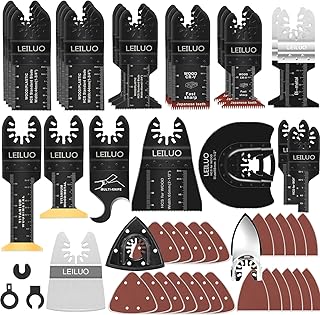
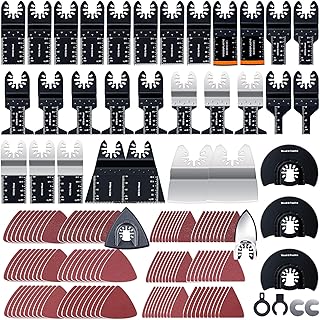
A multi-tool blade set can be a practical choice when you are building an accessory collection from scratch. Instead of buying several individual blades immediately, a carefully selected kit can provide different tooth patterns and materials for common jobs.
The important word is carefully. A large pack is not necessarily better value if most of the blades are unsuitable for your projects. Compare the actual blade types included, rather than judging a kit by its piece count alone.
A useful starter collection might include a general-purpose bi-metal blade, a wood blade, a segmented blade and a specialist accessory for the materials you work with most often.
Compatibility is one of the most important factors when buying oscillating multi-tool blades. Blade interfaces are not universally interchangeable, even though many products may be marketed using terms such as universal fit.
Starlock is a major oscillating accessory interface associated with brands such as Bosch and FEIN. Universal Fit systems are also used by manufacturers including Milwaukee on compatible non-Starlock tools. Some tools and accessories may support adapters, but compatibility should always be verified for the exact tool and blade combination.
Do not rely solely on the brand name. Check the model number of your multi-tool and compare it with the blade manufacturer's compatibility information.
Starlock accessories are designed around a specific mounting system and are available in different levels and configurations. The exact Starlock category accepted by a tool matters, particularly when comparing Starlock, Starlock Plus and Starlock Max equipment.
A Starlock blade should not be assumed to fit every tool simply because both products carry the Starlock name. Verify the exact interface supported by your model before purchasing.
Universal-fit accessories are designed to work with a broad selection of compatible oscillating tools. They can be attractive to users who own a non-Starlock tool or several tools from different manufacturers.
However, the term universal does not mean literally universal. Some mounting systems exclude Starlock tools, while certain older or less common tools may require a particular adapter.
High-carbon steel blades are commonly suited to wood and other relatively soft materials. They can be economical for routine cutting but may wear faster when exposed to nails, screws, hardened materials or abrasive surfaces.
Bi-metal blades combine characteristics intended to improve durability and versatility. They are a strong choice for mixed-material renovation work, especially where wood may contain nails or fasteners.
Carbide blades are designed for demanding applications where extended wear resistance is important. They can be particularly useful for certain metals, abrasive materials and specialist renovation tasks.
Diamond or abrasive accessories are specialist products intended for specific materials. They should be selected according to the manufacturer's application guidance rather than used as general-purpose cutting accessories.
Blade width affects access, control and the character of the cut. A narrow blade can be easier to position in confined spaces and may provide better visibility around obstacles. A wider blade can be useful when stability and coverage are more important.
For detailed work, smaller widths are often easier to manage. For longer straight cuts, a wider or segmented accessory may be more convenient. There is no universally correct blade width.
Cutting depth is another specification that should not be overlooked. A blade that is too short may not reach through the material, while an unnecessarily long blade can make control more difficult.
For plunge cuts, consider the thickness of the material and leave enough clearance to avoid contacting surfaces behind the workpiece. Depth markings can also help prevent accidental over-cutting.
Plunge-cut blades are designed to enter the material directly from the surface. They are useful when starting a cut in the middle of a panel without an existing edge.
Segmented blades have a more open cutting profile and are often useful for trimming, flush cuts and controlled cuts along edges.
If your projects involve cabinet modifications, flooring, door jambs and wall openings, having both styles available can be more useful than buying several blades of only one type.
Japanese-tooth blades use a tooth configuration intended to produce fast, controlled cutting in suitable wood applications. They can be particularly useful when working with hardwood and when a cleaner cut is more important than simply removing material as quickly as possible.
Milwaukee offers Japanese-tooth oscillating blades within its Universal Fit accessory range. As with any specialised blade, check the recommended materials before use.
Start by identifying the type of wood and the desired result. Softwood, hardwood, plywood, painted timber and wood containing nails can all benefit from different blade designs.
Renovation work often involves unknown materials. A wall, cabinet, floor or piece of trim may contain wood, nails, screws, adhesive, plastic or other materials.
For these projects, versatility is usually more valuable than buying a blade optimised for a single clean material. A small selection of quality bi-metal, wood and segmented accessories can cover many common repair situations.
Keep specialist carbide or abrasive blades available when your projects regularly involve metal, grout, cement board or other difficult materials.
Professionals should consider more than the purchase price of an individual blade. The effective cost per useful cut can be more important than the initial price.
Frequent users should consider blade longevity, cutting speed, consistency, compatibility and the availability of replacement packs. A blade that costs more but remains effective for significantly longer may be more economical for high-volume work, provided the application matches the blade.
For professional users, keeping several blade types organised by application can also reduce interruptions. A dedicated case or accessory organiser makes it easier to select the correct blade before starting a job.
This is one of the easiest mistakes to avoid. Always identify the exact mounting interface supported by your tool before purchasing.
The cheapest blade may not offer the lowest overall cost. If it wears quickly or produces poor cuts, repeated replacement can become more expensive than buying a suitable higher-quality accessory.
Multi-tools are versatile, but their accessories are application-specific. A wood blade should not automatically be treated as a metal blade, and a general-purpose accessory is not always the best choice for abrasive materials.
A large pack can look attractive, but unused specialist blades provide little value. Build the collection around the work you actually perform.
The widest blade is not necessarily the most useful. Consider access, visibility, cut length and control before choosing the size.
Even a premium blade can fail to perform well if the material is outside its intended application. Identify the material before choosing the accessory.
When comparing two or more blades, use a consistent set of criteria. This makes it easier to identify the product that actually fits your requirements instead of choosing based on packaging or brand recognition alone.
A large multi-tool blade pack is not automatically the best purchase. If you only need a few specific blade types, a smaller collection of appropriate accessories can provide better practical value.
On the other hand, frequent users may benefit from buying commonly used blades in larger packs. Compare the cost per blade and consider how frequently you replace accessories.
For occasional DIY use, prioritise versatility. For professional use, prioritise the combination of durability, productivity and predictable cutting performance.
Price should be considered alongside the application. Premium accessories can be worthwhile when you regularly cut demanding materials or need consistent results. For occasional softwood trimming, an expensive specialist blade may provide little additional value.
The most useful comparison is not simply the purchase price. Consider how much material you expect to cut, how often you replace blades and whether the accessory can handle multiple applications.
A blade should be replaced when it no longer produces the expected cut efficiently or safely. Visible tooth damage is an obvious warning sign, but gradual performance loss can also indicate that the cutting edge is worn.
Do not continue using a damaged blade simply because some cutting ability remains. Inspect accessories regularly, particularly after cutting hard or mixed materials.
Blade longevity depends heavily on using the correct accessory for the correct material. Applying excessive pressure is another common cause of premature wear. The tool should perform the cutting action rather than relying on force from the operator.
Keep the blade aligned with the intended cut and avoid twisting it unnecessarily. Secure the workpiece properly and allow the accessory to work at an appropriate speed.
After use, inspect the blade and store reusable accessories where their teeth cannot contact other metal tools. Specialist accessories should be kept separate when practical.
Good technique can make as much difference as blade selection. Begin with the accessory positioned securely and make sure the workpiece is stable.
For plunge cuts, allow the blade to enter gradually rather than forcing it deep into the material immediately. Maintain control as the cut progresses and avoid excessive sideways pressure.
For flush cuts, keep the blade orientation stable and avoid levering the accessory against the material. If the cut begins to wander, stop and reassess the blade selection, position and technique.
Oscillating multi-tools are versatile but still require appropriate precautions. Read the tool and accessory manufacturer's instructions before use and wear suitable personal protective equipment for the material being cut.
Several established manufacturers offer oscillating multi-tool accessories, but their ranges are not identical. The best brand depends on your tool platform, application and preferred blade types.
Bosch has a broad range of Starlock oscillating accessories covering wood, bi-metal, carbide and segmented applications. Its range can be particularly attractive to users who already own a compatible Bosch or other Starlock-equipped tool.
FEIN has a long association with oscillating multi-tools and offers accessories designed for its MultiMaster platform and compatible systems. FEIN's compatibility documentation is useful when checking which Starlock category works with a specific tool.
Milwaukee offers Universal Fit OPEN-LOK accessories for compatible non-Starlock tools, including bi-metal, carbide and Japanese-tooth options. Its range is worth considering for users already invested in the Milwaukee platform.
Diablo is another well-known accessory brand with oscillating multi-tool blades aimed at different materials and applications. Compare the exact blade construction and compatibility rather than selecting solely because of brand familiarity.
Imperial Blades offers a broad selection of oscillating accessories, including options for different interfaces and specialised applications. It can be worth considering when you need an accessory outside the most common general-purpose categories.
For occasional home maintenance, versatility is normally the most important characteristic. A small selection of reliable blades can handle cabinet modifications, trim cutting, flooring adjustments, drywall openings and general repair work.
Start with a general-purpose wood blade and a bi-metal option. Add a segmented blade if you frequently perform flush cuts. Specialist carbide or abrasive accessories can be purchased when a specific project requires them.
Contractors should select accessories according to the materials encountered most frequently. A renovation professional may need several bi-metal blades, while a flooring specialist may prioritise flush-cutting and segmented accessories.
Durability becomes increasingly important as usage increases. Maintaining spare blades also reduces downtime when a cutting edge becomes worn during a job.
Woodworkers should focus on tooth configuration, cut quality and control. Hardwood projects may benefit from specialised fine-tooth or Japanese-tooth designs, while general construction timber can often be handled effectively with standard wood or bi-metal accessories.
If the finished cut will remain visible, prioritise an accessory designed for clean cutting rather than choosing purely for speed.
Renovation work often rewards versatility. A contractor or serious DIY user may encounter timber, nails, drywall, plastic, adhesive and metal during the same project.
For this reason, a mixed accessory collection is generally more useful than a large quantity of identical wood blades. Keep a general-purpose bi-metal blade available for unpredictable materials and specialist accessories for tasks such as grout removal or abrasive cutting.
A sensible collection should grow according to actual projects. There is no need to purchase every blade type at once.
If you need to narrow a product list quickly, focus on five specifications first: compatibility, material, tooth pattern, blade width and cutting depth.
Compatibility determines whether the accessory can be mounted. Material determines what the blade is designed to cut. Tooth pattern influences cutting behaviour. Width affects control and coverage. Cutting depth determines whether the blade can reach through the workpiece.
Once these specifications match your requirements, consider durability, pack quantity and overall value.
Blade packaging often contains more useful information than it first appears. Look for the mounting interface, recommended materials, blade dimensions, material construction and intended application.
Words such as bi-metal, HCS, carbide, Japanese tooth, segmented, plunge and multi-material describe different characteristics. Understanding these terms makes it easier to compare products from different manufacturers.
If a package lists several applications, verify whether those applications are primary uses or simply possible uses. A multi-material blade can be convenient, but a dedicated blade may still be better when one material dominates the job.
Canadian buyers can find oscillating accessories through major hardware retailers, tool retailers and online marketplaces. Product availability, pack sizes and pricing can change, so compare the current specification rather than relying on an old product listing.
When shopping in Canada, pay attention to the exact model number, Canadian product description and compatibility information. Two accessories that look almost identical can use different mounting systems or have different intended applications.
Before purchasing, compare the current product specifications, customer feedback from verified purchasers and the retailer's current return conditions.
There is no single best blade for every Canadian buyer. The right choice depends on the multi-tool interface, material, cutting depth, tooth design and frequency of use. A quality bi-metal blade is a versatile starting point for many renovation tasks, while specialist wood, carbide or abrasive blades are better for specific applications.
No. Compatibility depends on the exact tool and Starlock category. Check the manufacturer's compatibility information for the specific model before purchasing.
No. Universal-fit terminology generally refers to compatibility across a broad range of supported tools. It does not guarantee compatibility with every oscillating multi-tool or every mounting system.
They are better suited to different requirements. Bi-metal blades are generally preferable for demanding mixed-material work, while HCS blades can be appropriate for routine wood applications. The best choice depends on the material and task.
A suitable bi-metal multi-material blade is generally a better choice than a basic wood-only blade when nails or other fasteners are expected. Confirm the manufacturer's recommended applications before cutting.
Look for a blade specifically designed for hardwood, particularly when cut quality matters. Fine-tooth or Japanese-tooth designs can be useful for suitable hardwood applications.
The answer depends on the type and thickness of metal. Bi-metal blades can be suitable for certain lighter or mixed-material applications, while carbide accessories are designed for more demanding metal and abrasive cutting.
You should not assume that a wood blade is suitable for metal. Select an accessory specifically rated for the material you intend to cut.
They can be worthwhile when you regularly cut demanding metal or abrasive materials. For occasional wood cutting, their specialist capability may not justify the additional expense.
Choose a set when you need several different blade types and expect to use them. Individual blades can be more economical when your projects consistently require only one or two specific configurations.
Blade life varies considerably according to the blade material, workpiece, cutting technique, pressure and frequency of use. There is no reliable universal lifespan that applies to every application.
Possible causes include using the wrong blade for the material, excessive pressure, sideways twisting, cutting abrasive material with an unsuitable accessory or simply reaching the normal wear limit of the blade.
Some FEIN accessories use compatibility standards that support multiple tool brands, but compatibility varies by blade and tool. Check the exact compatibility information for both products.
Compatibility depends on the particular Milwaukee tool and accessory interface. Do not rely on the brand names alone. Check the exact mounting system specified by the manufacturer.
Select the width and cutting depth according to the work. Narrow blades can improve access and control, while wider blades can provide greater coverage for suitable straight or flush-cutting applications.
The best multi-tool blade is not necessarily the most expensive, the widest or the one with the largest number of teeth. It is the accessory that matches your tool and performs the required task efficiently.
Start with compatibility. Then identify the material. Next compare blade construction, tooth pattern, width and cutting depth. Finally consider durability, pack quantity and overall value.
For general renovation work, a quality bi-metal blade is a useful foundation. Add dedicated wood or hardwood accessories when cut quality matters, segmented blades for appropriate flush-cutting work and carbide or abrasive accessories for demanding applications.
Before buying, compare the current specifications from trusted manufacturers such as Bosch, FEIN, Milwaukee, Diablo and Imperial Blades. Read verified customer feedback carefully, confirm the exact tool interface and compare today's Canadian prices across reputable retailers. A smaller collection of correctly selected blades will usually be more useful than a large assortment that does not match your tools or projects.