

♥ Wishlist






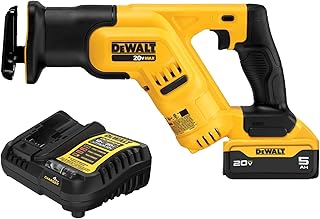

A DeWalt cordless reciprocating saw is a versatile cutting tool built around a back-and-forth blade motion. Unlike a traditional corded reciprocating saw, a cordless model does not require a nearby electrical outlet, making it particularly practical for construction sites, renovation projects, demolition work and outdoor applications. The compact, portable format also makes it easier to move between work areas when several cuts are required in different locations.
Reciprocating saws are often associated with demolition because their blade movement and interchangeable blades allow them to handle a broad range of materials. They can be used for tasks such as cutting lumber, removing sections of framing, trimming pipes, cutting metal components and dismantling unwanted materials. For renovation work, the same basic tool can be useful when removing old fixtures, opening up sections of a structure or making cuts where a larger saw would be inconvenient.
For Canadian contractors and DIY users, cordless operation can be especially useful when working in unfinished buildings, garages, exterior areas or locations where running an extension cord is inconvenient. Battery power keeps the work area less cluttered and allows the saw to travel easily with the rest of your tools.
When comparing DeWalt cordless reciprocating saws, look beyond the brand name and consider the features that match your applications. Stroke length influences how much blade movement occurs during each cycle, while strokes per minute indicates the speed at which the blade moves. A model with variable-speed control can provide greater control when starting a cut or working with different materials.
Tool balance and weight are also important. A lighter saw can be easier to manoeuvre overhead or in confined areas, while a more robust design may be preferable for frequent heavy-duty demolition. Look for practical features such as tool-free blade changes, a comfortable grip, an adjustable shoe and controls that are easy to access while wearing work gloves.
If you already use cordless DeWalt tools, battery compatibility should be one of the first considerations when selecting a reciprocating saw. Staying within a compatible battery platform can make it easier to share batteries and chargers across your existing tools. Buyers starting a new cordless system should consider the total tool ecosystem rather than evaluating the saw alone.
Battery capacity can also affect how long you can work between charges. Higher-capacity batteries may be useful for extended cutting and demolition sessions, while smaller battery packs can help reduce overall tool weight for shorter or less demanding jobs. Always check the specific product listing for battery and charger inclusions before purchasing, as configurations can vary.
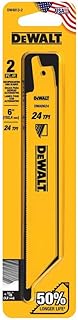
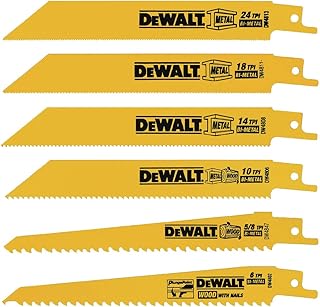
The blade has a major effect on reciprocating saw performance. Different tooth patterns and materials are designed for different applications. Wood-cutting blades are generally selected for lumber and similar materials, while metal-cutting blades are designed for applications involving metal. Multi-purpose blades can be useful when a job involves several materials and you want to avoid changing blades frequently.
For the best results, choose a blade appropriate for the material and thickness being cut. Allow the saw to do the work rather than forcing the blade through the material. Using the correct blade and maintaining appropriate contact with the workpiece can improve control and help extend blade life.
DeWalt is a well-known power tool brand among construction professionals, tradespeople and DIY users. Its cordless reciprocating saw range is aimed at users who value portable cutting performance and compatibility with a broader cordless tool setup. Depending on the model, users can find different combinations of speed, stroke characteristics, ergonomics and jobsite-oriented features.
For Canadian shoppers, the right choice ultimately depends on the type of work you perform, how frequently you use a reciprocating saw and which cordless batteries you already own. A homeowner tackling occasional renovation work may prioritise compact size and convenience, while a contractor performing daily demolition may place greater emphasis on runtime, durability, cutting control and overall productivity.
Before choosing your next cordless reciprocating saw, compare the available specifications and consider the applications you expect to handle most often. Think about the materials you cut, how much portability matters, whether you need variable-speed control and whether the tool should work with batteries already in your collection. Reviewing these factors can help you select a saw that fits your workflow instead of paying for features you may not need.
Browse the DeWalt cordless reciprocating saws category to compare suitable options for demolition, construction, renovation, maintenance and general cutting tasks. Whether you are preparing for a major project or upgrading your jobsite tools, a cordless reciprocating saw can be a practical addition to a portable cutting setup.
Take on demolition, renovation and demanding cutting jobs with DeWalt cordless reciprocating saws. Designed for the convenience of cordless operation, these saws are well suited to cutting through wood, metal, plastic, drywall and other common jobsite materials. Whether you are a professional tradesperson, contractor, renovator or serious DIY user in Canada, a cordless reciprocating saw can provide the cutting freedom needed when working in tight spaces or away from a power outlet. Explore this category to find a DeWalt cordless reciprocating saw suited to your workload, preferred battery platform and cutting requirements. When choosing a model, consider factors such as stroke length, strokes per minute, variable-speed control, tool weight, ergonomics, blade changes and overall portability. Matching the saw to the work can help you make cleaner cuts, work more comfortably and get through demanding tasks efficiently.