

Explore cordless power tools, kits, batteries, chargers, accessories and related equipment available to Canadian shoppers. Compare product options and follow useful buying guides before you buy.







Choosing the right Craftsman cordless screwdriver involves more than comparing voltage or looking for the highest customer rating. The ideal model depends on the type of fastening work, available battery platform, torque requirements, ergonomics, workspace conditions and the range of bits you intend to use. Canadian buyers should also consider whether a tool is supplied as a complete kit or as a bare tool, because batteries and chargers can significantly affect the overall cost.
Craftsman has a broad cordless tool ecosystem, so compatibility is an important part of the buying decision. Before selecting a screwdriver, check the exact battery system, included accessories, chuck or bit interface, speed settings and torque control. A compact screwdriver can be excellent for assembling furniture and installing hardware, while a more powerful cordless drill/driver may be better suited to demanding fastening and drilling applications.
A good cordless screwdriver should provide controlled fastening rather than simply maximum power. Excessive torque can damage screw heads, strip threads or drive fasteners too deeply into softer materials. For everyday household and workshop work, precise control can be more valuable than raw output.
The strongest buying candidates generally combine a useful speed range, practical torque control, comfortable handling and dependable battery operation. The tool should also be appropriate for the fasteners and materials you commonly work with.
One of the most important distinctions is between a dedicated cordless screwdriver and a drill/driver. These tools overlap, but they are not always interchangeable for every task.
A dedicated screwdriver is generally designed around controlled fastening. Its compact format can be particularly useful for furniture assembly, cabinetry, fixtures, electrical work and routine household repairs. When working in confined spaces, a smaller tool may be easier to position than a full-size drill/driver.
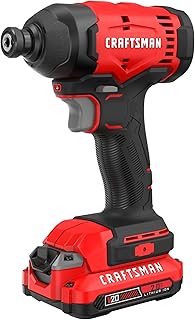
A drill/driver normally provides greater versatility. It can handle screwdriving as well as drilling when fitted with the appropriate accessories. Models with a conventional adjustable chuck can accept a broader selection of drill bits and driver accessories.
If most of your work involves screws, a purpose-built screwdriver may provide the handling characteristics you prefer. If you regularly switch between drilling and fastening, a Craftsman cordless drill/driver can offer broader functionality.
Voltage is one of the specifications buyers often notice first, but it should not be treated as a standalone measure of real-world performance. Battery voltage describes the electrical platform rather than guaranteeing a particular level of torque, runtime or speed.
Two tools operating on different battery systems can have very different designs and intended applications. A compact screwdriver designed for light fastening should not be judged by the same expectations as a larger drill/driver.
Instead of choosing solely by voltage, examine the complete specification set. Look at speed range, torque adjustment, battery capacity, tool weight, physical dimensions and the manufacturer's intended application.
Torque control is particularly important when driving screws into materials that can be damaged by excessive force. A clutch allows the user to limit the driving force and can help produce more consistent results.
Lower torque settings can be useful for delicate fastening, while higher settings may be appropriate for larger fasteners or tougher materials when the tool is designed for that application. The correct setting depends on screw size, material, fastener type and the desired depth.
Do not assume that the highest clutch setting is automatically the best option. Proper adjustment can protect the workpiece and reduce the likelihood of stripped screw heads.
Battery capacity is another major consideration when comparing Craftsman cordless screwdrivers. Capacity is commonly expressed in ampere-hours, but advertised capacity alone does not determine exactly how long a tool will operate.
Runtime changes with workload, material resistance, screw size, speed, temperature, battery condition and how frequently the motor is operated. Continuous heavy fastening places different demands on a battery than occasional furniture assembly.
For light household use, a compact battery may offer an attractive balance between runtime and tool weight. For extended workshop sessions, having a higher-capacity battery or a second compatible battery can reduce interruptions.
Canadian shoppers should carefully distinguish between a bare tool and a complete kit. A bare tool may be appealing when you already own compatible Craftsman batteries and a charger. If you are starting a cordless tool collection, a kit containing the tool, battery and charger may be more convenient.
Always verify exactly what is included in the specific product package. The same model family can appear in different configurations, and accessories can vary between listings.
The connection between the screwdriver and the bit affects convenience and compatibility. Many compact screwdrivers use a quick-change hex interface, while drill/drivers commonly use an adjustable chuck.
A quick-change system can make switching between frequently used driver bits convenient. A chuck, however, can provide broader accessory compatibility because it can accommodate different bit and drill-shank sizes within its stated range.
Think about the accessories you already own before selecting a tool. If you frequently use specialty bits, extensions or drilling accessories, verify that the tool's interface supports them.
Variable-speed control helps users adjust operation to the task. Lower speeds can make it easier to start a screw accurately and reduce the risk of losing control. Higher speeds can make repetitive fastening more efficient when the application allows it.
A responsive trigger can also improve precision. This is particularly useful when working with small screws, delicate hardware or finished surfaces where excessive speed can cause mistakes.
When comparing products, consider whether the tool offers one speed range, multiple mechanical speeds or electronic control. The most useful configuration depends on the type of work you perform.
Tool weight becomes increasingly important during repetitive tasks. A screwdriver that feels comfortable for several minutes may become tiring during extended work above shoulder height or while fastening multiple components.
Pay attention to handle shape, grip position, balance and the location of the battery. A battery mounted at the base can influence how the tool sits in the hand. Compact dimensions can also make a meaningful difference when working inside cabinets or between closely spaced components.
For Canadian DIY users completing occasional repairs, comfort can be more important than maximum specification numbers. Professionals and frequent users should place even greater emphasis on handling because the tool may be used repeatedly throughout the working day.
An integrated LED light can improve visibility around the fastening point. This is useful inside cabinets, beneath furniture, in utility areas and in other locations where the tool or user's hand may cast a shadow.
A work light does not replace proper workspace lighting. However, it can provide useful illumination directly around the bit and fastener. Buyers should consider the position of the LED because light placement can affect how effectively it illuminates the screw.
The appropriate application depends on the exact model and its specifications. Light-duty screwdrivers can be well suited to fastening tasks in common household materials, while more powerful drill/driver models can offer greater versatility.
Wood fastening requires attention to screw length, pilot holes and material density. When working with metal, the correct bit and drilling procedure become particularly important. For masonry, a standard screwdriver or drill/driver may not be appropriate unless the specific tool is designed for that application.
Never choose a tool based solely on the brand name. Check the manufacturer's stated capabilities for the specific model before using it on demanding materials.
A higher voltage does not automatically mean a better screwdriver for your particular needs. A larger tool can be unnecessary for light fastening and may add weight and bulk.
Buying a bare tool without confirming battery compatibility can create an unexpected additional expense. Check the exact battery platform rather than assuming that all Craftsman batteries fit every cordless product.
Maximum torque is useful for understanding capability, but excessive power is not always desirable. Controlled fastening can be more important for furniture, cabinetry and finished surfaces.
Two apparently similar listings can contain different batteries, chargers or accessories. Review the package contents carefully before comparing overall value.
A powerful drill/driver may be unnecessary for routine screwdriving. A smaller screwdriver can be easier to maneuver and more comfortable for repeated light-duty tasks.
Product names can be similar across different configurations. Confirm the exact model number, battery configuration, speed settings and included components before making a purchase.
A useful comparison should go beyond star ratings. Customer feedback can reveal recurring observations about usability, but specifications should be checked independently because reviews may relate to different package configurations or versions.
Craftsman is a significant name to consider, but an independent buying guide should not assume that one brand is automatically ideal for every buyer. Depending on the task and battery ecosystem, shoppers may also compare products from DeWalt, Milwaukee, Makita, Bosch, Ryobi, Black+Decker and other established manufacturers.
The best comparison is based on the complete tool ecosystem rather than brand recognition alone. Battery availability, compatible tools, ergonomics, accessories and the specific performance requirements of your work can all influence the better choice.
For household repairs and DIY projects, prioritize ease of use, compact handling and sufficient torque control. Typical tasks may include assembling furniture, installing shelves, tightening hardware, mounting brackets and completing routine repairs.
A compact model can be particularly convenient for users who do not need to drill large holes or work with demanding materials. If your DIY projects regularly involve both drilling and fastening, consider whether a drill/driver would provide better long-term versatility.
Workshop users may benefit from a more versatile tool with a wider operating range. Frequent users should pay particular attention to battery availability, ergonomics, accessory compatibility and the ability to maintain consistent performance during repeated fastening.
A second battery can be useful when productivity matters. Keeping a charged spare allows one battery to be used while the other is charging, provided the batteries and charger are compatible with the tool platform.
Furniture assembly often rewards precision rather than maximum torque. Many panels and fittings can be damaged if screws are overtightened, especially when working with engineered wood or pre-drilled components.
A compact screwdriver with adjustable control can make it easier to approach these tasks carefully. Start at a conservative setting and increase the driving force only when necessary and appropriate for the material.
Cabinet installation and interior projects can involve restricted working angles. Tool dimensions therefore deserve close attention. A compact body and integrated light can make positioning easier in confined spaces.
Long driver bits and extensions can sometimes improve access, but their use should remain within the manufacturer's recommended operating conditions. Proper bit selection also helps prevent damage to screw heads.
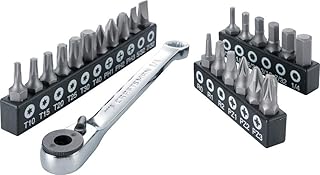
The bit is part of the fastening system and should not be treated as an afterthought. Phillips, Pozidriv, Torx, slotted and hex fasteners require the correct corresponding bit.
A poorly matched bit can slip, damage the fastener or reduce control. For repetitive work, high-quality bits can make the fastening process more consistent. Replace damaged or excessively worn bits rather than continuing to use them.
Correct technique often has as much influence on fastening quality as the tool itself.
Proper battery handling can help maintain the usefulness of a cordless tool system. Follow the battery manufacturer's charging, storage and operating instructions for the specific battery type.
Avoid exposing batteries to conditions outside their stated operating and storage requirements. Inspect batteries, chargers and contacts periodically for visible damage. If a battery or charger shows signs of damage, follow the manufacturer's safety guidance rather than continuing to use it.
Routine maintenance is generally straightforward. Keep ventilation openings clear of accumulated dust and debris, and wipe the exterior with an appropriate dry or lightly damp cloth according to the manufacturer's instructions.
Check the bit holder or chuck regularly for debris and inspect driver bits for wear. Do not modify the tool or attempt repairs beyond the maintenance procedures specified by the manufacturer.
Good fastening starts before the motor is activated. Select the correct fastener, choose a matching bit and position the tool squarely against the screw. Begin slowly when accuracy matters.
For materials that are prone to splitting or damage, use appropriate pilot-hole techniques. When the screw approaches its final depth, reduce speed and allow the clutch or manual control to prevent unnecessary overdriving.
For repetitive tasks, establish a consistent process. Using the same bit type, torque setting and technique can improve consistency across multiple fasteners.
Read the manufacturer's instructions before operating the tool. Use suitable eye protection when the application can produce flying particles, and select additional protective equipment when required by the work environment.
Keep hands away from rotating components, secure the workpiece where appropriate and remove adjustment tools before operation. Do not use damaged batteries, chargers, bits or tools. Make sure the bit is properly seated before applying power.
For electrical, plumbing, structural or other potentially hazardous work, confirm the relevant safety requirements and use equipment specifically appropriate for that application.
Availability, package contents and pricing can vary between Canadian retailers. Product configurations can also change over time. A listing may show a bare tool while another listing for a similar model includes a battery and charger.
Before purchasing, verify the current model number, package contents, battery compatibility, retailer information and applicable Canadian pricing. Customer reviews should also be read in context because experiences may relate to different configurations.
Reviews can be helpful when they provide specific information about handling, battery performance, durability or ease of use. However, a high review count alone does not establish that a particular screwdriver is the right choice for your requirements.
Look for recurring themes rather than relying on one unusually positive or negative comment. Give greater weight to reviews that identify the exact model and explain the type of work performed.
It is also useful to distinguish between comments about the tool itself and comments about delivery, packaging or retailer service. Those factors do not necessarily indicate the technical performance of the screwdriver.
For 2026 shoppers in Canada, the most sensible approach is to match the tool to the work instead of selecting a model simply because it has the highest specification. Start with the application, then narrow the choices by battery platform, torque control, speed, size and included equipment.
If you already have compatible Craftsman cordless tools, staying within the same battery ecosystem can simplify charging and battery management. If you are starting from scratch, compare the cost and usefulness of the complete system rather than evaluating only the screwdriver.
Before ordering, compare current specifications and retailer listings, check verified customer feedback and confirm the exact package contents. This process can help avoid buying a tool that is either underpowered for your work or unnecessarily large and expensive for simple fastening tasks.
There is no single model that is best for every Canadian buyer. The right choice depends on whether you need light-duty screwdriving, repetitive fastening, compact handling or broader drill/driver functionality. Compare the exact specifications and package configuration against your intended applications.
A suitable Craftsman cordless screwdriver can be useful for furniture assembly, particularly when it provides controlled speed and torque. Use the correct bit and avoid excessive torque, especially with engineered wood and other materials that can be damaged by overtightening.
Choose a screwdriver when compact fastening is the main requirement. Consider a drill/driver if you also need to drill holes and want a more versatile tool. The exact model's specifications should determine whether it meets your application.
No. Battery compatibility depends on the specific cordless platform and model. Always verify compatibility with the exact screwdriver before purchasing or installing a battery.
No. Voltage is only one specification. Tool design, torque control, speed, battery capacity, ergonomics and intended application also affect suitability. A compact lower-power tool can be preferable for light fastening.
A second battery can be useful for extended work because it allows one battery to be used while another charges, provided both are compatible with the tool and charger. For occasional household use, one battery may be sufficient.
Confirm that you already have a compatible battery and charger. Then check the exact model number, tool specifications, included accessories and current Canadian retailer listing.
Not necessarily. Drilling capability depends on the specific design. If drilling is an important requirement, consider a Craftsman drill/driver or another tool explicitly designed for drilling and fastening.
Torque adjustment is highly useful for controlled fastening. It can help reduce overtightening and damage when working with delicate components, small screws and materials that require careful handling.
There is no universal replacement interval. Replace bits when they become worn, damaged or unable to engage the fastener securely. Continuing to use a badly worn bit can increase slipping and fastener damage.
The best Craftsman cordless screwdriver for your needs is ultimately the model that provides the right combination of control, compatibility, comfort and capability for the work you actually perform. Rather than choosing solely by brand, voltage or review score, compare the complete specification and package configuration. That approach makes it easier to identify a practical cordless fastening tool for Canadian home projects, workshop tasks and everyday repairs in 2026.