

♥ Wishlist




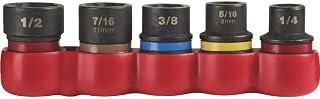


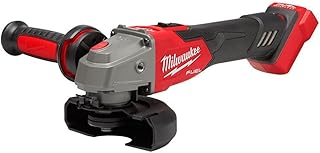

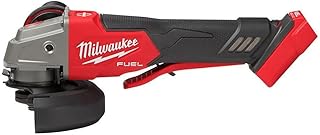

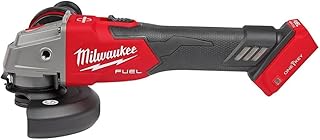


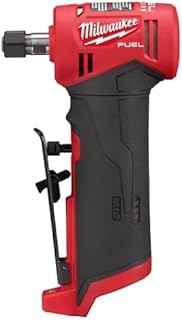


Milwaukee cordless die grinders give Canadian tradespeople, automotive technicians, fabricators and serious DIY users a portable alternative to corded or pneumatic equipment. The right model depends on the type of material you need to remove, the accessories you use, how much clearance you have around the workpiece and how long the grinder needs to run between battery changes. Milwaukee's range includes compact M12 FUEL models and higher-output M18 FUEL grinders, with both straight and right-angle configurations available.
For detailed work, deburring and applications where access matters, an M12 FUEL die grinder can be an attractive choice. Models such as the M12 FUEL 1/4-inch straight and right-angle grinders are designed around compact handling and controlled material removal. Right-angle versions can be especially useful around automotive components or other areas where a conventional straight grinder is difficult to position. If you already own M12 batteries and chargers, staying within that platform can also reduce the need to purchase additional charging equipment.
The choice between M12 and M18 should be based on the workload rather than battery voltage alone. M12 grinders emphasize compact size, manoeuvrability and access. They can suit automotive service, deburring, light-to-moderate metal finishing and jobs where a smaller tool is easier to control. The M18 FUEL range is generally better suited to sustained grinding and heavier material removal, particularly in fabrication environments where the tool may experience greater loads.
The M18 FUEL 2784-20 is a 1/4-inch die grinder designed around a brushless motor and a stated 20,000 RPM maximum. More feature-rich options, such as the M18 FUEL 2984-20, add multiple speed settings, braking, a paddle switch, LED lighting and ONE-KEY tool-management functionality. The M18 FUEL 2939-20 is another option for users prioritizing high-speed material removal, with a stated maximum speed of 27,000 RPM. Always compare the current model specification before purchasing because configurations and availability can change.
Tool geometry can make a major difference in real-world use. A straight die grinder places the spindle along the body and can feel natural for general grinding, edge work and deburring when there is sufficient clearance. A right-angle grinder changes the working position of the accessory, making it easier to approach restricted areas from a different direction.
For automotive work, right-angle M12 FUEL models can be particularly useful when components, brackets or surrounding structures limit access. For open surfaces, general fabrication and straightforward positioning, a straight model may provide the handling characteristics you prefer. Consider the physical workspace before comparing small differences in RPM or electronic features.
Maximum RPM is important, but it should never be the only specification used to compare die grinders. Different burrs, abrasive products, brushes and other accessories have different operating requirements. A variable-speed grinder can provide greater control when one tool is used for several materials or finishing tasks.
Many Milwaukee cordless die grinders use a 1/4-inch collet for compatible shank accessories. Before buying burrs or other attachments, verify the exact grinder specification, shank size, accessory type, maximum rated speed and intended application. Never assume that an accessory is suitable simply because its shank fits the collet.
Milwaukee FUEL die grinders use POWERSTATE brushless motor technology, with electronic systems and REDLITHIUM battery technology forming part of the broader FUEL platform. Brushless construction can be especially valuable for users who operate their tools frequently and want a durable cordless platform.
Selected M18 die grinders also include RAPIDSTOP braking. The M18 FUEL 2984-20 combines braking with variable speed, a paddle switch, LED lighting and ONE-KEY capabilities. ONE-KEY can be more useful for professional users managing multiple tools than for someone who owns a single grinder. Consider paying for advanced features only when they provide a practical benefit in your working environment.
Battery size affects both runtime and handling. A compact battery can help keep the grinder lighter and easier to manoeuvre, while a higher-capacity battery can reduce interruptions during demanding work. The largest battery is not automatically the best choice; balance, comfort and access can matter just as much as runtime.
Milwaukee cordless die grinders are available in tool-only and kit configurations. A tool-only model can be a cost-effective choice when you already own compatible batteries and a charger. If you are starting a new M12 or M18 setup, a kit may provide better overall value by including the necessary batteries, charger and related equipment. Check the exact package contents before comparing prices.
These grinders can be useful for weld cleanup, deburring, surface preparation, metal shaping, automotive service and other controlled material-removal tasks. Carbide burrs can support shaping and detailed removal, while flap wheels and suitable sanding accessories can be used for selected finishing and preparation applications. Wire wheels and brushes may be useful for cleaning when the tool, accessory and operating procedure are appropriate.
For welding and fabrication, an M18 FUEL grinder may be preferable when sustained material removal is the priority. For automotive service and restricted spaces, an M12 right-angle model can offer a useful combination of compact dimensions and access. Match the grinder and accessory to the job rather than treating one model as universally superior.
Start by identifying your main application and then compare tool geometry, battery platform, collet size, accessory compatibility, speed control, switch design and package contents. If you already use Milwaukee M12 or M18 tools, battery compatibility can be an important part of the overall value calculation. Also consider ergonomics, especially if the grinder will be used for extended periods.
Safety should remain part of the buying decision. Die grinders operate at high rotational speeds and may produce sparks, fragments, dust and significant noise. Use appropriate eye, face and hearing protection for the application, secure the workpiece, inspect accessories before use and follow the current tool and accessory instructions. Never exceed an accessory's rated operating speed.
For Canadian shoppers, the best Milwaukee cordless die grinder is ultimately the one that fits the job, existing battery ecosystem and preferred working style. Compare current product listings carefully, especially when deciding between tool-only and kit packages. M12 FUEL models are worth considering when compact access and manoeuvrability are priorities, while M18 FUEL models provide compelling options for demanding grinding and material-removal applications.
Find Milwaukee cordless die grinders for grinding, deburring, weld cleanup, surface preparation and detailed material removal. Compare compact M12 FUEL and higher-output M18 FUEL options, including straight and right-angle designs, variable-speed models, braking features, kits and tool-only configurations. Whether you work in automotive repair, metal fabrication or a Canadian workshop, choose a die grinder based on access, workload, accessory compatibility, battery platform and control rather than maximum speed alone.