

Explore cordless power tools, kits, batteries, chargers, accessories and related equipment available to Canadian shoppers. Compare product options and follow useful buying guides before you buy.





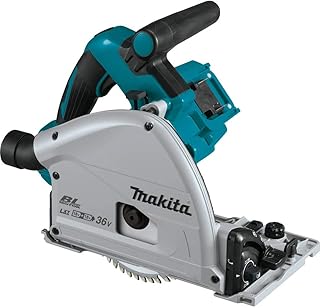


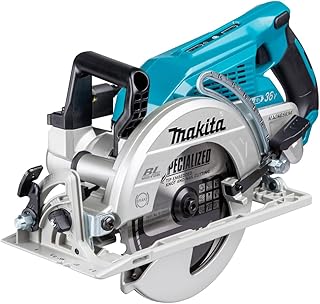
Choosing the right Makita cordless circular saw in Canada involves more than comparing cutting speed or battery voltage. The best saw depends on the material you plan to cut, required cutting depth, preferred blade size, battery platform, jobsite conditions, and the type of work you perform most often. A compact saw can be ideal for sheet goods and general DIY projects, while a larger model may be better suited to framing, construction and demanding repeated cuts.
This buying guide is designed to help Canadian shoppers compare Makita cordless circular saws by the features that have the greatest practical effect on everyday performance. It also explains what to look for in a battery-powered circular saw, how Makita platforms differ, which specifications deserve attention, and which common buying mistakes can lead to an unsuitable tool.
Makita is a long-established power tool brand with a broad cordless ecosystem. Its battery-powered circular saw range covers different blade sizes, battery platforms, configurations and intended applications. This makes the brand particularly relevant for buyers who already own compatible Makita batteries and chargers.
A cordless circular saw removes the need to manage a power cord around the workpiece. That can make positioning easier when working on framing, roofing, renovations, decks, workshops or outdoor projects. It can also be useful where access to mains electricity is inconvenient.
However, cordless does not automatically mean better for every application. Buyers should consider battery availability, charging requirements, runtime and the amount of cutting expected during a typical work session. A corded saw can still make sense for stationary workshop use where continuous power is more important than mobility.
Your materials should influence the saw and blade combination you choose. Circular saws are commonly used for lumber, plywood, OSB, MDF, dimensional timber and other compatible materials. Some applications require a different blade or cutting approach.
For occasional DIY work, a versatile general-purpose setup may be sufficient. For framing or construction, cutting capacity, ergonomics and sustained performance become more important. For fine woodworking, blade quality and control can matter more than maximum cutting speed.
Blade diameter is one of the most important specifications to compare. A larger blade generally allows a greater maximum cutting depth, although the actual capacity depends on the saw design and cutting angle.
Do not choose a saw based only on the largest advertised cutting depth. Check the specifications for both straight cuts and bevel cuts. A saw may cut substantially less material when the base is adjusted for an angled cut.
Think about the thickest material you realistically expect to cut. Selecting a tool with appropriate capacity gives you more flexibility without forcing the saw to operate at the edge of its intended range.
Makita cordless tools are available across different battery platforms. Two important systems for Canadian buyers are the 18V LXT platform and the 40V max XGT platform.
The platform should be treated as a purchasing decision rather than simply a voltage comparison. A higher nominal platform is not automatically the best choice for every user. Compatibility with the batteries and chargers you already own can be a major advantage.
If your workshop already contains several Makita 18V LXT tools, staying within that ecosystem may reduce the need to purchase additional batteries and chargers. Buyers starting a new battery platform should instead compare the wider range of compatible tools they expect to use in the future.
Battery capacity influences how long a cordless saw can operate between charges, but real-world runtime varies considerably. Material thickness, cutting technique, blade condition, battery age, temperature and workload can all affect performance.
For occasional home projects, a smaller battery may be convenient because it can reduce overall tool weight. For repeated framing or construction work, additional battery capacity can reduce interruptions.
It is useful to own more than one compatible battery when the saw is part of a larger cordless workflow. This allows one battery to charge while another is being used.
A circular saw is often used with the tool supported away from the body, so weight distribution matters. A saw that feels balanced can be easier to control during long cuts.
Battery placement can also change how the saw feels. Two models with similar specifications may have noticeably different handling characteristics because of their motor position, battery location, base design and overall geometry.
For overhead work or repeated cuts, ergonomics deserve particular attention. A lighter saw may reduce fatigue, while a heavier high-performance model may offer advantages when cutting demanding materials.
Bevel capability allows the blade to cut at an angle rather than remaining perpendicular to the workpiece. This is important for applications such as roofing, framing, trim work and angled woodworking cuts.
When comparing models, look at the available bevel range, adjustment mechanism, scale visibility and locking system. A clear bevel scale can make repeated angle changes easier.
If you frequently make angled cuts, a smooth and secure adjustment system may be more valuable than a feature that looks impressive on a specification sheet but is difficult to use accurately.
Many modern cordless circular saws use brushless motors. Brushless motor designs are generally associated with efficient power delivery, reduced mechanical wear and compatibility with advanced electronic controls.
For buyers, the practical question is not simply whether a saw is brushless. Consider how the complete system performs for your intended workload, including battery platform, cutting capacity, ergonomics and blade selection.
Electronic controls can help manage motor operation under changing loads. Some cordless saws incorporate technologies designed to maintain performance as cutting resistance changes.
These systems can be useful when moving from lighter sheet material to thicker stock, but performance still depends heavily on using the correct blade and cutting technique.
An electric blade brake is a useful convenience and safety-oriented feature. It is designed to stop the blade more quickly after the trigger is released than a blade that simply coasts to a stop.
Users should still wait for the blade to stop completely before placing the tool down or moving it through another work position.
An integrated LED can improve visibility around the cutting line, particularly in workshops, garages and construction environments with inconsistent lighting. It should not be treated as a substitute for proper work lighting.
A rafter hook can be useful for framing and construction workers who frequently need to place the saw temporarily on a structure. The feature may be less important for users who primarily work at a bench or cutting station.
Blade visibility affects how easily you can follow a marked cutting line. The position of the blade, guard, shoe and handle can influence sightlines.
When comparing circular saw designs, consider whether you naturally prefer a particular blade orientation. Neither configuration is universally superior because user preference, cutting direction and work position all matter.
The saw is only part of the cutting system. The blade has a direct influence on cut quality, speed, noise, material compatibility and finish.
A blade with fewer teeth may be useful when fast rough cutting is the priority. A blade with more teeth can provide a cleaner finish in suitable sheet materials and woodworking applications. The correct choice depends on the material and desired result.
Tooth count is one of the easiest specifications to misunderstand. More teeth do not automatically mean a better blade. Higher tooth counts can favor smoother cuts in suitable materials, while lower tooth counts can prioritize faster material removal.
Kerf refers to the width of material removed by the blade. Blade design, tooth geometry and material thickness all influence cutting behavior. A suitable blade should match the saw and the application rather than being selected solely because it is marketed as thin-kerf or high-performance.
Always verify blade diameter and arbor requirements before purchasing replacement blades. Never assume that every circular saw blade is interchangeable between models.
Makita cordless tools are often sold in different configurations. A bare tool generally means the saw is supplied without a battery and charger, while a kit may include one or more batteries and a charger.
A bare tool can be financially sensible for an existing Makita user who already owns compatible batteries. It avoids purchasing duplicate charging equipment.
A complete kit may be more convenient for someone entering the battery platform for the first time. However, the included battery configuration should be examined carefully because the contents of kits can vary.
Before purchasing, confirm exactly what is included rather than relying on product photographs or general descriptions. Check the current retailer listing for the battery, charger, blade and other accessories included with the specific package.
Makita and DeWalt both offer extensive cordless tool ecosystems. Buyers comparing the two should focus on the battery platform they already use, the specific saw's cutting capacity, ergonomics and accessory ecosystem rather than assuming one brand is universally better.
Milwaukee is another major cordless power tool brand with a broad professional-oriented lineup. When comparing Milwaukee and Makita circular saws, examine the individual model rather than relying solely on brand reputation. Battery compatibility, blade size, handling and intended application should drive the decision.
Bosch offers cordless and corded cutting tools across several categories. A comparison should include tool balance, cutting capacity, battery platform, controls and the availability of compatible blades and batteries in Canada.
Ryobi is widely associated with DIY and home workshop users. For occasional projects, affordability and ecosystem compatibility can be major considerations. For more demanding workloads, buyers should compare the individual specifications and intended use of each tool rather than judging solely by brand.
Voltage is not a complete measure of cutting performance. Motor design, blade choice, electronics, battery characteristics and tool geometry also matter.
A compact saw may feel convenient but become frustrating if your projects regularly involve thicker stock. Always compare the maximum capacity with the materials you actually cut.
Before ordering, confirm whether the product is a bare tool or kit and verify battery compatibility. This is particularly important when several Makita cordless platforms are involved.
A capable saw fitted with an unsuitable or worn blade may produce disappointing results. Budget for appropriate replacement blades as part of the ownership cost.
Specifications do not tell you everything about handling. Weight, grip position, trigger access, shoe stability and blade visibility can strongly affect everyday usability.
A high-performance model can be unnecessary for occasional DIY tasks. More capability can also mean additional weight or cost. Choose according to workload instead of buying the most powerful option available.
A circular saw should always be treated as a serious cutting tool. Read the manufacturer's instructions before use and follow the safety requirements for the specific model.
Canadian weather can create additional considerations for cordless tools. Battery performance can be affected by very low temperatures, so users working outdoors during winter should follow the battery manufacturer's storage, charging and operating guidance.
Avoid exposing batteries unnecessarily to extreme temperatures. Allow batteries to reach an appropriate temperature before charging when required by the manufacturer's instructions.
Outdoor construction also creates additional concerns involving snow, moisture, mud and condensation. Keep the tool and battery system within the environmental conditions specified by the manufacturer.
A dirty or damaged blade can increase cutting resistance. Inspect the blade regularly and replace it when it is damaged or no longer appropriate for the work.
The blade guard is an important safety component. Make sure it moves correctly and is not obstructed by debris. Any malfunction should be addressed before using the tool.
Sawdust and debris can interfere with smooth movement across the workpiece. Clean the shoe and surrounding areas according to the manufacturer's recommendations.
Use the battery manufacturer's recommended storage conditions. Avoid leaving batteries exposed to excessive heat, extreme cold or moisture for unnecessary periods.
Before important work, check that relevant adjustment mechanisms and fasteners are secure. A stable cutting setup contributes to predictable results.
If you are comparing ten Makita models, avoid ranking them using one specification. A better evaluation method is to score each model against the requirements of your projects.
For DIY users, versatility is often more important than maximum output. Look for a model that is comfortable to handle, offers sufficient cutting depth and works with a battery platform that fits your other tools.
If your projects involve shelves, framing repairs, garden structures, home renovation or sheet material, a versatile general-purpose configuration may provide the best balance.
Framing places greater emphasis on cutting capacity, repeated-use ergonomics, battery management and reliable blade performance. A framing-focused buyer should prioritize the ability to complete common dimensional lumber cuts without repeatedly pushing the tool beyond its intended capacity.
Consider how many cuts you make during a typical workday. A saw that feels manageable for five cuts may feel very different after several hundred cuts.
Sheet goods such as plywood and similar panels require attention to cut quality and handling. A suitable blade, accurate guide setup and stable support can be just as important as the saw itself.
For large sheets, plan your support arrangement before cutting. Supporting the material incorrectly can cause movement or unwanted pinching of the blade.
There is no single correct budget for a cordless circular saw. The right amount depends on how often you use the tool, whether you already own compatible batteries, the cutting capacity required and the cost of blades and accessories.
When comparing current Canadian prices, compare complete ownership cost rather than only the advertised tool price. A bare tool may appear less expensive than a kit until the cost of compatible batteries and chargers is included.
Prices and package contents can change, so check the current retailer listing before making a purchase.
Makita is the primary brand for this guide, but informed buyers can also compare alternatives from DeWalt, Milwaukee, Bosch, Ryobi and Metabo HPT. The comparison should focus on the exact model, battery ecosystem, intended application and available accessories.
For users already committed to one cordless platform, staying within that ecosystem can simplify battery management. For new buyers, compare the broader tool range rather than selecting a battery platform based on one circular saw alone.
The best model depends on the user's application, required cutting depth, battery platform, workload and preferred ergonomics. There is no single model that is ideal for every Canadian buyer.
Makita offers cordless tools designed for a range of applications. Professional suitability depends on the specific model and workload. Always compare the manufacturer's specifications with your expected use.
Brushless technology can be advantageous in a cordless power tool because of its efficiency and electronic control characteristics. However, the overall saw design and battery system should be considered alongside the motor type.
Choose based on the battery ecosystem, cutting requirements and other Makita tools you expect to use. Existing battery ownership can make one platform significantly more convenient.
No. Blade diameter, arbor configuration, intended material and other specifications must be compatible with the saw. Check the manufacturer's requirements before fitting a blade.
Suitable cordless circular saws can be used for framing applications, but the correct model, battery and blade combination matters. For repeated heavy cutting, compare cutting capacity and the manufacturer's intended applications carefully.
They can be suitable for plywood when paired with an appropriate blade and used with proper material support. A blade designed for cleaner sheet-goods cuts may be preferable when edge finish is important.
Battery characteristics can affect runtime and how the cordless system responds under load. Actual results depend on the battery, tool, material, blade and cutting conditions.
Check the exact model number, blade size, battery platform, included accessories, warranty information supplied by the manufacturer or retailer, seller details and current customer feedback. Confirm whether the listing is for a bare tool or kit before ordering.
The best Makita cordless circular saw is the one that fits your complete workflow rather than the one with the most impressive single specification. Start with the material and cutting depth you need. Then compare battery platform, blade size, ergonomics, bevel capability, runtime requirements and included accessories.
For existing Makita users, battery compatibility can be one of the strongest reasons to choose a particular model. For new buyers, consider the wider cordless ecosystem and the tools you may add later.
Before purchasing in Canada, compare the exact model number and current specifications from trusted retailers. Read verified customer reviews for practical feedback, but give greater weight to consistent information about handling, compatibility and intended use than to isolated opinions.
Finally, remember that a circular saw is a system rather than a standalone tool. The saw, battery, blade, cutting technique and workpiece support all contribute to the final result. A carefully matched combination will usually provide more useful value than choosing a model solely because it has the highest advertised power or the newest feature set.