

Explore cordless power tools, kits, batteries, chargers, accessories and related equipment available to Canadian shoppers. Compare product options and follow useful buying guides before you buy.


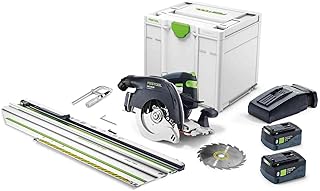
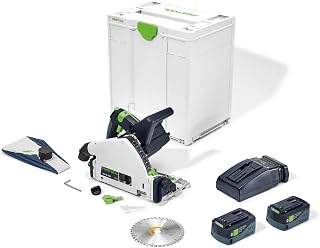


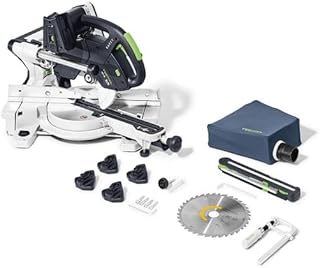
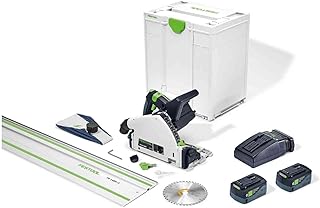

Choosing a Festool cordless circular saw in Canada involves more than comparing cutting depth or battery voltage. The right model should match the materials you cut, the type of work you perform, the required precision, and the battery platform already used in your workshop. Festool circular saws are designed around accurate cutting, controlled handling, dust management and compatibility with a wider professional tool ecosystem.
For Canadian buyers, working conditions also deserve attention. Job sites can involve cold temperatures, unfinished interiors, long operating periods and frequent movement between cutting stations. A cordless saw can eliminate the need for a nearby electrical outlet, but battery capacity, charger availability and the weight of the complete tool-and-battery combination can affect practical performance.
When comparing the best Festool cordless circular saws for 2026, consider the complete system rather than the bare tool alone. Blade diameter, cutting depth, guide-rail compatibility, bevel range, battery technology, ergonomics, dust extraction and intended material should all influence the decision.
Festool has built its professional power-tool range around a system approach. A cordless circular saw can therefore be particularly useful for tradespeople who already use compatible Festool batteries, chargers, guide rails, dust extractors and other cordless tools.
The main attraction is controlled cutting without the restriction of a power cord. This can be valuable for renovation projects, framing-related tasks, interior installations, cabinetry and workshop work where the cutting location changes frequently.
Not every cordless circular saw is intended for the same type of cutting. Before selecting a model, identify whether your priority is maximum cutting capacity, portability, guide-rail accuracy, repeated sheet-goods cutting or general-purpose construction work.
A conventional circular saw configuration is a practical choice when you need a versatile cutting tool for boards, sheet materials and general site work. These models typically offer a combination of cutting capacity, portability and straightforward handling.
For buyers who want one cordless circular saw for several common applications, the balance between depth of cut and overall weight can be more important than choosing the model with the highest specification.
Guide-rail compatibility is particularly valuable when straight, repeatable cuts are important. A guide rail can help maintain a consistent cutting path across sheet material and can be useful when accuracy is more important than simply completing a rough cut quickly.
Before buying, confirm that the saw and guide rail are designed to work together. Compatibility should not be assumed solely because two products belong to the same brand.
A compact saw can make sense when portability and reduced fatigue are more important than maximum cutting depth. Smaller tools can be easier to manoeuvre around confined work areas and may be preferable for installation work or lighter cutting applications.
Cutting depth determines the thickness of material that can be cut in a single pass. It should therefore be one of the first specifications checked when comparing Festool cordless circular saws.
Remember that cutting capacity can vary depending on the cutting angle. A saw may provide its greatest capacity at a standard 90-degree setting, while the available depth can decrease when making bevel cuts.
Blade diameter affects the potential cutting depth and the type of work for which the saw is suitable. However, a larger blade is not automatically better for every user.
The blade itself also has a major influence on the finished cut. Tooth geometry, tooth count, kerf, material and intended application all affect cutting behaviour.
Wood-cutting blades are available in different configurations for rough construction cuts, general-purpose work and finer finishing. A blade intended for rapid rough cutting may not produce the same finish as a blade designed for cleaner cuts.
When cutting plywood, MDF or other sheet materials, consider the desired edge quality as well as cutting speed. A suitable blade can reduce splintering and improve the appearance of the finished edge.
Always verify blade diameter, arbor requirements and manufacturer compatibility before fitting a replacement blade. Never assume that a blade is suitable simply because its diameter appears correct.
A guide rail can transform the way a cordless circular saw is used for sheet goods. Instead of relying entirely on a pencil line and freehand control, the saw can follow a predefined path.
This is particularly useful for cabinet components, worktops, panels, doors and other applications where consistent straight cuts matter.
Battery-powered cutting tools should be evaluated as complete systems. Runtime depends on the material being cut, blade condition, cutting technique, battery capacity and the amount of load placed on the motor.
If you already own compatible Festool cordless tools, choosing a circular saw from the same battery system may be more convenient than introducing another platform.
A higher-capacity battery can provide more available energy, but it can also increase the weight of the tool. For overhead work or repeated positioning, the lightest practical configuration may be preferable.
Battery placement can affect the overall balance of a circular saw. A well-balanced tool can feel easier to control during long cutting sessions, even when the published specifications between two models appear similar.
Battery-powered tools should be used and stored according to the manufacturer's instructions, particularly during winter. Very cold conditions can influence battery performance. Allowing batteries to reach appropriate operating conditions before demanding work may help avoid unnecessary performance issues.
Motor specifications are useful, but they do not tell the entire story. Real cutting behaviour depends on the interaction between motor output, blade selection, material, battery condition and operator technique.
A saw that maintains controlled cutting behaviour under load can be more useful in professional work than a model selected solely because of a higher headline specification.
When comparing products, look for a combination of suitable power, controllability, cutting capacity and efficient battery use rather than focusing on one number.
Brushless motors are common in modern professional cordless tools. They eliminate traditional replaceable motor brushes and are generally designed to provide efficient electronic motor control.
For a cordless circular saw, the practical benefits can include efficient use of battery energy and electronic control features, depending on the particular model. However, brushless technology should be treated as one part of the buying decision rather than a guarantee of superior performance in every application.
Circular saws require controlled two-handed or appropriate supported operation depending on the manufacturer's instructions and application. Handle shape, trigger placement, visibility of the cutting line and overall balance can therefore have a major effect on usability.
Compare the weight of the bare tool with the weight of the complete configuration you intend to use. A cordless saw with a battery and guide system can feel substantially different from the bare-tool specification.
Controls should be easy to reach without forcing the operator to change grip unnecessarily. This becomes more important when making repeated cuts throughout the day.
A clear view of the blade path can improve control during freehand cutting. Housing design, blade position and lighting conditions can all influence visibility.
Bevel adjustment allows the blade to cut at an angle rather than perpendicular to the workpiece. This is useful for angled joints, finishing work and certain construction applications.
When comparing Festool cordless circular saws, check the available bevel range and how easily the adjustment can be locked. Clear scales and secure adjustment mechanisms can make repeated angle changes more practical.
Sawing wood-based materials can produce substantial amounts of dust. Dust extraction can help keep the immediate work area cleaner and may improve visibility around the cut.
Festool's wider ecosystem includes dust extractors and accessories designed around workshop and job-site dust management. When evaluating a saw, check the extraction connection and compatibility with the extraction equipment you intend to use.
Dust extraction does not eliminate the need for appropriate respiratory and eye protection. Always follow the safety instructions for the tool, material and work environment.
A circular saw is a high-speed cutting tool and should be selected and operated with safety as a primary consideration. Before use, read the manufacturer's instructions and understand the correct operating procedure.
A high-performance saw can be unnecessary if most of your work involves thin sheet material. Match the tool to the materials you actually cut.
Do not compare bare-tool weights while forgetting the battery. The complete operating weight is more relevant to everyday handling.
If guide-rail cutting is central to your work, confirm compatibility before purchasing. The rail system can be just as important as the saw itself.
A premium saw paired with an unsuitable blade can produce disappointing results. Blade selection should reflect the material and required finish.
Voltage alone does not describe cutting performance or runtime. Battery capacity, motor design, workload and blade choice also matter.
Consider the long-term cost of blades, batteries and accessories. A cordless tool is part of a system, so the accessories required for your workflow should be included in the purchasing decision.
A useful comparison should go beyond star ratings. Customer reviews can help identify recurring usability concerns, but specifications and intended applications should remain central to the decision.
A Festool cordless circular saw can be particularly suitable for users who regularly move between work locations and want the convenience of battery operation without giving up a professional cutting system.
Renovation work often involves changing work areas, cutting openings and processing boards or sheet materials in locations where access to mains power may be inconvenient.
Guide-rail compatibility and controlled cutting can be useful when working with panels and other materials where straight, clean cuts are important.
In a workshop, a cordless circular saw can complement stationary equipment by providing a mobile solution for breaking down larger boards and panels.
Battery operation can reduce cable management and make it easier to move around an active construction environment.
Festool is not the only manufacturer producing professional cordless circular saws. Buyers may also compare systems from brands such as Makita, Milwaukee, Bosch Professional and DeWalt.
The most useful comparison is not simply brand against brand. Instead, compare the specific models according to cutting depth, battery ecosystem, guide-rail compatibility, ergonomics, blade availability, dust-management options and total system cost.
For someone already invested in a particular cordless platform, staying within that ecosystem can make practical sense. For a new buyer, however, it is worth comparing the complete system before committing to a battery platform.
Prioritise manageable weight, adequate cutting depth, straightforward adjustments and reasonable accessory requirements. There is little benefit in paying for professional-level capabilities that will rarely be used.
Look more closely at battery compatibility, cutting capacity, guide-rail integration, dust extraction and ergonomics. Frequent users benefit from tools that fit efficiently into an established workflow.
Guide-rail compatibility, blade selection, cutting accuracy and dust management become particularly important. Consider the entire cutting system rather than the saw alone.
Prioritise suitable cutting capacity, battery endurance, blade availability and robust day-to-day handling. The correct blade for the material can be just as important as the saw's motor performance.
Product specifications can vary between configurations and regional listings. Before placing an order, verify the exact model number and package contents.
Customer reviews are useful when interpreted carefully. A rating alone does not tell you whether a saw is appropriate for your application.
Look for repeated comments concerning battery life, handling, cutting accuracy, blade changes, dust extraction, guide-rail use and long-term usability. Give greater weight to detailed reviews that explain the application and conditions rather than short comments with little context.
Also separate product performance from shipping, packaging or retailer-specific issues. These may not reflect the performance of the saw itself.
Regular inspection helps keep a circular saw ready for accurate and safe work. Follow the manufacturer's maintenance instructions rather than relying on generic servicing intervals.
Cordless technology is convenient, but it is not automatically the best choice for every workshop. If the saw is used continuously in one location with reliable access to mains power, a corded model may offer a simpler operating setup.
A corded circular saw also avoids battery charging requirements. For occasional workshop use, this can be an advantage. The decision should therefore be based on workflow rather than assuming cordless tools are always superior.
If your primary requirement is highly controlled straight cutting of large panels, a dedicated track saw system may be more appropriate than a conventional circular saw.
The distinction is important. A standard circular saw can make straight cuts, especially with a compatible guide system, but a track-oriented setup is specifically designed around guided panel cutting. Consider the type and frequency of your work before choosing between the two.
The best model depends on your cutting requirements, material thickness, desired portability, guide-rail needs and existing battery system. There is no single model that is ideal for every Canadian buyer.
Festool's cordless circular saw range is aimed at demanding users, but the appropriate model should be selected according to the intended application. Always compare the specifications and operating instructions for the exact model.
A suitable circular saw and blade can be used for plywood when the model and blade are appropriate for the material. Blade selection and cutting technique influence the quality of the finished edge.
Some Festool circular saw configurations are designed for guide-rail use. Confirm compatibility for the exact model and rail before purchasing accessories.
It depends on your workflow. Cordless models provide greater mobility, while corded models can be convenient for continuous work in a fixed location with reliable mains power.
A bare tool can be sensible if you already own compatible batteries and a charger. A complete kit may make more sense if you are starting a cordless platform from scratch. Compare the total cost rather than the advertised tool price alone.
Battery capacity affects available energy and can influence runtime, but higher capacity can also add weight. Choose a battery that balances runtime and handling for your typical work.
Makita, Milwaukee, Bosch Professional and DeWalt are among the professional brands worth considering. Compare individual models and complete cordless ecosystems rather than choosing solely by brand reputation.
The best Festool cordless circular saw for a Canadian buyer is the model that fits the work rather than simply the model with the most impressive specification. Start with cutting capacity and material requirements, then evaluate battery compatibility, guide-rail support, ergonomics, blade options, dust extraction and total ownership cost.
If you already use Festool cordless equipment, ecosystem compatibility can be a significant advantage. If you are choosing your first professional cordless platform, compare Festool with alternatives such as Makita, Milwaukee, Bosch Professional and DeWalt before making a final decision.
Before purchasing, check the exact model number, current specifications, package contents and verified customer reviews from trusted Canadian retailers. Product configurations can change, so the most reliable buying decision is based on the exact listing rather than a general model name.