

Explore cordless power tools, kits, batteries, chargers, accessories and related equipment available to Canadian shoppers. Compare product options and follow useful buying guides before you buy.
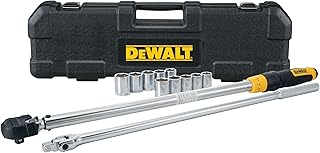


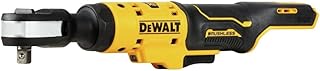


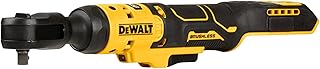


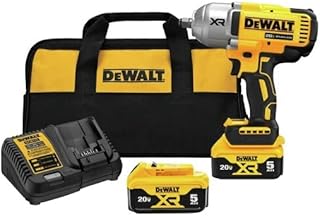


Choosing the best DeWalt cordless impact wrench in Canada requires more than comparing maximum torque figures. The right model depends on the type of fasteners you work with, available space, vehicle or equipment requirements, battery platform, tool size, and how frequently the wrench will be used. A compact impact wrench can be ideal for automotive work in restricted spaces, while a high-torque model may be more suitable for heavy-duty repairs, construction, equipment maintenance, or stubborn fasteners.
DeWalt has a broad cordless impact wrench range, including compact, mid-torque and high-torque models. Many belong to the DeWalt 20V MAX battery platform, which makes battery compatibility an important consideration for Canadian buyers who already own other compatible tools. However, torque alone should not determine your purchase. An impact wrench with very high output may be unnecessarily large or powerful for routine jobs, while a compact model may not provide enough capacity for seized or heavily tightened fasteners.
This guide focuses on the factors that matter when comparing DeWalt cordless impact wrenches for Canadian use. Before buying, compare the exact model number, included battery configuration, anvil style, torque specifications, dimensions, weight, warranty information, and current retailer details. Specifications and package contents can differ between tool-only versions and kits.
A cordless impact wrench combines a motor, impact mechanism, gearbox and square-drive anvil to deliver repeated rotational impacts. This makes it substantially different from a conventional cordless drill or impact driver. Impact wrenches are designed primarily for larger sockets and applications where higher rotational force is required.
DeWalt is a widely recognised power-tool brand with extensive coverage across automotive, construction, maintenance and professional trades. Its cordless range includes different sizes and output classes, allowing buyers to select a tool according to the application rather than relying on a single universal design.
The DeWalt ecosystem can also be an advantage for users who already have compatible batteries and chargers. A tool-only purchase may make more sense when several compatible batteries are already available. Buyers entering the platform for the first time should compare the total kit cost, including batteries and a charger, rather than comparing tool-only prices against complete kits.
There is no single DeWalt impact wrench that is best for every Canadian buyer. Different models are designed around different priorities. Understanding the general categories makes it easier to narrow the selection before comparing individual products.
Compact models prioritise size and accessibility. They can be particularly useful when working around suspension components, engine bays, wheel wells, machinery and other areas where a larger tool is difficult to position.
The main advantage is not simply portability. A shorter head length can make a noticeable difference when a socket must reach a fastener surrounded by brackets or other components. Compact models may also be easier to handle during repetitive work.
The trade-off is output. A compact wrench should not automatically be selected for heavy-duty fastening simply because it is easier to carry. Check the manufacturer's torque ratings and application guidance before using a compact model on demanding fasteners.
Mid-torque models occupy the middle ground between compact tools and high-output impact wrenches. They are often attractive to users who want one versatile tool for automotive maintenance, general mechanical work, construction and equipment servicing.
This category can provide a useful balance of power, size and handling. For many users, a mid-torque impact wrench may be more practical than buying the largest available model.
High-torque DeWalt impact wrenches are intended for applications where substantial fastening and removal capability is important. These tools are generally larger and heavier than compact alternatives.
High output can be valuable for large fasteners, heavy equipment, industrial maintenance and difficult removal work. However, greater torque also means buyers need to pay closer attention to socket quality, fastener requirements, reaction forces and proper tightening procedures.
Model selection should always be based on the exact specifications of the version being sold in Canada. Names and package configurations can vary between retailers and generations. Models commonly encountered in the DeWalt impact wrench range include the DCF921, DCF923, DCF891, DCF899 and DCF900 families, among others.
The DCF921 and DCF923 families are associated with compact impact wrench designs and can appeal to buyers who place a high value on accessibility and reduced tool size. The DCF891 family is positioned as a versatile mid-range option, while the DCF900 family is aimed at substantially higher-output applications. Older models such as the DCF899 may still appear in comparisons, used-tool markets or retailer listings, so buyers should verify generation, condition and included accessories.
Do not select a model solely because it appears on a "top 10" list. Compare the exact specifications of the listing you intend to purchase. A tool-only package and a complete kit may have the same basic wrench but very different contents.
Torque is one of the first specifications buyers notice when shopping for an impact wrench. It is also one of the easiest specifications to misunderstand.
Manufacturers may provide different torque figures for different functions, including fastening torque, breakaway torque or nut-busting capability. These figures should not be treated as interchangeable. A larger advertised number does not necessarily mean the tool is the best choice for every application.
Maximum torque describes the upper capability claimed under the manufacturer's specified conditions. It can help buyers understand the general performance class of the tool, but it does not predict exactly how quickly a particular fastener will loosen.
Some impact wrenches advertise a separate removal-oriented figure. This can be useful when comparing tools intended for stubborn fasteners. Actual results can still vary because rust, thread condition, corrosion, fastener size, socket fit, temperature and battery condition all influence removal performance.
Excessive torque can be unnecessary for smaller fasteners and may increase the risk of damage if a tool is used carelessly. An impact wrench should not replace a calibrated torque wrench when a manufacturer specifies an exact final tightening torque.
For critical wheel, suspension, structural or machinery fasteners, use the impact wrench for controlled removal or preliminary fastening as appropriate, then follow the equipment or vehicle manufacturer's torque specification with a suitable calibrated torque wrench.
Battery compatibility is a major factor when selecting a cordless DeWalt impact wrench. DeWalt's 20V MAX system is widely used across its cordless tool range. However, buyers should verify compatibility for the exact tool and battery rather than assuming every DeWalt battery works with every product.
For someone already invested in compatible DeWalt batteries, a bare-tool configuration can potentially reduce duplication. New users should compare a bare tool with a kit that includes batteries and a charger.
Battery capacity affects runtime, weight and overall handling. A larger battery can provide greater operating capacity but may make a compact impact wrench less convenient in confined spaces.
Consider how the tool will actually be used. A home mechanic performing occasional wheel changes may prioritise manageable size and adequate runtime. A professional technician or contractor using the wrench throughout the working day may place more emphasis on battery capacity, charging availability and having multiple batteries available.
Brushless motors are common in modern cordless power tools and are available across many DeWalt impact wrench models. A brushless motor eliminates traditional motor brushes and can support efficient operation, electronic control and reduced routine brush maintenance.
Brushless technology should still be evaluated alongside the complete tool design. Motor type alone does not determine whether an impact wrench is suitable for your work. Impact mechanism, gearbox design, electronics, battery compatibility, thermal management, size and ergonomics also matter.
The square-drive size determines which sockets can be used directly with the impact wrench. For automotive and general mechanical work, 1/2-inch-drive impact wrenches are particularly common because they accommodate a broad range of larger sockets.
A 3/8-inch-drive model can be attractive for smaller fasteners and applications where compact dimensions are more important. Larger drive sizes are relevant to heavy-duty applications involving larger sockets and fasteners.
Socket compatibility is equally important. Use impact-rated sockets designed for impact tools rather than ordinary chrome hand-tool sockets when the application requires impact-rated accessories.
The anvil retention system affects how sockets are installed and removed. Two common approaches are friction-ring retention and pin-detent retention.
A friction ring, sometimes called a hog ring, allows relatively quick socket changes and is convenient for users who frequently switch between socket sizes.
A pin-detent system mechanically retains the socket with a pin. It can provide secure retention, although changing sockets may take more effort depending on the design and working conditions.
Neither system is universally superior. The better choice depends on whether fast socket changes or firm socket retention is more important for your typical work.
Impact wrench performance is not determined only by torque. Speed and control affect productivity, especially when removing multiple fasteners.
Electronic speed controls and selectable modes can help users match the tool's behaviour to different applications. Lower settings may be useful for more controlled fastening, while higher settings can help with removal and demanding work.
When comparing models, look for information about speed settings, impact rates and electronic modes. More modes can be helpful, but only if the controls are easy to understand and practical during actual use.
Some modern cordless impact wrenches include electronic features designed to improve control during fastening or removal. Depending on the model, these can include modes intended to reduce over-tightening, slow the tool after fastener release, or limit impact operation under certain conditions.
These features should be considered assistance rather than a substitute for correct fastening procedures. If a vehicle or machine specifies a particular torque, verify the final torque with an appropriate torque wrench.
Impact wrench specifications can look impressive on paper, but ergonomics become important after repeated use. Weight, balance, grip shape, trigger position and overall tool length all affect handling.
A heavy high-torque wrench may be appropriate for occasional heavy-duty work but tiring during repeated overhead tasks. A compact wrench may be easier to control throughout a long maintenance session.
Automotive users often choose cordless impact wrenches for wheel removal, suspension work, brake-related servicing and general mechanical tasks. A 1/2-inch model can be particularly versatile for passenger vehicles and light-duty applications.
However, vehicle manufacturers specify torque values for wheel nuts and other critical fasteners. An impact wrench should not be used as a final torque-setting instrument unless the tool and procedure are specifically designed and validated for that purpose.
For wheel installation, a practical workflow is to start the fasteners carefully, use the impact wrench at an appropriate controlled setting if suitable, and then finish with a calibrated torque wrench according to the vehicle manufacturer's specification.
Pickup trucks, commercial vehicles, agricultural equipment and heavy machinery can require substantially more removal capacity than ordinary passenger-car maintenance. This is where high-torque models become more relevant.
Before buying a high-output model, identify the largest fasteners you expect to work with. Consider whether the tool will be used primarily for removal, installation, or both. Also consider access, battery availability, socket requirements and how much additional weight you are prepared to handle.
For extremely large industrial fasteners, a cordless impact wrench may not be the appropriate tool at all. Always follow equipment-specific procedures and use the fastening equipment specified for the job.
Impact wrenches and impact drivers are related but not interchangeable.
An impact driver commonly uses a hexagonal bit interface and is designed for screws, smaller fasteners and applications requiring driver bits. An impact wrench uses a square-drive anvil for sockets and is designed for larger nuts and bolts.
A cordless ratchet is designed around a different working style. It is useful where access is restricted and fasteners need to be removed or installed quickly. An impact wrench generally provides much greater impact force.
For routine automotive servicing, some users may find a cordless ratchet and compact impact wrench complementary rather than competing tools. The ratchet can handle accessible fasteners after they are initially loosened, while the impact wrench can provide faster removal of tighter fasteners.
Air-powered impact wrenches remain useful in professional workshops with an established compressed-air system. Cordless models eliminate the need for an air hose and compressor, which can make them more convenient for mobile servicing, roadside work and locations without compressed air.
Pneumatic tools can make sense where compressed air infrastructure is already available and continuous shop use is expected. Cordless tools are attractive when portability and setup speed are more important.
The largest torque figure is not automatically the best choice. Consider tool size, weight, access, battery requirements and the fastener sizes you actually work with.
A bare tool may appear cheaper until the cost of compatible batteries and a charger is added. Compare complete ownership cost rather than only the initial tool price.
Make sure the wrench matches the socket sizes used in your workshop. Buying a powerful wrench with an unsuitable drive size can create unnecessary accessory costs.
Impact tools should generally be paired with appropriate impact-rated sockets and accessories. Ordinary hand-tool sockets are not automatically suitable for repeated impact use.
A large impact wrench may have impressive specifications but still be unsuitable if the fastener is located in a confined space.
Unless the manufacturer's instructions specifically establish an appropriate controlled procedure, use a calibrated torque wrench when an exact final torque is required.
Older DeWalt impact wrench models can still be useful, but compare their specifications, battery compatibility, condition, included accessories and current support information with newer alternatives before purchasing.
When two models appear similar, compare them in a consistent order. Start with the intended application, then examine torque class, drive size, tool length, weight, speed settings, control modes and battery requirements.
The correct torque class depends on the fasteners you regularly encounter. A home mechanic who mainly services a passenger car does not necessarily need the same impact wrench as someone repairing heavy equipment.
For general automotive work, a versatile mid-torque tool may provide a practical balance. For restricted access, a compact model can be preferable. For heavy machinery, large fasteners and difficult removal tasks, a high-torque model may be more appropriate.
The safest approach is to identify your typical fastener range and application first. Then choose a model with appropriate capacity rather than purchasing based solely on the biggest number available.
Impact wrenches are powerful tools and should be used with appropriate protective equipment and work practices. Wear suitable eye protection and follow the manufacturer's instructions for operation, battery installation, accessories and maintenance.
Use the correct impact-rated socket for the job. Inspect sockets and adapters for cracks, excessive wear or other damage before use. Never assume an accessory is safe simply because it fits the anvil.
Keep hands clear of pinch points and maintain stable footing. When working beneath vehicles or equipment, ensure that the vehicle is properly supported using appropriate equipment. Never rely on a jack alone when a vehicle must remain elevated during work.
Cordless impact wrenches require relatively straightforward care, but good maintenance can help preserve reliable operation.
Lithium-ion batteries should be handled according to the manufacturer's charging and storage instructions. Avoid using visibly damaged batteries, chargers or electrical accessories.
For Canadian users, seasonal temperature changes are another practical consideration. Avoid leaving batteries or power tools exposed unnecessarily to extreme temperatures. Allow equipment to reach appropriate operating conditions when required by the manufacturer's instructions.
A complete kit can include the impact wrench, one or more batteries, a charger and a carrying case or storage solution. Exact contents vary by model and retailer.
When comparing kits, check battery capacity rather than simply counting the number of batteries. Also verify whether the included charger is suitable for your existing battery collection and whether the case can accommodate the tool with the battery attached.
A bare tool can be the better value for an established DeWalt user with compatible batteries. A complete kit may be more convenient for someone entering the battery platform.
DeWalt is not the only major manufacturer competing in the cordless impact wrench market. Milwaukee, Makita and Bosch also offer cordless power-tool systems with impact wrenches in different performance classes.
The best brand depends on your existing battery ecosystem, preferred tool ergonomics, local availability, intended application and model-specific specifications.
Milwaukee has a large cordless mechanical-tool portfolio, including several impact wrench categories. DeWalt can be especially appealing to users already invested in its battery ecosystem. Compare equivalent torque classes rather than comparing flagship models from one brand with compact models from another.
Makita offers a broad cordless tool ecosystem and multiple impact wrench options. Buyers should compare the exact model dimensions, battery platform, control functions, drive configuration and performance specifications.
Bosch also produces professional-oriented cordless tools and impact solutions. The strongest choice depends on which battery system fits your existing tools and which specific impact wrench meets your application requirements.
Online listings can contain several versions of what appears to be the same tool. Before purchasing, inspect the complete product title and model number. Confirm whether the listing is for a bare tool, a single-battery kit or a multi-battery kit.
Also check the seller information, current price, delivery terms, return conditions and warranty information directly on the retailer's current listing. Do not assume that two listings with similar photographs have identical contents.
Customer reviews can be useful for identifying recurring usability concerns, but they should be evaluated carefully. Reviews may combine several product variants or generations, so confirm that comments apply to the exact model being considered.
Compact models make sense for buyers who value accessibility, lower weight and easier handling. They can be particularly useful for automotive technicians, home mechanics and maintenance users who frequently encounter restricted spaces.
They are not automatically the best choice for large industrial fasteners. Match the tool's published specifications to your application before buying.
A mid-torque model can be a strong all-purpose option for buyers who want versatility without moving immediately to a larger high-torque tool. It can suit a range of workshop and automotive tasks while offering more capacity than many compact alternatives.
If you expect to work on heavy equipment regularly, however, compare high-torque options as well.
High-torque models are better suited to users who regularly deal with stubborn, large or heavily tightened fasteners. They can be valuable for heavy equipment, demanding mechanical maintenance and applications where removal capacity is a priority.
The increased capability comes with greater size, weight and potentially higher battery demands. If those characteristics do not benefit your normal work, a smaller model may be more practical.
Use the correct socket, maintain a fully charged compatible battery and select an appropriate operating mode. Keep the socket fully seated on the fastener and avoid excessive side loading.
For removal work, allow the impact mechanism to operate rather than applying uncontrolled body force to the tool. If a fastener remains stuck, investigate corrosion, thread damage or mechanical binding rather than simply continuing to increase impact exposure.
For installation, avoid using maximum power automatically. Controlled fastening followed by verification with a torque wrench is often more appropriate when the application has a specified torque requirement.
If a wrench feels excessively heavy during normal work, its capacity may be greater than you need. If it repeatedly struggles with fasteners that fall within your expected workload, it may be undersized for the application.
Another warning sign is poor access. A powerful wrench that cannot physically reach the fastener is less useful than a smaller model with adequate capacity.
Battery requirements can also reveal a mismatch. If the tool consumes batteries faster than practical for your working schedule, consider whether a different model or additional compatible batteries would better fit your workflow.
The best model depends on the application. Compact DeWalt impact wrenches can be preferable for restricted access, mid-torque models can offer versatility, and high-torque models are better suited to demanding fasteners. Compare the exact specifications of the models you are considering rather than choosing solely by advertised torque.
Many DeWalt cordless impact wrenches are suitable for automotive applications when their specifications match the required fastener sizes and working conditions. Choose the correct drive size and use impact-rated sockets. Always follow the vehicle manufacturer's torque specifications for final tightening.
No. Higher torque can be useful for demanding removal work, but it can also mean greater tool size and weight. Select a torque class that matches your normal applications.
If you already own compatible DeWalt batteries, a bare tool may be convenient. If you are new to the battery platform, compare the total cost of a complete kit with the cost of purchasing the battery and charger separately.
A 1/2-inch drive is a versatile option for many automotive and mechanical applications. A 3/8-inch drive can be useful when smaller sockets and compact dimensions are priorities. Larger drives are generally intended for specialised heavy-duty applications.
An impact wrench should not generally be treated as a replacement for a calibrated torque wrench when a specific final torque is required. Use the correct torque-setting procedure specified for the vehicle, machine or fastener.
Many modern DeWalt cordless impact wrench models use brushless motor technology, but buyers should verify the motor configuration for the exact model number they intend to purchase.
Use sockets specifically rated for impact-tool use and matched to the wrench's drive size. Avoid assuming that a standard hand-tool socket is appropriate for repeated impact loading.
They can be, particularly when the price and condition are attractive. However, compare the older model's performance, dimensions, battery compatibility, control features and included accessories with current alternatives before deciding.
Choose compact when access, size and handling are priorities. Choose high torque when your work regularly involves large or stubborn fasteners. If you need a balance between these characteristics, investigate mid-torque models.
The best DeWalt cordless impact wrench in Canada is the model that matches your actual workload, not necessarily the model with the highest advertised torque. Start by identifying your typical fastener sizes and applications. Then compare compact, mid-torque and high-torque options according to access, power, weight and battery requirements.
For automotive users, a versatile 1/2-inch model can be a practical starting point, while compact options can make more sense where access is restricted. Users working with heavy equipment or large fasteners should give greater attention to high-torque models and suitable sockets.
Existing DeWalt battery ownership can also influence the best purchase configuration. If you already have compatible batteries, a bare tool may be sufficient. If you are starting from scratch, compare complete kits and consider the battery capacity included.
Finally, verify the exact model specifications, current Canadian price, package contents, retailer terms and customer feedback before placing an order. Product generations and packages can change, so the most reliable buying decision comes from checking the current listing for the exact model rather than relying on an old comparison or headline specification.