

Explore cordless power tools, kits, batteries, chargers, accessories and related equipment available to Canadian shoppers. Compare product options and follow useful buying guides before you buy.


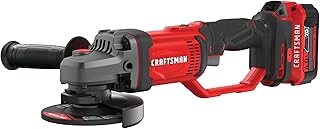


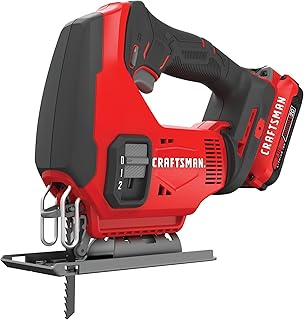


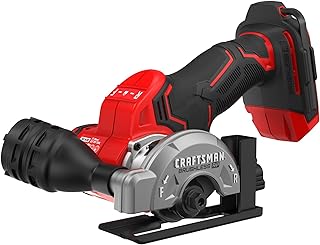

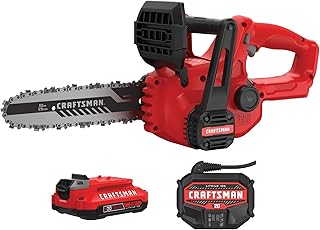


Choosing a cordless mitre saw is not simply a matter of selecting the model with the highest advertised power. For Canadian buyers, the better choice depends on cutting capacity, battery platform, portability, accuracy, blade size, available features, and the type of material you expect to cut. Craftsman cordless mitre saws are designed around the convenience of battery-powered operation, making them particularly useful when a conventional power cord is inconvenient or when a saw needs to move between a workshop, garage, renovation site, and outdoor job.
A good buying decision starts with understanding how each specification affects real work. A compact saw can be easier to transport, while a larger model may provide greater crosscut capacity. A brushless motor can offer an attractive combination of efficiency and durability, but the battery and charger ecosystem also matter. Likewise, a dual-bevel mechanism can save time when producing repeated angled cuts, whereas a single-bevel saw may be perfectly adequate for simpler projects.
This guide focuses on the factors Canadian shoppers should compare before choosing a Craftsman cordless mitre saw in 2026. Rather than treating one specification as proof that a saw is better than another, use the complete combination of capacity, accuracy, ergonomics, power system, accessories, and intended workload to determine which configuration makes sense for you.
Cordless operation is one of the biggest advantages of a modern mitre saw. There is no extension cord running across the work area, and the saw can be positioned where access to a wall outlet is limited. This can be useful for framing, trim installation, flooring work, deck projects, renovation jobs, and outdoor cutting.
Craftsman is a familiar power-tool brand with a broad range of battery-powered equipment. If you already own compatible Craftsman batteries, choosing a cordless mitre saw from the same platform may reduce the need to manage multiple battery systems. Before purchasing, however, always confirm the exact battery family required by the saw. Battery compatibility should never be assumed merely because two products carry the Craftsman name.
When comparing models, avoid focusing exclusively on motor power or battery voltage. A mitre saw is a complete cutting system. Its usefulness comes from the interaction between the motor, blade, cutting mechanism, fence, table, bevel adjustment, mitre adjustment, battery, and user controls.
Blade size is one of the first specifications worth checking. Common mitre saw configurations use different blade diameters, and the diameter influences the maximum cutting capacity available from the machine.
A smaller blade can contribute to a more compact and portable tool. A larger blade may provide greater cutting capacity for wider or taller workpieces. The correct choice depends on your projects rather than the assumption that the largest blade is automatically the best option.
Crosscut capacity indicates how large a workpiece the saw can cut under specified conditions. This specification is especially important for baseboards, framing lumber, shelving components, trim, decking material, and other dimensional stock.
Always examine the manufacturer's stated capacity for different cutting configurations. Maximum capacity can vary depending on the mitre angle, bevel setting, material dimensions, and whether the cut is performed in a particular orientation.
The mitre range determines how far the blade can rotate horizontally to make angled cuts. Wider adjustment ranges can be helpful for trim, framing, furniture construction, flooring, and compound cuts.
Positive stops can also make repeated common angles easier to set. When comparing saws, check not only the maximum range but also the locations and usability of the preset stops.
The bevel mechanism allows the blade to tilt relative to the workpiece. A single-bevel saw tilts in one direction, while a dual-bevel saw can tilt in both directions.
Dual-bevel capability can be particularly useful for crown moulding, decorative trim, cabinetry components, and repeated compound cuts. It can reduce the need to reposition or flip the workpiece when changing the direction of a bevel.
The difference between single-bevel and dual-bevel designs matters more as project complexity increases. A single-bevel model may be sufficient for straightforward crosscuts and basic angled cuts. It can also be attractive when simplicity, weight, or price is more important than maximum flexibility.
A dual-bevel design generally provides greater convenience for repeated compound-angle work. Instead of rotating the workpiece to achieve the opposite bevel direction, the saw can be adjusted from the other side.
Brushless motors are an important consideration in cordless power tools. Unlike traditional brushed motors, brushless designs use electronic control rather than physical brushes to manage motor operation.
For a cordless mitre saw, brushless technology can be appealing because efficient motor operation is particularly relevant when power comes from a battery. However, the presence of a brushless motor should not be treated as the only measure of saw quality.
Look at the complete system: motor design, battery compatibility, blade, cutting capacity, electronics, ergonomics, adjustment mechanisms, and intended workload. A brushless saw with a configuration that does not suit your projects may be a worse purchase than a simpler model that meets your requirements more effectively.
Battery selection deserves as much attention as the saw itself. A cordless mitre saw consumes considerably more energy during repeated cutting than many small handheld cordless tools, so battery capacity can influence how convenient the tool is during longer sessions.
Battery capacity is commonly expressed in amp-hours. Higher-capacity batteries can generally provide more stored energy, although actual runtime depends on the workload and tool electronics.
Do not compare amp-hour ratings in isolation. A battery's physical size and weight can also affect portability. For a portable mitre saw, the ideal battery is the one that provides an appropriate balance between runtime and handling.
If you already own compatible Craftsman batteries, check whether your existing batteries are suitable for the saw and whether their capacity matches your expected workload. For occasional DIY projects, one suitable battery may be sufficient. For frequent job-site use, having a spare compatible battery can reduce interruptions.
Always verify compatibility using the specific model information before purchasing. Battery-platform names can cover multiple generations or product categories, and compatibility should be confirmed rather than inferred.
Accuracy is a major consideration for a mitre saw because even a powerful machine is frustrating to use if adjustments are difficult to control or the workpiece does not remain securely positioned.
The fence supports the workpiece and helps establish a consistent cutting position. A well-designed fence should provide stable support and allow appropriate clearance for the blade at different angles.
Check whether the fence can accommodate the dimensions of your normal materials and whether its adjustment mechanism is practical for the types of cuts you make.
Preset mitre stops can simplify repeated cuts at commonly used angles. Good detents should be easy to locate and should help maintain repeatable settings.
Bevel controls should be accessible and easy to read. If you regularly switch between bevel angles, a mechanism that can be adjusted quickly may have a significant practical advantage.
Stable material support is essential. Even an accurate saw can produce inconsistent results if long boards move during cutting. Consider whether the saw provides suitable extensions or whether you will need a dedicated stand, workbench support, or auxiliary material supports.
Dust management is another important part of the buying decision. Mitre saws can generate substantial sawdust, particularly when cutting wood products. A dust port can help connect the saw to a suitable collection system, although no dust-collection setup should be assumed to capture every particle.
Visibility is equally important. The operator needs to see the cut line clearly while maintaining a safe working position. Some saw configurations may include work-lighting or laser-style guidance features. These can help with alignment, but they should be treated as aids rather than replacements for careful setup and proper measurement.
One of the strongest reasons to choose a cordless mitre saw is portability. However, portability involves more than the absence of a power cord.
Consider the overall weight of the saw with its battery installed, the carrying handle arrangement, the amount of space required for the rails or sliding mechanism, and how easily the saw can be secured during transport.
A portable configuration can be especially valuable when the saw needs to move between locations regularly. A compact footprint may also be helpful when working in unfinished rooms or restricted areas.
Workshop users may place greater emphasis on cutting capacity, stability, dust collection, and adjustment precision. If the saw will remain in one location most of the time, portability may be less important than a robust working setup.
A sliding mitre saw uses a mechanism that allows the blade assembly to move through the workpiece. This can increase crosscut capacity compared with a compact non-sliding design of a similar blade size.
A non-sliding design can be simpler and more compact. It may be suitable for narrower workpieces and users who prioritize straightforward transport.
Mitre saws are primarily associated with wood cutting, but the appropriate blade and machine specifications depend on the material. Always follow the specific manufacturer's instructions regarding approved materials and blade types.
The blade is a critical component of mitre saw performance. Two saws with similar motor specifications can produce very different results when fitted with different blades.
Blade tooth count, tooth geometry, kerf, diameter, arbor specification, and material compatibility all deserve attention. A blade designed for fast rough cutting may not produce the same finish as one intended for cleaner trim work.
Blades with fewer teeth are often associated with faster material removal and rougher general-purpose cutting. They can be appropriate for construction lumber where speed is more important than an extremely fine finish.
Higher-tooth-count blades can be useful when cleaner cuts are required, especially for trim and finish-oriented applications. Cutting speed and chip evacuation should still be considered.
Never purchase a replacement blade based solely on appearance. Confirm the correct diameter, arbor specification, permitted speed, and material compatibility for the specific mitre saw.
A mitre saw is a powerful cutting machine and should be treated accordingly. Product features can support safer operation, but safe working habits remain essential.
Canadian shoppers should consider more than the advertised tool price. The complete ownership cost can include a battery, charger, replacement blades, stand, dust-collection equipment, material supports, and other accessories.
Availability can also differ between Canadian retailers and other markets. Check the exact Canadian model number and specifications before comparing listings. A model with a similar name can have different included accessories, battery configurations, or regional packaging.
Do not assume that a battery from another country or another Craftsman product will automatically be appropriate. Verify the battery system specified for the exact Canadian-market tool.
Canadian users who work outdoors during colder months should pay attention to battery storage and operating guidance. Lithium-ion batteries should be handled and stored according to the manufacturer's recommendations, especially when exposed to low temperatures.
If your work is mostly stationary and near a suitable electrical supply, a corded mitre saw may remain practical. If mobility and fast setup are more important, cordless operation can offer greater convenience. The better option depends on the working environment rather than a universal preference.
When comparing Craftsman models, prioritize features according to the work you actually perform.
A Craftsman cordless mitre saw can make sense for DIY users, renovation enthusiasts, woodworkers, contractors, installers, and tradespeople who value cordless mobility. The ideal configuration differs considerably between these groups.
A homeowner may benefit from a compact model that is easy to store and sufficiently versatile for trim, shelving, small construction projects, and home improvements. Maximum cutting capacity may be unnecessary if the saw is used only occasionally.
Renovation work often involves moving between rooms and cutting different materials. A sliding design with useful mitre and bevel adjustment can provide a practical balance of versatility and mobility.
Trim work places greater emphasis on cutting accuracy, bevel adjustment, repeatability, blade quality, and support for long workpieces. A dual-bevel configuration can be particularly useful for complex moulding work.
Frequent users should look closely at battery runtime, cutting capacity, durability-oriented design features, transport requirements, and the availability of compatible batteries. Time spent changing batteries or adjusting a cumbersome setup can become significant during high-volume work.
More cutting capacity can be useful, but a larger machine can also be heavier and less convenient to transport. Choose capacity based on your typical material dimensions.
A tool-only listing may look attractive until the cost of a compatible battery and charger is added. Compare the complete setup rather than the bare-tool price alone.
Motor technology matters, but it does not determine the entire user experience. Fence quality, adjustment mechanisms, blade compatibility, cutting capacity, ergonomics, and battery efficiency all contribute to performance.
A mitre saw is dependent on its blade. Before purchasing, consider whether suitable replacement blades are readily available through Canadian retailers and whether the required specifications are easy to find.
Long boards need stable support. A saw that appears ideal on paper can become difficult to use if your work area does not provide sufficient support on either side of the cutting table.
Guidance features can help align a cut, but they do not replace careful measurement, a properly adjusted fence, stable material positioning, and correct blade selection.
Craftsman is not the only established manufacturer competing in the cordless mitre saw category. Buyers may also encounter products from DeWalt, Makita, Milwaukee, Bosch, Ryobi, Metabo HPT, and other established power-tool brands.
The most useful comparison is not simply brand versus brand. Look at battery ecosystem, model-specific capacity, bevel and mitre ranges, tool weight, accessories, blade size, service arrangements, and the type of work you perform.
DeWalt has a broad professional-oriented cordless tool ecosystem, while Craftsman can appeal to buyers who want access to the Craftsman platform. Compare the exact models rather than relying on brand reputation alone.
Makita has a substantial cordless power-tool range and offers multiple mitre saw configurations. Battery-platform compatibility can be an important deciding factor for users already invested in either ecosystem.
Milwaukee is another major cordless professional-tool brand. For a direct comparison, examine the specific cutting capacity, battery system, ergonomics, and intended application of each model.
Bosch mitre saws are known across woodworking and construction categories. Compare the cutting mechanism, adjustment system, portability, dust-management design, and blade capacity of individual products.
Ryobi is another widely recognised cordless platform, particularly among DIY and home-improvement users. If choosing between the two, battery ownership and the wider tools you plan to buy can be more important than a small difference in an individual specification.
Instead of asking which saw is universally the best, start with your most demanding recurring task.
Regular maintenance can help keep a mitre saw operating consistently. Always follow the specific maintenance instructions provided for the exact model.
Sawdust can accumulate around the table, fence, pivot points, and dust-collection areas. Remove debris using an appropriate cleaning method recommended by the manufacturer.
A dull or damaged blade can increase cutting resistance and reduce cut quality. Inspect the blade regularly and replace it when it no longer performs appropriately or when damage is present.
Periodically verify the alignment of the fence, mitre scale, and bevel settings. If repeated cuts no longer match as expected, check the adjustment system before assuming the motor or blade is responsible.
Follow the battery manufacturer's storage, charging, and handling instructions. Keep batteries protected from unsuitable temperatures, moisture, impact, and other conditions that could compromise safe operation.
Check the sliding mechanism, pivoting head, guards, fasteners, and other moving components for abnormal movement or damage. Do not operate a tool that appears unsafe or damaged.
Clean cuts are influenced by several variables rather than one feature. Use an appropriate blade for the material and finish requirement, support the workpiece securely, and make sure the saw is correctly adjusted.
For finish work, avoid forcing the blade through the material. Let the cutting system operate at its intended pace while maintaining appropriate control. Proper workpiece support is particularly important because movement during cutting can affect both accuracy and finish quality.
Online product pages can contain different configurations of the same general tool. Before placing an order, read the complete listing rather than relying on the product title alone.
Customer reviews can provide useful information, but they should be interpreted carefully. A large number of ratings does not automatically mean that a particular model is ideal for your requirements.
Look for recurring comments about specific characteristics such as portability, battery runtime, cut accuracy, fence adjustment, bevel operation, dust collection, blade changes, and ease of transport. Isolated comments are less useful than repeated observations about the same issue.
Also distinguish between dissatisfaction caused by the product and dissatisfaction caused by an unsuitable purchase. A compact saw may receive criticism for limited capacity even though its compact design is intentional. Always compare the reviewer's application with your own intended use.
For most buyers, the following order provides a practical way to narrow down options:
A cordless model is not automatically the best choice for everyone. If your saw will remain permanently installed in a workshop beside a suitable electrical outlet, a corded model may offer a simpler operating arrangement.
Likewise, if your projects require only very small crosscuts, a compact alternative may be easier to store. The goal is to buy the tool that matches your actual workload rather than paying for capacity and features that will rarely be used.
The best Craftsman cordless mitre saw for a Canadian buyer in 2026 is the model that provides the right balance of cutting capacity, portability, battery compatibility, accuracy, adjustment flexibility, and overall practicality for the intended work.
For occasional DIY projects, prioritize manageable size, ease of setup, and sufficient capacity. For renovation work, consider sliding capability and versatile angle adjustment. For trim and finish carpentry, place greater emphasis on accuracy, bevel flexibility, blade selection, and repeatability. For frequent professional use, battery management, capacity, transport, ergonomics, and long-term usability become increasingly important.
Before buying, compare the exact model specifications and included accessories, verify battery compatibility, review the manufacturer's instructions, and check current Canadian retailer listings. The right decision is not necessarily the most powerful or expensive saw. It is the one whose capabilities match the work you actually need to complete.
The best option depends on your requirements, budget, material dimensions, desired cutting capacity, and existing battery platform. Compare the exact models rather than choosing solely by brand or advertised motor specifications.
A cordless mitre saw can be useful for DIY work involving trim, shelving, framing, renovation, decking, and other suitable cutting tasks. The appropriate model depends on the material dimensions and cutting features required for the project.
Included equipment varies by model and retailer listing. Some configurations may be sold as tool-only products, while others can include batteries or chargers. Always check the exact Canadian product listing before purchasing.
Do not assume universal compatibility. Check the battery platform and exact compatibility information for the specific mitre saw and battery.
Not necessarily. Sliding models can offer greater crosscut capacity, while non-sliding designs can be more compact. Choose according to the dimensions of the material you normally cut.
Dual bevel is particularly useful for users who frequently make compound cuts or install detailed trim. If your work mainly consists of basic crosscuts and occasional mitre cuts, single bevel may be sufficient.
Use a blade that matches the saw's required diameter, arbor specification, speed rating, material compatibility, and intended cutting application. A construction blade and a fine-finish blade serve different purposes.
A suitable mitre saw and blade may be capable of cutting appropriate hardwood workpieces within the manufacturer's stated limits. Blade selection, material dimensions, battery condition, and cutting technique all matter.
Battery capacity matters more when the saw is used for repeated cutting sessions. Higher-capacity batteries can provide more stored energy, but they may also add weight. Choose a capacity that matches your workload and portability requirements.
Yes, cordless operation can be especially convenient on job sites because the saw does not require a conventional power cord during operation. Transport weight, battery availability, workpiece support, and environmental conditions should still be considered.
Follow the model-specific maintenance instructions, keep the cutting area clean, inspect the blade, check adjustment accuracy, examine moving components, and maintain the battery according to the manufacturer's guidance.
It can be convenient if your existing batteries are compatible with the exact saw you are considering. Confirm compatibility before purchasing because not every Craftsman cordless product necessarily uses the same battery configuration.
Check the exact model number, Canadian configuration, battery and charger inclusion, blade size, cutting capacity, bevel and mitre ranges, included accessories, current retailer price, and applicable manufacturer information.
When comparing the best Craftsman cordless mitre saws in Canada for 2026, focus on suitability rather than a single headline specification. Cutting capacity, blade size, battery system, bevel capability, sliding action, accuracy controls, portability, and accessory requirements all influence the real value of a saw.
Take time to compare the exact models, understand the included configuration, and match the tool to your most demanding regular task. Whether your priority is DIY renovation, trim installation, woodworking, framing, or portable job-site work, a carefully matched cordless mitre saw can provide the combination of cutting versatility and mobility that your projects require.