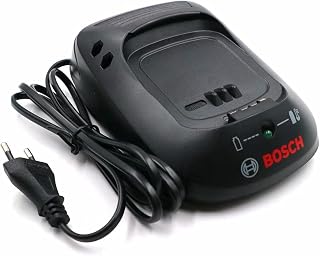

Explore cordless power tools, kits, batteries, chargers, accessories and related equipment available to Canadian shoppers. Compare product options and follow useful buying guides before you buy.




Choosing the right Bosch battery and charger is just as important as choosing the cordless power tool itself. A battery affects runtime, tool performance, balance and portability, while the charger determines how efficiently the battery can be replenished between jobs. For Canadian users, the best combination should also match the voltage platform, intended workload, tool compatibility and charging requirements.
This independent buying guide explains what to look for when comparing Bosch batteries and chargers in Canada in 2026. Rather than focusing only on capacity or advertised charging speed, it considers compatibility, battery technology, charging systems, physical size, weight, temperature management, workload and long-term practicality.
Bosch offers several cordless battery solutions, including its 18V platform and higher-performance battery designs intended for demanding professional applications. Product specifications can vary by model and market, so always confirm the exact battery and charger specifications before purchasing.
The best Bosch battery and charger combination depends on how you use your tools. A homeowner who occasionally operates a drill or impact driver has different requirements from a contractor using grinders, saws or rotary hammers throughout the working day.
Before comparing individual models, consider these factors:
Compatibility should be the first consideration when buying a replacement Bosch battery. Bosch cordless tools are designed around specific battery systems, and not every Bosch battery is automatically compatible with every Bosch cordless product.
Many Bosch professional cordless tools use an 18V battery platform. However, the correct battery depends on the tool generation, battery system and manufacturer's compatibility specifications.
Do not select a battery solely because the label says Bosch or 18V. Check the tool's manual, product documentation and battery compatibility information before placing an order.
This is particularly important when purchasing from a marketplace where several generations of Bosch cordless products may appear together. A visually similar battery does not necessarily mean that it is the correct battery for a specific tool.
A compatible battery should connect correctly, communicate appropriately with the tool when required and operate within the electrical specifications intended by the manufacturer.
Using the correct platform can help prevent purchasing mistakes and ensures that the battery is designed for the tool's intended operating requirements.
Amp-hours, usually abbreviated as Ah, indicate battery capacity. In simple terms, a higher Ah rating generally provides more stored energy than a lower-capacity battery when comparing batteries within the same voltage platform and technology.
For example, a compact battery may be preferable for a drill used overhead because its lower weight can make the tool easier to control. A higher-capacity battery can be more suitable for applications where longer runtime is more important than minimum weight.
However, battery capacity should not be treated as a direct guarantee of runtime. Actual runtime depends on the tool, workload, material, operating conditions, battery condition and user technique.
Compact batteries can be useful for:
Higher-capacity batteries can make more sense for:
The largest battery is not automatically the best battery. A high-capacity pack can provide greater energy storage, but it may also add weight and change the balance of a cordless tool.
Compact batteries are often easier to carry and can improve maneuverability. They are especially useful with tools that are already lightweight or frequently used in confined spaces.
High-capacity batteries become more attractive when runtime is a priority. For demanding cutting, grinding or drilling applications, reducing the number of battery changes can be valuable.
The best choice is therefore a balance between runtime, weight, tool balance and workload.
Bosch CORE18V batteries are designed for Bosch professional cordless tools and are available in different capacity and performance configurations. Some models are designed to provide a balance between compact dimensions and runtime, while others are intended for higher-demand applications.
When comparing CORE18V batteries, look beyond the name. Examine the exact model, Ah rating, physical dimensions, weight and compatibility information.
For users who already own several Bosch professional tools, staying within the appropriate Bosch battery ecosystem can simplify battery management because compatible packs can potentially be shared between multiple tools.
Modern cordless-tool batteries rely on lithium-ion cell technology. The internal cell arrangement, electronics, housing and thermal management all contribute to how a battery behaves under load.
A battery is more than a collection of cells. Battery-management electronics can monitor operating conditions and help control charging and discharging within the system's intended parameters.
For demanding tools, thermal management becomes especially important because heavy loads can generate significant heat. A battery designed for professional applications may incorporate construction and electronics intended to handle demanding operating conditions.
A good battery still needs an appropriate charger. When comparing Bosch chargers, verify the exact battery compatibility and charging specifications rather than assuming that every Bosch charger works with every Bosch battery.
Charger selection should consider how many batteries you use, how frequently you need them charged and whether charging speed matters for your workflow.
A standard charger can be suitable for users who operate only a few cordless tools and have sufficient time between jobs to recharge batteries.
This can be a practical choice for occasional DIY projects, household maintenance and light workshop use.
Higher-output Bosch charging solutions can be useful for professional users who need batteries ready for repeated work cycles.
Faster charging can reduce downtime, but the appropriate charger still depends on the specific battery. Always check the manufacturer's specifications for supported battery types and charging performance.
The Bosch GAL18V-40 is associated with Bosch's 18V battery system and is an example of a compact charger intended for users working within that platform.
A compact charger can be convenient for workshops, garages and mobile tool storage because it can take up less space than larger charging equipment.
When evaluating this type of charger, consider the battery capacities you use most often and whether its charging characteristics match your workflow.
The Bosch GAL18V-160C represents a higher-performance charging option within Bosch's professional 18V ecosystem. It is designed for users who place greater emphasis on charging performance and professional cordless-tool workflows.
Its suitability depends on the batteries being used and the requirements of the individual tool system. Buyers should check current specifications and compatibility before purchase because product configurations and market availability can change.
Buyers often face a choice between purchasing a battery-and-charger kit or buying each component separately.
A kit can be convenient when starting a cordless tool platform because it provides the essential charging equipment and battery together. It may also make sense when adding cordless tools to a workshop that currently has no compatible battery.
Buying separately can be more practical when you already own a compatible charger or several batteries. In that situation, purchasing another charger may add unnecessary equipment.
Different tools place different demands on a battery. A drill and a grinder may use the same battery platform but consume energy at very different rates during real-world operation.
For low-load drilling and fastening, a compact battery may provide a comfortable combination of runtime and maneuverability.
For high-load applications, such as extended cutting or grinding, a higher-capacity battery can be more appropriate. However, increased capacity can add weight, so the decision should account for how the tool will actually be used.
Runtime cannot be accurately determined from Ah alone. The tool's motor, operating mode, material and workload all affect energy consumption.
A cordless drill driving small screws into soft material may consume considerably less energy than the same tool drilling large holes through hard material.
Likewise, a saw cutting continuously under heavy load can use considerably more energy than a tool used intermittently.
Instead of asking only which battery lasts the longest, consider how long your typical work cycle lasts and whether you prefer a lighter battery or fewer battery changes.
Weight matters more than many buyers expect. A battery is part of the overall tool system, so its size can influence handling and fatigue.
For overhead work, compact battery packs can be particularly useful because reducing weight at the tool can make repeated positioning easier.
For floor-level cutting or stationary-style work, the additional weight of a higher-capacity battery may be less noticeable.
Professional users should consider not only total battery weight but also how the battery changes the centre of gravity of the tool.
Canadian users may encounter substantially different temperatures depending on region and season. Lithium-ion batteries can behave differently in cold conditions, so storage, charging and operating instructions should be followed carefully.
Do not assume that a battery should immediately be charged after being exposed to very cold temperatures. Consult the manufacturer's instructions for the appropriate temperature range and charging procedure.
For winter work, keeping batteries protected from unnecessary exposure to extreme cold can be an important part of battery care.
Proper storage can help preserve battery performance over time. Store batteries according to Bosch's instructions and avoid exposing them to excessive heat, moisture or other unsuitable conditions.
Keep battery contacts clean and inspect the housing periodically. If a battery shows physical damage, swelling, unusual heat or other signs of failure, stop using it and follow the manufacturer's safety guidance.
A higher Ah rating does not automatically make a battery the best choice. Weight, dimensions, tool compatibility and workload can be equally important.
Buying a battery without checking the exact tool model is one of the most avoidable mistakes. Confirm compatibility before purchasing.
Price should never be the only charger-selection criterion. Confirm that the charger is intended for your battery system and provides the appropriate charging specifications.
A larger battery may interfere with comfortable handling on some tools. Consider the complete tool-and-battery combination rather than the battery in isolation.
Additional batteries can be useful for demanding workflows, but casual users may not need a large collection. Estimate your actual workload before investing in multiple packs.
Professional users typically benefit from considering battery capacity, charging turnaround, tool compatibility and workload as part of a complete system.
DIY users may place greater emphasis on compact size, affordability and versatility. If the tools are used only occasionally, a single compatible battery and charger may be sufficient for many applications.
Neither approach is universally better. The right battery setup depends on usage frequency and the tools in the workshop.
Drills and impact drivers generally do not require the same battery strategy as high-draw tools. A compact battery can provide good maneuverability for fastening and general drilling.
If the tool is frequently used for larger holes, long drilling sessions or heavy fastening, moving to a higher-capacity battery may be worthwhile.
Compare the battery's weight against the duration of typical work sessions before deciding.
Circular saws and reciprocating saws can place significant demands on a battery, particularly during continuous cutting.
Users who regularly make long or demanding cuts may benefit from higher-capacity batteries designed for the relevant Bosch platform.
However, the correct choice depends on the saw model and manufacturer's compatibility requirements. Always verify the recommended battery configuration.
Angle grinders can be demanding cordless tools because cutting and grinding applications can require sustained power.
A higher-performance battery may be attractive for demanding grinding applications, while a compact pack can make sense for short tasks where maneuverability matters more.
Consider the frequency and duration of grinding work before selecting battery capacity.
Rotary hammers can place substantial demands on cordless batteries during drilling and chiselling. For users performing repeated heavy-duty applications, battery capacity and thermal performance become especially important considerations.
Choose a battery that the specific Bosch rotary hammer is designed to accept and compare the manufacturer's recommendations before purchase.
A useful comparison should examine more than the product name. Create a shortlist using the following specifications:
Model numbers are particularly useful when shopping online because similar-looking products can have different specifications.
For chargers, compare:
Do not judge charger quality solely by its advertised charging time. Charging performance can vary according to battery capacity, battery condition, temperature and the charger-battery combination.
Bosch has a broad professional cordless ecosystem, so buyers may encounter several product families when comparing batteries and chargers.
The exact features available depend on the individual model. Always use the current manufacturer's specifications as the final compatibility reference.
If you own several compatible Bosch cordless tools, it can be more efficient to build a battery system rather than buying a battery and charger for every tool.
Start by identifying your most frequently used tools. Then determine which batteries are appropriate for those tools. Keep compact batteries for lightweight applications and reserve higher-capacity batteries for tools that demand more energy.
Adding a second charger can also be useful for professional users who need several batteries available throughout the day.
There is no universal number. A homeowner using one drill occasionally may need only one battery.
A workshop with several cordless tools may benefit from multiple batteries so one can be charging while another is being used.
Professional users should consider the number of tools being used simultaneously, average work duration and access to electrical power at the job site.
Battery safety should always take priority over convenience. Use compatible batteries and chargers and follow Bosch's safety instructions.
Do not attempt to repair, modify or disassemble lithium-ion battery packs unless specifically instructed by an appropriately qualified service professional and manufacturer documentation.
If a battery has been physically damaged, becomes unusually hot, leaks, swells or behaves abnormally, discontinue use and follow the manufacturer's recommended safety procedure.
A compact battery is a sensible option for users who prioritize portability, low weight and easy handling. It can work particularly well with drills, drivers and other tools used for shorter tasks.
It may also be a good secondary battery for professional users who already own high-capacity packs but occasionally need a lighter setup.
A high-capacity battery is generally more appropriate when runtime is a priority and the tool is regularly subjected to demanding workloads.
Users of saws, grinders, rotary hammers and other high-demand cordless tools may prefer greater capacity, provided the battery is compatible with the tool and the additional weight is acceptable.
A higher-performance charger is most useful when charging turnaround affects productivity. Professional users who rotate several batteries throughout the day can potentially benefit more from faster charging than occasional users.
For infrequent DIY projects, a compact standard charger may be sufficient if batteries have plenty of time to recharge between uses.
The best Bosch battery and charger combination is not necessarily the most powerful or most expensive option. The strongest choice is the one that matches your Bosch tool platform, workload, desired runtime, preferred tool weight and charging routine.
Start with compatibility. Then compare battery capacity, weight, dimensions and intended application. For chargers, verify the supported battery system and charging specifications. If you already own Bosch cordless tools, consider the benefits of building around a compatible battery ecosystem rather than purchasing isolated components.
Before buying, compare the exact model numbers and specifications from trusted retailers and Bosch documentation. Read verified customer reviews where available, but use reviews as supplementary information rather than a replacement for technical specifications.
The appropriate professional battery depends on the tool and workload. Bosch CORE18V and other professional 18V battery options are designed for use within Bosch's professional cordless ecosystem, but the exact capacity and model should be matched to the tool.
No. Higher capacity can provide more stored energy, but it can also increase battery size and weight. A compact battery may be preferable when maneuverability is more important than maximum runtime.
No assumption should be made that every Bosch charger is compatible with every Bosch battery. Check the exact charger and battery specifications before purchase.
Interchangeability depends on the specific Bosch battery platform, tool and product generation. Verify compatibility using the exact model numbers rather than relying only on the 18V label.
A compact battery can be suitable for general drilling and fastening because it keeps the tool lighter. A higher-capacity battery can be preferable for longer or more demanding drilling sessions.
A higher-capacity battery may be more appropriate for extended cutting, but the exact battery should be selected according to the circular saw manufacturer's compatibility and performance recommendations.
A kit can be convenient if you are starting a Bosch cordless platform and need both components. If you already own a compatible charger and battery, buying individual components may be more practical.
Follow Bosch's storage instructions and protect batteries from unsuitable temperatures, moisture and physical damage. Always consult the manufacturer's documentation for specific storage requirements.
Operating and charging conditions depend on the specific battery. Cold temperatures can affect lithium-ion battery behaviour, so follow Bosch's temperature and charging guidance when working in winter conditions.
An additional charger can be useful if you operate multiple batteries and need a faster rotation between charged and used packs. For occasional users, one compatible charger may be sufficient.
Check the exact tool model, battery platform, voltage, compatibility information and manufacturer part number before purchasing. Do not rely solely on product photos or general descriptions.
For Canadian buyers in 2026, choosing the right Bosch battery and charger should be approached as a complete cordless-tool system decision. Compatibility comes first, followed by capacity, weight, runtime, charging requirements and workload.
A compact Bosch battery can be the better choice when low weight and maneuverability matter. A higher-capacity battery can be more appropriate for demanding tools and longer work sessions. Similarly, a basic charger may suit occasional DIY work, while a higher-performance Bosch charger can be more relevant to users who regularly rotate multiple batteries.
There is no single Bosch battery and charger combination that is ideal for every Canadian buyer. Compare exact model numbers, verify compatibility with your tools and review the latest specifications before making a purchase. This approach makes it easier to select a battery and charger that fit your actual working conditions rather than simply choosing the largest capacity or fastest advertised charging option.