

Explore cordless power tools, kits, batteries, chargers, accessories and related equipment available to Canadian shoppers. Compare product options and follow useful buying guides before you buy.


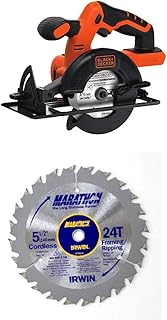

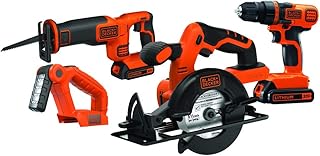
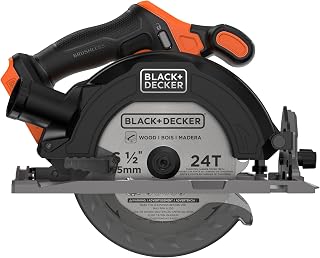

Choosing a cordless circular saw is not simply a matter of selecting the model with the highest advertised power. For Canadian buyers, the right saw needs to match the type of material being cut, the frequency of use, the required cutting capacity, battery platform, ergonomics, safety features and the conditions in which the tool will be used. A compact saw can be convenient for light renovation work, while a larger model may be more appropriate for repeated cuts through thicker construction materials.
This guide focuses specifically on BLACK+DECKER cordless circular saws and the factors that matter when comparing available models in Canada. Because product specifications, included accessories, retailer packages and availability can change, buyers should verify the current product listing before ordering. Pay particular attention to the exact model number rather than relying only on a product title.
BLACK+DECKER is a familiar power-tool brand with a broad consumer-oriented product range. Its cordless tools can appeal to homeowners, DIY users, occasional renovators and people who want the convenience of battery-powered equipment without managing a power cord during every cut.
The main attraction of a cordless circular saw is mobility. You can move around a work area without locating a nearby electrical outlet or dragging an extension cord behind the tool. This can be useful during framing, shelving projects, repairs, outdoor construction and renovation work.
However, cordless convenience should not be confused with unlimited cutting performance. Runtime depends on the battery, material, blade condition, cutting technique and workload. A buyer who expects to make long, continuous cuts throughout the day should assess the battery system and availability of compatible replacement batteries before choosing a saw.
When comparing several BLACK+DECKER models, start with the specifications that directly affect your work rather than choosing based on appearance or promotional wording.
Blade diameter is one of the most important specifications because it is closely related to the saw's potential cutting depth. A larger blade can be appropriate when deeper cuts are required, while a smaller saw may be easier to control for lighter tasks.
Do not assume that two saws with similar blade sizes have identical cutting capabilities. Check the manufacturer's stated maximum cutting depth at the relevant bevel settings. If your projects involve dimensional lumber, sheet goods or thicker boards, compare the actual cutting capacity with the thickness of the materials you regularly use.
A circular saw with an adjustable bevel can make angled cuts instead of limiting the user to straight 90-degree cuts. This matters for roofing-related work, framing, cabinetry, trim preparation and many woodworking projects.
Check the available bevel range, adjustment mechanism and markings. A clearly marked adjustment scale can make repeated angle changes easier. Also consider whether the bevel lock is easy to operate while wearing appropriate work gloves.
Battery voltage is useful when comparing cordless tools, but it should not be treated as a complete measure of cutting performance. Motor design, electronics, blade selection, material resistance and battery condition also influence how a saw behaves during use.
For cordless buyers, the battery platform can be just as important as the saw itself. If you already own compatible BLACK+DECKER batteries, a tool-only package may be worth considering. If you are starting from zero, compare the total cost of the saw, battery and charger rather than evaluating the bare-tool price alone.
Runtime varies substantially according to workload. Cutting thin sheet material intermittently requires a different amount of energy from making repeated cuts through dense or thick stock.
When reviewing a listing, determine whether the advertised package includes a battery and charger. Some listings may be tool-only. Others may include a battery, charger, blade or additional accessories. Comparing packages on an equal basis prevents an apparently cheaper option from becoming more expensive after essential accessories are added.
A cordless circular saw needs sufficient power to maintain useful cutting performance without excessive bogging under normal loads. Look for clearly stated manufacturer specifications and compare them with the materials you intend to cut.
Do not rely solely on claims such as “powerful,” “high performance” or “professional.” These descriptions are not substitutes for measurable specifications. Consider the tool's intended application, blade size, maximum cutting depth and battery requirements together.
A saw can be technically capable yet uncomfortable to use. Weight distribution matters because a circular saw is normally operated while being guided along a workpiece. A balanced design can make it easier to maintain a steady cutting path.
Consider the main handle position, auxiliary grip, trigger access and overall balance. If you frequently work overhead, on ladders or in awkward spaces, minimizing unnecessary weight can become especially important.
The saw is only part of the cutting system. The blade has a major effect on the quality, speed and cleanliness of the cut.
Different blades are designed for different materials and cutting objectives. A blade intended for general wood cutting is not automatically the best choice for fine sheet goods. Tooth count, tooth geometry, kerf and blade construction all influence the finished cut.
For construction lumber, a suitable general-purpose blade can be practical when speed and versatility are priorities. For plywood and finished sheet goods, a blade designed for cleaner cuts may be more appropriate.
Always check that a replacement blade is compatible with the saw's required diameter, arbor specification and operating requirements. Never select a blade solely because it fits visually.
A worn or damaged blade can increase cutting resistance and make the tool harder to control. It can also produce rougher cuts and place additional demands on the motor and battery.
Inspect blades regularly. Replace blades that are damaged, excessively worn or unsuitable for the material being cut. Keeping the cutting system in good condition is often more useful than chasing small differences between similar saw models.
A circular saw is a serious cutting tool. Safety should be part of the buying decision, not an afterthought.
The lower blade guard helps cover the blade when it is not actively cutting. Check that the guard moves freely and returns correctly before using the tool. Never operate a saw with a damaged or improperly functioning guard.
Examine how the saw is started and stopped. A sensible switch arrangement should reduce the chance of accidental activation while allowing deliberate operation.
Good visibility can make it easier to follow a marked cutting line accurately. Look for a design that provides a clear view of the blade path without requiring awkward hand positioning.
Where a particular model includes electronic stopping or other control technology, review the manufacturer's documentation to understand exactly how the feature works. Do not assume that every cordless circular saw has the same control system.
Package contents can differ considerably between listings. Before purchasing, check whether the package includes the items you actually need.
A tool-only package can be a sensible choice for an existing battery-platform user. For a first-time cordless-tool buyer, a complete kit may provide better convenience if the included battery and charger are compatible with the intended future tools.
The tool-only versus kit decision depends largely on your existing equipment.
If you already have compatible BLACK+DECKER batteries and chargers, buying another bare tool can avoid unnecessary duplication. This approach can also make it easier to build a collection around one battery ecosystem.
If you do not own compatible batteries, compare the complete kit cost. A lower tool-only price can be misleading if a suitable battery and charger must be purchased separately.
Before committing to a battery ecosystem, think beyond the circular saw. Consider whether you may eventually want a drill, impact driver, reciprocating saw, jigsaw, blower or other cordless equipment that uses the same battery family.
Canadian buyers can encounter different working conditions depending on the region, season and project location. Outdoor work during colder months can affect battery behaviour, while renovation work indoors may place greater emphasis on dust management, visibility and compact handling.
Store batteries according to the manufacturer's instructions and avoid exposing them to unsuitable temperatures or moisture. Before using a battery-powered tool after storage, inspect the battery, charger and tool for visible damage.
For outdoor projects, also consider how easily you can transport the saw, spare batteries and required accessories. Cordless equipment is especially useful where power access is inconvenient, but only when the battery supply is sufficient for the planned workload.
The appropriate material depends on the exact saw, blade and manufacturer instructions. A typical woodworking circular saw may be used for suitable wood-based materials when the correct blade is installed.
Do not use a wood-cutting circular saw for materials outside its intended application simply because the blade appears capable of cutting them. Metal, masonry, plastics and composite materials can require different blades, guards, speed requirements and tool designs.
A cordless circular saw can be particularly useful when portability matters. It can simplify work in locations where extension cords are inconvenient or unavailable.
It is a strong candidate for DIY users who frequently perform straight cuts, construction projects, furniture repairs, shelving work, outdoor projects and general renovation tasks. It can also complement other cordless tools in a battery ecosystem.
However, a corded circular saw may still make more sense for certain stationary or high-volume workloads where uninterrupted electrical power is more important than portability.
The central difference is the power source, but the practical decision involves several factors.
Neither design is universally superior. The best option depends on where and how frequently you cut.
BLACK+DECKER is not the only brand worth considering. Buyers comparing cordless circular saws may also encounter products from DeWalt, Makita, Milwaukee, Bosch and Ryobi.
The most useful comparison is not simply brand against brand. Compare the individual models based on blade size, cutting capacity, battery ecosystem, included accessories, ergonomics, warranty terms stated by the manufacturer and intended application.
A buyer who already owns several compatible tools may reasonably prioritize battery compatibility. Someone building a first cordless-tool collection may instead compare the long-term cost and breadth of the platform.
Compare the specific intended use and product specifications rather than assuming one brand is automatically better. DeWalt has a broad cordless power-tool ecosystem, while BLACK+DECKER can appeal to consumers seeking tools for general DIY and home projects. The appropriate choice depends on the model and workload.
Makita offers extensive cordless equipment across multiple applications. When comparing a Makita circular saw with a BLACK+DECKER model, examine the exact battery platform, saw dimensions, cutting capacity, ergonomics and intended user rather than comparing brand reputation alone.
Milwaukee is another major cordless-tool manufacturer with a wide range of equipment. Buyers should compare complete system costs and the specifications of the individual circular saws. A premium-oriented tool ecosystem may include capabilities that are unnecessary for an occasional DIY user.
Bosch circular saws may also appear in Canadian buying comparisons. Check blade compatibility, adjustment features, battery platform, cutting capacity and package contents for each exact model.
Ryobi is widely associated with multi-tool cordless systems aimed at home improvement users. When comparing the two, battery compatibility can be a deciding factor if you already own tools from either ecosystem.
The cheapest listing is not necessarily the best value. A lower-priced package may exclude a battery, charger or other required equipment.
A saw may look suitable for a project but fail to provide the required cutting capacity. Always compare the manufacturer's stated depth with your thickest planned workpiece.
Check whether the listing is tool-only or a complete kit. Also verify battery compatibility rather than assuming batteries from unrelated BLACK+DECKER product families will work interchangeably.
Extra weight can become noticeable during repeated cutting. Consider how long you normally hold and guide the tool.
The supplied blade may be appropriate for general use, but different materials and desired finishes can call for different blade designs.
Retail listings can use similar product names for different packages or configurations. The model number provides a much more reliable basis for comparison.
Product specifications can appear complicated, but a few fields deserve particular attention.
Tool selection is only one part of accurate cutting. Correct setup and technique matter just as much.
Measure carefully before cutting and mark the workpiece clearly. Support the material so that the cut does not cause the offcut to pinch the blade. Keep both hands in the positions specified by the manufacturer's instructions and maintain a stable stance.
Allow the blade to reach its intended operating condition before beginning the cut where the manufacturer's instructions call for it. Avoid forcing the saw through the material. Let the blade do the cutting while maintaining controlled forward movement.
For repeated cuts, a properly positioned guide or straightedge can help maintain consistency when the application permits it.
Routine maintenance can help keep a cordless circular saw in usable condition.
Do not attempt repairs beyond your experience or the procedures permitted by the manufacturer. If a safety-critical component is damaged, discontinue use until the issue has been properly addressed.
Battery maintenance is particularly important with cordless power tools. Use the correct charger for the battery system and follow the manufacturer's charging instructions.
Avoid storing batteries in locations where they may be exposed to excessive heat, moisture or physical damage. Do not use a battery that shows signs of damage. When storing the saw for an extended period, follow the manufacturer's recommendations for both the tool and battery.
A BLACK+DECKER cordless circular saw may be worth considering if you want a portable cutting tool for household projects, renovation work, woodworking tasks or general DIY use and value the convenience of cordless operation.
It may be especially attractive to users who already own compatible BLACK+DECKER cordless tools and want to expand their collection without introducing another battery platform.
Consider alternatives if your work requires specialized cutting performance, exceptionally high cutting volume, a particular professional battery ecosystem or a tool designed specifically for a material outside ordinary woodworking applications.
For occasional cuts in a home workshop, portability may be more important than maximum output. For professional production work, long operating sessions and specialized requirements can change the priorities considerably.
For occasional DIY work, prioritize manageable weight, simple controls, adequate cutting depth and compatibility with a battery system you can realistically maintain.
For frequent renovation work, place greater emphasis on battery capacity, ergonomics, blade availability, cutting capacity and durability-related specifications.
For woodworking and furniture projects, pay closer attention to blade selection, cut-line visibility, bevel adjustment and the ability to make clean, controlled cuts.
For outdoor construction, portability and battery management may become more important. Consider how many cuts you expect to make and whether spare batteries will be practical for your work schedule.
When reviewing the individual BLACK+DECKER cordless circular saw recommendations, use a consistent comparison process. First confirm the exact model number. Then check the blade specification, maximum cutting depth, bevel capability, battery requirements, weight and package contents.
Next, consider whether the product matches your intended workload. A compact model can be preferable for occasional home projects, while a model with greater capacity may be more appropriate for demanding material sizes. The best overall choice is the one that satisfies your actual requirements without paying for capabilities you will rarely use.
Before purchasing, compare the current retailer listing, customer feedback and manufacturer's documentation. Pay attention to recent reviews that discuss the exact model rather than reviews for visually similar products.
Customer reviews can provide useful information, but they should be evaluated carefully. Look for recurring comments about handling, battery life, cutting performance, ease of adjustment and long-term usability.
Do not treat a single extremely positive or negative review as conclusive evidence. Review the overall pattern and confirm that the comments refer to the exact model and package you are considering.
Also separate subjective preferences from genuine product limitations. A compact saw may receive criticism from someone expecting professional-grade capacity even though its intended use is lighter DIY work.
Good value is not necessarily the lowest purchase price. Value comes from the relationship between useful features, reliability expectations, included equipment, battery compatibility and your actual workload.
A saw that fits your existing battery ecosystem can offer practical value even if another model has a lower standalone price. Likewise, paying more for capacity you never need may not be efficient for occasional users.
Compare the complete ownership requirements before making a decision. Include the saw, compatible battery, charger if required, suitable blades and any essential accessories.
The best model depends on the user's materials, cutting depth requirements, battery situation, frequency of use and budget. There is no single model that is ideal for every Canadian buyer. Compare the exact specifications and package contents of the models you are considering.
They can be suitable for many general DIY applications when the selected model has the required cutting capacity and is used with an appropriate blade. Always follow the manufacturer's instructions and verify that the tool is rated for the intended material.
If you do not already own a compatible battery and charger, a complete kit can be more convenient. If you already have compatible equipment, a tool-only package may avoid duplicate batteries and chargers.
Runtime depends on battery capacity, material thickness, material type, blade condition, cutting technique and workload. Manufacturer runtime figures, where provided, should be interpreted in the context of their stated testing conditions rather than as a universal guarantee.
No. The replacement blade must meet the saw's required diameter, arbor specification and other applicable requirements. Always consult the manufacturer's instructions before fitting a replacement blade.
Many cordless circular saws are designed for wood-cutting applications, but the suitable thickness and material depend on the exact model and blade. Check the manufacturer's cutting specifications before starting a project.
Yes. Routine inspection, cleaning, blade checks, guard checks and correct battery care are important. Follow the maintenance procedures specified by the manufacturer.
Neither is universally better. Cordless models offer mobility and convenience, while corded models provide continuous mains power. Choose according to your workspace, workload and preference for battery-based tools.
Consider cutting capacity, blade suitability, visibility of the cut line, ergonomics and bevel adjustment. For cleaner plywood cuts, use a blade specifically appropriate for the material and desired finish.
Use the saw outdoors only in conditions permitted by the manufacturer. Protect the tool and battery from unsuitable moisture and temperatures, and follow all electrical, battery and operating safety instructions.
The best BLACK+DECKER cordless circular saw for a Canadian buyer is the model that matches the work rather than simply the model with the most impressive headline specification. Start with cutting depth and blade requirements, then consider battery compatibility, ergonomics, bevel adjustment, package contents and long-term usability.
For shoppers comparing the top models in 2026, verify the current specifications for the exact model, check whether the listing includes a battery and charger, read recent reviews for that model and compare the complete purchase cost. Taking these steps makes it easier to identify a circular saw that fits your projects without paying for features you do not need.
Product availability, retailer pricing, package contents and specifications can change during the year. Before making a final purchase decision, confirm the latest Canadian information directly from the manufacturer and the retailer listing you intend to use.