

♥ Wishlist
We analyzed 45 of the most popular Milwaukee Battery and Charger Options for Canadian Tool Users available in ca. Compare features, customer reviews, ratings, and expert recommendations to help you choose the best option in 2026.


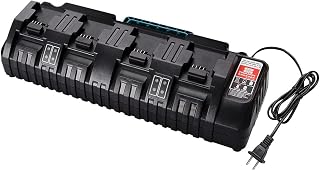


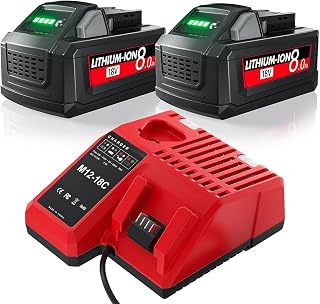


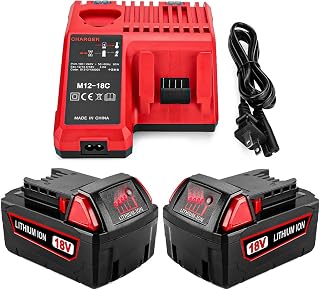


Choosing a Milwaukee battery and charger is not simply about selecting the largest battery or the fastest charger. The right combination depends on the Milwaukee cordless tools you already own, the type of work you perform, how long you need to work between charging sessions, and whether portability or maximum runtime matters most. Milwaukee's M12 and M18 platforms serve different tool categories, while battery capacities and charger technologies can significantly affect the way a cordless setup performs.
This buying guide is designed for Canadian shoppers comparing Milwaukee batteries and chargers in 2026. Instead of focusing only on headline specifications, consider compatibility, battery capacity, physical size, charging requirements, temperature conditions, expected workload, and long-term practicality. Brands such as Milwaukee are particularly relevant to professional tradespeople and serious DIY users because their cordless ecosystems include a broad selection of tools that share compatible battery platforms.
The first decision is the battery platform. Milwaukee M12 and M18 batteries are designed for different tool ecosystems, so choosing the correct platform is more important than comparing amp-hour numbers in isolation.
M12 batteries are intended for Milwaukee's compact 12-volt cordless tool platform. They are well suited to applications where a smaller tool and battery combination makes the job easier. Compact drills, inspection equipment, installation tools, lighting products and other space-conscious tools can benefit from the smaller format.
The main advantage is portability. A smaller battery can reduce the overall size and weight of a tool, which can be useful when working overhead, inside cabinets, around electrical installations or in confined spaces. The trade-off is that M12 batteries are not interchangeable with M18 tools.
M18 is Milwaukee's larger cordless platform and covers a wide range of demanding applications. It is commonly associated with drills, impact drivers, saws, grinders, outdoor equipment and other tools where greater power and runtime can be valuable.
For users building a larger cordless workshop, M18 can be attractive because the platform offers extensive tool compatibility. However, a larger battery may add weight and bulk. The best choice depends on the workload rather than the battery's headline capacity alone.
Amp-hour, commonly abbreviated as Ah, is one of the most important specifications to understand when comparing Milwaukee batteries. In general terms, a higher Ah rating represents greater stored electrical capacity within the battery pack. It does not automatically mean that a tool will perform better in every application.
A compact battery with a lower Ah rating can be preferable when weight and maneuverability are priorities. A higher-capacity pack can make more sense for prolonged cutting, grinding, drilling or other demanding work where reducing battery changes is important.
Lower-capacity batteries are useful for short jobs and applications where minimizing tool weight matters. They can be practical for installers, maintenance workers and DIY users who frequently move between tasks.
Higher-capacity batteries are generally more appropriate for extended workloads. They can reduce the frequency of battery changes, which may be especially useful on construction sites or during long periods of outdoor work.
However, a higher Ah rating can come with increased size and weight. Before choosing the largest available battery, consider whether the additional runtime justifies the added weight for the tools you use most often.
Battery capacity should always be considered alongside ergonomics. A battery that provides excellent runtime but makes a compact drill unnecessarily heavy may not be the most practical choice.
Tool balance becomes particularly important during repetitive work. If you are drilling overhead, driving fasteners repeatedly or performing precision installation tasks, a lighter configuration may reduce fatigue. For stationary or ground-level applications, additional battery capacity may be more valuable.
Compare the battery dimensions, weight and mounting position with your specific Milwaukee tool. The best battery is the one that provides an appropriate balance between runtime and handling.
Compatibility is the first technical specification to verify. Do not assume that every Milwaukee battery works with every Milwaukee cordless tool simply because the batteries have a similar appearance.
Compatibility should take priority over price. A battery that does not properly match the intended platform is not a useful bargain.
A charger is just as important as the battery because it determines how conveniently your battery collection can be maintained. When comparing Milwaukee chargers, look beyond the advertised charging speed and consider the number of batteries you own, whether you need sequential or simultaneous charging, and whether your workspace has convenient access to mains power.
A single-bay charger can be sufficient for occasional users with one or two batteries. It takes up little space and can be convenient in a home workshop.
Multi-bay charging solutions can be more practical for users who operate several cordless tools throughout the day. They can simplify battery management by keeping multiple packs organized in one charging location.
Rapid charging can be useful when batteries need to return to service quickly. However, charging speed should not be the only purchasing criterion. Consider the battery capacity, charger compatibility, charging environment and your actual workflow.
Using the correct charger is essential for maintaining a compatible battery system. Before purchasing, identify the exact battery platform and charger requirements. Avoid selecting a charger solely because it physically resembles another model.
Manufacturer specifications should be checked for supported battery types. This is especially important when buying accessories from different sellers or when replacing an older charger.
A Milwaukee battery and charger kit can be convenient when starting a cordless tool collection or expanding into a new platform. Kits can simplify compatibility because the included components are designed to work together.
However, buying individual components may make more sense if you already own several compatible batteries. In that situation, purchasing another charger may be more useful than buying another battery-and-charger combination.
Compare the complete package rather than looking only at the advertised battery capacity. Check the included battery model, charger type, number of accessories and compatibility with the tools you intend to operate.
Compare Ah ratings to understand the approximate energy capacity of different battery packs. Higher capacity can support longer operation but may increase weight.
Modern cordless power tool batteries commonly use lithium-ion technology. Battery chemistry affects energy density, weight and overall system design. Always follow the manufacturer's charging and storage recommendations for the specific battery.
Modern battery systems may incorporate electronic controls intended to manage operating conditions. When comparing products, review the manufacturer's stated protection and communication features instead of assuming that every battery pack provides identical electronics.
A battery used on a construction site needs to withstand normal handling associated with professional work. Inspect the housing, connection area and overall construction when comparing options. Avoid damaged packs or batteries with cracked housings, deformed terminals or other visible defects.
Battery runtime varies according to much more than Ah capacity. Tool type, workload, material, operating technique, temperature and battery condition can all influence how quickly a battery is depleted.
A drill used for light fastening may consume considerably less energy than a grinder or circular saw operating under heavy load. Even the same tool can produce different runtime results depending on the material being cut or drilled.
For this reason, published runtime figures should be treated as application-dependent rather than universal promises. When comparing batteries, consider the tasks you perform most frequently.
Canadian users should consider temperature when planning battery use. Winter conditions can affect battery performance and charging behavior. Extremely cold batteries should not automatically be placed on a charger simply because they have been brought in from outside.
Follow the manufacturer's instructions regarding temperature limits, charging conditions and storage. Allowing equipment to reach an appropriate operating environment before use or charging can be an important part of responsible battery management.
For contractors working outdoors during Canadian winters, keeping battery packs protected from extreme environmental conditions can also make day-to-day cordless tool management easier.
Proper storage can help protect your investment. Keep batteries in a dry environment away from unnecessary heat, moisture and direct exposure to harsh conditions.
Maintenance should focus on inspection rather than attempting to open or repair the battery pack yourself. Lithium-ion battery packs contain electrical components that require appropriate handling.
The largest battery is not always the best battery. Weight, tool balance and intended workload should be considered together with capacity.
An M12 battery and an M18 battery belong to different systems. Always verify compatibility before purchase.
An unusually low price can make a battery attractive, but price alone does not establish compatibility, authenticity, condition or suitability. Compare the exact model and specifications before making a decision.
Buying additional batteries without considering charging capacity can create unnecessary downtime. Users with multiple batteries may benefit from a charging setup that matches their daily workflow.
Battery weight matters when tools are used for long periods. A high-capacity pack may be excellent for one application but excessive for another.
Third-party battery packs may appear attractive because of their pricing, but compatibility and quality can vary. When comparing alternatives, check the stated platform compatibility, electrical specifications, construction quality and seller information carefully.
Original Milwaukee batteries provide the most straightforward path when maintaining a Milwaukee cordless ecosystem because the battery and tool are designed as part of the same manufacturer's platform. For users who depend on their tools professionally, compatibility and reliability may be more important than achieving the lowest initial purchase price.
DIY users often benefit from a balanced battery that provides useful runtime without unnecessary bulk. If most jobs involve drilling, fastening, light repairs and occasional maintenance, a compact option may be practical.
Construction users may prioritize runtime, durability and efficient battery rotation. A combination of compact and higher-capacity batteries can provide flexibility for different tools and tasks.
Professional users should evaluate the entire battery ecosystem. Consider how many tools are used daily, how frequently batteries are changed, how many charging stations are available and which tools consume the most energy.
Outdoor equipment can place different demands on batteries than drills or impact drivers. Extended operation and sustained loads can make battery capacity especially relevant. Consider weather exposure, temperature and the practical ability to recharge packs during the workday.
There is no universal number because battery requirements depend on the number of cordless tools and the intensity of use. A homeowner who uses one drill occasionally may need far fewer batteries than a contractor operating several tools throughout a working day.
For larger tool collections, battery rotation can be useful. One battery can be in use while another is charging, with additional packs available for high-demand applications. The ideal setup is based on actual workflow rather than a fixed battery count.
When comparing products for a buying guide, use a consistent set of criteria. This prevents a battery with a larger capacity from automatically appearing better than a lighter option that may be more suitable for your tools.
The most efficient approach is to build around the tools you actually use. Start by identifying your most frequently used Milwaukee tools and determine which battery platform they share. Then select batteries according to the workload of those tools.
A compact battery can be assigned to lightweight tools where maneuverability matters. Higher-capacity packs can be reserved for tools that consume more energy. This approach can provide greater flexibility than buying identical batteries for every application.
Charging equipment should be planned at the same time. If several batteries are used during the day, a charging arrangement that keeps packs organized and available can reduce interruptions.
Product listings can differ considerably in how much technical information they provide. Before purchasing, look for the exact model designation rather than relying on broad descriptions such as “Milwaukee compatible battery.”
Check the listed voltage platform, capacity, included charger, package contents and compatibility details. If information is unclear, consult the manufacturer's documentation or verify the specifications with a trusted retailer before ordering.
Customer reviews can provide useful information, but they should not replace technical verification. Look for reviews that describe the actual tool being used, the workload, charging setup and battery configuration.
Pay particular attention to recurring comments about compatibility, physical fit, charging behavior and handling. Avoid treating one unusually positive or negative review as definitive evidence of overall performance.
Verified customer feedback is most useful when combined with manufacturer specifications and your own requirements.
A higher-priced battery may be justified when it provides characteristics that matter to your work, such as greater capacity, better tool balance for a particular application, faster charging compatibility or integration with a broader cordless setup.
However, paying more does not automatically make a battery the correct choice. Compare the specifications against your workload. If a smaller battery already provides sufficient runtime and better handling, the larger option may offer limited practical value.
Lithium-ion batteries require appropriate handling. Never use a battery that has visible damage, unusual swelling, leaking or other signs of a serious fault. Do not attempt to modify the battery pack or bypass built-in safety systems.
Use compatible charging equipment and follow the manufacturer's instructions. Keep batteries away from unnecessary heat and moisture, and store them in an appropriate environment. If a battery behaves unusually during use or charging, stop using it and follow the manufacturer's guidance.
There is no single best battery for every user. The right choice depends on the Milwaukee platform, tool type, desired runtime, weight and workload. A compact battery may be preferable for lighter work, while a higher-capacity pack may be better for demanding applications.
No. M12 and M18 are separate Milwaukee cordless platforms. Always confirm the platform specified for your tool before purchasing a battery.
No. Higher capacity can provide more stored energy, but it can also increase battery size and weight. Choose capacity according to the tool and application.
Do not assume universal compatibility. Check the charger specifications and the battery platform before using a charger.
It depends on your workflow. If you regularly have several depleted batteries waiting to be charged, additional charging capacity may be useful. If charging is already sufficient but you frequently run out of battery during work, an additional compatible battery may provide greater value.
They can be used according to the manufacturer's specified operating conditions, but cold temperatures can affect battery performance and charging. Follow the manufacturer's temperature and charging guidance, especially during winter work.
Store batteries according to the manufacturer's instructions in an appropriate environment away from excessive heat, moisture and damaging conditions. Inspect packs before use and do not use visibly damaged batteries.
They may have an attractive price, but compatibility, construction and quality can vary. Compare exact specifications carefully and consider the importance of reliability for your application.
Confirm the battery platform, exact model compatibility, capacity, weight, charger compatibility, package contents and current retailer information. Comparing these factors together is more useful than choosing based on price or Ah rating alone.
The best Milwaukee battery and charger combination is the one that fits your existing tool ecosystem and working habits. Start with platform compatibility, then compare capacity, weight, charging requirements and application demands. A compact battery can improve maneuverability, while a higher-capacity pack can reduce interruptions during demanding work.
For Canadian buyers, temperature and storage conditions deserve additional attention, particularly when tools are used outdoors during colder seasons. Always verify current specifications because product configurations and availability can change during 2026.
Before purchasing, compare exact model numbers, read verified customer reviews, check specifications from reliable sources and compare current prices from trusted Canadian retailers. A careful comparison can help you build a Milwaukee battery and charger setup that provides the right balance of runtime, portability, charging convenience and compatibility for your tools.