

♥ Wishlist
We analyzed 32 of the most popular DEWALT Battery and Charger for Cordless Tools available in ca. Compare features, customer reviews, ratings, and expert recommendations to help you choose the best option in 2026.






Choosing a DEWALT battery and charger is not simply a matter of selecting the largest battery or the fastest-looking charging system. The right combination depends on the DEWALT tool platform you already own, the amount of power you need, how long you work between charges, and whether portability or maximum runtime matters more to you.
For Canadian buyers, it is also important to consider the tool ecosystem, charger compatibility, battery capacity, charging speed, operating conditions and the type of work involved. A compact battery can be ideal for an impact driver or drill used overhead, while a higher-capacity pack may make more sense for demanding saws, grinders, outdoor equipment and other power-hungry applications.
This buying guide is designed to help compare DEWALT battery and charger options available for the Canadian market in 2026. Product specifications can vary by model and package, so always verify the exact battery series, voltage, capacity, charger model and included accessories before purchasing.
DEWALT offers several cordless tool platforms, and compatibility is one of the most important factors when choosing a replacement or additional battery. A battery should never be selected based only on physical appearance or advertised capacity. The voltage platform and tool compatibility must match the equipment you intend to use.
DEWALT 20V MAX batteries are widely associated with the company's cordless tool ecosystem. In Canada and the United States, the 20V MAX designation refers to the maximum initial battery voltage, while the nominal operating voltage is lower. This distinction is common in cordless power-tool specifications and should not be confused with a completely different battery platform.
DEWALT also produces higher-capacity and higher-performance battery technologies designed for demanding applications. Some battery families use advanced cell configurations and electronics intended to deliver greater output while maintaining compatibility with specific tools.
If your existing tools use the DEWALT 20V MAX system, start by confirming that the battery you are considering belongs to the same compatible platform. Many DEWALT 20V MAX batteries are designed to work across a broad range of compatible 20V MAX tools, but compatibility should always be confirmed against the specific tool and battery model.
Voltage and amp-hour capacity describe different characteristics. Voltage relates to the electrical platform and operating requirements. Amp-hours, commonly written as Ah, indicate the battery's rated capacity.
A higher Ah rating generally means greater stored energy and potentially longer runtime, although actual runtime depends on the tool, workload, material, operating conditions and battery technology.
Battery capacity is one of the first specifications shoppers notice. DEWALT cordless batteries are available in different capacities, allowing users to balance runtime, size and weight.
Lower-capacity batteries are often useful when portability is more important than maximum runtime. They can be particularly practical for drills, impact drivers, screwdrivers, inspection tools and other applications where the tool is frequently held at arm's length or above shoulder height.
The reduced size can make a cordless tool easier to handle during repetitive work. For installers, maintenance workers and DIY users, that lower weight can be more useful than simply having the highest possible Ah rating.
Mid-range battery capacities can provide a useful balance between runtime and portability. They are worth considering for users who operate several cordless tools throughout the day and want fewer battery changes without adding excessive weight.
High-capacity packs are more appropriate when long runtime is a priority. They can be useful for demanding applications involving saws, grinders, rotary hammers, outdoor equipment and other tools that consume substantial power.
The trade-off is additional size and weight. A larger battery may extend working time, but it can also make a compact tool less comfortable to use for extended periods.
A common buying mistake is assuming that a battery with more Ah will automatically make every cordless tool substantially more powerful. That is not always the case.
Battery capacity primarily affects available stored energy and potential runtime. Actual performance also depends on the battery's ability to deliver current, the tool's electronics, motor design and workload.
For demanding tools, battery technology can therefore matter as much as the printed Ah number. When comparing two DEWALT batteries, examine the complete specification rather than choosing solely on capacity.
Modern cordless tool batteries use lithium-ion technology because it provides a useful combination of energy density, weight and rechargeable performance. However, not all lithium-ion battery packs are identical.
Internal cell arrangement, battery management electronics, thermal monitoring and the overall design of the pack can influence performance. Higher-output battery families are designed for applications where the tool may demand substantial current.
For buyers, the practical lesson is simple: compare the intended application, compatible battery family and manufacturer specifications rather than assuming that two packs with similar voltage and Ah ratings will perform identically.
The charger is just as important as the battery. A good battery paired with an unsuitable or incompatible charging system can create unnecessary inconvenience and may prevent you from using the battery as intended.
Standard DEWALT chargers are suitable for users who do not need the shortest possible charging intervals. They can be a sensible choice for occasional DIY projects, maintenance work and users who have multiple batteries available.
Rapid chargers are designed for users who need to return batteries to service quickly. They can be particularly useful for professional users who work through several battery packs during a shift.
Charging speed should still be considered alongside battery capacity. A larger battery may require a different charging period than a compact pack, and actual charging times can vary by battery model, charger and operating conditions.
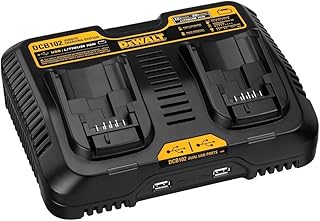
Users with several cordless tools may benefit from charging systems designed to handle multiple batteries. This can simplify battery management in workshops and busy job environments.
Before purchasing a multi-port charger, confirm which DEWALT battery platforms it supports and whether it charges batteries simultaneously or sequentially.
The best battery depends heavily on the tool being powered. A battery that is excellent for a compact drill may be unnecessarily heavy for an impact driver, while a small pack may be frustrating when used with a high-demand saw.
Runtime is important, but it should not be considered in isolation. Battery weight directly affects how a cordless tool feels during use.
For overhead installation, cabinet work, electrical work, maintenance and repetitive fastening, a lighter battery can make the tool easier to control. For ground-level cutting or heavy-duty applications, additional battery weight may be less noticeable.
Think about how the tool is normally used. If you regularly hold it above shoulder level, work from a ladder or perform repetitive tasks, a compact battery may offer a better overall experience than the highest-capacity option.
Published capacity should not be treated as a guaranteed working time. Actual runtime depends on several variables.
For example, drilling small holes in soft material generally places a different demand on a battery than continuous cutting through dense construction material. This is why two users can obtain very different runtimes from the same battery model.
Canadian users may encounter significantly different temperatures depending on the season and region. Lithium-ion batteries can behave differently in cold conditions, and extremely low temperatures may affect available performance and charging behavior.
Battery manufacturers provide operating and charging guidance for their products. Follow the instructions supplied with the specific DEWALT battery and charger, particularly when working or storing equipment in cold environments.
Do not assume that a battery that has been stored in a freezing environment should immediately be placed on a charger. Allowing equipment to reach the manufacturer's recommended conditions before charging can be an important part of responsible battery care.
Rechargeable lithium-ion batteries should be treated as electrical energy-storage devices rather than ordinary disposable batteries. Correct storage, transportation and charging practices matter.
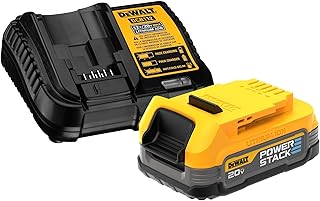
When comparing bundles, look beyond the number of batteries included. A package with two compact batteries may be more useful to one buyer than a package containing one very large battery.
Confirm the exact battery model numbers and capacities. Do not rely only on product photography or general package descriptions.
Identify the included charger and compare its capabilities with your working routine. If rapid charging is important, make sure the charger is actually designed for the required battery system.
Some packages may include one battery, multiple batteries, a charger or other accessories. Read the complete listing carefully before comparing prices.
A cheaper bundle is not automatically the better purchase if it contains batteries with a capacity that does not suit your tools. Compare battery capacity, charger capability, quantity, compatibility and intended use as one package.
More amp-hours can mean more stored energy, but capacity is not the only specification that matters. Tool compatibility, output capability, size and weight should also be considered.
DEWALT has multiple cordless systems. Always verify compatibility with your exact tool before ordering.
A maximum-capacity pack can be unnecessary for a compact drill or impact driver. Excess weight can reduce comfort during repetitive work.
A fast charger can be valuable, but it does not eliminate the need for enough batteries. Professional users may find that owning multiple batteries is more practical than relying on one battery and one charger.
When shopping through online marketplaces, examine the seller information, product identification, specifications and customer feedback carefully. Be cautious about listings that provide unclear model information or unusually incomplete specifications.
DEWALT is the central brand to consider when purchasing batteries for DEWALT cordless tools. However, shoppers may also encounter other established power-tool brands such as Milwaukee, Makita, Bosch, Ryobi and Metabo HPT during product research.
These brands have their own battery ecosystems. A battery designed for one manufacturer's platform should not be assumed to be interchangeable with another manufacturer's cordless tools.
If you already own several DEWALT tools, remaining within the compatible DEWALT battery ecosystem can simplify charging, storage and battery management. If you are building a cordless tool collection from scratch, compare the broader ecosystem before committing to a platform.
Brand comparison is most useful when considering the entire cordless platform rather than a single battery.
DEWALT is well known for its extensive cordless power-tool range. Buyers who already own compatible DEWALT tools may benefit from using a shared battery ecosystem across multiple products.
Milwaukee uses its own battery platforms and tool ecosystem. It can be a relevant comparison for professional users researching high-performance cordless equipment.
Makita offers several cordless platforms and a broad range of power tools. Buyers should compare the exact voltage and battery family when considering Makita alongside DEWALT.
Bosch also offers cordless tools and battery systems. As with other brands, batteries should be matched according to the manufacturer's specified platform and compatibility.
Customer ratings can be useful, but a single star rating does not tell the complete story. Read reviews for details that relate to your intended application.
Verified customer reviews can provide useful real-world context, but they should complement manufacturer specifications rather than replace them.
Battery pricing can vary significantly depending on capacity, technology, package size and charger type. When checking today's prices, compare equivalent products rather than comparing unrelated bundles.
For example, a two-battery kit may appear more expensive than a single battery, but the additional battery changes the overall value. Likewise, a larger-capacity battery may cost more than a compact pack while offering a different balance of runtime and weight.
Always compare the exact model numbers and included accessories before deciding that one listing represents a better deal.
A single battery may be sufficient if you use cordless tools occasionally or already own several compatible batteries.
It can also be a practical choice when replacing a worn battery while keeping your existing charger and other accessories.
A two-battery setup can be more convenient for users who work continuously. One battery can be in the tool while another is charging or ready for use.
This approach can reduce interruptions and may be especially useful when operating several cordless tools on a job site.
Users operating high-demand tools frequently may benefit from investing in higher-capacity battery technology. This is particularly relevant when changing batteries repeatedly interrupts productive work.
However, do not purchase a large battery simply because its capacity is higher. Consider whether the tool can make practical use of the additional energy and whether the additional weight is acceptable.
Proper maintenance begins with following the manufacturer's instructions. Avoid unnecessary exposure to extreme heat, moisture and physical damage.
Keep battery contacts clean and check the pack periodically for visible damage. Store batteries in suitable conditions and avoid leaving them exposed to environments outside the manufacturer's recommended temperature range.
Good charging habits also matter. Use a compatible DEWALT charger and follow the charging instructions supplied with the battery.
If you own several cordless tools, think of batteries as part of a complete power-management system.
Professionals should prioritize uptime, compatibility, charging strategy, battery capacity and ergonomics. A well-planned battery rotation can be more valuable than owning one exceptionally large battery.
Professionals should also consider the cordless tools they are likely to add in the future. Maintaining a consistent platform can simplify battery management across multiple applications.
DIY users may not need the highest-capacity batteries or fastest charging equipment. A compact or mid-capacity battery paired with a compatible charger can be sufficient for intermittent home projects.
The best choice should reflect actual usage rather than professional-level specifications that may rarely be needed.
The best DEWALT battery depends on the tool, workload and desired balance between runtime and weight. Compact batteries suit users who value maneuverability, while larger-capacity batteries can be better for demanding applications.
No. A higher Ah rating generally provides greater stored capacity, but it can also increase battery size and weight. The ideal capacity depends on the tool and application.
Compatibility depends on the specific tool and battery platform. Always verify the manufacturer's compatibility information for the exact models involved.
If you already have a suitable compatible charger, buying a battery alone may be enough. If you need another charger or are building your cordless setup, a complete kit may be more practical.
No general interchangeability should be assumed. DEWALT, Milwaukee and Makita use their own battery ecosystems. Always use batteries specifically approved for the tool.
Multiple batteries allow one pack to power a tool while another is available for use or charging. This can reduce downtime during longer work sessions.
Store them according to the manufacturer's instructions and protect them from excessive heat, moisture, physical damage and unsuitable environmental conditions.
Start with compatibility. Then consider charging speed, the number of batteries you use and whether your work requires rapid battery turnover.
It can be. Compact batteries can reduce overall tool weight and improve maneuverability. For demanding drilling tasks, however, a larger-capacity or higher-output battery may be more appropriate.
Check the exact model number, battery platform, voltage, Ah capacity, compatibility, package contents, charger information and seller details. Also compare current specifications and verified customer reviews before purchasing.
The best DEWALT battery and charger combination is the one that fits your existing tool ecosystem and actual working requirements. Do not select a battery based on capacity alone. Consider compatibility, output, runtime, weight, charging speed, package contents and long-term practicality.
For light-duty tools, a compact battery can provide an excellent balance of handling and runtime. For demanding equipment, a larger or higher-performance battery may be more suitable. If your workday involves several cordless tools, owning multiple compatible batteries and a charger that matches your workflow can make the entire system more convenient.
Before buying in Canada in 2026, compare the exact DEWALT model numbers, read verified customer reviews, check current specifications and compare today's prices from reputable retailers. Most importantly, confirm compatibility with your specific tool before placing an order.