

Explore cordless power tools, kits, batteries, chargers, accessories and related equipment available to Canadian shoppers. Compare product options and follow useful buying guides before you buy.


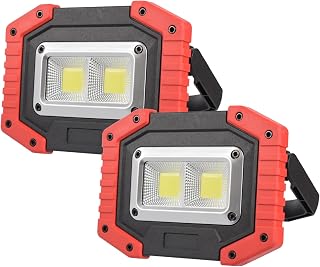


Choosing a cordless work light is not simply a matter of selecting the model with the highest lumen figure. The most useful light depends on where you work, how far you need to illuminate, whether you need both hands free, how long the light must operate between charges, and whether you already own compatible batteries.
For Canadian buyers, the CRAFTSMAN V20 platform is particularly relevant because several CRAFTSMAN lighting products are designed to use the same V20 battery system. This can make a bare-tool light considerably more attractive to someone who already owns V20 batteries, while a first-time buyer should calculate the cost of the light, battery and charger together rather than comparing the bare-tool price alone. CRAFTSMAN Canada's current lighting catalogue includes cordless work lights, a small-area light, a hanging work light and a handheld spotlight.
The V20 designation is important when comparing CRAFTSMAN cordless lighting. A light sold as a tool-only product normally requires a separately purchased compatible battery and charger. That is not necessarily a disadvantage: existing V20 tool owners may already have batteries available, allowing them to add lighting without buying another charging setup.
On the other hand, someone entering the CRAFTSMAN V20 system for the first time should treat the battery and charger as part of the real purchase cost. The official Canadian product information for several CRAFTSMAN lighting models specifically identifies them as tool-only products and states that the battery and charger are sold separately.
This distinction is especially important when comparing marketplace listings. Two apparently similar listings can represent very different packages: one may include a battery and charger while another may contain only the light. Always compare the complete kit contents before deciding which option represents better value.
CRAFTSMAN's V20 documentation uses 20V MAX terminology, while the nominal voltage is lower. This is common in cordless power-tool battery systems. Buyers should therefore avoid comparing lights solely by the printed voltage number. Battery capacity, LED efficiency, brightness settings, beam pattern and the electronics controlling the light can have a much greater effect on practical usefulness.
Lumens describe the amount of visible light produced, but they do not tell the entire story of how that light will perform. A high-lumen floodlight can be excellent for illuminating a garage or construction area but inappropriate when you need to inspect a small component. Conversely, a focused spotlight can project light much farther without evenly illuminating everything around you.
For commercial investigation, consider these characteristics together:
The CRAFTSMAN CMCL020B is aimed at straightforward task illumination. Its compact format and pivoting head make it suitable for directing light toward a particular working area rather than flooding an entire room. CRAFTSMAN Canada specifies a 140-lumen LED output, three LED bulbs and an adjustable head, with the battery and charger sold separately.
This type of light makes the most sense when portability and positioning matter more than maximum brightness. It can be useful around a workbench, under a cabinet, inside a utility area or when performing repairs where a large floodlight would be unnecessarily bulky.
A 140-lumen task light should not be evaluated as a substitute for a high-output area light or long-range spotlight. If your main requirement is illuminating a large garage, jobsite or outdoor area, a higher-output CRAFTSMAN lighting model may be more appropriate.
The CMCL030B occupies a different part of the lighting spectrum. CRAFTSMAN Canada lists two LED brightness levels of 750 and 1,825 lumens, along with AC/DC operation and a pivoting head. The product is sold as a tool-only unit, with the compatible battery and charger purchased separately.
The ability to operate with AC/DC power is particularly relevant for users who spend long periods in one location. Cordless operation provides portability, while corded operation can be useful when continuous illumination is more important than mobility.
The important buying question is whether you actually need an area light. For a quick inspection or small repair, a compact task light may be easier to handle. For prolonged work in a dark garage or renovation area, the higher-output area-light format can make much more sense.
The CMCL050B is designed around hands-free illumination. CRAFTSMAN Canada specifies high and low settings of 700 and 350 lumens, a 360-degree telescoping hanging hook and a head that pivots through 140 degrees.
These features make the design particularly useful when holding a flashlight is inconvenient. Instead of positioning a handheld light repeatedly, the user can suspend the unit and adjust its direction.
Hands-free positioning is an underrated specification. When working beneath a vehicle, installing wiring, repairing plumbing or working overhead, one hand may already be occupied by a tool or component. A hanging mechanism can eliminate the need for a second person to hold a light or for the user to repeatedly reposition it.
The CMCL060B is intended for a substantially different job. CRAFTSMAN Canada lists four high-power LEDs, a maximum output of 2,500 lumens, two brightness settings and a stated beam distance of up to 1,600 feet. It is also a tool-only V20 product.
A spotlight should be judged primarily by beam concentration and reach rather than by comparing its lumen figure directly with a flood-style work light. The purpose is to project useful illumination toward a distant target instead of providing uniform light across a nearby workspace.
A spotlight is not necessarily the best choice for detailed bench work. A concentrated beam can create strong contrast and shadows, whereas a diffuse work light may provide more comfortable illumination for close-up tasks.
Canadian product listings sometimes use terms such as torch, flashlight, spotlight and work light interchangeably. For buying purposes, these categories should be separated by function.
The best choice therefore depends on the job rather than the product name. A person searching for the “best cordless torch” may actually need a work light, while someone who frequently checks outdoor areas may benefit much more from a dedicated spotlight.
Prioritize broad illumination, adjustable positioning and runtime. An area light or hanging work light will generally be more useful than a narrow spotlight when you need to see tools, components and the surrounding workspace simultaneously.
Look for lights that can be positioned without constant hand-holding. A pivoting head, hanging hook or clamp can be more valuable than maximum brightness. Also consider whether the housing and controls can tolerate normal workshop handling.
Targeted illumination is usually valuable because the work area may be inside a cabinet, wall cavity, utility room or ceiling space. Compact size and flexible positioning should receive significant weight in the buying decision.
A spotlight becomes more attractive when the objective is seeing a distant location. Beam reach, brightness control, battery capacity and portability become more important than features intended primarily for bench work.
Area illumination can reduce shadows across a larger work zone. A model that offers multiple brightness levels may also be preferable because renovation work can last considerably longer than a quick repair.
Battery capacity is one of the most important variables in cordless lighting. However, runtime should not be estimated from battery capacity alone. Actual operating time can vary according to brightness setting, battery condition, temperature and the design of the light.
For buyers already invested in CRAFTSMAN V20 tools, battery interchangeability can be a major advantage. A larger battery may extend operating time, but it can also add weight and bulk. For a handheld light, the smallest practical battery may be preferable; for a stationary area light, additional battery weight may matter much less.
Do not choose a battery purely because it has the largest capacity. Think about how the light will actually be held, carried or mounted. A heavy battery attached to a handheld spotlight may be noticeably less comfortable than a smaller pack.
Modern cordless work lights generally use LEDs because they provide efficient illumination in a compact package. For practical buying decisions, however, the quality of the beam can matter as much as the LED technology itself.
Consider whether the light produces an even beam or noticeable hotspots, whether the illumination creates distracting shadows, and whether the colour makes small components easy to distinguish. For detailed inspection, a clear and consistent beam can be more useful than simply maximizing output.
A fixed light forces the user to position the entire unit. A pivoting light can redirect illumination without moving the battery and housing. This seemingly simple feature can have a significant effect on convenience during repetitive work.
When comparing models, examine the actual range of movement rather than assuming that every pivoting head provides the same flexibility. The CMCL020B, CMCL030B and CMCL050B all emphasize adjustable or pivoting illumination, but their physical formats serve different purposes.
Hands-free operation can be one of the strongest reasons to choose a dedicated work light instead of a conventional torch. Hanging hooks, clamps, magnetic mounting, stable bases and adjustable heads can dramatically change how useful a light becomes during a real repair.
Before buying, ask where the light will actually be positioned. A hook is useful when there is a suitable overhead support. A clamp can be better for a stud or workbench. A stable base is preferable when the light must remain on the floor or a flat surface.
There is no universal winner between a compact light and a high-output light. Compact products are easier to carry, store and position, while larger area lights can illuminate substantially more space.
For a tool bag, prioritize size and weight. For a permanent workshop lighting kit, prioritize coverage, mounting options and runtime. For emergency storage, prioritize versatility and battery compatibility.
Canadian buyers should pay attention to more than the headline product specification. Product availability, package contents and regional listings can change, particularly when comparing manufacturer pages, major retailers and marketplace listings.
Check whether the listing is specifically intended for the Canadian market, whether the model number matches the manufacturer's documentation, and whether the advertised package contains a battery and charger. CRAFTSMAN's Canadian product pages identify several lighting products as tool-only and provide model-specific specifications, making the model number an important verification point.
Cold temperatures can affect rechargeable battery performance. If a cordless light is being used outdoors during a Canadian winter, avoid assuming that the advertised runtime will be identical in very cold conditions. Store batteries according to the manufacturer's instructions and allow equipment to return to an appropriate temperature when required.
Also distinguish between a product being cordless and a product being specifically weatherproof. Do not assume that a cordless work light is suitable for rain, snow, standing water or prolonged outdoor exposure unless the manufacturer's documentation expressly supports the intended environment.
A high lumen number does not automatically mean better performance for every application. Beam pattern, positioning, runtime and intended distance all matter.
A tool-only light may appear inexpensive until the required battery and charger are added. Existing V20 owners have a different calculation because they may already have compatible equipment.
A long-range beam is excellent for distance but can be excessive for a workbench or engine compartment. Close-up work often benefits from broader, more controlled illumination.
If you regularly need both hands, a light without a useful mounting method may become frustrating even if its brightness is impressive.
Larger lights may offer more output, but they can be less convenient in confined spaces. The best light is the one that can be positioned where the work actually takes place.
A handheld spotlight, hanging work light and area light solve different problems. A meaningful comparison should begin with intended use rather than price or lumen output.
Check exactly what is included. Hooks, clamps, stands, batteries and chargers can materially affect the practical value of a lighting product.
CRAFTSMAN is not the only established manufacturer with a battery-powered lighting ecosystem. Buyers may also encounter cordless lighting from brands such as DeWalt, Milwaukee, Makita, Bosch and Ryobi.
The most sensible comparison is usually ecosystem compatibility rather than brand reputation alone. If you already own several cordless tools from one battery platform, adding a compatible light can reduce the need to maintain multiple battery and charger systems.
For a buyer already invested in CRAFTSMAN V20 equipment, staying within that battery platform can simplify ownership. A DeWalt light may be attractive to someone already invested in the DeWalt ecosystem. Comparing isolated light specifications without considering existing batteries can produce a misleading value assessment.
Milwaukee offers extensive cordless lighting options, particularly across professional-oriented tool categories. The right choice depends on the user's existing battery platform, preferred form factor and job requirements rather than assuming that one brand's lights are universally superior.
Makita's cordless ecosystem can also be a strong alternative for buyers already using compatible Makita batteries. When comparing the two, pay particular attention to battery compatibility, light positioning, brightness levels, mounting methods and the total cost of joining a new platform.
Ryobi's broad cordless ecosystem makes it another natural comparison for DIY users. If your toolbox already contains one platform, ecosystem compatibility may outweigh relatively small differences in light output.
Customer reviews can provide useful information, but they should be interpreted carefully. Look for recurring comments about battery consumption, switch placement, mounting stability, durability, beam quality and ease of use rather than relying on a single enthusiastic or negative review.
Model numbers are one of the simplest ways to reduce the risk of comparing the wrong product. For example, the official Canadian CRAFTSMAN catalogue identifies CMCL020B, CMCL030B, CMCL050B and CMCL060B as specific V20 lighting products.
Before purchasing, compare the marketplace listing against the manufacturer's stated product type, voltage platform, included items and major features. If a retailer description conflicts with the manufacturer's documentation, investigate the discrepancy rather than assuming the retailer listing is correct.
A home workshop normally benefits from versatility rather than maximum output. A useful lighting setup can include a compact task light for close work, a hanging light for hands-free illumination and a larger area light for projects that occupy a substantial part of the garage.
That approach can be more practical than expecting one flashlight to perform every lighting task. The best cordless lighting system is often a combination of complementary formats.
Professional users should place greater emphasis on reliability of controls, mounting options, battery compatibility, runtime, ergonomics and suitability for the work environment. A light that saves several minutes of repositioning every day can be more valuable than a product with a higher peak brightness that is rarely used.
For tradespeople, ecosystem compatibility can also be strategically important. If the rest of the tool collection already uses CRAFTSMAN V20 batteries, a compatible lighting product may be convenient to keep charged and ready without introducing another battery platform.
Proper care can help preserve both the light and its battery system. Keep lenses and reflectors clean, inspect the housing periodically and avoid exposing the unit to conditions outside the manufacturer's intended operating environment.
Rechargeable lithium-ion batteries should be treated as engineered electrical components rather than ordinary disposable batteries. Use compatible batteries and chargers, inspect them for damage and follow the manufacturer's charging instructions.
Do not attempt to modify battery packs, bypass protection features or use visibly damaged batteries. When storing or transporting cordless lighting equipment, follow the applicable manufacturer guidance and Canadian transportation or storage requirements where relevant.
A bare tool can be the most economical option when you already own compatible CRAFTSMAN V20 batteries. A complete kit can be more appropriate for a first-time buyer who does not have a compatible battery or charger.
The correct comparison is therefore the total ownership cost:
Always compare the final package rather than the headline price of the light alone.
Use the following sequence when narrowing down the options:
Ranking cordless lights from first to tenth can be convenient, but a universal ranking can hide important differences between products. A compact task light may be the right choice for one buyer while a high-output spotlight is the obvious choice for another.
For that reason, the strongest buying decision is one that matches the product to the job. A product should not rank highly for you merely because it has the highest lumen specification or the most prominent marketplace rating.
CRAFTSMAN Canada's current lighting catalogue provides a useful example of why category matching matters: the V20 range includes distinct formats for area illumination, hanging work, compact task lighting and long-distance spotlighting.
There is no single best model for every workshop. A compact task light is appropriate for localized repairs, while an area light or hanging work light is generally better when a larger workspace must be illuminated. Choose according to the size of the area and whether you need hands-free operation.
A dedicated spotlight is the more appropriate category when distance is the priority. The CRAFTSMAN CMCL060B is specifically designed as a handheld spotlight and is listed by CRAFTSMAN Canada with up to 2,500 lumens and a stated beam distance of up to 1,600 feet.
The CRAFTSMAN CMCL050B is specifically designed around hanging operation, with a telescoping hook and pivoting head. This makes it worth considering for automotive, electrical, renovation and workshop tasks where both hands are occupied.
The CMCL030B is designed as a small area light and offers high and low brightness levels of 1,825 and 750 lumens. It also supports AC/DC operation, which can be useful for longer stationary jobs.
Several CRAFTSMAN V20 lighting products are explicitly sold as tool-only units. The CMCL020B, CMCL030B, CMCL050B and CMCL060B Canadian product pages state that the battery and charger are sold separately. Always verify the package contents of the specific retailer listing you are considering.
Compatible V20 lighting products are designed as part of the CRAFTSMAN V20 system. However, always verify compatibility using the exact model and manufacturer's current documentation before purchasing or combining equipment.
No. Higher output is valuable for large areas and demanding illumination, but a lower-output task light may be easier to carry, position and use for close-up work. Beam pattern, runtime and mounting options can be more important than maximum lumens.
It can be useful when you need directional or distant illumination, but an adjustable task light or hanging work light may be more convenient for close-up engine-bay work. Consider whether you need a concentrated beam or broad hands-free illumination.
Price should be considered together with battery compatibility, package contents, brightness modes, mounting features, intended use and total ownership cost. A lower-priced bare tool may not represent better value if you also need to purchase a battery and charger.
Clean the lens and exterior whenever dust, dirt or residue begins to interfere with illumination or operation. Jobsite conditions can require more frequent cleaning than occasional home use.
The best CRAFTSMAN cordless lighting choice in Canada depends on the problem you are trying to solve. The CMCL020B is oriented toward compact task illumination, the CMCL030B toward broader area lighting, the CMCL050B toward hands-free hanging illumination, and the CMCL060B toward long-distance spotlighting. These are materially different tools even though they belong to the same general cordless-lighting category.
For buyers already using the CRAFTSMAN V20 platform, battery compatibility can be one of the strongest reasons to stay within the ecosystem. For new buyers, the smarter approach is to compare the complete system cost, including the required battery and charger, rather than judging a tool-only listing in isolation.
Before purchasing in 2026, verify the exact model number, current Canadian package contents, specifications and retailer information. Product catalogues and availability can change, so the strongest buying decision is based on the current listing rather than an older ranking or a generic claim that one cordless light is best for every Canadian user.