

Explore cordless power tools, kits, batteries, chargers, accessories and related equipment available to Canadian shoppers. Compare product options and follow useful buying guides before you buy.


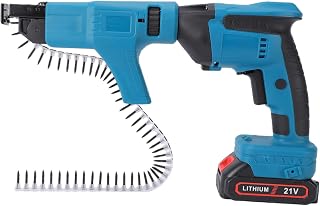

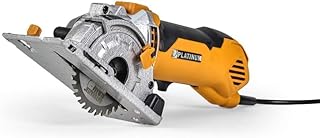


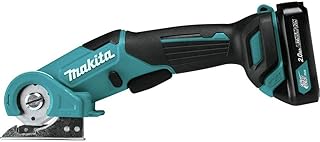
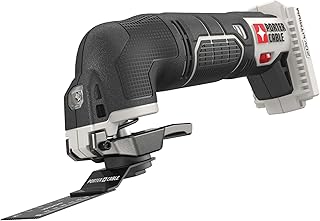


A cordless drywall cutter is designed for fast, controlled openings in drywall, gypsum board and other compatible wall-panel materials without the inconvenience of a power cord. The right model can make repetitive cut-outs for electrical boxes, recessed lighting, vents, access openings and other renovation work considerably easier, but cordless drywall cutters are not all designed around the same cutting method.
Before choosing a tool, identify the type of work you actually perform. A rotary cut-out tool with a small high-speed bit is particularly useful when you need to follow irregular outlines around electrical boxes, outlets and fixtures. A reciprocating-style drywall cutter such as the Makita DSD180 takes a different approach and can be attractive when controlled straight-line cutting, overhead balance and dust management are more important. These tools should therefore be compared by application rather than by RPM alone.
The following models and purchasing configurations are useful reference points when comparing cordless drywall-cutting equipment in Canada. Model availability, included batteries, regional inventory and pricing can change, so check the exact Canadian listing and package contents before purchasing.
One of the most important buying decisions is whether you want a conventional rotary cut-out tool or a purpose-designed drywall cutter. These terms are sometimes used interchangeably, but the cutting experience can be quite different.
Rotary cut-out tools use a small bit spinning at high speed. The bit can be guided around an opening, allowing the operator to cut relatively complex shapes without repeatedly starting and stopping. This design is especially useful for outlet boxes, electrical openings, recessed lights and similar installation work.
Models such as the DEWALT DCE555B, DEWALT DCS551B, Milwaukee 2627-20, Bosch GCU18V-30N, Metabo HPT M18DYAQ4 and RIDGID R84730B fall into this general category. Their high no-load speeds are intended to support fast material removal with small cutting bits.
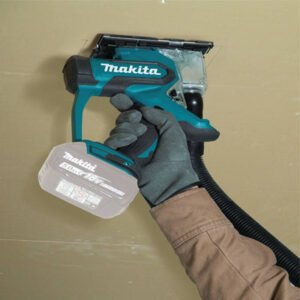
A dedicated drywall cutter can use a reciprocating or specialized cutting action instead of a conventional rotary router-style bit. The Makita DSD180 is a notable example. Makita specifies variable speed from 0 to 6,000 strokes per minute, a 6 mm stroke length and a maximum drywall capacity of 30 mm.
This style can be particularly appealing when you value a controlled cutting motion, depth adjustment and overhead handling. The DSD180 also incorporates a dust box and is designed to connect to compatible dust-extraction equipment.
Brushless motors are increasingly common in professional cordless tools because they eliminate physical carbon brushes and can provide an efficient, electronically controlled drive system. For frequent drywall work, a brushless model can be attractive when runtime, durability and repeated use matter.
The DEWALT DCE555B, Bosch GCU18V-30N and Metabo HPT M18DYAQ4 are examples of brushless cordless cut-out tools.
A brushed motor is not automatically unsuitable for occasional DIY work. The more important question is whether the tool's overall design, battery system, ergonomics, bit compatibility and intended workload match your needs.
RPM is an important specification for rotary cut-out tools, but it should not be treated as a standalone measure of cutting performance. A higher advertised RPM does not automatically mean a tool will produce better results in every material or application.
For example, the Bosch GCU18V-30N is listed at 30,000 RPM, while the Milwaukee 2627-20 and Metabo HPT M18DYAQ4 are listed at 28,000 RPM and the DEWALT DCE555B and DCS551B at 26,000 RPM.
Instead of choosing solely on RPM, consider how easily the tool starts, how well you can control it, whether the base maintains a consistent cutting depth and whether the manufacturer provides appropriate bits for your intended materials.
Variable speed is valuable when you need more control at the beginning or end of a cut. It can also be useful when working with different materials or when a lower cutting speed makes the tool easier to manage.
The Makita DSD180 uses a variable-speed trigger and operates from 0 to 6,000 strokes per minute. This is fundamentally different from a high-speed rotary cut-out tool, so buyers should compare speed-control systems according to cutting method rather than simply comparing the largest number on the specification sheet.
Depth control is one of the most important features when making blind cuts. A properly adjusted base or guide can help keep the bit from penetrating farther than necessary into the cavity behind the drywall.
This matters because drywall often conceals electrical cables, plumbing, insulation and other components. A drywall cutter should never be treated as though the space behind the panel is automatically clear.
Several current models provide depth-control mechanisms. DEWALT's DCS551B uses an adjustable guide, while the DCE555B incorporates a compact design intended for controlled cut-out work. Milwaukee provides tool-free depth adjustment on the 2627-20, while Bosch and Metabo HPT also provide adjustable base or foot mechanisms.
Do not assume every drywall cut-out tool accepts the same bits. Collet sizes, included accessories and compatible bit diameters vary between models.
The DEWALT DCE555B accepts 1/8-, 5/32- and 1/4-inch bits and collets. Metabo HPT supplies interchangeable 1/8- and 1/4-inch collets with the M18DYAQ4, while Bosch's GCU18V-30N package includes 1/8-, 1/4- and 5/32-inch collets.
Before buying replacement bits, verify the exact tool model and manufacturer's compatibility information. A bit that physically appears to fit is not necessarily appropriate for the tool or material.
Drywall dust is one of the biggest practical disadvantages of cutting gypsum board indoors. A tool with dust containment or vacuum compatibility can make a substantial difference to cleanup and visibility.
The Makita DSD180 includes an integrated dust box and can be adapted to compatible Makita dust extractors. Bosch's GCU18V-30N includes a dust hood designed for connection to a vacuum.
For a major renovation, dust extraction should be evaluated alongside the cutter itself. Even a high-quality dust-management feature cannot eliminate the need for appropriate respiratory protection, ventilation and jobsite housekeeping.
An LED can be surprisingly useful when cutting behind cabinets, inside closets, beneath ceilings or around fixtures where the operator's hands or the tool itself can create shadows.
DEWALT, Milwaukee, Bosch, Metabo HPT, RIDGID and Makita all offer models or configurations with work-area illumination.
Weight becomes more important when drywall is being cut overhead. A tool that feels comfortable for five minutes can become tiring during an extended installation session.
Consider the bare-tool weight, battery weight, grip diameter, switch location, balance point and whether you can comfortably maintain control with one hand. A smaller battery can reduce overall weight, while a larger battery may increase runtime at the cost of additional mass.
The Makita DSD180 is specifically designed around overhead drywall cutting and dust collection, while Metabo HPT emphasizes its compact, low-vibration design and RIDGID emphasizes its lightweight construction and point-of-cut switch location.
If you already own cordless tools, the battery platform may be more important than a small difference in cutting specifications.
For example, a tradesperson already using DEWALT 20V MAX batteries may find a DEWALT cut-out tool more economical overall because batteries and chargers may already be available. The same principle applies to Makita 18V LXT, Milwaukee M18, Bosch 18V, RIDGID 18V and Metabo HPT MultiVolt users.
Tool-only packages can appear inexpensive at first glance, but they are not necessarily the lowest total-cost option if you do not already own compatible batteries and a charger. Conversely, purchasing another battery and charger when you already have several compatible packs may unnecessarily increase the cost of the project.
When comparing cordless drywall cutters, published weight can be misleading because manufacturers may specify tool-only weight while retailers or customers may think in terms of the complete working weight with battery and accessories.
For overhead cutting, the practical weight is the tool plus battery plus bit or guide. A heavier battery can shift the balance of the tool and increase wrist fatigue. A compact high-output battery may be preferable for short, repetitive openings, while a larger pack can make more sense when the tool is being used continuously.
Do not choose a battery solely on amp-hour capacity. Think about the complete tool-and-battery combination and how it feels during the specific work you perform.
For rotary drywall cut-out tools, speeds around the mid-20,000 to 30,000 RPM range are common among several professional cordless models. Current examples include 26,000 RPM DEWALT models, 28,000 RPM Milwaukee and Metabo HPT models, and a 30,000 RPM Bosch model.
However, the best tool is not necessarily the one with the highest RPM. Cutting accuracy depends on the bit, depth setting, operator control, base design and material. Excessively aggressive cutting can also make it easier to wander from the intended line.
For installation work, predictable control is generally more useful than chasing the highest theoretical no-load speed.
The bit is effectively the cutting interface between the tool and the wall. A good cutter paired with the wrong bit can produce poor results, excessive dust, rough edges or premature wear.
For example, Makita lists dedicated DSD180 blades for drywall and separate blades for wood applications, with different stated material capacities.
Electrical-box cut-outs are one of the clearest reasons professionals choose a cordless rotary cut-out tool. The tool can be guided around the perimeter of the box so the opening can be made without measuring every side and manually removing the entire section.
However, the convenience of a rotary cutter does not remove the need for careful positioning. Blind cutting should be performed only when you understand what is behind the panel and have taken appropriate precautions to avoid hidden wiring, plumbing and other hazards.
A depth guide is particularly valuable because it can reduce unnecessary penetration into the cavity. Always follow the tool manufacturer's operating instructions and the applicable Canadian electrical and building requirements for the project.
Recessed lighting installations frequently involve circular or shaped openings in ceiling drywall. A cordless cut-out tool can be useful for this work, particularly when the tool can be guided accurately around a marked template or fixture opening.
For repeated installations, consider battery runtime, overhead comfort, dust control, LED visibility and the availability of suitable bits. A tool that is slightly lighter or easier to control may be preferable to a heavier model with higher theoretical output.
Vent openings can vary substantially in size and shape. Before choosing a cutter, determine whether the tool is intended for the thickness and material involved. A compact cut-out tool is particularly useful for small and medium openings, while larger openings may be more efficiently started with another cutting method and finished with a suitable drywall tool.
For straight cuts, a dedicated drywall cutter may offer a different handling experience from a rotary cut-out tool. The Makita DSD180, for example, is specifically described as suitable for drywall holes and vents and is designed around controlled drywall cutting rather than being a general-purpose rotary cut-out tool.
Drywall dust is extremely fine and can spread throughout an occupied room. If the tool will be used indoors, dust control should be considered before power, speed or battery capacity.
Makita's DSD180 incorporates a dust box and supports dust-extraction equipment, while Bosch's GCU18V-30N includes a dust hood intended for vacuum connection.
Power-tool model numbers can differ by market, package configuration and included accessories. Before purchasing, verify the exact model number rather than relying only on a product photograph or a shortened product title.
Many cordless tools are sold as bare tools. The DEWALT DCE555B, for example, is listed with the battery and charger sold separately, while Milwaukee offers the 2627-20 as a tool-only configuration as well as complete kits.
Canadian product pages may present specifications in both metric and imperial units. When comparing cutting depth, bit size or tool dimensions, use the same unit system across all models to avoid confusing superficially similar specifications.
Availability can change by province, retailer and package configuration. A model that is listed by the manufacturer may not necessarily be immediately available from every Canadian retailer. Compare the exact model, package contents and current retailer listing before making a purchase.
Warranty coverage can differ by brand, model and region. Read the current Canadian warranty documentation rather than assuming that a warranty advertised in another country applies identically in Canada. Manufacturer service provisions can also change over time.
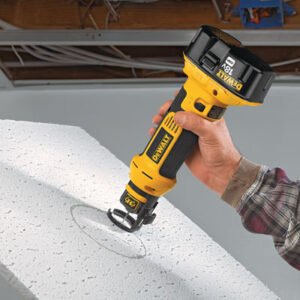
DEWALT is particularly relevant for buyers already invested in the 20V MAX ecosystem. The DCS551B provides a conventional 26,000 RPM cut-out design, while the newer DCE555B uses a 26,000 RPM brushless motor and accepts several collet sizes.
The DCE555B is worth particular consideration if brushless operation, compact size and tool-free bit changes are priorities.
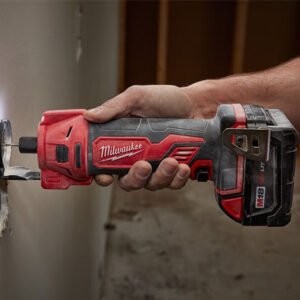
Milwaukee's M18 2627-20 is a high-speed rotary cut-out tool with a 28,000 RPM four-pole motor, REDLINK overload protection, tool-free depth adjustment and LED lighting.
Its strongest advantage for existing Milwaukee users is platform compatibility. The same tool is available in different kit configurations, allowing buyers to choose between tool-only and battery-inclusive packages.
The Makita DSD180 is different from the typical high-speed rotary cut-out tool. It is a purpose-designed 18V LXT drywall cutter with variable speed, a dust box, depth-related accessories and a design intended to make overhead drywall work manageable.
It is especially interesting for users who prioritize drywall-specific handling and dust management rather than simply looking for the highest RPM.
The Bosch GCU18V-30N is a brushless 18V rotary cut-out tool rated at 30,000 RPM. It also includes an adjustable foot plate, soft start, LED lighting and dust-hood capability.
For existing Bosch 18V or compatible AMPShare users, battery-platform compatibility can be a significant part of the buying decision.
The Metabo HPT M18DYAQ4 combines a 28,000 RPM brushless motor with soft start, low-vibration ergonomics, tool-less base adjustment and interchangeable 1/8- and 1/4-inch collets. The manufacturer lists the bare-tool weight at 1.6 pounds.
Its MultiVolt battery concept can be attractive to users who want compatibility across Metabo HPT's 18V and 36V ecosystem, subject to the battery and tool combination being supported.
The RIDGID R84730B is another 18V rotary cut-out option, with 28,000 RPM, tool-free depth adjustment, point-of-cut switching, LED illumination and 1/8- and 1/4-inch collets.
The model is worth comparing when the buyer values compact handling, straightforward depth adjustment and an existing RIDGID 18V battery platform.
High RPM looks impressive on a specification sheet, but it does not tell you how comfortable the tool is, how accurately you can follow a line, how well it controls dust or how easily you can set the cutting depth.
A low tool-only price is not necessarily a bargain if you have to purchase an entire battery ecosystem to use it.
General rotary tools and drywall cut-out tools may look similar, but their intended accessories, guides, switches, depth-control systems and operating procedures can differ.
If you regularly work inside finished homes, dust control can be more valuable than a modest increase in cutting speed.
Maximum amp-hour capacity is not always the best choice. For overhead work, a compact battery may improve balance and reduce fatigue.
A bare tool may not include the bit, collet, guide or dust-collection component you expect. Always compare the package contents line by line.
Do not assume a drywall-specific cutter is suitable for every wall material. If you need to cut plywood, cement board, laminate or other panels, confirm the manufacturer's stated application and accessory requirements first.
When two models appear similar, use a structured comparison rather than relying on star ratings or a single specification.
The Makita DSD180 is the natural model to investigate if you already use Makita 18V LXT batteries and want a drywall-specific cutter with variable speed, overhead-oriented balance and integrated dust collection.
The DEWALT DCE555B is a strong candidate for users already invested in 20V MAX batteries who want a compact brushless rotary cut-out tool. The older DCS551B remains another model to compare, particularly when its feature set and current package pricing are favourable.
The Milwaukee 2627-20 is an obvious model to investigate within the M18 platform. Buyers should compare the tool-only 2627-20 with complete 2627-22 and 2627-22CT configurations based on the batteries and charger they already own.
The Bosch GCU18V-30N deserves attention when a Bosch 18V battery platform is already part of your tool collection. Its 30,000 RPM brushless motor, adjustable foot plate, soft start and dust hood give it a feature set aimed at professional cut-out work.
Weight should be judged with the battery attached, but the Metabo HPT M18DYAQ4 is notable because its manufacturer lists a bare-tool weight of 1.6 pounds and emphasizes its compact, low-vibration design.
Consider models that provide integrated collection or vacuum compatibility. The Makita DSD180 and Bosch GCU18V-30N are particularly relevant because their published designs include dedicated dust-management provisions.
Drywall dust can accumulate around switches, vents, guides and other openings. Clean the tool according to the manufacturer's instructions rather than allowing dust to build up around moving or electrical components.
Check cutting accessories for dullness, chips, deformation or other damage. Replace accessories when necessary. Do not compensate for a worn bit by applying excessive force.
Make sure the guide or base is securely positioned before beginning a cut. A loose guide can alter the cutting depth and make accurate work more difficult.
Use the correct charger and follow the battery manufacturer's storage, charging and temperature recommendations. Do not use a damaged battery or attempt to continue working with a battery that shows signs of physical damage.
Keep bits, collets, wrenches and guides together with the tool when possible. Having the correct accessory available reduces the temptation to improvise with an incompatible cutter.
Drywall cutting is deceptively simple. The visible material may be thin, but the cavity behind it can contain electrical wiring, plumbing, fasteners, insulation and structural components.
For occasional home renovation work, you usually do not need the most powerful or expensive professional platform. Convenience, controllability and total ownership cost can matter more.
A DIY buyer should first determine whether the tool will be used once for a single opening or repeatedly throughout a renovation. If only a few openings are required, a tool-only purchase may not make economic sense unless compatible batteries are already available. If the tool will become part of a broader cordless collection, platform compatibility can justify the investment.
Professional users should evaluate the tool as part of a complete workflow. Important factors include cutting speed, runtime, battery availability, ergonomics, dust management, bit changes, depth adjustment, service support and compatibility with other tools already used on the jobsite.
A contractor cutting hundreds of openings has different priorities from a homeowner cutting two outlet boxes. Runtime and ergonomics become increasingly important as the number of cuts rises.
Customer ratings can help identify recurring issues, but they should not replace specification checks. Reviews can refer to different package versions, different battery sizes or different generations of a tool.
When reading verified customer reviews, look for repeated comments about concrete aspects such as battery fit, switch placement, bit changes, dust management, depth adjustment, ergonomics and long-term accessory availability. Give less weight to isolated comments that provide no information about how the tool was used.
Also check the date of reviews. A review written for an older version may not describe the current model or kit configuration.
Compare the complete cost rather than the advertised bare-tool price.
A slightly more expensive tool can represent better value if you already own its batteries and chargers. Conversely, a heavily discounted bare tool can become expensive once the required battery and charger are added.
There is no single best model for every Canadian buyer. The right choice depends on the cutting method you prefer, your battery platform, the amount of drywall you cut, your need for dust control and whether you primarily perform overhead or wall-level work. The Makita DSD180, DEWALT DCE555B, Milwaukee 2627-20, Bosch GCU18V-30N, Metabo HPT M18DYAQ4 and RIDGID R84730B represent different approaches worth comparing.
It can be worthwhile when you frequently cut openings for electrical boxes, lighting, vents or renovation work. For a one-time small repair, a manual drywall saw may be sufficient. The more repetitive the cutting task, the greater the convenience advantage of a cordless power tool.
A traditional drywall saw is manually operated, while a powered cut-out tool uses a motor-driven bit or blade. Powered tools can reduce effort and speed up repetitive work, but they also require more attention to depth, accessories, dust and hidden obstacles.
Not necessarily. High RPM can support fast cutting in rotary tools, but control, bit design, depth adjustment, ergonomics and dust management are equally important. Several current cordless cut-out tools operate between approximately 26,000 and 30,000 RPM, yet they have different designs and intended workflows.
Brushless models can offer efficiency and reduced brush-related maintenance, making them attractive for frequent use. However, a brushed model can still be appropriate for occasional work if its specifications, ergonomics and price suit the application.
Some models are designed for materials beyond drywall, but compatibility varies. DEWALT describes its DCS551B as suitable for drywall, acoustic ceiling tile and plywood, while RIDGID lists drywall, plywood, cement board and laminate among its applications. Always verify the current manufacturer's instructions and accessory requirements for the exact material.
They can. Drywall produces fine dust during cutting, particularly with high-speed rotary tools. A model with integrated collection or vacuum compatibility can help reduce airborne dust, but it does not eliminate the need for appropriate protective measures.
Choose tool-only if you already own compatible batteries and chargers. Choose a kit if you are entering the platform or need additional batteries. Compare the total cost rather than the headline tool price.
Runtime varies with battery capacity, material, bit condition, cutting technique and workload. Manufacturer-published runtime or cut-count figures are normally based on specific test conditions and should not be treated as a universal guarantee for every jobsite.
Not completely. A dedicated drywall cutter is optimized for a particular class of cutting tasks, while an oscillating multi-tool can accept a wider range of accessories and perform different jobs. Choose according to the materials and cuts you regularly make.
Do not assume that a drywall cutter designed for gypsum board is suitable for metal. Verify the manufacturer's approved materials and use an accessory specifically designed for the intended material when the tool supports that application.
A compact battery can improve handling and reduce weight, especially for overhead work. A larger battery may provide more runtime but also adds weight. The ideal choice depends on how long each work session lasts and how much maneuverability matters.
No. Cordless tool lineups, model numbers, package contents, retailer inventory and Canadian availability can change during the year. Recheck the exact model and current specifications before purchasing.
The best cordless drywall cutter for a Canadian buyer in 2026 should be selected according to the actual job rather than a single headline specification. A rotary cut-out tool is particularly useful for repeated outlet, electrical-box and fixture openings, while a dedicated drywall cutter can provide a different cutting experience for controlled drywall work.
DEWALT, Milwaukee, Makita, Bosch, Metabo HPT and RIDGID all provide credible models or platforms worth comparing, but the strongest choice depends heavily on battery compatibility, cutting style, ergonomics, depth control and dust management.
Before ordering, compare the exact Canadian model, current package contents, compatible batteries and accessories, manufacturer specifications, verified customer feedback and today's retailer pricing. That approach is more reliable than choosing solely from a generic “top 10” ranking and helps ensure the cordless drywall cutter fits both the work and the cordless platform you already use.