

Explore cordless power tools, kits, batteries, chargers, accessories and related equipment available to Canadian shoppers. Compare product options and follow useful buying guides before you buy.




Choosing a cable cutting tool is less about finding the tool with the highest advertised cutting capacity and more about matching the cutter to the cable construction, conductor material, diameter, frequency of use, and working environment. A compact hand cutter can be ideal for occasional electrical work, while a ratcheting cutter or powered cable cutter can make repeated cuts through larger conductors considerably easier. The right choice should produce clean cuts without unnecessarily crushing, deforming, or fraying the cable.
Canadian buyers should also consider the conditions in which the tool will be used. A tool intended for indoor electrical work may not need the same corrosion resistance, grip, leverage, or cold-weather usability as one used on construction sites, utility projects, telecommunications installations, industrial maintenance, or outdoor work. Availability, replacement parts, manufacturer support, and the exact specifications of the Canadian-market model are also worth checking before purchasing.
Cable cutters are purpose-built tools for severing electrical and other types of cable. Unlike general-purpose pliers or ordinary diagonal cutters, a dedicated cable cutter is designed around the geometry and construction of cable. Many models use curved cutting edges that help surround the cable as force is applied, allowing the blades to cut through the material progressively rather than attempting to shear the entire cross-section simultaneously.
The term “cable cutter” covers a wide range of tools. Small hand-operated cutters may be suitable for relatively modest copper or aluminium conductors. Ratcheting models provide mechanical advantage for larger cables. Hydraulic, battery-powered, and other powered designs are intended for demanding applications where repeated manual cutting would be slow or physically tiring.
Before comparing products, determine whether the tool is intended for copper cable, aluminium cable, communication cable, armoured cable, flexible cable, stranded conductor, or another specific construction. A cutter's maximum stated diameter does not automatically mean it is appropriate for every cable of that diameter.
Manual cutters are straightforward, portable, and generally easy to maintain. They are attractive for electricians, installers, maintenance workers, and DIY users who need a reliable cutter without the additional size, weight, charging requirements, or maintenance associated with powered equipment.
The major limitation is leverage. As cable diameter and material hardness increase, considerably more hand force can be required. A manual cutter that feels excellent on small conductors may become uncomfortable or inefficient when used repeatedly on larger cable.
Ratcheting cable cutters use a mechanical ratchet mechanism to multiply the user's input force. Instead of requiring one large squeezing motion, the operator advances the cutting mechanism through a series of smaller movements. This can make larger cable considerably easier to cut and can improve control during demanding jobs.
A ratcheting design can be particularly useful when portability matters but manual leverage alone is insufficient. When evaluating one, inspect the handle design, ratchet release mechanism, blade material, maximum recommended cable size, and whether the cutter is designed for the particular conductor types you expect to encounter.
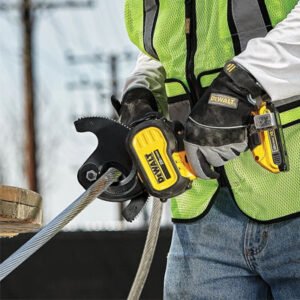
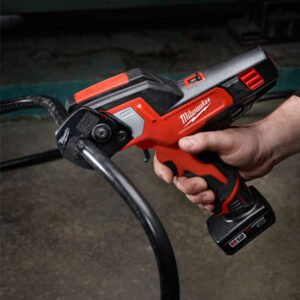
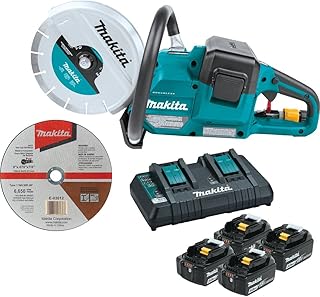
Battery-powered cutters can be valuable for professionals performing many cuts during a workday. They reduce the amount of manual force required and can improve productivity on repetitive jobs. Brands such as Milwaukee, DEWALT, Makita, and Bosch offer broad cordless tool ecosystems, although the exact cable-cutting products, specifications, batteries, and kits vary by market and model.
The battery platform is an important purchasing consideration. A tool-only package may be attractive if you already own compatible batteries, while a complete kit can be more practical for someone entering an ecosystem. Compare the cutter itself rather than assuming that a familiar battery platform automatically makes one model better for your application.
Hydraulic cutters are designed for demanding cutting applications where very high mechanical force is necessary. They can be useful in electrical, utility, industrial, and heavy-duty applications, but they are usually more specialized than a typical homeowner needs.
Hydraulic systems may be manual, pump-assisted, or powered depending on the design. Buyers should verify the manufacturer's specified materials and cable capacities rather than selecting a hydraulic cutter solely because it appears more powerful.
Small cutters are convenient for control panels, electronics-related work, telecommunications tasks, low-volume electrical work, and general maintenance. Their compact size can make them easier to carry and position in confined spaces.
However, compact cutters should not be judged by appearance alone. Check the conductor size range, cutting geometry, handle opening, blade construction, and intended cable type. A compact wire cutter is not necessarily a substitute for a dedicated large-cable cutter.
Maximum cutting capacity is one of the first specifications to examine, but it needs context. Manufacturers may state capacity in terms of cable diameter, conductor cross-sectional area, or a particular cable construction. Two cutters with apparently similar maximum diameters may therefore not have equivalent real-world capability.
Look for the manufacturer's specific capacity information for copper and aluminium conductors when applicable. If you regularly work close to a tool's maximum rating, consider whether a larger-capacity model would provide a more appropriate margin rather than treating the maximum figure as an everyday target.
Copper and aluminium behave differently during cutting. Their mechanical characteristics, conductor construction, and cable designs can affect the force required and the resulting cut. Never assume that a cutter intended for copper is automatically suitable for every aluminium cable.
For professional work, verify the manufacturer's compatibility information for the exact cable construction. This is especially important when dealing with larger conductors or specialized cables.
Stranded cable can behave differently from solid conductor material because individual strands may move as the blade advances. A properly designed cable cutter should help contain the cable and produce a controlled cut. The suitability of a particular blade design depends on the cable type and the tool's intended application.
For clean results, choose a cutter specifically intended for the cable construction rather than assuming that any sharp cutting tool will perform equally well.
Blade quality affects cutting performance, durability, and the consistency of repeated cuts. Look for clearly stated blade materials or construction details from established manufacturers rather than relying exclusively on marketing language such as “heavy duty” or “professional grade.”
Blade geometry is equally important. Curved or semicircular cutting profiles are common on dedicated cable cutters because they help retain the cable while cutting. Ratcheting cutters may use replaceable or serviceable blades depending on the model.
Handle ergonomics become increasingly important as cable size and cutting frequency rise. A tool can have excellent blades yet be unpleasant to use if the handles are too narrow, the opening is uncomfortable, or excessive force is required.
Consider grip texture, handle length, hand clearance, overall balance, and whether the mechanism can be operated comfortably while wearing the type of work gloves normally used for the job. For repeated cutting, small ergonomic differences can become significant over several hours.
Weight is a trade-off rather than an absolute quality measure. A heavier cutter may incorporate a stronger mechanism and larger cutting capacity, but excessive weight can become inconvenient when the tool is carried continuously or used overhead.
For occasional large-cable work, capacity and leverage may justify additional weight. For installation work involving frequent movement and many smaller cables, a lighter design may be the more practical choice.
Traditional manual cutters rely directly on handle leverage. They are fast and simple when the cable is within their comfortable operating range. Their advantage is mechanical simplicity: there is no battery, motor, hydraulic pump, or ratchet mechanism to maintain.
Ratcheting cutters trade some simplicity for additional mechanical advantage. The ratchet holds the cutting progress between strokes, allowing the operator to apply force incrementally. This can be particularly helpful with larger conductors.
When comparing the two designs, consider not only whether the tool can technically cut the cable but also how frequently you will make the cut. A tool that requires substantial effort on every cut may be a poor choice for repetitive professional work even if its published capacity is sufficient.
A powered cutter is worth considering when cutting speed, repetition, and reduced physical effort are important. Electricians, contractors, maintenance teams, and utility professionals may benefit from powered operation when a large number of cables must be processed.
Battery-powered tools also remove the need to position a separate manual pump or hydraulic setup in some applications. However, powered tools introduce additional considerations, including battery availability, charging, tool weight, noise, maintenance, replacement blades, and compatibility with the cable types being cut.
Do not select a powered cutter solely because it is faster or more expensive. For occasional household use, a quality manual or ratcheting cutter can be more practical, easier to store, and simpler to maintain.
A cable cutter experiences concentrated mechanical stress at the cutting edges, pivots, and handle mechanism. Strong construction is therefore more meaningful than superficial finish quality. Look for manufacturers that clearly specify the intended application and capacity of the tool.
High-quality steel components can contribute to edge retention and structural durability, but steel grade alone does not determine overall performance. Pivot design, blade geometry, heat treatment, alignment, manufacturing tolerances, and the relationship between the blades and handles all influence how effectively the tool performs.
For ratcheting models, the durability of the ratchet mechanism deserves particular attention. A cutter that has excellent blades but a poorly suited or difficult-to-release mechanism can be frustrating in actual use.
A cable cutter should not automatically be replaced by a bolt cutter simply because both are cutting tools. Bolt cutters are designed primarily around the requirements of cutting hard metal objects such as bolts and rods. Cable cutters are designed around cable constructions and are intended to produce a controlled cut through conductors and their surrounding materials.
Using the wrong cutting tool can damage the tool, deform the cable, produce an unnecessarily rough cut, or create a safety problem. Select the cutter according to the material and construction rather than simply choosing the tool with the largest-looking jaws.
Diagonal cutters are excellent for many small wires, leads, and general electrical tasks, but they are not a universal solution for cable cutting. Large cable can require substantially more leverage than ordinary diagonal cutters provide.
A dedicated cable cutter generally provides a more suitable cutting profile and mechanical advantage for larger conductors. If your work involves a mixture of small wires and larger cable, owning appropriately sized tools for each task can be more effective than forcing one cutter to cover every application.
Prioritize simplicity, manageable size, comfortable handles, and compatibility with the relatively small cables you actually expect to cut. There is little advantage in carrying an oversized professional cutter if your projects rarely involve large conductors.
Professional users should pay closer attention to cutting capacity, ergonomics, blade durability, mechanism reliability, portability, and compatibility with other tools used on the job. A ratcheting or cordless cutter may be preferable when larger cables or repeated cuts are routine.
Consider productivity and standardization across the team. A cordless system can be attractive when workers already use the same battery platform, while a robust manual or ratcheting cutter can remain useful for situations where powered equipment is unnecessary.
Application-specific requirements become particularly important. Cable size, conductor material, cable construction, operating environment, required cutting speed, and serviceability should all be verified against manufacturer specifications. Specialized high-capacity cutters may be more appropriate than general-purpose models.
Smaller, precision-oriented cutting tools may be more appropriate than heavy cable cutters. The goal is controlled cutting without unnecessary deformation of the cable. For specialized communication cable, use a tool designed for that cable type rather than relying on a generic cutter.
A large diameter rating can look impressive, but it does not tell the entire story. Verify the conductor material and cable construction associated with the rating. A cutter rated for one type of cable should not automatically be assumed suitable for another.
Someone making two or three cuts a month has different requirements from a professional making dozens or hundreds of cuts during regular work. Frequent users should place greater emphasis on ergonomics, mechanism durability, blade serviceability, and productivity.
Oversizing a tool can increase weight and reduce convenience without providing meaningful benefits for smaller work. Select capacity based on your actual cable requirements plus a sensible margin.
Battery compatibility is platform-specific. Even within a single manufacturer's product family, battery requirements and included equipment can differ. Check the exact model designation and package contents before purchasing.
For professional users, replacement blades can influence the long-term value of a cutter. Check whether replacement cutting components are available and whether the manufacturer describes a service procedure for the model.
Cutting and stripping are different operations. A cable cutter is designed to sever the cable; a stripping tool is intended to remove insulation or jacketing while preserving the conductor. Some multi-purpose tools combine functions, but their suitability depends on the specific task.
Always identify the cable and understand the working conditions before cutting. For electrical installations, de-energization and appropriate verification procedures are essential where applicable. A cable that appears inactive should not simply be assumed safe to cut.
Use eye protection appropriate for the task and keep hands away from the cutting path. Inspect the cutter before use for damaged blades, loose pivots, cracked handles, malfunctioning ratchets, or other defects. Do not use a cutter beyond its manufacturer's stated capacity.
Never substitute a tool's maximum advertised capacity for an assessment of the actual cable. Armoured, reinforced, unusually constructed, or specialized cables can require tools specifically designed for them.
Position the cable correctly within the cutter's intended cutting area rather than placing it at an awkward angle. Keep the tool aligned with the cable and apply force in a controlled manner. With ratcheting models, use the mechanism as intended instead of attempting to force the handles beyond their normal operating range.
A clean cut is particularly useful when subsequent termination or installation work depends on a reasonably square cable end. Avoid twisting the cable aggressively during the cut, as unnecessary deformation can make later handling more difficult.
Good maintenance begins with keeping the cutting surfaces clean and protected. Remove dirt and debris after use and inspect the pivot and cutting edges periodically. Follow the manufacturer's lubrication recommendations rather than applying an unspecified lubricant indiscriminately.
Store the tool in a dry location and protect precision cutting edges from contact with other metal tools. Powered cutters should be stored and maintained according to their manufacturer's instructions, including battery care and inspection of moving components.
If a blade becomes damaged, excessively worn, chipped, or visibly misaligned, stop using the tool until the issue has been addressed. Continuing to force a damaged cutter can affect both cutting performance and user safety.
Long-term value is not determined solely by the purchase price. A less expensive cutter that is well matched to occasional use may offer better value than an oversized professional model. Conversely, a professional who repeatedly cuts large conductors may save time and physical effort with a higher-capacity ratcheting or powered design.
Consider the total ownership picture: expected frequency of use, cutting capacity, blade replacement, battery requirements, maintenance, portability, ergonomics, and the availability of compatible accessories or replacement components. A tool that remains useful for several different jobs can also provide greater practical value than one selected for a single maximum specification.
Established tool manufacturers can be useful starting points when researching cable cutters because their product documentation often makes it easier to verify specifications, compatible accessories, and intended applications. Depending on the type of cutter required, Canadian shoppers may encounter brands such as Klein Tools, Knipex, Milwaukee, DEWALT, Greenlee, RIDGID, Southwire, Wiha, and Makita.
Brand familiarity should not replace model-level comparison. A manufacturer may produce several cutters aimed at very different applications, and the most expensive model in a product family is not necessarily the best match for every user. Always compare the exact model specifications, included components, capacity, cable compatibility, and intended use.
Customer reviews can provide useful information, but they should be treated as one part of the buying process rather than definitive evidence. Look for repeated comments about cutting performance, handle comfort, blade longevity, ratchet operation, battery life where relevant, and durability.
Pay particular attention to reviews that identify the cable size and material being cut. A positive review from someone cutting small copper conductors does not necessarily establish that the same tool is suitable for large aluminium cable. Similarly, an isolated complaint may reflect an application outside the manufacturer's intended use.
Compare verified customer feedback with the manufacturer's specifications. If a review claims that a tool can perform a task beyond its published capacity, the manufacturer's stated limit should take precedence.
Canadian shoppers should verify that the exact model being considered is intended for the Canadian market and that the listed specifications correspond to that model. Product names can be similar across regions while included accessories, model numbers, electrical configurations, or package contents differ.
For cordless equipment, check the battery and charger configuration carefully. Some listings may contain the bare tool while others include batteries and charging equipment. Comparing kit contents prevents an apparently inexpensive option from becoming more expensive after necessary accessories are added.
Canadian buyers should also compare current retailer listings rather than relying on an old price or an outdated availability claim. Prices, inventory, bundles, and promotional offers can change, so the current retailer listing should be checked immediately before purchase.
Price should be considered in relation to the work the tool is expected to perform. For occasional use, spending substantially more for a powered professional cutter may provide little practical benefit. For repetitive commercial work, however, the additional productivity and reduced manual effort of a higher-end mechanism can make the investment more reasonable.
A useful comparison is to separate “necessary capability” from “nice-to-have features.” First make sure the cutter can safely and appropriately handle the required cable. Then compare ergonomics, speed, portability, battery compatibility, replacement parts, and other features that affect everyday usefulness.
There is no single best cable cutter for every Canadian buyer. The appropriate choice depends primarily on cable size, conductor material, cable construction, cutting frequency, required portability, and budget. A compact manual cutter may be ideal for occasional work, while a ratcheting or cordless model may be better for larger or repetitive cutting jobs.
Ratcheting cutters are often better when greater mechanical advantage is needed, particularly for larger cable. Standard manual cutters can be preferable when simplicity, low weight, and quick operation on smaller cables are more important.
They can be worthwhile for professionals or anyone making many cuts. The main advantages are reduced manual effort and potentially faster repetitive work. For occasional use, the additional cost, weight, battery requirements, and maintenance may not be justified.
Some cable cutters are specifically designed for both copper and aluminium conductors, but compatibility must be verified for the exact model. Do not infer suitability from the tool's general appearance or maximum diameter.
Not necessarily. Armoured cable can contain metallic layers or other construction features that require a cutter specifically designed for that application. Check the manufacturer's specifications before attempting to cut it.
A dedicated cable cutter can handle some wire and cable applications, but a smaller wire cutter may provide better control for thin conductors. Choose the tool according to the size and construction of the wire rather than using a large cutter for every task.
Identify the largest cable you expect to cut, determine its conductor material and construction, and then compare those details with the manufacturer's published capacity. Leave an appropriate margin rather than routinely operating at the tool's maximum stated limit.
Replaceable blades can be particularly valuable for professional users because cutting edges eventually wear or may become damaged. For occasional users, a non-replaceable design may be perfectly adequate. Check the availability and cost of replacement components for the exact model.
Focus on appropriate cutting capacity, reliable construction, comfortable ergonomics, suitable blade geometry, manageable weight, mechanism quality, and serviceability. If the tool will be used repeatedly, productivity and physical effort become much more important than they are for occasional DIY work.
Inspect the cutter before use and clean it after demanding or dirty work. Follow the manufacturer's instructions for lubrication, blade inspection, storage, and servicing. The appropriate maintenance interval depends on the tool design and how frequently it is used.
Before selecting a cable cutting tool, confirm the application first and the brand second. The most useful purchase is the one whose published specifications align with the cable you actually work with.
The best cable cutting tool for a Canadian buyer in 2026 is the one that provides the correct combination of capacity, cutting mechanism, ergonomics, durability, and application-specific compatibility. Small manual cutters make sense for light work, ratcheting models offer additional leverage for larger conductors, and cordless or hydraulic equipment can be justified when cutting volume or cable size makes manual operation inefficient.
Rather than choosing solely from a “top 10” ranking, use the specifications and buying criteria above to verify whether each shortlisted model genuinely matches your cable type and workload. Compare current Canadian listings, read relevant customer feedback, confirm package contents, and give manufacturer specifications priority when reviews and marketing claims conflict.