

Explore cordless power tools, kits, batteries, chargers, accessories and related equipment available to Canadian shoppers. Compare product options and follow useful buying guides before you buy.


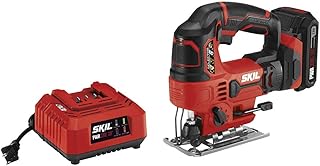


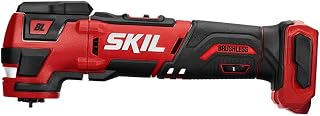


Choosing a SKIL cordless multi-tool is less about finding the highest specification and more about matching the tool to the work you actually expect to perform. Oscillating multi-tools can cut, sand, scrape and remove materials, but different SKIL models are designed around different priorities such as compact size, brushless motor performance, battery capacity, accessory compatibility and vibration control.
For Canadian buyers, the decision should also include battery availability, charger configuration, accessory costs and the practical conditions in which the tool will be used. A compact 12V model may be easier to handle for detailed indoor work, while a 20V platform can make more sense for demanding renovation, flooring and cutting applications.
Voltage should not be treated as a simple measure of overall tool quality. A well-designed 12V multi-tool can be an excellent choice when portability and control are more important than maximum sustained output. A 20V model generally makes more sense when the tool will be used for larger or more demanding jobs.
A 12V brushless oscillating multi-tool can be particularly attractive for homeowners, renovators and DIY users who regularly work in confined spaces. The lower-voltage platform can offer a compact form factor without giving up important features.
The SKIL PWRCORE 12 Brushless 12V Oscillating Multi-Tool, model OS5927A-11, is specified with a 3.6-degree oscillation angle, six-speed Auto Sensing technology and a no-load range of 11,000 to 18,000 OPM. Its listed configuration can also include a 2.0Ah USB-C battery, charger, sanding pad, multiple cutting blades, a rigid scraper and sanding sheets.
This type of configuration is worth considering when the tool will spend considerable time cutting drywall, trimming material, sanding edges or removing old adhesive. The compact format can be easier to control during detailed work than a larger tool.
The 20V PWRCORE platform is a better fit when the multi-tool is expected to perform more demanding renovation tasks. SKIL currently lists several 20V oscillating multi-tool configurations, including the OS5920B and OS5937 families.
The SKIL 20V Brushless Oscillating Multi-Tool Kit OS5920B-10 is specified with a 3.6-degree oscillating angle, six speeds, an 11,000 to 17,000 OPM no-load speed range, constant-speed technology, soft start, anti-vibration features and tool-free accessory changes.
The 20V platform can therefore be particularly useful for users who already own compatible PWRCORE 20 batteries or who expect to build a larger cordless tool collection around the same battery ecosystem.
Motor design is one of the most important differences to examine when comparing SKIL multi-tools. Brushless motors eliminate traditional carbon brushes and are commonly used in newer performance-oriented cordless tools.
SKIL describes its brushless multi-tools as providing efficient power and extended tool life. The OS5920B-10, for example, uses a digital brushless motor and adds constant-speed technology for maintaining tool performance when the cutting load increases.
A brushless motor should not automatically make one model the best choice for every buyer. Consider the complete package instead. Motor design should be evaluated alongside vibration control, speed adjustment, battery size, ergonomics, accessory compatibility and included equipment.
OPM means oscillations per minute. It describes how rapidly the accessory moves back and forth. A higher maximum OPM can be useful for certain cutting and sanding tasks, but maximum speed alone does not determine cutting performance.
Variable-speed control is often more useful than a high headline number. Lower speeds can provide better control for delicate materials, while higher settings can improve productivity during appropriate cutting or sanding applications.
The SKIL 20V Brushless OS5920B-10 is listed with six speeds and an 11,000 to 17,000 OPM no-load range. The 12V Brushless OS5927A-11 is listed with six-speed Auto Sensing technology and an 11,000 to 18,000 OPM range.
Oscillation angle affects how far the accessory travels during each movement. A larger angle can contribute to aggressive material removal, while the actual result also depends on the blade, material, pressure, speed and motor design.
Several current SKIL brushless oscillating multi-tools are specified with a 3.6-degree oscillation angle. This makes the specification useful for comparing SKIL models within the same product family, but it should not be treated as an isolated indicator of real-world performance.
Oscillating tools naturally produce repetitive movement. Extended use can therefore make vibration control an important purchasing consideration, particularly for sanding, scraping and repeated cutting.
The SKIL OS5920B-10 includes a vibration reduction system. SKIL states that this system provides 80 percent less vibration compared with SKIL models without the VRS feature. This is a manufacturer specification rather than an independent comparative test, so buyers should interpret it within that context.
For users who expect long work sessions, ergonomics should be assessed together with vibration control. Look at grip shape, balance, tool weight, switch placement and the position of the accessory relative to the work surface.
Weight becomes especially important when using a cordless multi-tool overhead, at shoulder height or against vertical surfaces. A heavier tool can become tiring even when its specifications appear impressive.
The listed bare-tool weight of the SKIL OS5920B-10 is approximately 1.72 lb. The actual handheld weight will be higher once a battery and accessory are installed.
When comparing models, avoid looking only at the advertised tool-only weight. Battery size changes the balance and total weight. A larger battery can increase runtime but may also make a compact tool feel heavier during detailed work.
Battery capacity is normally expressed in amp-hours, or Ah. A higher Ah rating generally provides greater energy capacity, but runtime varies according to load, material, accessory type, operating speed and tool efficiency.
A 2.0Ah battery can be attractive when low weight and manoeuvrability matter. A higher-capacity battery may be preferable for longer cutting or sanding sessions where stopping to change batteries would interrupt the workflow.
Canadian buyers should also consider whether the battery is included. A tool-only listing can initially appear more affordable, but the total cost can change significantly if a compatible battery and charger must be purchased separately.
One of the strongest reasons to choose a cordless multi-tool is the ability to share batteries across compatible tools. SKIL maintains both PWRCORE 12 and PWRCORE 20 product families, with the current SKIL catalogue containing a broad selection of tools within the PWRCORE ecosystem.
If you already own SKIL cordless tools, check the exact battery platform before purchasing another multi-tool. A PWRCORE 12 battery should not be assumed to replace a PWRCORE 20 battery simply because both are lithium-ion systems.
For a new buyer, it can be useful to choose the platform based on future tool plans. Someone building a compact home-maintenance collection may prefer the 12V ecosystem, while a user planning to add larger saws, drills and other 20V equipment may find PWRCORE 20 more appropriate.
Some newer SKIL battery configurations add USB-C functionality. The 12V OS5927A-11 configuration, for example, includes a 2.0Ah USB-C battery and a 20W Type-C PD wall charger. SKIL states that the battery can provide two-way charging through its USB-C port.
This feature is useful for people who value charging flexibility, but it should not outweigh the core requirements of the tool. Cutting performance, ergonomics, battery compatibility and accessory support should remain the primary purchasing criteria.
A cordless multi-tool is only as versatile as the accessories available for it. Before purchasing, check the attachment system and whether replacement blades, sanding pads and scrapers are readily available from suitable retailers.
The SKIL OS5920B-10 is listed with 12-pin OIS accessory compatibility and a quick-clamp system.
Accessory compatibility matters because multi-tools are used for very different applications. A wood-cutting blade is not interchangeable in purpose with a bi-metal blade, scraper or sanding pad. The correct accessory should always match the material and task.
The exact accessories supplied vary by SKIL model and package. For example, the OS5937-10 configuration is listed with multiple blade types, a rigid scraper, sanding pad, 35 sanding sheets and an accessory case.
The main advantage of an oscillating multi-tool is access. Its compact blade movement makes it useful where a circular saw, reciprocating saw or larger power tool cannot easily reach.
An appropriate plunge blade can be used for suitable drywall-cutting tasks. This can be useful when making openings for electrical boxes or performing renovation work. The blade and cutting technique should always match the material and the manufacturer's instructions.
Oscillating tools are useful for flush-cutting applications and detail work where a larger saw would be awkward. They can also be useful when making controlled cuts around existing structures.
A scraper accessory can help with suitable adhesive or material-removal jobs. The accessory should be kept under control to avoid damaging the underlying surface.
The compact triangular sanding pad makes an oscillating multi-tool useful for corners and areas that are difficult to reach with larger sanders. It can complement, rather than replace, a dedicated random orbital or detail sander.
Oscillating tools can be particularly useful during renovation because they can handle a variety of small cutting, scraping and trimming tasks without requiring a separate tool for every operation.
The OS5920B and OS5937 families are both 20V brushless oscillating multi-tools, but package contents and configuration can differ. The OS5920B-10 is listed with a 2.0Ah battery, charger, sanding pad, sanding sheets and two cutting blades.
The OS5937-10 package is listed with a broader accessory selection, including 35 sanding sheets, multiple blade types, a rigid scraper and an accessory case.
For this reason, compare the complete kit rather than comparing only the tool body. If you already have compatible batteries and accessories, a tool-only configuration may provide better value. If you are starting from zero, the included battery, charger and accessories can have greater importance.
A 12V brushless model is worth considering for lighter renovation, maintenance, cabinetry, drywall work, detail sanding and general household tasks where compact handling is valuable.
A 20V brushless model becomes more compelling when the tool will be used frequently, under heavier loads or as part of a larger PWRCORE 20 tool collection.
Neither platform is universally superior. The better choice depends on the balance between portability, power requirements, battery ecosystem and the type of work involved.
SKIL also offers a 12V Multi-Cutter, which is a different category of tool. The ES4651A family is designed around cutting materials such as cardboard, carpet, cloth, leather and vinyl rather than providing the broad cutting, sanding and scraping functions of an oscillating multi-tool.
The distinction is important when searching for the best SKIL cordless multi-tool. A compact power shear or multi-cutter can be extremely useful for repetitive soft-material cutting, but it should not be ranked as though it were an oscillating renovation tool.
The current SKIL specifications for the 12V Multi-Cutter list a maximum cutting thickness of 1/4 inch, a 1-9/16-inch cutting blade and a no-load speed of 300 per minute.
Higher voltage does not automatically mean better performance for every application. A compact 12V brushless tool may be more comfortable for detailed work than a larger 20V tool.
A tool-only package and a complete kit are fundamentally different purchasing propositions. Always calculate the complete setup required for your project.
Maximum oscillation speed is only one specification. Variable-speed control, load management, vibration reduction and accessory quality can have a major influence on usability.
A multi-tool with limited accessory support can become less useful over time. Confirm that replacement blades and sanding accessories are practical to obtain before committing to a model.
A tool that feels comfortable for a short demonstration may become tiring during a long renovation session. Weight, grip shape and vibration should all be considered.
A cordless design removes the need for a power cord during operation, but it does not eliminate the normal risks associated with cutting, sanding and scraping tools. Wear appropriate eye protection and use respiratory protection where the material and work environment require it.
Keep hands away from the moving accessory and secure the workpiece whenever practical. Select the correct blade for the material and inspect accessories for damage before use.
When cutting into walls, always consider concealed electrical wiring, plumbing and other services. Do not assume that a surface is safe to cut simply because the area appears clear.
Follow the specific safety instructions supplied with the SKIL model. Manufacturer manuals can also provide model-specific information about accessories, operating temperatures, maintenance and safe use. SKIL maintains manuals and parts information for its current and older tool models.
Battery-powered tools require additional consideration when used or stored in very cold conditions. Lithium-ion batteries can behave differently at low temperatures, and charging conditions matter.
Do not assume that every battery should be charged immediately after being exposed to freezing temperatures. Check the battery and charger instructions for the specific SKIL platform and model, including recommended operating and storage temperatures.
For example, a SKIL manual for an earlier PWRCORE 20 oscillating multi-tool specifies a recommended working temperature range of -10°C to 40°C and a recommended storage range of 0°C to 40°C. Model-specific documentation should take priority because specifications can vary between generations.
Use the correct accessory for the material and let the tool perform the work rather than applying excessive downward force. Excessive pressure can reduce control and may increase wear on the accessory.
Start at a suitable speed and adjust according to the material and accessory. For plunge cutting, establish the cut carefully and maintain control. For flush cutting, keep the accessory aligned with the intended surface and avoid twisting the tool unnecessarily.
Choose the sanding grit according to the surface condition. Coarser abrasives are intended for more aggressive material removal, while finer abrasives are generally used for finishing and surface refinement.
Do not rely on excessive pressure to accelerate sanding. The oscillating action should provide the working motion. A controlled pace and appropriate abrasive can produce a more consistent result while reducing unnecessary strain on the tool and accessory.
Scraping performance depends heavily on blade condition, material hardness and angle. Keep the scraper controlled and avoid forcing it into surfaces where it could gouge the underlying material.
For flooring, adhesive and renovation applications, test the accessory and technique in an inconspicuous area when possible. Different surfaces can react very differently to mechanical scraping.
Online product listings can contain multiple configurations under similar names. Always identify the complete model number. For example, SKIL lists tool-only and battery-and-charger configurations separately for several multi-tool families.
Next, check the included accessories. Two listings with similar tool names may have substantially different kit contents. Then compare battery capacity, charger type, accessory compatibility, weight and included warranty information.
For Canadian purchases, also confirm that the specific configuration is intended for the Canadian market and that the retailer's listing clearly identifies the package contents, voltage platform and applicable support information.
A tool-only SKIL multi-tool can be the better option if you already own compatible PWRCORE batteries and a charger. It can reduce duplication and allow you to put more of your budget toward the tool itself or additional accessories.
A complete kit can be more convenient for first-time buyers. The battery, charger and accessories are supplied together, reducing the need to identify compatible components separately.
Always compare the total cost rather than the headline price. A lower tool-only price is not necessarily the lower-cost solution once a compatible battery and charger are added.
SKIL's current multi-tool range includes compact 12V brushless models and more powerful 20V brushless options, giving DIY users several configurations to consider. The feature sets include variable-speed control, brushless motors, accessory-change systems, LED lighting and battery-platform integration depending on the model.
The best model for a DIYer depends on workload. Someone performing occasional repairs may benefit more from compact handling and a useful accessory kit than from maximum power. A frequent renovator may place greater value on the 20V platform, brushless motor and vibration control.
Some SKIL cordless multi-tools offer specifications and features that can be relevant to demanding users, but suitability for professional work should be judged against the exact workload, duty cycle, accessory availability, service requirements and tool ecosystem.
Professional buyers should also consider how frequently the tool will be used, how important downtime is, how many compatible batteries are available and whether replacement accessories can be sourced quickly.
A “Top 10” ranking should not imply that ten distinct SKIL oscillating multi-tool models are currently available in Canada if the underlying market does not support that claim. SKIL's current product and manual pages show a smaller group of identifiable multi-tool families, including the 12V Brushless OS5927A series, 20V OS5920B series, 20V OS5937 series and 20V OS593001, along with the separate 12V Multi-Cutter ES4651A family.
For an accurate buying guide, different kit configurations should not be presented as completely different tools merely to fill a ranking. Model numbers, motor type, voltage platform, included accessories and package configuration should be clearly distinguished.
The strongest all-round choice is normally the model that offers the right combination of power, control, ergonomics, battery compatibility and accessory support for the intended work.
For a compact tool, the SKIL 12V Brushless OS5927A-11 stands out on paper for its six-speed Auto Sensing system, 18,000 OPM maximum no-load speed, quick-release accessory changes, 3.6-degree oscillation angle and compact PWRCORE 12 platform.
For users who prefer the 20V ecosystem, the OS5920B-10 provides a brushless motor, six-speed operation, constant-speed technology, anti-vibration features and 12-pin OIS compatibility.
The OS5937 family is also worth considering when included accessories are important, particularly where a broader set of blades, sanding materials and a storage case can reduce the need for immediate accessory purchases.
There is no single best model for every Canadian buyer. The SKIL 12V Brushless OS5927A-11 is a strong option for buyers prioritising compact size and modern features, while 20V brushless models such as the OS5920B and OS5937 are more appropriate when the PWRCORE 20 platform and heavier-duty renovation work are priorities.
For many household, detail and renovation applications, a modern 12V brushless oscillating tool can be sufficient. The appropriate choice depends on material, workload, accessory and operating technique rather than voltage alone.
Not automatically. A 20V model can be preferable for users who need a larger cordless platform or expect heavier workloads, while a 12V model can be preferable when compact handling and lower weight are more important.
SKIL currently offers brushless oscillating multi-tools in both 12V and 20V families. Buyers should still check the exact model number because SKIL's range also contains earlier and non-brushless configurations.
OPM means oscillations per minute. It describes the frequency of the oscillating movement. A higher maximum OPM can be useful for certain applications, but variable-speed control and the correct accessory are equally important.
Suitable SKIL oscillating multi-tools can be used for appropriate drywall-cutting applications when fitted with a suitable blade. Always check the blade specification and follow the manufacturer's operating and safety instructions.
Yes. SKIL oscillating multi-tools can be configured with sanding pads and abrasive sheets for suitable wood-sanding applications. The correct grit should be selected for the required level of material removal and finish.
Accessory compatibility depends on the model and attachment system. The SKIL OS5920B-10, for example, is listed with 12-pin OIS compatibility. Always confirm compatibility before purchasing replacement accessories.
If you do not already own the compatible SKIL battery platform, a complete kit can be more convenient. If you already have compatible batteries and a charger, a tool-only configuration may avoid unnecessary duplication.
An oscillating multi-tool is designed for several functions including cutting, sanding and scraping. The SKIL 12V Multi-Cutter is a separate compact cutting tool intended for materials such as cardboard, carpet, cloth, leather and vinyl.
Compare the complete package rather than the tool price alone. Check whether the listing includes a battery, charger, blades, sanding accessories and storage. Also verify the current Canadian price, applicable taxes, shipping terms and retailer conditions at the time of purchase.
No. Product catalogues and retailer inventory can change. The SKIL product pages confirm the models and configurations, but Canadian shoppers should verify current Canadian availability and the exact package before ordering.
The best SKIL cordless multi-tool for Canada is the one that matches the material, workload, battery platform and working style rather than simply the model with the longest feature list.
For compact renovation and detail work, the 12V Brushless OS5927A family deserves close attention. For users who want the broader PWRCORE 20 ecosystem, the 20V brushless OS5920B and OS5937 families offer a stronger platform-oriented choice. The OS5937 configuration can also be attractive when a larger accessory package is valuable.
Before buying, verify the exact model number, battery configuration, included accessories and Canadian retailer information. Compare specifications with current customer feedback, and focus on the features that directly affect your projects. That approach is more reliable than choosing solely from a headline ranking or maximum-speed specification.