

Explore cordless power tools, kits, batteries, chargers, accessories and related equipment available to Canadian shoppers. Compare product options and follow useful buying guides before you buy.


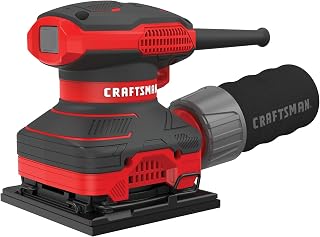


Choosing a cordless sander is less about finding the most powerful tool and more about matching the sander's design to the work you actually do. A homeowner preparing furniture for refinishing has different requirements from a contractor smoothing drywall repairs, a woodworker shaping cabinet components, or a DIY user completing occasional renovation projects. For Canadian buyers, battery platform compatibility, replacement abrasive availability, cold-weather considerations, dust collection, ergonomics and the intended sanding finish all deserve attention before comparing individual models.
Craftsman cordless sanders can be particularly appealing when you already use compatible Craftsman cordless tools and batteries. A shared battery platform can reduce the need to maintain separate chargers and battery systems. However, buyers starting from scratch should compare the complete tool ecosystem rather than judging a sander by its bare-tool price alone.
If the goal is a general-purpose cordless sander for furniture, shelves, trim, doors and routine woodworking, a random orbital design is often the most flexible category to investigate. If most of your work involves corners and intricate profiles, a detail-oriented design may be more appropriate.
The sanding pad determines which abrasives you can use and influences how efficiently the tool covers a surface. Common random orbital designs use circular pads, while finishing sanders may use rectangular sheets or proprietary pad configurations. Before buying, confirm the abrasive dimensions and attachment method so that replacement discs or sheets are practical to obtain in Canada.
Orbit size also matters. A larger sanding motion can favour faster stock removal, while a smaller motion can be preferable when the priority is controlled finishing. The specification should therefore be considered alongside the type of material, grit progression and desired surface quality rather than treated as an isolated performance number.
Variable speed can make a cordless sander more adaptable. Lower speeds can provide greater control when working around delicate surfaces, edges or heat-sensitive finishes, while higher settings can help with general material removal. The ideal setting depends on the abrasive, workpiece material and task.
A variable-speed control is especially useful when one sander will be used across different woods and finishing stages. Buyers should also consider whether the speed control is easy to operate while maintaining a secure grip on the tool.
Battery voltage should not be treated as a direct measurement of sanding performance. Runtime is influenced by battery capacity, motor design, sanding pressure, abrasive condition, material hardness and how continuously the tool is operated.
For occasional projects, a smaller battery may offer a more manageable overall tool weight. For extended sanding sessions, a higher-capacity compatible battery can reduce interruptions. The trade-off is additional weight, which may become noticeable during overhead or vertical work.
Battery compatibility is one of the most important purchasing considerations. If you already own Craftsman cordless tools using the same battery family, check the exact platform and compatibility requirements before purchasing a bare tool.
Buyers should also determine whether the package includes a battery and charger or consists of the bare tool only. Two apparently similar listings can represent very different total purchase costs when one includes the required power source and the other does not.
Sanding produces fine particulate material, making dust management an important part of both tool selection and safe working practices. A cordless sander with an effective dust-collection connection can help reduce the amount of loose dust around the immediate work area, although no built-in collection system should be assumed to capture everything.
When sanding coatings, old finishes, composite boards or unfamiliar materials, buyers should identify the material before beginning work and use appropriate respiratory and eye protection. Good ventilation and a suitable dust-management setup are particularly important for indoor projects.
Sanding can involve repetitive movements for extended periods, so comfort should be considered alongside motor specifications. A tool that is technically capable but awkward to hold can be frustrating during large furniture, flooring or woodworking projects.
Overall balance matters because the battery contributes to the tool's weight distribution. A compact battery may make the sander easier to manoeuvre, while a larger battery may extend working time at the cost of additional mass. There is no universally best configuration.
When comparing Craftsman cordless sanders, look for a combination of manageable weight, comfortable grip geometry and controls that can be reached without constantly changing hand position.
Vibration is another consideration for repeated sanding. A comfortable grip and well-balanced tool can make controlled sanding easier, particularly when working across broad surfaces. Users should avoid excessive downward pressure because forcing the tool can interfere with normal sanding action and unnecessarily load the abrasive and motor.
The sander is only part of the sanding system. Abrasive selection has a major effect on the result, and using the wrong grit can make even a capable cordless sander appear ineffective.
Do not automatically begin with the coarsest abrasive available. Removing too much material can create unnecessary scratches, flatten edges or alter profiles. A progressive grit sequence is usually easier to control than trying to achieve the entire result with one abrasive.
A random orbital sander is generally the more versatile choice when a single cordless sander needs to handle a variety of woodworking tasks. Its circular pad and random orbital movement can make it useful for both material removal and surface preparation.
A finishing sander can be attractive when the work primarily involves flat surfaces and controlled finishing. Its pad shape can make it convenient for certain edges and areas where a circular random orbital pad is less suitable.
Craftsman should be compared with competing cordless ecosystems based on the complete ownership proposition rather than brand name alone. DeWalt, Milwaukee, Makita, Bosch, Ryobi and Metabo HPT all offer cordless power-tool systems, but battery compatibility, tool selection, ergonomics, accessories and intended user profiles can differ between platforms.
For a buyer already invested in a DeWalt battery platform, moving to Craftsman solely for a sander may not make economic sense unless the particular tool or package offers a meaningful advantage for the intended application. Conversely, a household already using compatible Craftsman batteries may benefit from keeping its sanding tool within the existing system.
Milwaukee is another major cordless-tool ecosystem worth considering for buyers who already own compatible batteries. The comparison should focus on the exact sander, battery requirements, control layout, dust-management options and total ecosystem cost rather than assuming one brand is universally superior.
Makita provides another established cordless platform for shoppers who prioritize ecosystem breadth and already own compatible equipment. Compare the specific pad configuration, battery arrangement, ergonomics and intended sanding applications before making a decision.
Ryobi is particularly relevant to DIY buyers who want to build a broader cordless collection around a shared battery platform. A direct comparison should include the complete kit contents, abrasive compatibility, tool weight and availability of other compatible tools needed for future projects.
The choice between a bare tool and a kit depends largely on what you already own. A bare Craftsman sander can be sensible when you already have the correct compatible battery and charger. A complete kit can be more practical for someone entering the battery platform for the first time.
Voltage alone does not tell you how a sander will perform. Motor efficiency, orbital motion, battery capacity, abrasive condition and tool design all influence practical performance.
A sander becomes less convenient if compatible discs or sheets are difficult to find. Check pad dimensions, attachment style and hole pattern before buying.
Professional-grade specifications are not automatically better for every homeowner. Additional capability can come with extra weight, cost or complexity. Match the tool to the frequency and scale of your projects.
A common sanding mistake is pressing down heavily to make the tool remove material faster. Excess pressure can reduce the effectiveness of the sanding motion, accelerate abrasive wear and produce an inconsistent finish.
A cordless tool should be assessed with the battery attached. The battery can substantially influence balance and handling, particularly during prolonged sanding.
Dust bags and vacuum connections can improve collection, but they should not be treated as complete dust elimination systems. Keep the work area appropriately ventilated and use suitable protective equipment for the material being sanded.
A useful comparison should prioritize the factors that affect your actual work. Instead of simply counting features, create a short evaluation based on the jobs you expect to perform most often.
Furniture refinishing generally benefits from control, manageable vibration and the ability to move between coarse, medium and fine abrasives. A versatile random orbital sander can be a strong choice for broad wooden panels, tabletops, cabinet doors and similar surfaces.
For detailed furniture with turned legs, decorative moulding and narrow corners, no single random orbital sander will reach every area efficiently. A detail sander or hand-sanding approach may still be necessary. Buyers should therefore evaluate the entire project rather than expecting one cordless tool to perform every sanding operation.
For general DIY use, versatility and convenience usually deserve significant weight. A cordless sander can be useful when working in locations where running an extension cord is inconvenient or where quick setup is valuable.
DIY buyers should pay particular attention to battery compatibility. If the household already owns several compatible Craftsman cordless tools, the ability to share batteries can be more valuable than a small difference in individual sander specifications.
Large projects place greater emphasis on runtime, dust extraction, abrasive longevity, ergonomics and the ability to maintain consistent results. A spare compatible battery can be useful for extended work, although the exact runtime will depend on the battery and working conditions.
For very large surfaces, buyers should also consider whether a cordless handheld sander is the appropriate primary tool. Some projects may be completed more efficiently by combining a power sander with other preparation methods rather than expecting a compact cordless model to handle every stage.
Canadian users may encounter substantial differences between indoor heated workshops, unheated garages and outdoor work areas. Lithium-ion batteries generally perform differently at very low temperatures, so batteries should be handled and stored according to the manufacturer's instructions rather than routinely exposed to extreme cold.
If a tool or battery has been stored in a cold garage, allow it to reach an appropriate operating temperature before use and follow the manufacturer's guidance. Avoid assuming that a cold battery will deliver the same performance as one operating under normal conditions.
Regular maintenance can help preserve the tool's usability and make sanding results more consistent. Always follow the manufacturer's instructions for maintenance, inspection and servicing.
Good sanding technique is often more important than buying the most expensive tool. Allow the abrasive to do the cutting instead of forcing the machine through the material. Keep the sander moving consistently and avoid dwelling in one location, especially near edges.
Progress through appropriate abrasive grits rather than jumping from a very coarse abrasive directly to a fine one. Clean the workpiece between sanding stages so that loose abrasive particles and dust do not interfere with evaluating the surface.
Edges require particular care. A random orbital sander can quickly soften or round an otherwise crisp edge if it is tilted or held in one position. Keep the pad as level as practical and use hand sanding when a profile requires precise edge control.
Customer reviews can provide useful information when they are evaluated systematically. The most valuable comments tend to identify recurring practical issues rather than simply stating that a tool is good or bad.
Review scores should therefore be treated as one input rather than the sole reason to select a sander. Product specifications, compatibility, intended application and current package contents should be checked separately.
Read the manufacturer's operating instructions before using any cordless sander. Wear appropriate eye protection and use suitable respiratory protection and dust controls for the material and working environment. Keep hands away from the moving sanding pad and secure the workpiece before sanding.
Take additional precautions when sanding painted, coated or composite materials because the dust produced can differ from ordinary untreated wood dust. Do not assume that a familiar-looking material is safe to sand without checking its composition and the applicable safety guidance.
Disconnect or remove the battery as directed by the manufacturer before performing maintenance, changing accessories or inspecting the tool. Never use a battery, charger or sander that shows signs of damage.
A ranked list can make product discovery easier, but the highest-ranked item is not automatically the right choice for every Canadian buyer. Treat the ranking as a starting point and compare the specifications, package contents, battery requirements and intended applications against your own project.
Before purchasing, verify the current product information, compatible accessories, seller details, customer feedback and package contents. Product availability, configurations and pricing can change during 2026, so current retailer information should be checked at the time of purchase.
The best choice depends on the application, budget, battery platform and preferred sanding method. A versatile random orbital model can suit many general woodworking tasks, while detail and finishing sanders can be preferable for more specialized work.
Yes, cordless sanders can be suitable for a wide range of woodworking tasks when the sander type, abrasive and technique are appropriate for the material. The correct grit progression and controlled sanding pressure are important for achieving a good result.
Neither is universally better. Cordless models provide mobility and eliminate the need to manage a power cord, while corded tools can be attractive for users who prioritize continuous operation without battery changes. The better option depends on the project and working environment.
Package contents vary by product configuration. Some listings may be bare-tool packages while others may include batteries and chargers. Always verify the exact contents of the current listing before purchasing.
Compatible tools within the same battery platform can share batteries, but compatibility should be confirmed using the manufacturer's specifications. Battery families and tool requirements should not be assumed to be interchangeable solely because the products carry the same brand.
Use the grit appropriate to the stage of the job. Coarser abrasives are generally used for greater material removal, medium grits for smoothing, and finer grits for final surface preparation. The ideal sequence depends on the starting condition of the workpiece and the desired finish.
Sanding painted surfaces requires additional care because coatings can produce dust that differs from untreated wood. Identify the coating where possible, use suitable dust controls and protective equipment, and follow applicable safety guidance before sanding.
Use appropriate abrasives, avoid excessive pressure, keep the tool moving steadily and progress through suitable grits. Make sure the sanding disc is correctly installed and replace abrasives that have become worn or contaminated.
No. A higher-capacity battery may provide longer operation between charges, but it can also add weight. For short jobs, a lighter battery may provide better handling, while extended sanding can justify additional capacity.
If the sander supports vacuum extraction and the appropriate connection is available, a shop vacuum can be useful for managing sanding dust. Confirm hose and adapter compatibility before purchasing accessories.
There is no universal replacement interval. Replace an abrasive when it becomes worn, clogged, damaged or ineffective for the task. Continuing to use a spent abrasive can increase sanding time and encourage users to apply excessive pressure.
They can be, depending on the workload, tool specifications, battery availability and user's workflow. Professional users should place particular emphasis on runtime, ergonomics, dust management, replacement accessories and compatibility with their existing cordless ecosystem.
The strongest way to choose among Craftsman cordless sanders is to start with the job rather than the product name. Identify the surfaces you will sand, the finish you want, the amount of material you need to remove and how long you expect to work at a time. Then compare pad format, sanding action, speed control, battery compatibility, weight, dust collection and abrasive availability.
For buyers already invested in Craftsman cordless tools, battery compatibility can be a major convenience. For buyers without an established battery system, compare the complete ecosystem and total cost with alternatives from brands such as DeWalt, Milwaukee, Makita, Bosch, Ryobi and Metabo HPT.
Finally, check current specifications, package contents and customer feedback before making a purchase. The most suitable cordless sander is the one that fits your projects, handling preferences, battery system and expected workload rather than simply the model with the longest feature list.