

Explore cordless power tools, kits, batteries, chargers, accessories and related equipment available to Canadian shoppers. Compare product options and follow useful buying guides before you buy.


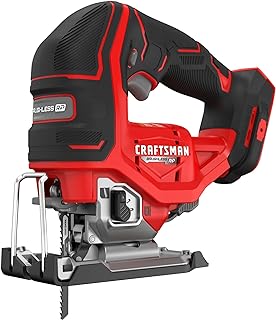
Choosing a Craftsman cordless jigsaw is about more than comparing advertised cutting speed or battery voltage. The best model for a particular project depends on the type of material being cut, required cutting depth, blade compatibility, battery platform, visibility of the cut line, control at low speeds, and the amount of work expected from the tool. A compact jigsaw may be ideal for occasional household projects, while a more capable model can make more sense for renovation work, cabinetry, flooring, woodworking, and repeated cuts.
For Canadian buyers, it is also worth considering the availability of compatible batteries, chargers, replacement blades and accessories. A cordless tool can be an excellent choice for portability, but the total cost of ownership depends partly on whether the battery and charger are already part of your existing tool collection.
Battery voltage is useful as a broad indication of a cordless tool's platform, but it should not be treated as a direct measurement of cutting performance. Motor design, electronics, gearing, blade selection and the condition of the battery can all affect how a jigsaw behaves under load.
If you already own compatible Craftsman cordless tools, a bare-tool jigsaw can potentially be a more economical addition than purchasing another battery and charger. Before ordering, confirm exactly what is included in the package and make sure the battery platform matches the batteries you already own.
Variable-speed control is particularly valuable when a jigsaw will be used on different materials. A slower setting can provide greater control for delicate work or materials where excessive cutting speed can increase heat and damage, while higher speeds can be useful when productivity is the priority.
The useful feature is not simply having multiple speed settings. Good control allows the user to start a cut gradually, maintain a consistent pace and adjust the cutting action according to the material and blade being used.
Orbital action changes the movement of the blade so that it travels through a more aggressive cutting path. This can increase cutting efficiency in appropriate materials, but maximum orbital action is not automatically the best setting for every job.
When comparing Craftsman jigsaws, pay attention to whether orbital settings are adjustable and how easily the control can be changed.
Maximum cutting depth is one of the most important specifications to verify before buying. A jigsaw designed primarily for thin plywood and craft projects may not be the right choice for consistently cutting thicker lumber.
Do not evaluate cutting capacity in isolation. The practical result also depends on blade length, tooth configuration, material hardness, battery condition and the user's cutting technique. If your projects routinely involve thick stock, compare the manufacturer's published specifications for the exact model rather than relying on a general description of the tool family.
Blade compatibility directly affects the usefulness of a jigsaw. Common jigsaw blade systems can make it easier to source blades for wood, metal, plastics and specialized applications, but compatibility should always be confirmed for the exact tool.
For woodworking, blades with different tooth counts and tooth geometries can produce substantially different results. A coarse blade may prioritize speed, whereas a finer blade may be more appropriate when a cleaner edge is required.
A tool-free blade-change mechanism is a practical convenience for anyone who switches frequently between materials or blade types. It can reduce interruptions during a project and makes changing a worn blade simpler.
When assessing this feature, look beyond the phrase "tool-free." The important questions are whether the mechanism securely holds the blade, whether the blade can be removed easily after extended use, and whether the system accepts the blade types you intend to use.
A jigsaw's ability to keep the cutting line visible can have a major effect on real-world accuracy. The position of the blade, shape of the shoe, lighting around the work area and movement of sawdust can all affect visibility.
Some models incorporate features intended to improve visibility around the blade. Depending on the model, this may include lighting or a design that leaves the cutting area relatively unobstructed. These features are especially useful when following curved or marked lines.
Dust management deserves similar attention. Sawdust can obscure a pencil line and reduce visibility while cutting. If a model supports dust extraction, determine whether that capability fits your existing workshop vacuum and accessories. A dust-extraction connection is useful only if it works with equipment you actually intend to use.
The shoe, or base plate, supports the jigsaw against the workpiece. A stable shoe helps maintain a consistent cutting angle and can make long cuts easier to control.
Look for a shoe that remains secure during use and provides enough surface area for the materials you commonly cut. A beveling shoe can also be useful for angled cuts, but check the available adjustment range and locking mechanism rather than assuming that every jigsaw provides the same capability.
Bevel capability is valuable for projects involving angled edges, trim, joinery and certain woodworking applications. Before buying, check how the bevel is adjusted and whether the selected angle can be locked securely.
If most of your projects involve straightforward 90-degree cuts, bevel capability may be less important than ergonomics, visibility and speed control. Buyers should prioritize features according to actual use rather than paying more for specifications they are unlikely to use.
Jigsaws are often used with the tool held directly over the cutting area, so balance and grip can be more important than a specification sheet suggests. A tool that feels manageable during a short test can feel very different after repeated cuts.
Consider the placement of the trigger or switch, grip shape, location of speed controls and balance between the battery, motor and shoe. If the battery sits prominently behind the handle, it can affect how the tool feels during curved cuts.
Wood is one of the most common materials for a cordless jigsaw. However, "wood cutting" encompasses everything from thin plywood and laminate to hardwood boards and construction lumber.
For thin sheet material, control and blade selection can matter more than maximum power. For thicker lumber, sustained cutting ability and an appropriate blade become more significant. A coarse blade can remove material quickly, while a finer blade can be better suited to work where the appearance of the cut matters.
When cutting finished surfaces, consider whether the blade's tooth orientation is appropriate for the visible face of the material. A blade designed to reduce splintering can be particularly useful for plywood, laminate and other materials where edge appearance matters.
Some jigsaws can cut metal when paired with an appropriate metal-cutting blade, but this is a different application from cutting wood. Metal-cutting blades generally require different tooth configurations and a more controlled cutting approach.
Check the manufacturer's specifications before using a particular Craftsman jigsaw for metal. Thickness limits, material type and blade requirements can differ substantially. Never select a metal blade simply because its packaging says it fits a jigsaw; the tool and blade must both be suitable for the intended material.
Jigsaws can be useful for certain plastics, laminate products and composite sheet materials when the correct blade and speed are used. Excessive speed can generate heat, potentially affecting the edge or material.
When cutting unfamiliar material, check the material manufacturer's recommendations and the jigsaw manufacturer's operating guidance. Test cuts on scrap material are often useful for determining whether the selected blade and speed produce the desired finish.
It is easy to focus on the jigsaw itself while overlooking the component that actually contacts the material: the blade. Blade geometry, tooth count, tooth orientation, material and length can all change the cutting experience.
Brands such as Bosch, DEWALT and Milwaukee offer broad selections of jigsaw blades, while Craftsman users should verify that the blade's shank and specifications are compatible with the selected saw.
Craftsman is not the only brand worth considering when shopping for a cordless jigsaw in Canada. The right comparison depends heavily on whether you are already invested in a battery ecosystem.
DEWALT has a large cordless tool ecosystem and is widely considered by buyers who want to build around a single battery platform. Craftsman may be more attractive to someone who already owns compatible Craftsman equipment or is looking for a tool suited to general household and workshop applications.
Milwaukee's cordless lineup is another major alternative, particularly for users building a broader professional-oriented battery system. When comparing Milwaukee and Craftsman jigsaws, look beyond the saw itself and consider the cost and availability of compatible batteries, chargers and accessories.
Bosch is particularly relevant when blade selection, woodworking applications and jigsaw-specific features are central to the buying decision. A buyer choosing between Bosch and Craftsman should compare the exact models rather than making a decision solely from brand reputation.
Ryobi is another strong consideration for Canadian DIY users because of its broad cordless ecosystem. If you already own batteries from either platform, staying within that ecosystem can simplify charging and battery management.
Motor technology is another specification that deserves careful interpretation. Brushless motors eliminate traditional motor brushes and can offer advantages in efficiency, durability and electronic control. However, brushless construction alone does not guarantee that one jigsaw will outperform every brushed competitor in every application.
If a cordless jigsaw will be used frequently, compare motor type alongside ergonomics, cutting capacity, controls, warranty terms supplied by the manufacturer, battery compatibility and overall tool specifications.
There is no single runtime figure that applies to every cutting job. Runtime varies with material, thickness, blade type, cutting speed, orbital setting, battery capacity and user technique.
A larger-capacity battery can provide more stored energy, but it may also add weight. For occasional household jobs, a smaller battery may be more convenient. For extended workshop use, additional battery capacity can reduce interruptions.
Rather than selecting a battery solely because it has the highest capacity, consider the balance between runtime and handling comfort. If you already have several compatible batteries, purchasing the bare tool may also make more sense than duplicating batteries and chargers.
Any power saw can generate significant noise and vibration. Comfort should therefore be considered alongside cutting performance, particularly for longer projects.
Use appropriate hearing protection and follow the manufacturer's safety guidance. Maintain a secure grip without forcing the saw through the material. Excessive pressure can reduce control and may work against the cutting action of the blade.
The cheapest jigsaw may not be the best value if it lacks the battery compatibility, cutting capacity, controls or accessories you actually need. Compare the complete setup required for your projects rather than comparing tool prices alone.
A bare tool may appear inexpensive until the cost of a compatible battery and charger is added. Conversely, a kit can be unnecessary if you already own compatible batteries.
Cut quality depends on blade selection, speed, feed pressure, material support and technique. More aggressive cutting action can be useful for productivity but may be inappropriate for delicate finish work.
A high-quality jigsaw with an unsuitable blade can still produce poor results. Always match the blade to the material and desired finish.
Check the published cutting capacity for the material you intend to cut. Do not assume that a compact cordless jigsaw can comfortably handle every thickness of wood.
Two listings for the same general tool may differ in included batteries, chargers, blades or other accessories. Read the exact package contents before comparing prices.
A structured comparison makes it easier to identify meaningful differences between similar models.
Even a capable cordless jigsaw can produce rough edges if the workpiece is unsupported or the blade is poorly matched. Start by securing the material firmly. Mark the cutting line clearly and support the workpiece so that the off-cut does not pinch the blade near the end of the cut.
Allow the saw to do the cutting rather than forcing it through the material. Excessive forward pressure can cause the blade to deflect, which may result in a cut that is not square or does not follow the intended line.
For visible edges, select a blade designed for the desired finish and perform a test cut when practical. When working with expensive sheet goods or finished materials, a scrap test can reveal potential splintering before the final cut is made.
Curved cutting is one of the areas where a jigsaw has an advantage over many other portable saws. Accuracy depends on controlling the tool rather than trying to force the blade around a curve too quickly.
Routine maintenance can help preserve cutting performance and reduce avoidable problems. Remove accumulated sawdust from the tool after use, particularly around ventilation openings, the blade area and moving components. Follow the manufacturer's cleaning instructions and do not use cleaning methods that could damage electrical components.
Inspect blades regularly. A dull or damaged blade can increase cutting effort and make the tool appear less capable than it actually is. Replace blades when they become worn rather than compensating with excessive pressure.
Battery maintenance should follow Craftsman's current instructions for the specific battery platform. Store batteries appropriately and inspect them for visible damage before use.
Read the manufacturer's instructions before operating a new jigsaw. Wear suitable eye protection, keep hands away from the blade path and secure the workpiece before cutting.
Allow the blade to stop before setting the tool down. Remove the battery when changing blades or performing maintenance if the manufacturer's instructions call for it. Keep the cutting area clear of hidden nails, screws and other objects that could damage the blade or create a hazard.
For electrical materials, pipes, walls or renovation work, verify that the cutting area is free from hidden utilities before making a cut. A cordless tool does not eliminate the risks associated with cutting into concealed wiring or plumbing.
Product listings can change over time, so buyers should verify the current information immediately before purchasing. Check the exact model number, package configuration and whether the displayed product is a bare tool or a kit.
A Craftsman cordless jigsaw can be particularly useful for DIY users who need a portable saw for curved cuts, openings, trim work, plywood, dimensional lumber within the tool's rated capacity and other applications suited to jigsaws.
It can also complement a circular saw or table saw. A circular saw is generally more convenient for long straight cuts, while a jigsaw offers greater flexibility for curves, cut-outs and irregular shapes. For a workshop, choosing both tools can provide broader cutting capability than expecting one saw to handle every task.
Cordless convenience is not automatically superior. If your work consists of long cutting sessions in a workshop where power is readily available, a corded jigsaw can eliminate concerns about battery runtime and charging.
A cordless model becomes particularly attractive when portability, outdoor work, construction-site mobility or freedom from extension cords matters. The best choice depends on the environment in which the tool will actually be used.
A jigsaw is versatile, but it is not the ideal solution for every cut. For long, repeated straight cuts through sheet goods, a circular saw with an appropriate guide may be more efficient. For highly precise repetitive woodworking cuts, other saw types may provide better consistency. For very thick stock, a jigsaw may also be outside its practical range.
The goal is not to find a jigsaw that can theoretically perform every possible task. Instead, choose a model that matches the majority of your actual cutting requirements and use the appropriate saw for specialized applications.
A useful buying decision separates essential features from attractive extras. If your work consists primarily of occasional DIY projects, basic variable-speed control, suitable cutting capacity, dependable blade retention and comfortable handling may be enough.
Frequent users may place greater value on brushless motor technology, advanced speed control, multiple orbital settings, improved visibility, more substantial battery options and stronger compatibility with a broader cordless tool system.
There is no universal "best" configuration. The strongest value is the model whose capabilities align closely with the work you expect to perform.
Customer reviews can be useful, but they should be evaluated for relevance. A review from someone cutting thin craft material does not necessarily tell you how the same tool performs on thick hardwood.
The best model depends on the intended application, budget and existing battery platform. Compare cutting capacity, motor design, speed control, orbital settings, ergonomics, blade compatibility and package contents before choosing.
They can be suitable for many DIY applications, including curved cuts, plywood, lumber within the rated capacity, trim work and cut-outs. The appropriate model should be selected according to the material thickness and type of work involved.
A bare tool can make sense when you already own compatible batteries and a charger. A kit may be more practical for someone starting a cordless platform. Compare the total cost of the complete setup rather than the advertised tool price alone.
Brushless models can offer advantages in efficiency, motor design and electronic control. Whether those benefits justify a higher purchase cost depends on how frequently the tool will be used and which other features are included.
A suitable model and blade can be used for hardwood when the material thickness is within the manufacturer's specifications. Use an appropriate blade, avoid excessive feed pressure and make sure the workpiece is securely supported.
Some jigsaws can cut suitable metal materials when equipped with the correct blade and operated according to the manufacturer's instructions. Verify the exact model's specifications and the blade manufacturer's requirements before attempting metal cutting.
Orbital action can increase cutting aggressiveness and speed in suitable applications. It is most useful when adjustable because delicate work may benefit from a less aggressive setting.
Battery capacity affects available runtime, but larger batteries can add weight. Choose capacity according to the duration of your typical work and whether you prioritize minimum interruptions or lighter handling.
A jigsaw can complement a circular saw because it is better suited to many curved cuts, irregular shapes and interior cut-outs. The two tools serve different purposes and can work well together.
Match the blade to the material and desired finish. Consider tooth count, tooth geometry, blade material, cutting direction and the manufacturer's stated application.
No. A more expensive model may provide additional features that are valuable to frequent users but unnecessary for occasional DIY work. Compare the specifications that directly affect your projects rather than price alone.
The best Craftsman cordless jigsaw for a Canadian buyer in 2026 is the one that fits the user's materials, cutting requirements, battery ecosystem and working style. Rather than selecting a model solely because it has the highest advertised specification, compare the exact cutting capacity, motor type, speed control, orbital action, blade system, ergonomics, battery requirements and package contents.
For occasional DIY work, practicality and value may be the priority. For frequent woodworking or renovation projects, advanced control, brushless motor technology, battery capacity and long-term usability may deserve greater weight. Before purchasing, verify current specifications and package contents, compare current Canadian pricing, and use recent verified customer feedback as an additional source of information.