
♥ Wishlist
We analyzed 30 of the most popular Makita Power Tool Combo Kits available in ca. Compare features, customer reviews, ratings, and expert recommendations to help you choose the best option in 2026.


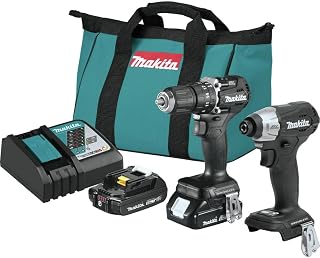

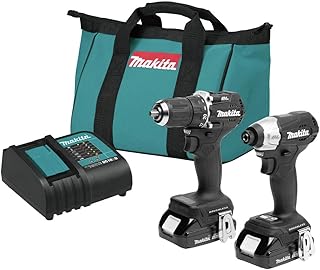
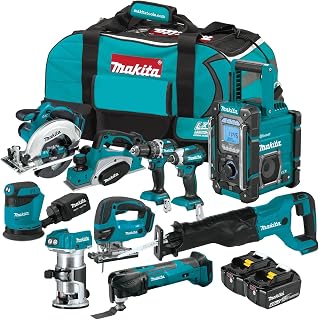
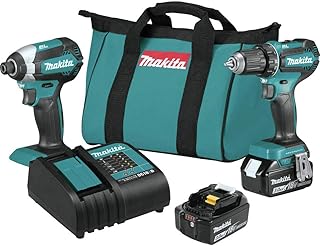


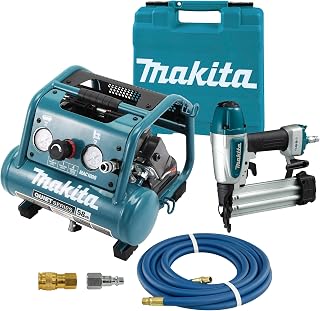


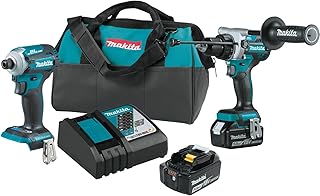


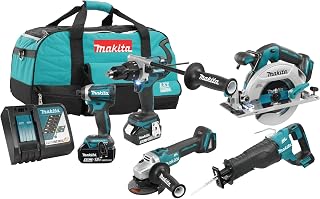


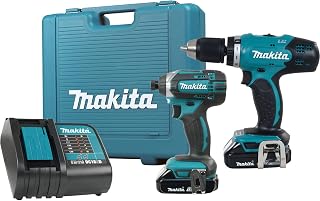
A Makita combo kit can be an efficient way to establish or expand a cordless tool collection, but the number of tools in the box should not be the only deciding factor. A six-tool kit is not automatically a better purchase than a four-tool kit, and a larger battery pack does not necessarily make every kit the best choice for a particular project. The right combination depends on the tools you actually use, the battery platform you want to build around, the type of work you perform, and the conditions in which those tools will operate.
For Canadian buyers, it is also important to verify the exact kit model and included accessories before ordering. Makita Canada lists different combinations under similar 18V LXT categories, with differences in tool generations, brushless motors, battery capacity, chargers, cases and included accessories. For example, current Canadian listings include six-tool and seven-tool LXT combinations alongside smaller two-tool kits.
The most useful approach is to compare the complete package rather than simply counting tools. Look at the individual model numbers, battery capacity, charger type, motor technology, cutting tools, drilling capability, included storage and the long-term usefulness of the platform.
One of the first decisions is the battery platform. Makita's 18V LXT system is a mature cordless platform with a broad selection of compatible tools. It is particularly attractive when you want to build a versatile collection around one battery family. Many Makita combo kits available through the Canadian market use this platform.
The 40Vmax XGT system targets applications where higher-performance cordless equipment is appropriate. It should not be selected simply because the voltage number is larger. Tool design, motor efficiency, battery technology, application requirements and overall system compatibility all matter.
For many homeowners, tradespeople and serious DIY users, platform continuity can be more valuable than choosing a kit with the largest number of tools. A smaller kit that establishes a useful battery ecosystem may provide better long-term value than a larger package containing several tools you rarely use.
Brushless technology is an important comparison point when evaluating Makita cordless tools. A brushless motor eliminates conventional carbon brushes and is designed to operate efficiently through electronic motor control. This can contribute to improved efficiency, reduced maintenance requirements and strong performance in demanding applications.
Not every tool in every Makita combo kit necessarily uses the same motor technology. Some established LXT packages contain a mixture of brushless and non-brushless tools. Makita Canada's current listings demonstrate this variation. The DLX6071PT, for example, includes several brushless tools, while other LXT packages use different tool generations and configurations.
When comparing two kits, inspect each tool rather than assuming that the entire package has identical motor technology. If the drill, impact driver, circular saw and grinder are your most frequently used tools, brushless versions of those tools may deserve greater priority than a larger kit containing older motor designs.
Battery capacity is expressed in ampere-hours, commonly abbreviated as Ah. In simple terms, a higher Ah rating generally means more stored energy and potentially longer runtime under comparable conditions. It also normally means additional battery weight and size.
For a combo kit, battery selection should be evaluated according to the tools included. A compact battery can be convenient on an impact driver or drill, while a higher-capacity battery can be useful for tools that consume more energy during prolonged cutting or grinding work.
Makita Canada's current Canadian listings include kits with two 4.0Ah batteries and kits with two 5.0Ah batteries, demonstrating why battery capacity should be considered separately from tool count.
Do not compare battery Ah alone. A kit with three smaller batteries may be more useful for a particular workflow than a kit with two larger batteries, while another buyer may prefer fewer high-capacity packs. Charger speed and the number of batteries supplied can be equally important.
Combo kits commonly range from compact two-tool packages to much larger sets. The ideal number depends on the work you perform.
A two-tool kit is often a practical starting point. A drill-driver paired with an impact driver covers many fastening and drilling tasks. Makita Canada lists two-tool LXT combinations containing a drill-driver, impact driver, two batteries and a charger.
This format can make sense for homeowners, installers, furniture builders and DIY users who already own cutting tools or only need basic cordless equipment.
A four-tool package can expand the collection into cutting work. A typical combination may include a drill-driver, impact driver, circular saw and reciprocating saw. This type of arrangement covers a wider range of renovation, framing and general construction tasks without becoming excessively large.
Makita Canada's DLX4055S is an example of a four-tool LXT configuration containing a hammer drill/driver, impact driver, circular saw and reciprocating saw, along with two batteries, a charger and a tool bag.
Six-tool kits can be attractive when you want a more complete collection in one purchase. Depending on the configuration, the additional tools may include an angle grinder, jigsaw, reciprocating saw or rotary hammer.
Makita's Canadian listings include six-tool configurations containing combinations such as a hammer drill-driver, impact driver, angle grinder, reciprocating saw, circular saw and jigsaw.
Larger kits can be useful for professional users who routinely need multiple tool categories. However, they require more careful comparison because the extra tools can increase the overall cost without necessarily improving value for every buyer.
A seven-tool LXT package listed by Makita Canada includes brushless versions of several core tools and adds a rotary hammer and LED flashlight to the main drilling, driving, cutting and grinding selection.
When comparing the best Makita power tool combo kits, identify which tools have genuine value for your work. A kit containing eight tools may look impressive, but unused tools are effectively paying for storage space rather than productivity.
The drill-driver is one of the most versatile tools in a cordless collection. Look for appropriate chuck size, speed settings, torque control, hammer functionality if required, ergonomic design and brushless technology where applicable.
A hammer drill-driver is particularly useful when drilling into masonry is part of your workload. However, users who regularly drill concrete should compare the kit's hammer drill with a dedicated SDS rotary hammer rather than assuming that every hammer drill can replace one.
An impact driver is designed primarily for fastening applications. It can make repetitive screw driving more efficient and is particularly useful for construction, decking, framing, cabinetry and general installation work.
Consider the driver's speed and control characteristics rather than focusing only on maximum torque. Excessive power can make delicate fastening more difficult if the tool lacks suitable control settings.
A cordless circular saw can be one of the most useful additions to a general-purpose kit. Check blade diameter, cutting capacity, bevel adjustment, visibility of the cutting line, shoe construction and compatibility with the battery platform.
For users who frequently cut sheet goods or dimensional lumber, the circular saw may be one of the most important tools in the entire package.
A reciprocating saw is useful for demolition, rough cutting, plumbing work and cutting through materials where precision is less important than access. It is particularly valuable during renovation projects where old materials must be removed quickly.
Look for stroke characteristics, variable-speed control, blade-change design, vibration management and overall balance.
A jigsaw is more appropriate for curved cuts, cut-outs and detailed work in materials such as wood and certain sheet products. If your projects involve countertop openings, decorative shapes or curved cuts, a jigsaw may provide more value than another general-purpose cutting tool.
An angle grinder expands a combo kit into metalworking, grinding, cutting and surface-preparation applications. Compare disc size, motor technology, switch design, guard adjustment and compatibility with the accessories you intend to use.
Because grinders can produce sparks, dust and high-speed debris, protective equipment and correct operating procedures are essential.
A rotary hammer is a specialist addition that can significantly increase the usefulness of a kit for masonry and concrete work. SDS-PLUS rotary hammers are designed for drilling and related applications that exceed the typical capabilities of a standard drill-driver.
If your work regularly involves concrete anchors, masonry drilling or renovation tasks, a kit containing a rotary hammer can be substantially more useful than one that simply adds another light-duty tool.
One of the easiest mistakes is comparing combo kits by their marketing names instead of their individual tool model numbers. Two packages can both be described as six-tool kits while containing different drills, impact drivers, saws, batteries and chargers.
Makita Canada's catalogue demonstrates that several LXT combinations exist with overlapping tool categories but different individual model numbers and configurations.
Before purchasing, make a simple checklist:
A combo kit should be evaluated as a complete charging system. Having several cordless tools but only one battery can create interruptions during demanding projects. Two batteries can be much more practical because one can be charging while the other is in use.
Charger type also matters. Some Makita kits are supplied with rapid chargers, while other configurations use different charger arrangements. For example, several Canadian LXT listings specify the DC18RC rapid charger, while other packages have different charging configurations.
If you already own compatible Makita batteries and a charger, a tool-only or differently configured kit may sometimes make more sense than paying for duplicate charging equipment. Conversely, someone starting from zero should place greater importance on a complete battery-and-charger package.
Specifications are only part of the buying decision. A tool can have strong performance characteristics but still be inconvenient if it is poorly balanced for your particular work.
Consider where you normally use the tools. Overhead drilling, ladder work, cabinet installation and prolonged fastening can make weight and balance especially important. A compact impact driver may be easier to control in confined spaces, while a larger battery may provide longer runtime at the cost of additional weight.
Canadian users may encounter substantial temperature differences depending on region and season. Cordless lithium-ion batteries can behave differently in cold conditions, so storage and operating practices should follow the battery and tool manufacturer's instructions.
For outdoor work, also consider dust and moisture exposure. Features such as protection against dust and water ingress can be useful, but no protective rating should be interpreted as permission to use a cordless tool outside its stated operating conditions.
For winter work, avoid making assumptions about battery performance based solely on the Ah rating. Temperature, load, battery condition, tool design and operating conditions all influence real-world runtime.
A large combo kit needs an equally practical storage solution. Some Makita packages include tool bags, while larger configurations may use wheeled storage. Canadian buyers should consider how the tools will be transported between a workshop, garage, vehicle and job site.
A compact kit can be easier to organize, while a large package can reduce the need for separate purchases. Check whether the supplied storage is suitable for the number of tools and batteries included.
For professionals, storage can affect productivity. Tools that are difficult to organize are more likely to be left behind, misplaced or stored without adequate protection.
More tools do not automatically mean better value. Prioritize the tools that correspond to your actual projects.
A kit can look attractive because of its tool count while providing batteries that are less suitable for prolonged heavy use. Always compare battery quantity and Ah rating.
Do not infer motor technology from the brand or battery platform. Check the specifications of every tool included.
If you already own a compatible drill, impact driver or saw, another similar tool may provide little additional value. A more specialized kit could make better sense.
A tool-only package can be useful for existing Makita users but inconvenient for someone building a system from scratch. Confirm whether the batteries and charger are included.
The lowest advertised price does not necessarily represent the lowest overall cost. Compare the number of batteries, charger, storage and individual tool models before deciding.
These tools serve different purposes. A hammer drill can be suitable for certain masonry tasks, while a rotary hammer is designed for more demanding drilling and related concrete applications.
When two packages appear similar, use a consistent comparison process. Start with the tools you need most, then compare battery capacity, charger, motor technology and storage.
A compact two- or four-tool kit is often sufficient for routine maintenance, furniture assembly, repairs and occasional renovation work. A drill-driver and impact driver provide a strong foundation, while a circular saw and reciprocating saw can extend the system for larger projects.
DIY renovators can benefit from a more comprehensive combination. A drill-driver, impact driver, circular saw, reciprocating saw and grinder cover many common renovation tasks. A rotary hammer becomes more valuable when concrete or masonry is frequently involved.
Woodworkers should pay particular attention to the drill-driver, impact driver, circular saw and jigsaw. Ergonomics, control, cutting accuracy and battery weight may matter more than having demolition-oriented tools in the same package.
Professionals should prioritize durability, runtime, charging efficiency, ergonomics and the tools used every day. A larger brushless kit can make sense when the included tools directly match the user's trade.
A larger package may reduce the number of separate initial purchases. However, contractors should still examine whether the kit contains the exact professional-grade tools they need rather than treating tool count as the main measure of value.
Makita is part of a highly competitive cordless-tool market. Depending on the buyer's existing battery platform and preferred tool ecosystem, it can also be useful to compare equivalent combo-kit categories from brands such as DeWalt, Milwaukee, Bosch, Metabo HPT and Ryobi.
The goal is not to choose a brand based solely on reputation. Compare the complete ecosystem, including compatible tools, battery costs, charger options, ergonomics, warranty terms, local retailer support and the availability of the specific equipment required for your work.
For someone already invested in Makita batteries, staying with Makita can provide a straightforward ecosystem strategy. A new buyer without existing cordless tools has more freedom to compare platforms before committing.
Buying individual tools can sometimes be more economical. This is especially true when you need only one or two specialized tools or already own compatible batteries and chargers.
A combo kit may also be a poor fit when several included tools would remain unused. For example, a homeowner who only needs a drill-driver and impact driver may not benefit from paying extra for a reciprocating saw, grinder, jigsaw and rotary hammer.
On the other hand, if you expect your projects to expand, a well-selected kit can provide a useful foundation and reduce the need to purchase several tools separately.
Long-term value involves more than the initial purchase price. Consider how frequently you will use each tool, whether the battery platform supports future purchases, and whether the included tools match the type of work you expect to perform over several years.
Product pages and retailer listings can change. Kit contents may also differ between regions or between similar model numbers. Always review the current listing before completing a purchase.
Makita continues to offer multiple generations and configurations within its cordless ecosystem. Canadian buyers should therefore avoid relying on photographs alone. The model number is the most useful starting point for confirming what is actually included.
Current Makita Canada listings illustrate the variety available. The Canadian catalogue includes two-tool, four-tool, six-tool, seven-tool and nine-tool configurations, with differences in batteries, tool models and accessories.
This is particularly important when shopping through third-party retailers or marketplaces, where product titles can be abbreviated or reused across different regional configurations.
Proper maintenance can help keep cordless tools ready for work. Follow the manufacturer's instructions for each tool and battery rather than applying the same cleaning or storage method to every product.
Every tool in a combo kit has different hazards. A drill, impact driver, circular saw, grinder and reciprocating saw should not be treated as interchangeable equipment from a safety perspective.
Use the personal protective equipment specified for the task, including appropriate eye and hearing protection where required. Cutting and grinding operations may create debris, sparks or dust, while drilling can generate airborne particles. Follow the manufacturer's operating instructions and use accessories appropriate for the tool.
Before changing blades, discs, bits or other accessories, follow the tool manufacturer's procedure for making the equipment safe. Remove or isolate the battery as instructed before performing maintenance or accessory changes.
They can be worthwhile when the kit contains tools you genuinely need and provides a battery and charger configuration that matches your workload. Compare individual tool models and package contents rather than choosing solely by tool count.
For many general drilling, fastening, cutting and renovation tasks, an 18V LXT kit can provide a versatile foundation. The appropriate configuration depends on the materials and applications involved.
Brushless tools can be attractive for frequent or demanding use because of their electronic motor design and efficiency characteristics. However, compare the complete kit rather than assuming every tool in a package has the same motor technology.
Not necessarily. A two-tool kit can be the better choice when drilling and fastening are your main requirements. A six-tool kit makes more sense when you will regularly use the additional cutting, grinding or other specialist tools.
Choose battery capacity according to the workload. Smaller packs can reduce weight, while higher-capacity packs can provide more stored energy. Compare battery count, capacity and charger configuration together.
No. Battery compatibility depends on the specific Makita platform and tool. Check the manufacturer's compatibility information before assuming that a battery will work with a particular product.
No. LXT and XGT are separate cordless platforms. Buyers should identify the platform before purchasing batteries, chargers or additional tools.
If you regularly drill concrete or masonry, a rotary hammer can be valuable. If your projects rarely involve those materials, a kit with more general-purpose tools may offer better practical value.
Check the exact kit number, individual tool models, battery quantity and capacity, charger, storage, platform and current specifications. Also verify the current Canadian listing because package contents can vary between models and markets.
Write down the three or four tools you need most, then compare the exact model numbers and battery configuration of each candidate. This prevents the tool count or product photograph from becoming the main deciding factor.
Before choosing from the best Makita power tool combo kits available in Canada, use the following checklist to narrow the options:
The strongest Makita combo kit is ultimately the one that matches the buyer's actual workflow. A homeowner may prefer a compact two- or four-tool package, while a contractor may benefit from a larger brushless kit with multiple batteries and specialized equipment. By comparing the platform, individual tools, battery system, charger, ergonomics and long-term usefulness together, Canadian buyers can make a more informed decision instead of choosing solely by tool count.