

♥ Wishlist
We analyzed 21 of the most popular Best Cordless Routers for Canadian Woodworking Projects available in ca. Compare features, customer reviews, ratings, and expert recommendations to help you choose the best option in 2026.
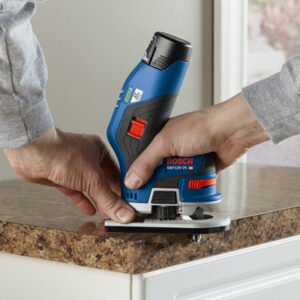
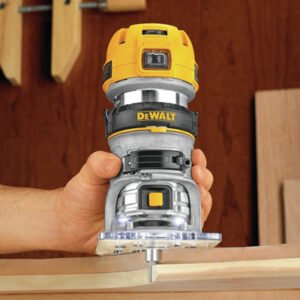
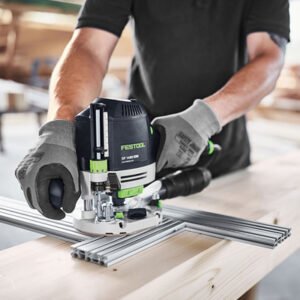
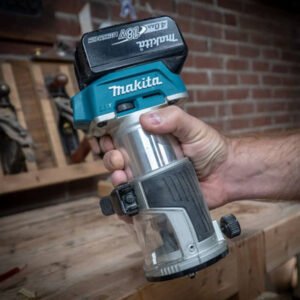
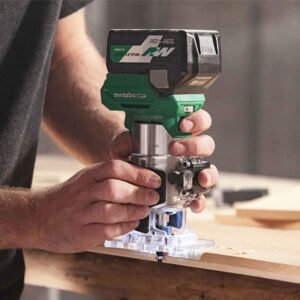
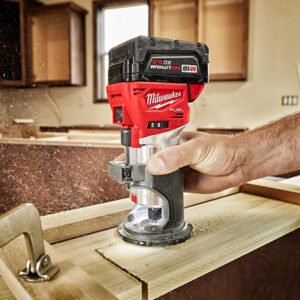


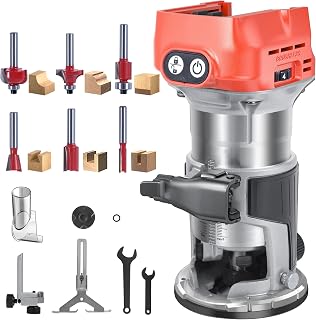


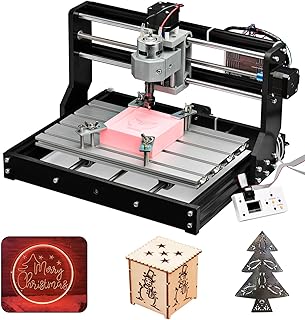
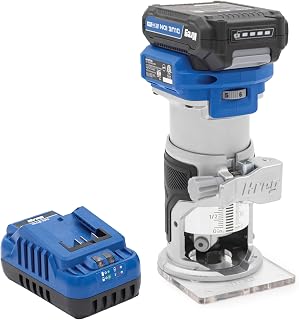
A cordless router can be one of the most useful additions to a woodworking tool collection, particularly when portability, quick setup and freedom from an extension cord matter. The right model can handle tasks such as trimming laminate, rounding edges, cutting shallow grooves, flush-trimming workpieces and producing decorative profiles. However, cordless routers differ substantially in motor behaviour, battery platform, ergonomics, adjustment systems and accessory compatibility.
For Canadian buyers, the best cordless router is not necessarily the model with the highest advertised power. A better choice depends on the type of work, material, cutter size, desired finish, battery ecosystem and amount of routing you expect to do. A compact trim router may be ideal for cabinetry and edge work, while a more substantial model may make more sense for demanding woodworking applications.
A well-designed cordless router should combine controllable power with precise depth adjustment and a stable base. Because routing involves a rapidly rotating cutter, control is generally more important than simply choosing the most powerful-looking specification.
One of the most important decisions is whether you actually need a compact trim router or a larger router. Many products marketed as cordless routers are designed primarily for trimming and light to moderate routing rather than heavy stock removal.
Compact models are generally easier to manoeuvre around cabinet edges, small workpieces and narrow areas. They are particularly useful for flush trimming, rounding over edges, chamfering and other detail work. Their relatively small footprint can also make it easier to see the cutter and the intended cutting path.
The trade-off is that compact routers may be less suitable for prolonged heavy cuts, large-diameter bits or applications that demand substantial material removal. Buyers should therefore avoid assuming that every cordless trim router is a substitute for a large plunge or fixed-base router.
A larger cordless router can offer greater capacity and may be preferable for more demanding woodworking. Depending on the design, it may support a broader range of routing operations and provide a more substantial base for controlling larger workpieces.
The additional size and weight can become noticeable during extended edge-routing sessions. If most of your work involves small cabinet components or occasional edge profiles, a compact model may be more practical.
Battery compatibility is one of the strongest reasons to choose one cordless router over another. If you already own compatible batteries and a charger, purchasing a bare-tool router from the same platform can be more economical than starting a completely new battery system.
Popular cordless tool ecosystems from manufacturers such as DeWalt, Makita, Milwaukee, Bosch and Ryobi offer different combinations of batteries, chargers and tools. Compatibility is not interchangeable simply because batteries have similar voltage labels, so buyers should verify the exact battery family supported by the router.
A bare tool can be attractive when you already have several batteries. If you are entering a battery ecosystem for the first time, compare the cost and availability of the router, batteries and charger together rather than evaluating the tool alone.
It is tempting to compare cordless routers primarily by battery voltage, but voltage by itself does not tell you how effectively a router will perform. Motor design, electronic controls, cutter selection, material, cutting depth, feed rate and battery condition all influence real-world performance.
A higher-voltage platform can provide a useful foundation for demanding cordless tools, but that does not automatically make every higher-voltage router the better choice. For many edge-routing jobs, control, balance and precision can matter more than maximum output.
Variable speed gives the operator more control over how quickly the cutter rotates. Different router bits and materials can call for different operating speeds, and larger-diameter cutters generally require careful speed selection.
For a buyer who expects to use several bit sizes, variable speed can make a router considerably more versatile. A single-speed compact router may still be perfectly suitable for straightforward trim work, but it provides fewer options when applications become more varied.
Routing is not simply a matter of running the cutter as fast as possible. Cutter diameter, material and manufacturer guidance should be considered together. Excessive speed can be inappropriate for certain cutters or materials, while an unsuitable feed rate can produce poor results even when the router itself is capable.
Depth adjustment deserves close attention when comparing cordless routers. A router that allows fine, repeatable adjustments is easier to use for joinery, decorative profiles and controlled edge work.
Look for an adjustment mechanism that can be locked securely and adjusted without unnecessary movement. A coarse adjustment may be sufficient for simple trimming, whereas fine adjustment becomes more valuable when the difference between a good result and an imperfect result is only a small change in cutting depth.
Not every cordless router is designed for the same routing technique. Fixed-base routing is particularly common with compact trim routers, while plunge routing requires a mechanism that allows the motor and cutter assembly to move vertically into the workpiece.
If you need to start a cut in the middle of a workpiece rather than at an existing edge, determine whether the selected router and base configuration are designed for that operation. Do not assume that a compact edge router can perform every task associated with a larger plunge router.
The collet determines which router-bit shank sizes can be securely held. Canadian buyers should check the exact collet configuration before purchasing a router, especially if they already own a collection of bits.
Common router-bit shank sizes include 1/4-inch and 1/2-inch configurations, but support varies by model and regional package. A router may be supplied with one collet while offering another configuration only with a compatible accessory or different package.
Never force an incompatible bit into a collet. The bit, collet and router must be designed to work together, and the bit should be inserted and secured according to the manufacturer's instructions.
Brushless motor technology is widely used in modern cordless power tools because electronic motor control can provide useful efficiency and performance characteristics. It can be particularly attractive in battery-powered tools where energy management matters.
That does not mean a brushed router is automatically a poor purchase. The more useful comparison is between the complete tool systems: motor behaviour, battery runtime, adjustment, ergonomics, controls, included bases and intended workload.
Battery runtime varies with the work being performed. Shallow edge trimming places a different load on a router than repeatedly removing substantial amounts of hardwood. Cutter diameter, cutting depth, feed speed, material and operator technique all affect energy consumption.
For occasional jobs, a compact battery may be sufficient. For larger projects, having multiple charged batteries can be more convenient than expecting one battery to complete an entire project.
Buyers should also distinguish between the physical battery capacity and the practical workload of a routing application. A larger battery may increase operating time but can also affect the tool's overall balance and weight.
Routing requires controlled movement, so ergonomics should receive at least as much attention as headline specifications. A router that feels balanced in the hand can be easier to guide along an edge and may reduce fatigue during repetitive work.
Routing produces chips and fine dust, particularly when working with engineered wood products. A suitable dust-extraction setup can help keep the work area cleaner and may improve visibility around the cutter.
When comparing routers, check whether a dust-collection adapter is included, whether it is compatible with your extraction equipment and whether the base design allows practical access to the routing area. A dust port that is technically present but awkward to connect may be less useful than expected.
A router should be treated as a high-speed cutting tool, regardless of whether it is cordless. Buyers should consider features that support controlled operation rather than treating convenience features as substitutes for safe technique.
Always follow the router and cutter manufacturer's safety instructions. Secure the workpiece properly, use appropriate eye and hearing protection, keep hands away from the rotating bit and disconnect the battery before changing accessories or performing maintenance.
Cordless routers can be used with many woodworking materials when the router, cutter and application are appropriate. Common examples include solid wood, plywood, MDF and other wood-based sheet materials. The correct bit and operating technique depend on the material.
Different materials can produce significantly different cutting behaviour. Hardwood can place greater demands on the motor and cutter, while MDF can generate substantial fine dust. Laminated materials may require particular attention to cutter selection and cutting direction to minimise unwanted chipping.
A round-over bit can soften a sharp wooden edge and create a consistent decorative profile. This is one of the applications where a compact cordless router can be especially convenient.
Chamfering removes material at an angle from an edge. The router's stability and depth adjustment become important when you want a uniform result across multiple components.
Flush-trim bits can be used to make one surface follow another, such as trimming an overhanging laminate or template-guided workpiece. Bearing position, cutter condition and stable movement are important considerations.
Grooves and rabbets require greater attention to depth and positioning than simple edge profiling. If this type of joinery is a major part of your work, look beyond compact trim capability and consider whether the router has the capacity and base configuration required.
Even an excellent cordless router cannot compensate for a poor or unsuitable cutter. Bit geometry, sharpness, bearing condition and compatibility with the intended material all influence the finished cut.
For buyers building a new setup, it can be more useful to purchase a smaller selection of appropriate, quality bits than a very large assortment containing profiles that will rarely be used. Manufacturers such as Bosch, Freud and Diablo are among the established names worth considering when comparing compatible routing accessories.
Rather than choosing a router solely from star ratings or a single specification, compare the complete package.
Several established power-tool manufacturers produce cordless routers or related cordless routing systems. The strongest choice depends on the battery ecosystem and application rather than brand recognition alone.
DeWalt is a major cordless power-tool brand with a broad battery ecosystem. Its cordless routing products are worth considering for users who already have compatible DeWalt batteries and chargers. When comparing a DeWalt router, pay particular attention to the included base configuration, collet arrangement and package contents.
Makita has a long-standing presence in woodworking and cordless power tools. Its cordless router options can be particularly relevant to users already invested in the Makita battery platform. Compare ergonomics, adjustment systems and available accessories alongside motor specifications.
Milwaukee's cordless tool ecosystem is another option for buyers who value platform compatibility across a workshop. If considering a Milwaukee router, compare the complete tool-and-battery setup rather than treating the router as an isolated purchase.
Bosch has extensive experience in woodworking tools and routing accessories. Its products and compatible accessories can be worth comparing when precision, cutter compatibility and woodworking versatility are priorities.
Ryobi is particularly relevant to buyers looking for a broad cordless ecosystem across home-improvement and woodworking tasks. Its platform can make sense for users who already own compatible batteries, although the intended workload should still determine which router configuration is appropriate.
Cabinet work often involves repeated edge profiles, laminate trimming, template work and careful fitting. A compact router can be advantageous because it is easy to manoeuvre around cabinet components.
For cabinet making, prioritise precise depth adjustment, good visibility, comfortable handling and reliable cutter control. If the project involves extensive joinery, also determine whether a larger router or plunge configuration would complement the compact router.
DIY users often benefit from versatility rather than maximum power. If the expected workload consists mainly of rounding edges, chamfering, trimming and occasional decorative work, a compact cordless router can provide a convenient solution.
Consider the other tools you already own. A router that uses the same battery platform can reduce the number of chargers and battery families in the workshop and may be more convenient for occasional projects.
Professional users should consider workload, repeatability and serviceability more heavily. A router used frequently needs to remain predictable under repeated operation, and the availability of compatible bases, accessories and batteries can influence long-term practicality.
For demanding production work, compare cordless routing against corded alternatives rather than assuming cordless is automatically superior. Cordless operation offers mobility and convenience, while corded equipment can remain attractive where uninterrupted operation and continuous mains power are more important than portability.
A cordless router eliminates the power cord and can be particularly useful when moving between workstations or working in locations where an electrical outlet is inconvenient. It also reduces the risk of the cord crossing the workpiece or becoming an obstruction during routing.
A corded router, however, does not depend on battery capacity. For extended stationary routing sessions, that can be a meaningful advantage. The better option depends on how the tool will actually be used.
Battery voltage is only one part of the specification. Motor control, cutter selection, depth, material and ergonomics can be equally important.
A bare tool may appear inexpensive until the cost of a compatible battery and charger is considered. Compare the complete setup if you are entering a new battery ecosystem.
A larger router can be useful, but extra size and weight are not automatically advantages for small edge-routing jobs.
Existing router bits may not fit every cordless router. Check the supported shank size before purchasing.
Package contents can vary between tool-only, kit and regional configurations. Confirm exactly which bases, wrenches, guides, batteries and adapters are included with the specific listing.
The battery is part of the tool while you are using it. A large battery can change the balance and overall weight, so consider the complete assembled tool.
Regular maintenance helps keep a router ready for accurate work. Follow the manufacturer's instructions for all maintenance procedures and avoid modifying the tool or using incompatible components.
Clean routing is a combination of equipment, cutter quality and technique. Use a sharp, appropriate bit and avoid forcing the router through the material. Let the cutter remove material at a controlled rate rather than trying to achieve maximum material removal in one aggressive pass.
For deeper cuts, multiple controlled passes can often provide better control than attempting to remove all the material at once. The appropriate depth per pass depends on the router, bit, material and application, so follow the manufacturer's guidance rather than relying on a universal measurement.
The relationship between cutter rotation and feed direction affects how the router behaves. Conventional routing generally provides predictable control when performed correctly, while climb cutting can cause the router to pull itself forward unexpectedly and should only be considered by experienced users in appropriate circumstances.
Secure the workpiece and maintain a firm, controlled grip. When working on an edge, keep the router's base fully supported and avoid allowing the tool to rock as it moves through the cut.
Customer reviews can provide useful information, but they should not be treated as a substitute for specifications or professional judgement. Look for recurring comments about the same characteristic rather than relying on one unusually positive or negative review.
Useful review themes include battery compatibility, ease of depth adjustment, base stability, ergonomics, dust collection, bit visibility and long-term reliability. Reviews that describe the exact application are generally more informative than comments that simply state whether someone likes the tool.
Prioritise simplicity, manageable weight and compatibility with the battery system you already use. A compact router with straightforward depth adjustment can cover many common home woodworking tasks.
Precision and repeatability become more important. Look for a stable base, fine adjustment and a motor capable of maintaining controlled performance through the intended workload.
Visibility, manoeuvrability, edge-trimming capability and accessory compatibility deserve particular attention. A compact router can be especially useful, while a larger plunge router may complement it for other operations.
Battery availability, portability, durability and compatibility with the rest of the cordless tool fleet can be decisive. A contractor may value a platform that allows batteries to be shared across several job-site tools.
Consider whether cordless routing genuinely improves your workflow. A cordless trim router can be an excellent mobile tool even when a corded router remains the preferred option for heavier stationary work.
There is no single cordless router that is best for every Canadian buyer. The right choice depends on the intended routing tasks, battery platform, cutter compatibility, desired precision, ergonomics and budget. Compare the current specifications and package contents of the leading models before deciding.
Many cordless routers are well suited to common woodworking operations, particularly edge profiling and trimming. Whether a specific model is appropriate depends on the material, cutter, cutting depth and workload. Heavy routing may justify a larger router or a corded alternative.
For users who frequently perform edge trimming, rounding, chamfering and similar tasks, a cordless trim router can be highly convenient. Its value increases if it uses batteries you already own.
A bare tool can make sense if you already own compatible batteries and a charger. A kit may be more appropriate if you are starting a new battery platform. Compare the complete cost and included accessories rather than the advertised tool price alone.
The best battery depends on the application. Smaller batteries can reduce weight, while larger batteries may provide longer operating time. The best compromise is the battery that provides suitable runtime without making the router unnecessarily cumbersome.
No. The router must support the bit's shank size and the cutter must be appropriate for the router's operating range and intended application. Check the manufacturer's specifications before using a particular bit.
Some do and some do not. Variable speed is useful when working with different cutter sizes and materials, but it is not a feature found on every compact cordless router.
Brushless technology can offer advantages in modern cordless tools, but motor type alone should not determine the purchase. Compare the entire tool, including performance, controls, battery system, ergonomics, adjustment and intended workload.
It can replace a corded router for some applications, particularly portable trimming and edge work. It may not be the ideal replacement for every demanding or continuous routing task. Many workshops benefit from using each type where it is most suitable.
Prioritise precise depth adjustment, good visibility, comfortable handling, suitable cutter compatibility and easy control. If laminate trimming is a major part of the work, also consider the base design and dust-management options.
There is no universal replacement interval. Inspect bits before use and replace or professionally service them when they become damaged, excessively worn or unsuitable for producing a clean and safe cut.
The best cordless router is the one that matches your actual routing workload rather than the one with the longest specification list. Start by identifying the jobs you perform most often, then narrow the options according to battery platform, router size, collet compatibility, depth adjustment, speed control and ergonomics.
For many users, compatibility with an existing DeWalt, Makita, Milwaukee, Bosch or Ryobi battery system can simplify the decision. For more demanding woodworking, look closely at motor capability, base stability and whether a plunge or larger-router configuration is required. For occasional DIY work, portability and ease of handling may matter more than maximum capacity.
Before purchasing, compare the exact Canadian package, current specifications, included accessories and recent customer feedback. Prices, bundles and availability can change, so check today's retailer listings rather than relying on an old price or package description. An informed comparison of the complete tool system is more useful than choosing a router from its headline specification alone.