

♥ Wishlist
We analyzed 26 of the most popular Dewalt Cordless Routers available in ca. Compare features, customer reviews, ratings, and expert recommendations to help you choose the best option in 2026.





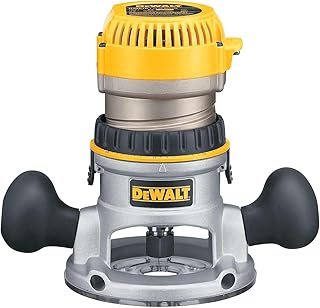


Choosing a DEWALT cordless router is about more than selecting the model with the highest advertised power. The right router should match the type of woodworking you actually do, the router bits you intend to use, the depth and size of your cuts, your preferred battery platform, and the amount of control you need around the workpiece. For Canadian buyers, it is also important to compare the exact kit configuration because a tool-only package may require a compatible battery and charger before it can be used.
DEWALT's current Canadian router range includes cordless compact and plunge-router options alongside corded models. The DCW600B is a 20V MAX XR brushless cordless compact router with variable speed, a fixed base, dual LEDs and electronic control features, while the newer DCW620B is positioned as a 20V MAX XR 2-1/4 Peak HP plunge router.
This distinction matters because a compact cordless router and a full-size plunge router solve different problems. A compact router is convenient for edge profiling, trimming, small dados, hinge work and general light-to-medium routing. A plunge router is better suited to applications where the bit needs to enter the workpiece away from an existing edge, such as mortises, stopped grooves and certain joinery operations.
The best DEWALT cordless router for one Canadian woodworker may be the wrong choice for another. Before comparing individual models, identify the jobs you perform most often.
Start with your typical projects. If you mainly round over edges, create chamfers, flush-trim laminate, cut small grooves or perform general cabinet work, a compact router is often the more convenient format. Its smaller footprint makes it easier to control and move around smaller workpieces.
If your work involves plunge cuts, mortises, stopped grooves or larger routing operations, a plunge router deserves closer attention. A plunge mechanism lets the router start with the bit above the surface and lower it progressively into the material. That capability can make certain operations much easier and more controlled.
For demanding production woodworking, do not automatically assume that cordless is superior to corded. A corded router can still make more sense when maximum sustained power and continuous operation are more important than mobility.
Battery compatibility can have a major effect on the real cost of a cordless router. A tool-only router may look less expensive than a complete kit, but the calculation changes if you do not already own a compatible DEWALT battery and charger.
The DCW600B, for example, is listed by DEWALT Canada as a 20V tool-only cordless router and is supplied with a fixed base and wrench rather than a battery and charger.
For existing DEWALT 20V MAX users, a tool-only configuration can be attractive because it avoids buying duplicate batteries and chargers. For someone entering the platform for the first time, a kit that includes the battery and charger may offer a more practical starting point.
Collet compatibility is one of the most important specifications to check before buying a router. A compact router with a 1/4-inch collet is well suited to many common small and medium router bits. Larger routers may support both 1/4-inch and 1/2-inch collets, giving access to a broader selection of larger-diameter bits.
Do not assume that every DEWALT router accepts the same accessories simply because the tools carry the same brand name. Always verify the collet size, compatible bases, guide bushings, edge guides and other accessories for the exact model you are considering.
The DEWALT DCW600B is one of the most relevant models to examine when shopping specifically for a cordless compact router in Canada. DEWALT lists it as a 20V MAX XR brushless cordless compact router with a fixed base, variable-speed control and dual LED work-area illumination.
The brushless motor is an important part of the DCW600B's design. Brushless technology can provide an efficient motor architecture without traditional motor brushes, making it well suited to modern cordless power-tool platforms.
For a router, however, the motor type should not be the only buying criterion. Cutting performance also depends on the router bit, material, cutting depth, feed rate, battery condition and operator technique. A brushless motor does not remove the need to choose an appropriate bit or make conservative passes through difficult material.
Variable speed is particularly useful when working with different bit diameters and materials. A smaller bit and a larger bit do not necessarily require the same operating speed, and the correct setting can depend on the application.
DEWALT lists a variable-speed dial on the DCW600B and gives a no-load speed range of approximately 16,000 to 25,500 RPM.
The important point for buyers is not simply the maximum RPM. Look for a router that lets you adjust speed appropriately for the bit and application. Following the router-bit manufacturer's speed guidance is more useful than running every bit at maximum speed.
Sudden motor acceleration can make a router harder to control, particularly when beginning a cut. The DCW600B incorporates soft start and full-time electronic feedback according to DEWALT's Canadian product information. The electronic system is designed to help maintain motor speed during cutting, while soft start reduces the abruptness of initial acceleration.
These features are valuable for control, but they should not be treated as substitutes for secure workholding, correct feed direction and proper routing technique.
Dual LEDs can make it easier to see the immediate cutting area, particularly when the router body or workpiece would otherwise create shadows around the bit. DEWALT specifically identifies dual LEDs as a feature of the DCW600B.
Lighting is a convenience feature rather than a replacement for proper workshop illumination. The cutting path should remain clearly visible before and during operation.
Precise depth adjustment is essential for repeatable routing. The DCW600B uses a depth-adjustment ring for height changes.
When comparing routers, look beyond the existence of a depth adjustment mechanism. Consider how quickly it can be adjusted, whether the setting remains secure, how easily the measurement can be repeated and whether the base provides enough stability during the cut.
Canadian buyers should also distinguish the DCW600B from the DEWALT DCW620B. DEWALT's current Canadian router catalogue lists the DCW620B as a 20V MAX XR 2-1/4 Peak HP plunge router, placing it in a different class from the compact DCW600B.
A plunge router is designed around controlled vertical movement. That makes the format useful for jobs where the bit needs to begin cutting inside the workpiece rather than at an outside edge.
A plunge router can also be more versatile when used with appropriate accessories, but that versatility often comes with additional size and weight. If most of your work consists of simple edge profiles, buying a larger plunge router may be unnecessary.
The answer depends on your projects rather than the product category alone.
DEWALT's Canadian catalogue continues to include corded routers such as the DW618 alongside its cordless models.
A cordless tool is not automatically the best tool. Corded routers remain relevant for woodworkers who routinely perform demanding cuts for long periods.
The DEWALT DW618, for example, is a 12-amp corded router with electronic variable speed and a stated operating range of 8,000 to 24,000 RPM. DEWALT also lists both 1/4-inch and 1/2-inch collets with this model.
This comparison highlights an important buying principle: compare the complete tool system rather than comparing voltage numbers or marketing labels in isolation.
For cordless DEWALT routers, voltage identifies the battery platform, but it should not be used as a complete measure of routing performance. Motor design, electronic control, bit diameter, cutting depth and material all affect the actual result.
No-load RPM tells you how fast the motor spins without cutting material. It does not directly predict cutting performance under load. A router with variable speed provides more flexibility because you can select an appropriate operating range for the job.
Check whether the router accepts 1/4-inch bits, 1/2-inch bits or another configuration. This specification directly affects which router bits you can use.
A fixed base is convenient for edge routing and repeatable depth work. A plunge base provides controlled vertical movement. Some DEWALT router kits combine different bases around a common motor system, which can make a multi-purpose setup attractive to experienced woodworkers. The DW618B3, for example, is listed with fixed, plunge and D-handle bases.
Weight becomes important during extended routing. A heavier router can feel stable during some cuts, but it may also become tiring when used around small workpieces or when routing edges for long periods.
Balance is equally important. A router that sits naturally on the workpiece and allows both hands to maintain control can be easier to manage than a tool that feels top-heavy.
A clear or open base can improve visibility around the cutting area. When comparing models, consider how much of the bit and cutting line remains visible during operation.
An electronic brake can reduce the time required for the spindle to slow after the trigger or switch is released. DEWALT lists an electronic brake on the DCW600B.
Integrated LEDs can improve visibility around the base and bit. This is especially helpful when working inside cabinets, along darker materials or in areas where shadows interfere with the cutting line.
If you regularly switch between routing configurations, a fast and secure base-change mechanism can save time. Check the exact accessories included with the model rather than assuming that every base is included.
Routing produces significant wood dust and chips. Dust collection compatibility is therefore more than a convenience. A suitable extraction setup can help keep the work area cleaner and make the cutting line easier to monitor.
When comparing accessories, check whether the required dust adapter is included or must be purchased separately. Do not assume that an accessory shown in a product photograph is automatically part of the standard package.
Battery selection can affect handling as well as runtime. A larger-capacity battery may provide more energy for longer sessions, but it can also add weight to a compact router.
For detailed routing work, balance can be more important than simply choosing the largest battery available. If the router feels less comfortable because of additional battery weight, the theoretical runtime advantage may not justify the change for short jobs.
Always compare these two configurations separately:
DEWALT lists the DCW600B as tool-only, while the DCK201P1 combo kit includes the DCW600 router together with a compatible battery and charger plus another cordless tool.
The router itself is only one part of the cutting system. Bit quality, profile and diameter can have a substantial effect on the final result.
Round-over bits are commonly used to soften sharp furniture and cabinet edges. Select the radius based on the desired appearance and the thickness of the workpiece.
Chamfer bits create angled edges and can be useful for furniture details, decorative work and edge treatment.
Flush-trim bits are useful when one surface needs to be trimmed to match another. They are particularly valuable for template work and laminate trimming.
Rabbeting bits remove material along an edge to create a recessed step. They can be useful for joinery and panel-related woodworking.
Straight bits are versatile for grooves, dados and general material removal. The required diameter and cutting depth should be matched carefully to the router and application.
Always inspect router bits before use. Damaged, dull or unsuitable bits can compromise cut quality and increase the risk of poor control.
More power is not automatically better. A large router can be unnecessary for small edge-profile work and may be less comfortable than a compact model.
A tool-only price does not represent the complete cost if you do not already own the required battery and charger. Calculate the full setup cost before comparing packages.
Ratings can provide useful context, but they do not replace specification checking. A highly rated router can still be unsuitable if it lacks the collet size, base type or plunge capability required for your projects.
Product photographs can show multiple components while the actual package contains only selected accessories. Confirm the exact included items in the current product specification.
Routing requires controlled movement. A router that feels uncomfortable, unbalanced or difficult to grip can become frustrating even if its specifications look impressive.
If your workshop routinely performs long, demanding routing sessions, a corded model may be worth considering. Cordless convenience is valuable, but it should match the workload.
For a useful comparison, evaluate each candidate using the same criteria. This prevents marketing terminology from dominating the decision.
Cabinet makers often need precise edge profiles, dados, rabbets, hinge-related work and template routing. A compact cordless router can be particularly convenient when moving around assembled cabinets or working away from a fixed bench.
However, the ideal choice depends on the stage of construction. A compact router may be convenient for finishing and edge work, while a larger plunge router can be preferable for certain joinery operations.
For cabinet work, also consider dust collection, bit visibility, depth repeatability and the ability to make multiple consistent passes.
DIY users should prioritize versatility and ease of use rather than specifications designed for professional production environments.
A compact model can be a sensible starting point for homeowners who want to create shelves, furniture edges, decorative profiles and small woodworking projects. If the router will only be used occasionally, purchasing an expensive multi-base system may not be necessary.
On the other hand, someone planning to expand into furniture building, joinery and template work may benefit from buying a more versatile router from the beginning.
Professional users should consider workflow efficiency as carefully as cutting capability. Battery availability, fast adjustments, accessory compatibility, dust extraction and ergonomics can all influence productivity.
A professional comparison should also consider whether the cordless router is being used as a primary production tool or as a mobile complement to a larger corded router. In many workshops, both formats can serve different roles.
A router is a high-speed cutting tool and should be treated accordingly. Read the manufacturer's instruction manual before operation and follow the safety procedures specified for the exact model and accessory combination.
Clean routing is a combination of tool setup, bit quality and technique. Even an excellent cordless router can produce poor results if the bit is dull or the cut is too aggressive.
When significant material must be removed, several controlled passes can be preferable to trying to achieve the entire depth immediately. Smaller passes can make the tool easier to control and can reduce the load placed on the cutting system.
Router direction matters. Moving the tool in the correct direction relative to bit rotation helps maintain control and reduces the tendency of the router to pull itself along the edge.
The router base should remain stable against the workpiece. Tilting the router can change the cutting depth and create uneven profiles, particularly near the end of an edge.
Feeding too quickly can overload the cutter and produce a rough surface. Feeding too slowly can also be undesirable because the bit may spend excessive time cutting the same area. The correct feed rate depends on the bit, material, cutting depth and router.
Routine care can help preserve tool performance and make problems easier to identify.
Do not use compressed air or cleaning methods that could force dust into sensitive areas unless the manufacturer's instructions permit that approach. When servicing is required, use the procedures and service information specified for the exact tool.
Canadian shoppers should verify the current product listing immediately before purchasing because package contents, retailer pricing, availability and promotional offers can change.
DEWALT product names can appear very similar, but the final letter or package designation may indicate a different configuration. Tool-only versions, kits and combination packages can share a core tool while differing in included batteries, chargers or accessories.
For example, the DCW600B is listed as a tool-only product, while the DCK201P1 is a combination package containing a DCW600 router, another cordless tool, a 5.0Ah battery and a fast charger.
Always compare the complete model number rather than purchasing based solely on a shortened product name.
For many woodworkers, the strongest argument for a DEWALT cordless router is flexibility. Removing the power cord can make it easier to work on large benches, job sites, cabinets and partially assembled projects.
The value becomes even more compelling for people who already own compatible DEWALT batteries. In that situation, a tool-only router can integrate into an existing tool ecosystem without requiring another battery platform.
However, cordless does not eliminate the reasons to own a corded router. For continuous heavy routing, larger bits and workshop-based production work, a corded machine may still be the more appropriate solution.
There is no single best model for every Canadian buyer. A compact model such as the DCW600B is aimed at general compact routing and edge work, while the DCW620B belongs to the cordless plunge-router category. The better choice depends on the type of cuts, material, router bits and depth-control requirements involved in your projects.
Yes. DEWALT identifies the DCW600B as a 20V MAX XR brushless cordless compact router.
The DCW600B is listed by DEWALT Canada as a tool-only product, so the standard configuration does not include a battery and charger. Always verify the package contents of the specific retailer listing before purchasing because separate kits may contain additional components.
DEWALT lists the DCW600B with a no-load speed range of approximately 16,000 to 25,500 RPM and variable-speed control.
Not in every situation. Cordless routers are excellent when portability and freedom from a power cord matter. Corded routers can remain preferable for extended heavy-duty routing and applications where continuous power is the priority.
A compact router can be a practical starting point for beginners because it is useful for many common woodworking operations. However, beginners should learn correct feed direction, bit installation, depth adjustment, workholding and safety procedures before attempting advanced routing.
No. Router-bit compatibility depends on the collet size, bit diameter, recommended operating speed and the capabilities of the specific router. Check the router manual and bit manufacturer's specifications before use.
If you already own compatible DEWALT batteries and a charger, tool-only can be practical. If you do not have the required battery system, compare the total cost of a complete kit against buying the components separately.
Neither is universally better. They are designed for different routing requirements. The DCW600B is a compact cordless router, while the DCW620B is a cordless plunge router. Choose according to the type of work you perform rather than treating the models as direct substitutes.
Yes, cordless routers can be used for appropriate hardwood-routing applications, but the correct bit, cutting depth, speed and feed rate are essential. Difficult materials may require multiple passes rather than aggressive single-pass cuts.
Variable speed can be valuable because different bit sizes and applications may require different operating speeds. It provides greater control than a router with only one fixed speed.
The best DEWALT cordless router is the one that fits your actual workflow. Start with the job rather than the marketing specification. Decide whether you need compact edge-routing convenience or plunge capability. Then check the collet, speed range, depth adjustment, base design, battery requirements, accessories and overall ergonomics.
For buyers already invested in the DEWALT 20V MAX system, cordless compatibility can be a major advantage. For workshop users performing prolonged heavy routing, compare cordless models against corded DEWALT alternatives before making a final decision.
Most importantly, compare the exact model number and package contents available in Canada at the time of purchase. Specifications and configurations should be verified against current manufacturer documentation, while current retailer pricing, availability, return terms and verified customer feedback should be checked immediately before ordering.
DEWALT's Canadian router catalogue provides a useful starting point for comparing the current cordless and corded range, including compact, plunge and full-size router configurations.