
♥ Wishlist
We analyzed 5 of the most popular Cordless Nail Guns for Canadian Projects available in ca. Compare features, customer reviews, ratings, and expert recommendations to help you choose the best option in 2026.
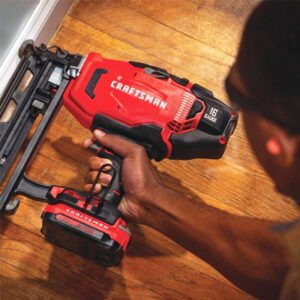
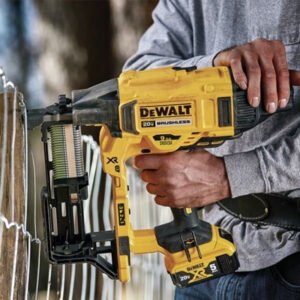
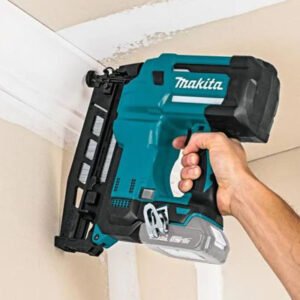
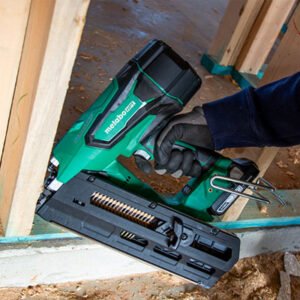
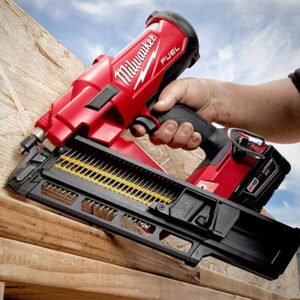
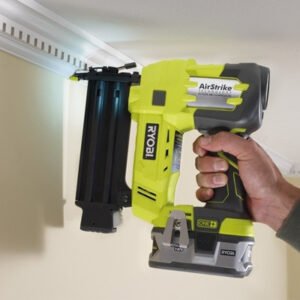
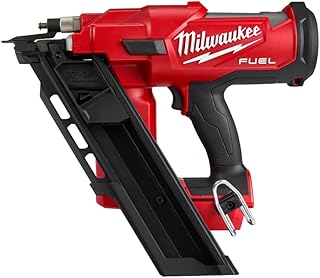


A cordless nail gun can be one of the most useful additions to a Canadian workshop, renovation kit, framing setup, or professional jobsite, but the right model depends heavily on the type of fastening you actually do. A compact 18-gauge brad nailer is excellent for trim, cabinetry and finishing work, while a 15- or 16-gauge finish nailer is better suited to heavier mouldings and door or window casing. Framing nailers occupy another category entirely, with longer fasteners and substantially different power, magazine and handling requirements.
The most important buying decision is therefore not simply choosing the tool with the highest voltage or the longest advertised runtime. It is matching the nailer mechanism, gauge, fastener range, battery platform, magazine design, depth adjustment, firing modes and ergonomics to the material and application.
Canadian buyers should also pay particular attention to battery compatibility, cold-weather working conditions, locally available fasteners, tool-only versus kit configurations, and the availability of replacement parts and service. Current Canadian retail listings show a broad cordless nailer market spanning RYOBI, Milwaukee, DEWALT, RIDGID, Makita and Paslode, with significant differences between compact finishing nailers and full-size framing tools.
A pneumatic nailer uses compressed air supplied by a compressor, hose and fittings. A cordless nailer instead obtains its operating energy from a battery, although the internal mechanism varies considerably between brands and models.
Some cordless nailers use an air-spring or nitrogen-based mechanism. Others use a flywheel or related electromechanical system, while gas-powered cordless framing nailers use a combustion cartridge in combination with a battery-powered ignition and control system. These mechanisms affect firing behaviour, maintenance, noise, operating cost and how the tool feels during repeated use.
For example, Milwaukee describes its M18 FUEL 18-gauge brad nailer as using a nitrogen air-spring mechanism combined with a POWERSTATE brushless motor and REDLINK PLUS electronics. That design is intended to provide consistent nail driving without an external compressor or gas cartridge.
The practical advantage of cordless operation is convenience. There is no compressor hose running across a finished floor, no pneumatic hose to drag around a ladder and no need to position a compressor close to the work area. For small renovation projects, that convenience can be more valuable than maximum firing speed.
For buyers who already own cordless tools, the battery platform should be one of the first things considered. Buying a nailer that accepts batteries you already own can significantly change the overall value of a tool-only package.
Common platforms found in the Canadian cordless nailer market include DEWALT 20V MAX, Milwaukee M18, RYOBI 18V ONE+, RIDGID 18V and Makita battery systems. Canadian retail listings currently show multiple cordless nailer families across these platforms.
A bare tool can look inexpensive compared with a complete kit, but that comparison can be misleading if you do not already have the required battery and charger. Conversely, buying another complete battery and charger when you already have several compatible packs may unnecessarily increase the total cost.
Do not assume that a higher amp-hour battery automatically makes a nailer more powerful. Battery capacity primarily affects available energy and runtime; the tool's electronics, motor and mechanical drive system determine how it converts that energy into nail-driving performance.
Nail gauge is one of the easiest specifications to misunderstand. A smaller gauge number generally corresponds to a thicker nail. Therefore, a 15-gauge finish nail is heavier than a 16-gauge nail, while an 18-gauge brad is thinner.
An 18-gauge cordless brad nailer is arguably the most versatile category for general household finishing. The smaller fastener leaves a relatively discreet hole and works particularly well for attaching decorative moulding, trim, cabinetry components and other relatively light materials.
DEWALT's DCN680, for example, accepts 18-gauge brads from 5/8 inch to 2-1/8 inches and is specifically positioned for applications including decorative mouldings, casing, kitchen mouldings, shoe moulding and cabinetry.
The RYOBI P322 is another 18-gauge option sold in Canada. Its published specifications include a 5/8-inch to 2-1/8-inch nail range and a 105-nail magazine. RYOBI also states a claimed capacity of up to 2,250 nails per charge, although actual results will vary with material, nail length, battery condition, temperature and firing frequency.
A 16-gauge nailer is a better match when an 18-gauge brad is too small for the material or when additional holding power is desirable. It is frequently considered for baseboards, substantial casing, crown moulding and other finish carpentry.
DEWALT's DCN660 is a 20V MAX cordless angled 16-gauge finish nailer designed for 1-1/4-inch to 2-1/2-inch fasteners. The angled magazine can also make access easier in certain trim applications.
For heavier finish work, 15-gauge nailers provide a larger fastener and consequently a larger hole to fill. They are useful when the joint needs more substantial mechanical fastening than a small brad can provide.
Do not choose a 15-gauge model merely because it sounds more powerful. If the work involves delicate trim, the larger fastener may create unnecessary damage or a more visible hole. The best nailer is the smallest appropriate fastener system that provides the required holding power.
Choosing the correct gauge is only half of the fastener decision. Nail length must also suit the combined thickness of the materials being joined.
A nail that is too short may not provide sufficient penetration into the supporting material. A nail that is too long can penetrate through the workpiece, interfere with hidden components or create a safety problem.
Framing nailers are substantially different from brad and finish nailers. They are intended for structural construction rather than delicate finish work and generally accept longer, heavier fasteners.
DEWALT's DCN692, for example, is a 30-degree paper-collated cordless framing nailer designed for 2-inch to 3-1/2-inch nails. Its design includes a dual-speed motor, selectable sequential and bump-fire modes, depth adjustment and a stall-release mechanism.
Canadian cordless framing options also include products from Milwaukee, RYOBI, DEWALT, Makita, Paslode and RIDGID. Current Canadian retail category data shows both battery-powered and gas-powered cordless framing products, so buyers should distinguish between truly battery-operated nailers and gas-assisted cordless systems.
The angle of a framing nailer is not simply a measure of how powerful it is. It relates to the magazine and the type of collated nails the tool is designed to use.
Before buying a framing nailer, check the exact nail angle, collation type, nail diameter, nail length and head style specified by the manufacturer. A magazine designed for one fastener configuration should not be treated as universally compatible with every framing nail on the shelf.
The internal drive system influences how quickly the tool recovers between shots, how consistently it sets nail depth and how it behaves when the material becomes harder or denser.
Brushless motors are now common in higher-end cordless nailers. They can reduce mechanical brush wear and allow electronic control of motor performance. DEWALT identifies brushless motor technology in its DCN680 and DCN660 models, while Milwaukee uses a POWERSTATE brushless motor in its M18 FUEL 18-gauge nailer.
Air-spring systems are designed to reproduce some of the consistent driving characteristics associated with pneumatic equipment without requiring an external compressor. Milwaukee specifically describes a sealed compressed nitrogen system in its M18 FUEL 18-gauge brad nailer.
Other cordless nailers use an electromechanical approach in which stored rotational or mechanical energy is used to drive the fastener. The design can influence firing delay, noise, weight and the sensation of recoil.
Gas-powered cordless framing nailers should be evaluated differently because the battery does not necessarily provide all of the energy used to drive the nail. Gas cartridges become another consumable to consider alongside batteries and nails.
A good depth-of-drive adjustment helps you set the nail head consistently relative to the surface. This is particularly important for trim work, where a nail driven too deeply can create a crater that requires additional filling and sanding.
Tool-free depth adjustment is available on several major cordless models. DEWALT lists tool-free depth adjustment on its DCN680 and DCN660, while RYOBI lists tool-free depth-of-drive adjustment on the P322.
Depth should always be tested on scrap material before starting visible work. Different wood species, engineered boards, temperature and nail length can change the result, so a setting that works perfectly on one material may not be appropriate for another.
Firing mode affects both speed and control.
For trim, cabinetry and visible finish work, controlled sequential operation is usually the more appropriate choice. For repetitive construction fastening, a suitable bump-fire mode can improve productivity when the tool and application permit it.
DEWALT and Milwaukee both list selectable sequential and contact actuation on relevant cordless nailer models.
Magazine capacity affects how frequently you stop to reload. This matters far more on a framing project than on occasional trim installation.
For example, the DEWALT DCN680 has a published magazine capacity of 110 nails, while the RYOBI P322 lists a capacity of 105 brads.
Magazine design also matters. Look for a mechanism that makes it easy to see remaining fasteners and simple to reload without awkward disassembly. A low-nail lockout can be particularly useful because it helps prevent firing when the magazine is nearly empty.
Even a high-quality nailer can occasionally jam. A nail can deform, a fastener can enter an unusual grain pattern or the driver can fail to complete its cycle.
Tool-free jam-release systems reduce downtime and make routine troubleshooting easier. DEWALT specifies tool-free jam release on the DCN680, while RYOBI provides a tool-free jam release latch on the P322.
Some nailers also include a stall-release mechanism. This is especially useful when the driver blade does not return fully after a difficult drive. The correct procedure should always follow the specific manufacturer's instructions rather than forcing the mechanism manually.
Specifications do not fully explain how comfortable a nailer is to use. Two tools with similar weights can feel completely different depending on where the battery, motor and magazine place their mass.
Balance becomes especially important when working overhead, on ladders, inside cabinets or at arm's length. A compact tool with a smaller battery may be preferable for short finishing tasks, while a larger battery can make sense for extended production work if the additional weight is manageable.
Canadian working conditions can be harder on batteries and cordless electronics than mild indoor environments. Cold temperatures can reduce lithium-ion battery performance and may reduce available runtime or cause the tool to behave differently.
For winter jobs, keep batteries protected from unnecessary exposure to extreme cold and follow the manufacturer's instructions for charging and storage. Do not attempt to charge a battery outside its specified operating temperature range.
Cold weather can also affect the wood itself, particularly when working with materials that have been stored outdoors. Test nail depth and drive behaviour before beginning a large installation.
Do not judge a nailer solely on how it performs in softwood. Hardwood, engineered lumber, plywood, MDF and dense trim can require different drive characteristics.
Dense material can increase the chance of proud nail heads, incomplete drives or inconsistent countersinking. Conversely, excessive power on softer material can push the nail too far beneath the surface.
A quality depth adjustment helps, but it does not eliminate the need for testing. The correct approach is to use a representative scrap piece and adjust the tool before installing visible components.
Manufacturers may publish estimated nail counts per charge, but such numbers should be treated as application-dependent estimates rather than guaranteed results.
Runtime can change according to nail length, material hardness, battery capacity, battery age, temperature, firing frequency and the condition of the tool. A professional installing long nails into dense framing material may see very different results from a homeowner installing short brads into soft trim.
For example, RYOBI publishes an estimate of up to 2,250 nails per charge for its P322 under its stated testing conditions. The useful takeaway is that the tool is designed around substantial cordless runtime, not that every user should expect exactly that number.
A cordless nailer is still a high-energy fastening tool. Convenience does not reduce the need for safe operating practices.
Wear appropriate eye protection, keep hands away from the firing area, disconnect or remove the battery when clearing a jam if the manufacturer's instructions require it, and never point a loaded nailer at yourself or another person.
Small ergonomic details can have a meaningful effect on finishing accuracy. A clearly visible nose makes it easier to position the fastener precisely, particularly around corners and narrow trim.
DEWALT's DCN680 incorporates a micro nose intended to improve visibility and nail-placement accuracy, along with LED lighting. Milwaukee's M18 FUEL 18-gauge nailer also includes an LED work light.
Cabinet installation and woodworking demand control more than brute force. An 18-gauge nailer is often a strong fit for attaching trim and other relatively light components, while pin nailers can be useful for delicate assemblies where an almost invisible hole is desirable.
Look for a narrow nose, accurate depth adjustment, predictable firing and good visibility. A compact design is also valuable when fastening inside cabinets or close to corners.
For substantial mouldings, a 16- or 15-gauge finish nailer can provide more holding power than an 18-gauge brad nailer. The exact choice should be based on the moulding profile, thickness, supporting material and fastening requirements.
An angled magazine can be useful when working in corners or tight areas. The DEWALT DCN660, for example, is an angled 16-gauge cordless finish nailer designed around 1-1/4-inch to 2-1/2-inch fasteners.
DEWALT has a broad cordless nailer range covering brad, finish and framing applications. Its Canadian lineup includes 20V MAX XR models such as the DCN680 18-gauge brad nailer and DCN660 16-gauge angled finish nailer, along with cordless framing equipment such as the DCN692.
The main reason to favour DEWALT may be platform compatibility. If a buyer already owns several 20V MAX batteries, a compatible nailer can be a more logical purchase than starting another battery ecosystem.
Milwaukee's M18 FUEL line is a major competitor in cordless fastening. Its 18-gauge brad nailer uses an air-spring mechanism, brushless motor and electronic control system, with tool-free depth adjustment, jam clearing, LED lighting and selectable firing modes.
Milwaukee can make particular sense for users already invested in M18 tools, because the nailer can share batteries with other compatible equipment.
RYOBI is especially relevant for buyers who want access to a broad 18V ONE+ ecosystem. Its Canadian range includes 18-gauge brad nailers as well as 16-gauge finish and framing nailers.
The P322 18-gauge HP Brushless AirStrike model combines an 18V battery platform with a published 5/8-inch to 2-1/8-inch nail range, 105-nail magazine and tool-free adjustments.
RIDGID offers 18V cordless fastening equipment, including the R09891 18-gauge brad nailer. The Canadian manufacturer's page lists CLEAN DRIVE technology, a 2-1/8-inch maximum nail length and a kit configuration including a 2.0Ah battery and charger.
RIDGID is worth considering when its battery platform and service arrangements align with the buyer's existing tool collection.
Makita is another established professional power-tool brand with cordless fastening equipment. When comparing a Makita nailer with competitors, prioritize the exact model's fastener specifications and battery platform rather than choosing solely from brand reputation.
Paslode is particularly associated with cordless framing and construction fastening. Its cordless systems can differ from purely battery-powered nailers because some models use fuel-cell technology. Buyers should therefore include fuel-cell consumption and availability in the running-cost calculation rather than comparing battery capacity alone.
A meaningful comparison should use the same criteria for every model. Looking only at price or voltage can produce a misleading ranking.
Voltage alone does not determine whether a nailer is appropriate. An 18V brad nailer can be exactly the right tool for trim, while a high-powered framing nailer would be unnecessary and potentially unsuitable for the same task.
A gauge rating tells you about fastener thickness, not whether the nail is long enough for your particular assembly. Always consider both specifications.
A tool-only nailer can be an excellent value for an existing battery-platform user and a poor value for someone who needs to purchase batteries and a charger separately.
Calculate the complete ownership equation: tool, batteries, charger if necessary, compatible nails, fuel cells where applicable, replacement parts and expected maintenance.
Framing nailers are built around very different fasteners and applications. Using an oversized framing tool where a brad or finish nailer is appropriate can create excessive holes, damage trim and reduce control.
A nailer is only useful if compatible nails are easy to obtain. Before purchasing, verify the exact nail specification and check Canadian retailers for appropriate fasteners.
Two nailers may both accept 18-gauge brads but still differ in permitted length, collation, head design and manufacturer requirements. Always follow the model-specific fastener specifications.
The purchase price is only one component of the cost. A useful comparison should consider:
For an occasional DIY user, a platform with affordable compatible batteries may be more important than maximum professional-duty performance. For a contractor using the nailer every day, productivity, durability, downtime and ergonomics can matter much more than the initial price difference.
Modern cordless nailers generally require less setup and maintenance than pneumatic systems because there is no compressor, hose or pneumatic oiling routine. They still need regular inspection and cleaning.
Do not modify a nailer, bypass safety mechanisms or use non-approved lubricants or replacement components simply to solve a performance problem. Consult the model-specific manual when maintenance requirements differ.
A nailer that suddenly stops firing does not necessarily have a serious mechanical failure. Begin with simple checks.
Even the best nailer cannot compensate for poor setup. Start by selecting a scrap piece that closely matches the material being installed. Set the depth so the nail head sits correctly without creating a large depression.
Hold the nose squarely against the surface and keep the tool stable during firing. For narrow trim, take time to position the nose accurately rather than relying on speed. When fastening near an edge, consider the direction of the wood grain and the nail's tendency to follow the grain.
If a nail repeatedly bends, exits the side or fails to reach the desired depth, stop and investigate rather than simply increasing pressure or repeatedly firing. The problem may be nail selection, material hardness, tool setup or an unsuitable fastener angle.
For most nail guns, "corded" is not the dominant alternative in the same way it is for drills or saws. Pneumatic nailers remain an important alternative because they can provide consistent operation when connected to an appropriately sized compressor.
A pneumatic setup can make sense in a fixed workshop or high-volume production environment where compressor infrastructure already exists. A cordless nailer is often more convenient for renovations, punch-list work, remote construction areas and tasks where moving a compressor and hose is inconvenient.
The best choice therefore depends on workflow rather than ideology. Cordless does not automatically mean better; it means a different balance between mobility, setup time, battery management and operating convenience.
A pneumatic nailer can remain attractive for users who already own a compressor and perform high-volume work in a workshop. If mobility is not important, the hose and compressor may be a minor inconvenience compared with the advantages of an established pneumatic setup.
Similarly, someone who only uses a nailer a few times each year should compare the cost of buying a cordless tool, battery and charger against borrowing or renting appropriate equipment where that option is practical.
For general household projects, an 18-gauge cordless brad nailer is often the most versatile starting category. It can cover many trim and light woodworking tasks without the bulk of a framing tool.
Before purchasing, identify the projects you expect to complete over the next several years. If those projects include substantial baseboards and crown moulding, a 16-gauge finish nailer may be a better long-term choice. If structural framing is involved, move directly into the framing-nailer category rather than trying to make a finishing tool do work it was not designed for.
Professionals should place greater emphasis on downtime, ergonomics, battery logistics and service support. A tool that saves setup time every day can have a very different value proposition from one that is used occasionally.
It can also make sense to standardize battery platforms across the jobsite. A consistent platform reduces the number of chargers and battery types that need to be transported and makes it easier to rotate charged packs between tools.
For renovation work in occupied homes, cordless nailers can provide a particularly convenient workflow because there is no long air hose running between rooms. This can simplify stairway, hallway and finished-floor work.
Noise should still be considered. Cordless does not mean silent, and firing a nailer indoors can produce a sharp impulse noise. Appropriate hearing protection remains sensible, especially during repeated fastening.
Customer reviews can reveal useful information that specifications cannot, but they should be interpreted carefully. A single complaint about a jam or battery problem does not establish that every unit has the same issue, while a collection of enthusiastic comments does not prove professional-grade durability.
Specifications can change as manufacturers introduce new generations or discontinue older kits. DEWALT's Canadian website, for example, currently identifies the DCN680B as a tool-only model while listing the DCN680D1 kit as discontinued. This is a useful reminder to verify the exact model number rather than assuming every package configuration remains current.
Before placing an order, compare the exact model number, battery inclusion, nail range, gauge, magazine capacity and warranty information. Retail listings can contain multiple configurations of the same basic tool family.
There is no single best cordless nail gun for every Canadian buyer. The best choice depends on whether you need an 18-gauge brad nailer, 16- or 15-gauge finish nailer, or a framing nailer. Battery-platform compatibility should also influence the decision.
An 18-gauge nailer can work for some lighter baseboard and trim applications, but a 16- or 15-gauge finish nailer may be preferable for larger or heavier mouldings where greater holding power is required. Always follow the fastening requirements for the specific material and installation.
Dedicated cordless framing nailers are designed specifically for framing applications and use substantially larger fasteners than brad nailers. Models from major manufacturers are available in Canada, but buyers should compare the exact fastener specifications and drive mechanism rather than assuming every cordless nailer can handle structural framing.
Neither is universally better. Cordless nailers offer portability and eliminate the compressor and hose, while pneumatic systems can remain highly practical for fixed workshops and high-volume users who already have compressor equipment.
Battery-powered cordless nailers do not require an external air compressor. Some cordless nailers use internal air-spring technology, which should not be confused with requiring an external compressor.
Not all cordless nailers use gas. Battery-only designs do not require fuel cells, while some cordless framing systems use gas-assisted technology. Check the exact model before comparing operating costs.
A brad nailer generally uses thinner 18-gauge fasteners and is suited to lighter trim and woodworking. Finish nailers use larger 16- or 15-gauge fasteners and are intended for applications requiring greater holding power.
No single nailer is ideal for every application. An 18-gauge brad nailer cannot replace a framing nailer for structural work, and a framing nailer is inappropriate for delicate trim. The correct tool category should be selected according to the fastener and application.
Brushless technology can provide advantages in efficiency, durability and electronic control, but it should be considered alongside the complete tool design. A brushless motor alone does not guarantee that a nailer is the right choice for your application.
A tool-only model can be excellent value if you already own compatible batteries and a charger. If you are entering a new battery ecosystem, compare the total cost of the tool, battery and charger before deciding.
Runtime varies substantially by tool, battery, fastener, material and working conditions. Some manufacturers publish estimated nail counts under specified conditions. These figures should be used for comparison rather than treated as guaranteed real-world output.
They can be used in cold conditions when the specific tool and battery are operated within their manufacturer's stated limits. Cold temperatures can reduce lithium-ion battery performance, so battery storage, charging and temperature management become particularly important during winter work.
A compact battery can reduce overall tool weight and may be preferable for trim work. A higher-capacity battery can provide more available energy for extended work but may add weight. The ideal choice depends on workload and ergonomics.
Use the correct fasteners, keep the magazine and nose area clean, avoid damaged nails and use the manufacturer's recommended fastener specifications. If repeated jams occur, stop using the tool until the cause has been identified.
Focus on compatible framing nail type, nail length, magazine angle, drive performance, depth adjustment, firing modes, battery runtime, weight, magazine capacity and service support. These factors are more useful than comparing voltage alone.
The best cordless nail gun for a Canadian buyer in 2026 is the model that fits the actual fastening job while integrating sensibly with the tools and batteries already in the workshop. The strongest buying decision is rarely based on one specification.
For general trim and woodworking, start by comparing 18-gauge brad nailers. For heavier finish carpentry, move into 16- or 15-gauge models. For structural framing, compare dedicated cordless framing nailers and verify their exact fastener requirements. Across all categories, evaluate battery compatibility, tool balance, depth adjustment, firing modes, magazine design, jam handling, fastener availability and long-term ownership costs.
Current Canadian offerings demonstrate why model-specific research matters. DEWALT, Milwaukee, RYOBI and RIDGID all offer distinct cordless fastening approaches, while Canadian retailers list numerous cordless nailer configurations across several battery ecosystems.
Before buying, compare the exact model number and current Canadian package configuration, read detailed customer feedback, confirm compatible nails, and check the manufacturer's current specifications. That process will usually produce a better result than choosing a nailer simply because it has the highest rating, largest battery or most powerful-sounding specification.