

♥ Wishlist
We analyzed 30 of the most popular Cordless Planers for Woodworking and Carpentry available in ca. Compare features, customer reviews, ratings, and expert recommendations to help you choose the best option in 2026.
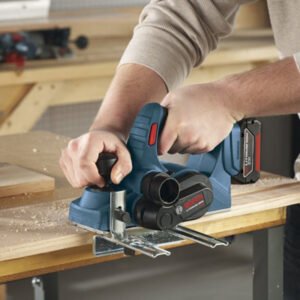
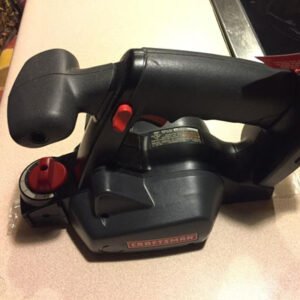
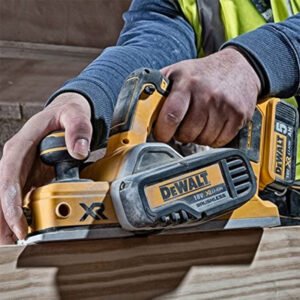

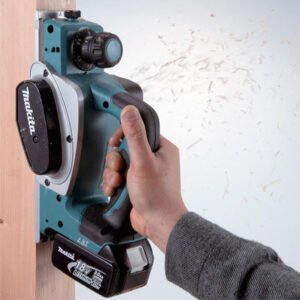
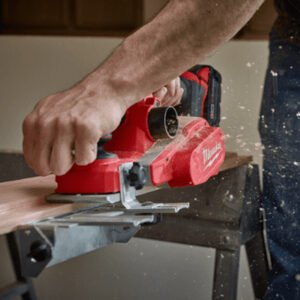
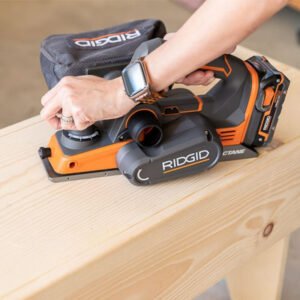


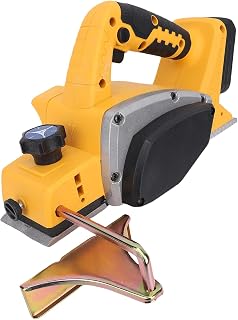


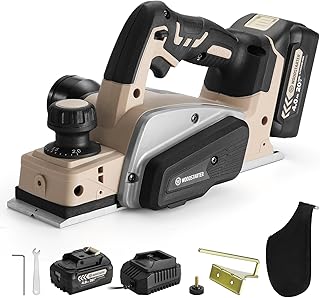
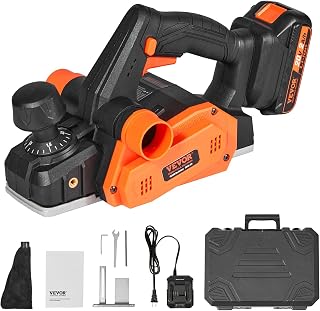
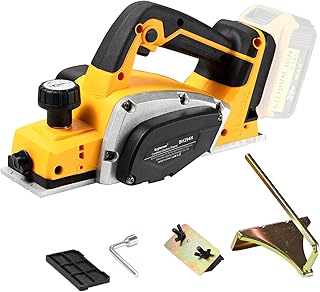


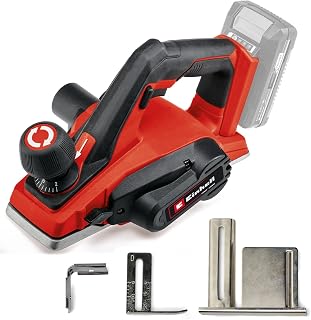


A cordless planer can be one of the most useful portable woodworking tools for correcting oversized doors, trimming timber, fitting boards, easing sharp edges, levelling proud joints and making controlled adjustments during renovation or carpentry work. Unlike a stationary thickness planer, a handheld cordless planer is designed to travel to the work rather than requiring the workpiece to be brought to a machine.
For Canadian buyers, the right choice is not simply the planer with the highest advertised cutting speed or the largest battery. A useful comparison should consider cutting width, maximum depth of cut, depth-adjustment increments, motor design, shoe construction, blade type, battery platform, ergonomics, dust collection, balance and the availability of replacement blades and accessories.
The best cordless planer for one person may be a poor choice for another. A homeowner who occasionally trims doors has very different requirements from a professional carpenter who planes framing lumber throughout the working day. Before choosing a model, identify the material you normally work with, the amount of stock you expect to remove, how frequently you use the tool and which cordless battery system you already own.
The fundamental advantage of a cordless planer is mobility. There is no extension cord to route around a door, deck, workbench or jobsite, and the tool can be used where mains power is inconvenient. This is particularly useful during renovation work where the nearest outlet may be several metres away from the work area.
A corded planer can still make sense when the tool is used continuously in a workshop and maximum uninterrupted operating time is more important than portability. A corded machine also avoids the need to monitor battery charge and can be a practical choice for users who do not already own a compatible cordless platform.
For most buyers comparing cordless and corded options, the decision should therefore be based on workflow rather than the assumption that one power source is universally better.
Cutting width determines how much material the planer can remove across a single pass. Many handheld cordless planers are built around the familiar 3-1/4-inch class, which provides a useful balance between coverage and portability.
A wider cutting width can reduce the number of passes required on wider boards, but it does not automatically make a planer more precise. For narrow workpieces, edge work and smaller components, a compact planer may be easier to control.
When comparing products, check the manufacturer's stated maximum planing width rather than judging capacity by the physical width of the tool body. Also consider whether the stated capacity applies to normal straight planing or a specialized operation.
Maximum depth of cut describes how much material the planer is designed to remove in a single pass under specified conditions. It is an important specification, but it should not be interpreted as the ideal depth for routine finishing work.
Deep cuts can increase the load on the motor and battery and may make the tool more difficult to control. They can also produce a rougher result, particularly in difficult grain. For accurate woodworking, several lighter passes are frequently more controllable than attempting to remove the entire amount in one operation.
A planer with precise incremental adjustment is therefore often more useful than one chosen solely because it advertises a larger maximum cut.
Fine adjustment is particularly valuable when fitting a door, correcting a tight cabinet component or bringing a board gradually to a desired dimension. Small changes at the adjustment knob can translate into meaningful differences at the cutting edge.
Look for a clearly marked adjustment mechanism that is easy to operate while maintaining a secure grip on the tool. A well-designed depth control should allow the user to make repeatable changes rather than forcing approximate adjustments.
Motor technology is another important comparison point. Brushless motors eliminate conventional carbon brushes and use electronic control to manage motor operation. This design can provide efficiency and reduced maintenance requirements compared with traditional brushed motor construction.
Brushless technology can be particularly appealing in a cordless planer because battery energy is limited. However, brushless does not automatically mean that every tool will outperform every brushed alternative. Overall performance depends on the motor, gearing, battery, cutting system, electronics, shoe design and mechanical construction.
If two otherwise comparable models are close in price, a brushless option can be an attractive long-term choice for frequent users. Occasional users may reasonably place greater emphasis on price, ergonomics and battery compatibility.
Do not compare cordless planers by voltage alone. Different manufacturers use different naming conventions and electrical architectures, and a higher nominal voltage does not by itself guarantee a better cutting result.
The battery ecosystem is often the more important consideration. Major cordless tool families from brands such as DeWalt, Makita, Milwaukee, RYOBI and Bosch can include numerous compatible tools, allowing one battery investment to serve drills, impact drivers, saws, lights, sanders and other equipment.
If you already own batteries and chargers, a compatible tool-only planer can sometimes make more financial sense than purchasing another complete battery kit. Conversely, a buyer entering a new platform should calculate the combined cost of the planer, battery and charger rather than comparing tool-only prices.
A battery's amp-hour rating provides useful information about stored energy, but it should not be treated as a guaranteed runtime figure. Actual runtime depends on cutting depth, timber species, moisture content, feed rate, blade sharpness, battery condition and ambient temperature.
Cold Canadian conditions can also influence battery behaviour. Lithium-ion batteries should be handled according to the battery manufacturer's instructions, particularly when tools are transported or stored in very cold environments.
For occasional indoor woodworking, battery capacity may be relatively unimportant. For professional site work, having enough charged batteries to complete the task can be more important than selecting the planer with the lowest bare-tool weight.
The blades are among the most important consumable components of a handheld planer. Even an excellent motor and rigid shoe cannot compensate for dull, damaged or incorrectly installed blades.
When comparing a cordless planer, identify the blade type, replacement part number and whether the cutting system uses reversible blades or another replaceable design. Check that replacement blades are realistically obtainable in the Canadian market before committing to an unfamiliar tool.
Carbide blades can be attractive for general construction use because they are designed for durability, while the exact blade material and geometry should be matched to the manufacturer's intended applications.
The front and rear shoes provide the reference surface that guides the planer across the timber. Their flatness, rigidity and alignment therefore matter considerably.
A planer that tracks smoothly is easier to control than one that rocks or changes angle during a pass. Precision-machined metal shoes are generally desirable for users who care about repeatable results, although the overall design matters more than the material label alone.
Keep the shoe clean and free from resin, pitch and accumulated debris. Contamination underneath the shoe can interfere with smooth movement and potentially affect the consistency of the cut.
Small design details can make a significant difference in everyday use. A kickstand, for example, allows the planer to be placed on a work surface without allowing the blade assembly to contact the material underneath.
An edge guide can help maintain a consistent position when working along an edge. A dedicated chamfering groove in the shoe can also make controlled edge chamfering easier.
These features should not replace careful technique, but they can improve convenience and repeatability for common carpentry tasks.
Handheld planers generate a large volume of chips. Unlike fine sanding dust, planer shavings can be substantial and may quickly accumulate around the work area.
Check whether the model supports a dust bag, extraction hose adapter or compatible shop-vac connection. The direction of chip discharge is also worth considering. A user working inside a finished room may value controlled chip collection more than someone working outdoors.
Never assume that a dust collection accessory is included with a tool-only package. Verify the contents of the exact package before purchase.
Planing is a hands-on operation. The user must maintain downward pressure, control the feed direction and keep the shoe properly seated against the workpiece. A tool that is technically powerful but uncomfortable can become tiring during repeated passes.
When assessing ergonomics, consider more than the advertised weight. Battery position can change the balance substantially, especially when using a high-capacity pack. Handle shape, trigger access, grip texture and the position of the front depth-adjustment knob can all affect comfort.
For frequent overhead or vertical work, weight becomes particularly important. For heavy stock removal, a slightly heavier design may be acceptable if its balance and control are excellent.
All power planers generate substantial mechanical and cutting noise. Appropriate hearing protection should therefore be part of normal operation. Eye protection is also important because chips can be ejected at considerable speed.
Vibration is another factor that becomes noticeable during extended use. A comfortable grip, balanced rotating assembly and suitable feed technique can reduce fatigue, but no cordless planer should be treated as a silent or vibration-free tool.
Door fitting is one of the classic applications for a handheld planer. The main objective is usually controlled material removal rather than maximum stock removal.
A planer for door work should have accurate depth adjustment, good balance and a shoe that remains stable against the edge. A manageable tool is particularly useful when the door cannot easily be moved to a workshop.
Before planing a door, confirm which edge requires adjustment and mark the amount of material that needs to be removed. Removing material gradually provides more opportunities to check the fit rather than committing to an excessive cut.
Construction lumber can be rough, variable and occasionally contaminated with debris. For this type of work, durability and blade replacement availability can matter more than ultra-fine adjustment.
Inspect lumber carefully before planing. Nails, screws, staples, dirt and other embedded material can damage planer blades and create a serious safety hazard. Never use a planer on material unless it is suitable for planing and has been properly inspected.
Fine woodworking places greater emphasis on control, repeatability and surface quality. A planer with precise depth adjustment and a rigid shoe can be more useful than one optimized solely for rapid material removal.
Wood species and grain direction also matter. Figured or difficult grain can be more susceptible to tear-out. In these situations, lighter cuts, careful feed direction and sharp blades are often more important than maximum motor output.
These tools perform related but different jobs. A handheld planer removes material from a selected surface while the operator guides the tool. A thickness planer feeds a board through a machine and establishes a more controlled thickness across the workpiece.
A cordless handheld planer is better suited to localized corrections, edge fitting, renovation and mobile work. A benchtop or stationary thickness planer is generally more appropriate when repeatedly dimensioning boards to a consistent thickness.
If your main objective is making rough lumber uniformly thinner across its entire length and width, a handheld cordless planer is not a direct substitute for a thickness planer.
A jointer is designed to establish a flat reference face and straight edge, whereas a handheld planer is primarily a portable material-removal tool. Although a skilled user can perform certain edge-straightening tasks with a handheld planer, it should not be assumed to replace a dedicated jointer for precision furniture work.
When two models appear similar, compare their specifications in a consistent order instead of focusing on one headline feature.
Voltage is only one specification. Motor efficiency, electronics, cutting geometry and mechanical design can have a major effect on real-world usability.
A tool-only price may look attractive until the cost of a compatible battery and charger is added. Always calculate the complete package you actually need.
Maximum cutting depth is useful for aggressive work, but most precision tasks benefit from controlled incremental removal.
A low purchase price is less attractive if replacement blades are difficult to identify or obtain.
Weight that seems insignificant on paper can become tiring during repeated passes, overhead work or door fitting.
Cordless tools are frequently sold in both tool-only and kit configurations. Confirm the exact contents before comparing prices.
A handheld planer is not designed to perform every operation associated with a stationary thickness planer. Choose the machine according to the job rather than the word "planer" on the package.
Professional users should place particular emphasis on durability, battery-platform compatibility, blade availability and ergonomics. A tool used repeatedly on jobsites must also be practical to transport, store and maintain.
Occasional users do not necessarily need the most expensive professional-grade model. A practical homeowner choice should be easy to control, compatible with an existing battery platform where possible and capable of handling common repair and woodworking tasks.
If the planer will only be used a few times each year, consider whether buying a new battery ecosystem is justified. In some cases, a compatible tool from a battery platform already used for a drill, saw or impact driver can provide considerably better overall value.
Canadian buyers should pay attention to the exact regional model number and package configuration. Product names can appear similar across markets while included accessories, battery bundles and specifications differ.
Availability can also vary between provinces and retailers. Before purchasing, check the current Canadian listing for the exact model rather than assuming that information from a U.S. listing applies to the Canadian package.
Canadian consumers should also review the manufacturer's current warranty terms, exclusions and service provisions for the specific product. Warranty coverage can differ by market and product category.
Canada's climate makes battery handling especially relevant for users who work outdoors during colder months. Lithium-ion batteries should be stored, charged and used according to the manufacturer's instructions.
A cold battery may not perform in the same way as a battery operating within its recommended temperature range. Avoid treating a frozen or excessively cold battery as though it were operating under normal workshop conditions.
For winter jobsites, sensible battery storage and transport can be just as important as selecting the correct planer.
Good results depend on technique as much as tool specifications. Start with a shallow cut when precision matters. Keep the front shoe firmly supported on the workpiece before engaging the cutting action, then maintain a controlled feed rate without forcing the tool.
Keep the planer level throughout the pass. Excessive pressure on the front or rear handle can alter the angle of the tool and create an uneven surface.
Pay attention to grain direction. If tear-out occurs, reducing the depth of cut and changing the direction of the pass may improve the result, depending on the workpiece and grain structure.
Routine maintenance helps preserve cutting performance and makes problems easier to identify. Remove accumulated chips from the tool after use and keep the shoe clean.
Inspect blades regularly and replace or service them according to the manufacturer's instructions. Check fasteners, guides and other components for looseness or visible damage.
Keep batteries and chargers clean and dry and follow the battery manufacturer's storage recommendations. Do not modify battery packs or use damaged batteries.
Tool-only cordless planers can be excellent choices when the buyer already owns batteries from the same platform. However, tool-only pricing should never be compared directly with a complete kit without accounting for the battery and charger.
When comparing offers, calculate the effective cost of ownership: planer, battery, charger if required, replacement blades and any necessary dust or guide accessories. This approach makes it easier to distinguish a genuinely economical option from a low headline price that requires substantial additional purchases.
Customer reviews can provide useful information, but they should be read selectively. Look for repeated comments about specific characteristics such as balance, depth adjustment, blade changes, battery compatibility, chip ejection and long-term usability.
A review that simply says a tool is "great" provides less buying information than a detailed review explaining the type of material used, the task performed and the conditions under which the tool was evaluated.
Also separate reviews of the tool itself from reviews of batteries, packaging, delivery or unrelated accessories. For an independent buying guide, specifications and manufacturer documentation should remain important reference points alongside customer feedback.
Specifications are most useful when compared on a like-for-like basis. Confirm whether weight is listed with or without the battery, whether maximum cutting depth is stated in imperial or metric units, and whether the package includes accessories.
Also distinguish between no-load speed and actual cutting performance. A high no-load figure does not automatically mean the planer will maintain that speed under load.
Likewise, a larger battery may increase available runtime without necessarily making the tool itself more powerful. A sensible comparison considers the complete system.
Canadian shoppers will commonly encounter cordless planers and related woodworking tools from established manufacturers including DeWalt, Makita, Milwaukee, RYOBI, Bosch and RIDGID. Each brand may offer different battery platforms, package configurations and tool categories, so the best brand is not necessarily the one with the highest overall reputation.
For an existing cordless-tool owner, battery compatibility can be a stronger reason to choose one brand than a small difference in individual planer specifications. Someone already invested in one ecosystem should compare the planer within that ecosystem before considering a completely new battery platform.
There is no single best cordless planer for every Canadian buyer. The right choice depends on your required cutting width, depth adjustment, workload, battery platform, budget and preferred handling characteristics. A professional carpenter may prioritize durability and runtime, while a homeowner may prioritize compatibility with an existing battery system and ease of use.
Many modern cordless planers can handle appropriate hardwood applications, but cutting performance depends on the particular tool, blade condition, depth of cut, battery and wood species. Difficult grain should generally be approached with controlled, lighter cuts rather than assuming maximum depth is appropriate.
For frequent cordless use, a brushless motor can be an attractive feature because of its efficiency and electronic control. Whether it is worth the additional cost depends on how often you use the planer and what other tools you have on the same battery platform.
A planer in the 3-1/4-inch class is a versatile choice for many general carpentry tasks. If your projects involve unusually narrow components or demand maximum portability, a compact model may be preferable. Always match the cutting width to your typical work rather than choosing the largest tool automatically.
No. A handheld planer and a stationary thickness planer serve different purposes. A handheld planer is excellent for localized adjustments and portable work, while a thickness planer is designed to dimension boards to a more consistent thickness.
Yes. Door fitting is a common application for handheld planers. Use careful measurements, secure the door properly, make shallow controlled passes and check the fit frequently.
There is no universal replacement interval. Blade life depends on the material being planed, the amount of material removed, the presence of contaminants and frequency of use. Replace or service blades when they become damaged or no longer produce the expected result, following the manufacturer's instructions.
A larger battery can be useful when runtime is important, but it also adds weight. Choose capacity according to the workload and balance of the tool rather than assuming the largest battery is automatically the best option.
They can be, provided the user learns correct handling and safety procedures. Beginners should start with shallow cuts, secure the workpiece properly and practice on suitable scrap material before attempting precision work.
If you already own compatible batteries and a charger, tool-only can be practical. If you are starting a new battery platform, compare the cost of a complete kit against the total cost of purchasing each component separately.
For general-purpose use, both matter, but depth adjustment often has a greater influence on precision. High cutting speed does not compensate for poor control or an adjustment mechanism that makes accurate settings difficult.
The strongest cordless planer purchase is not necessarily the most powerful, most expensive or highest-voltage model. It is the one whose capabilities match the work you actually perform.
Start with your existing battery ecosystem, then compare cutting width, depth-adjustment range, motor design, weight, shoe construction, blade system and dust-management options. After that, consider package contents, replacement consumables, warranty information and the complete cost of ownership.
For Canadian buyers, always verify the current specifications and package contents for the exact Canadian model before purchasing. Product availability, retailer stock, package configurations and pricing can change, so today's listing should take precedence over an older comparison.
A careful comparison of specifications, current customer feedback and manufacturer documentation will make it easier to identify a cordless planer that delivers the right balance of portability, control, durability and value for your woodworking or renovation needs.