

♥ Wishlist
We analyzed 5 of the most popular Craftsman Cordless Planer for Portable Woodworking available in ca. Compare features, customer reviews, ratings, and expert recommendations to help you choose the best option in 2026.


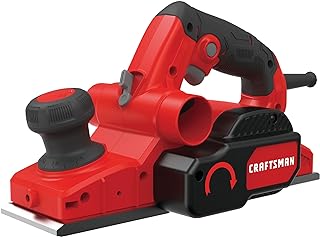
Choosing a cordless planer is less about finding the tool with the most impressive headline specification and more about matching cutting capacity, battery requirements, ergonomics, dust management and adjustment control to the work you actually do. For Canadian buyers, the first important distinction is that the current CRAFTSMAN cordless handheld planer is part of the V20 system, so compatibility with batteries and chargers can materially affect the overall value of a tool-only purchase.
CRAFTSMAN currently lists the CMCW350B V20 Brushless RP 3-1/4-inch Handheld Planer as its cordless handheld planer. The manufacturer identifies it as a tool-only model, with the battery and charger sold separately. Its published specifications include a no-load speed of up to 15,000 RPM, up to 30,000 cuts per minute, and a maximum cutting depth of up to 5/64 inch. CRAFTSMAN also specifies a dual chip-exhaust design and includes an edge guide, dust bag, wrench and vacuum adapter.
The 3-1/4-inch cutting width is an important specification because it determines how much material the planer can remove across one pass. A handheld planer in this class is intended for tasks such as correcting proud boards, fitting doors, trimming timber and dimensioning smaller pieces of wood. Wider workpieces may require overlapping passes, while narrower stock can often be handled more efficiently.
Maximum depth of cut should not be confused with the amount of material you should routinely remove in one pass. Deeper cuts can increase the load on the motor, demand more from the battery and make maintaining a controlled finish more difficult. For furniture-quality work or when removing only a small amount of material, shallow passes are generally easier to control.
Motor design deserves attention when comparing cordless planers. The CMCW350B uses CRAFTSMAN's Brushless RP technology. CRAFTSMAN describes the motor as being designed to provide more runtime and better performance, and the company's published specification states up to 30 passes per charge under its stated test conditions.
Runtime figures should always be interpreted carefully. The number of passes possible from a battery depends on factors such as battery capacity, wood species, cutting depth, feed rate, board dimensions, blade condition and how aggressively the tool is used. A manufacturer runtime claim is therefore useful as a reference point rather than a guarantee for every project.
If you already own CRAFTSMAN V20 tools, a bare-tool planer can be more attractive because the same battery platform can potentially serve multiple tools. CRAFTSMAN describes its V20 system as a broad cordless platform covering power tools and outdoor equipment, with battery capacities including 2.0Ah and 4.0Ah options as well as higher-capacity batteries.
For shoppers entering the V20 platform for the first time, the cost of the battery and charger should be included when comparing the total purchase. A tool-only listing can appear inexpensive when the required power source is not included. Always confirm exactly what is supplied in the package before ordering.
A cordless planer eliminates the need to manage a power cord while working around a workbench, construction site, garage, renovation project or outdoor cutting area. That freedom can be particularly useful when the workpiece is large, awkward to position or located away from a convenient electrical outlet.
The main advantage is not necessarily greater cutting performance than a corded planer. Instead, cordless operation combines portability with the ability to use the same battery platform across several tools. If you already have compatible batteries, the convenience can be significant.
Handheld planers are particularly useful when a door needs a small amount of material removed to improve clearance. They can also be useful for trimming timber, correcting swollen or uneven wooden edges and fitting boards during renovation work.
Door work requires precision. Removing too much material can create an unnecessary gap, so a sensible approach is to measure the problem area, mark the material to be removed and work gradually. A planer should not be treated as a substitute for careful measurement.
A portable planer can help with selected construction and carpentry tasks where a board has a localized high spot or an edge needs adjustment. However, a handheld planer is not the same type of machine as a benchtop thickness planer. It does not automatically produce uniform thickness across an entire board.
For repetitive dimensioning of many boards, a stationary thickness planer may be more appropriate. For occasional trimming, fitting and surface correction, a handheld cordless planer can be considerably more convenient.
These tools solve related but different problems. A handheld planer is moved across the workpiece by the operator. A benchtop thickness planer feeds the workpiece through the machine to reduce its thickness more consistently.
Choosing the wrong category is one of the most expensive buying mistakes. If the main goal is to turn rough boards into consistently dimensioned stock, investigate a thickness planer rather than expecting a handheld model to perform that job.
A larger maximum depth can provide more material-removal capability, but maximum capacity is only one part of the decision. Adjustment precision is equally important because many woodworking applications require controlled, shallow cuts rather than aggressive stock removal.
Cutting speed influences how quickly blades engage the material and can affect the resulting surface. CRAFTSMAN specifies up to 15,000 no-load RPM and up to 30,000 cuts per minute for the CMCW350B.
Do not compare RPM figures between different planer designs without considering the complete cutting system. Blade geometry, cutterhead design, depth setting, motor characteristics and feed technique all influence practical results.
Wood chips can accumulate rapidly when planing. The CMCW350B has a dual chip-exhaust port, allowing the user to choose the exhaust side, and it includes a dust bag and vacuum adapter.
Dust collection is more than a convenience. Effective chip management can make the workspace easier to maintain and can reduce the amount of loose debris around the workpiece. When connecting a shop vacuum, check the adapter and hose compatibility before assuming that every vacuum will fit directly.
An edge guide can help maintain a more consistent relationship between the planer and the side of the workpiece. This can be useful when working along an edge or when repeatability matters.
However, an edge guide does not automatically guarantee a perfectly straight result. Operator pressure, board movement, planer alignment and technique still matter.
Handheld planers require the operator to control both forward movement and downward pressure. A tool that feels balanced in the hand can therefore be easier to use accurately than one that is technically powerful but awkward to control.
When comparing models, consider grip position, trigger access, handle placement, battery location and the overall shape of the tool. Battery weight can also change the balance of a cordless planer.
The blades are among the most important wear components on a planer. A sharp, correctly installed blade helps the cutter engage wood cleanly. Dull or damaged blades can increase the effort required to move the tool and may contribute to rougher results.
Before purchasing, identify the replacement blade specification for the exact model. Do not assume that blades from another planer will fit simply because they look similar. The model number and manufacturer's documentation should be used to confirm compatibility.
It is also worth checking how easy blade changes are intended to be and whether the required tools are supplied. The CMCW350B's listed accessories include a wrench, indicating that the tool is supplied with equipment intended for routine blade-related service.
There is no universal number of boards that determines when blades need replacing. Wear varies according to wood species, moisture, contaminants, knots, nails or other embedded material, cutting depth and frequency of use.
Signs that deserve attention include a noticeably rougher surface, increased resistance while planing, inconsistent cutting and visible blade damage. Always inspect the workpiece and blade condition rather than continuing to increase cutting pressure when performance deteriorates.
The package contents can change the real cost of a cordless tool. A tool-only planer may be ideal for someone who already owns compatible batteries and a charger. A complete kit can be more convenient for someone who does not.
Amp-hour capacity, expressed as Ah, indicates the battery's rated charge capacity. It should not be interpreted as a direct measurement of how many minutes a planer will operate because actual energy consumption varies with workload.
A higher-capacity battery can generally provide more available energy than a lower-capacity battery within the same platform, but it may also add weight and alter tool balance. For occasional trimming, a smaller compatible battery may be sufficient. For extended planing sessions, additional or higher-capacity batteries may be worth considering.
CRAFTSMAN's V20 system includes batteries across several capacities, giving users different options depending on the application.
Instead of selecting a battery solely because it has the highest Ah rating, consider how the planer will be used.
CRAFTSMAN's planer range includes cordless and corded models. Its current planer listings include the V20 Brushless RP handheld planer as well as corded handheld and benchtop models.
Always verify the exact model number and power source. The name of a product category is not enough to establish whether a particular listing is battery powered.
The CMCW350B is listed as a tool-only product. CRAFTSMAN specifically states that the battery and charger are sold separately.
If you do not already own a V20 battery and charger, include those items in your budget before comparing the total cost with corded alternatives.
A maximum depth-of-cut figure is not a complete measure of planer quality. Precision, ergonomics, blade availability, chip extraction, battery compatibility and ease of adjustment can be just as important in everyday use.
A handheld planer is operated against the surface of the workpiece and relies heavily on user technique. It is not designed to provide the same automated thickness-control process as a stationary thickness planer.
A planer is a cutting tool, so blades are consumable components. Before purchasing, confirm that replacement blades are identifiable for the exact model and that maintenance information is available.
Good results depend as much on technique as on the machine. Begin by securing the workpiece firmly. A board that moves under the planer can produce inconsistent cuts and creates an avoidable safety problem.
Set a conservative cutting depth when precision matters. Place the front shoe flat on the workpiece before engaging the cutter and maintain controlled forward movement. Avoid forcing the tool faster than it can comfortably cut.
For a long board, maintain consistent pressure and keep the planer aligned with the intended path. At the end of the pass, avoid abruptly changing downward pressure because this can influence the depth removed near the end of the board.
End-grain work requires additional care because the cutting action can behave differently from planing along the grain. Take shallow passes and pay particular attention to tear-out and edge breakout.
If the application demands a particularly clean finish, test the technique on scrap material before working on the finished component.
Knots and changes in grain direction can make planing more difficult. Slow, controlled passes and conservative depth settings can help maintain control. Never assume that a planer should be pushed through every defect simply because its motor can continue running.
Different woods can produce noticeably different planing behaviour. Straight-grained material is generally easier to approach consistently, while reversing grain, knots and irregular grain can increase the risk of tear-out.
Before beginning a visible finished surface, identify the predominant grain direction and make a short test pass. When the grain changes direction, the best technique may also change.
For expensive hardwood or figured wood, the cost of the workpiece can justify spending additional time on setup, blade condition, cutting depth and test cuts.
The better choice depends on the work environment. A homeowner performing occasional indoor trimming may prefer either format, while a contractor or mobile carpenter may place a higher value on cordless mobility.
When evaluating a CRAFTSMAN cordless planer against alternatives from brands such as DeWalt, Makita, Milwaukee or Bosch, avoid comparing brand reputation alone. The most useful comparison is based on the complete system surrounding the tool.
CRAFTSMAN provides model-specific manuals and product documentation through its support resources, and its product pages identify the model number and included accessories.
For buyers already invested in the V20 platform, the brushless CMCW350B is particularly relevant because it combines cordless operation with CRAFTSMAN's higher-performance V20 Brushless RP designation. The manufacturer specifically positions the model around runtime and performance improvements and lists up to 30 passes per charge under its stated conditions.
Whether that makes it the best choice depends on workload. Someone who only needs to shave a small amount from a door a few times a year may prioritize price and simplicity. A frequent woodworker may place greater value on motor efficiency, battery options, blade access and ergonomics.
CRAFTSMAN recommends locating the exact model number when searching for manuals and support documentation, which is important because maintenance procedures and specifications can differ between products.
A planer contains a rapidly rotating cutting assembly and should be treated as a serious woodworking machine. Read the manufacturer's instructions before use and follow the safety requirements specified for the exact model.
Customer ratings can help identify recurring ownership issues, but a rating by itself does not establish that one planer is objectively better than another. Review volume, reviewer experience, project type and the age of the listing can all affect how useful the feedback is.
Look for repeated comments about battery life, ease of adjustment, blade changes, ergonomics, chip evacuation, noise, finish quality and long-term reliability. Give more weight to specific observations than to reviews containing only a star rating or a short statement.
Also distinguish between complaints about the product and complaints caused by incorrect expectations. For example, a shopper expecting a handheld planer to dimension an entire stack of boards like a thickness planer may judge the product unfairly even if it performs its intended role correctly.
A CRAFTSMAN V20 cordless planer makes the most sense for buyers who value portability and either already own compatible V20 batteries or are comfortable investing in the platform. It can be especially relevant for renovation, carpentry, door fitting, general DIY woodworking and mobile work where a cord is inconvenient.
It may be less suitable for someone whose primary objective is high-volume thicknessing of large quantities of lumber. In that situation, a dedicated benchtop thickness planer deserves closer consideration.
A corded handheld planer can be sensible for workshop users who prefer continuous power and do not need cordless mobility. A stationary thickness planer can be a better fit when repeatable board thickness is the primary requirement.
The right decision is therefore determined by the job rather than by the word “cordless” alone. Before buying, write down the typical workpiece dimensions, amount of material to remove, expected frequency of use and whether portability matters. Those four factors often narrow the choices considerably.
CRAFTSMAN currently lists the CMCW350B V20 Brushless RP 3-1/4-inch Handheld Planer as its cordless handheld planer. The manufacturer describes it as a tool-only product, with battery and charger sold separately.
No. CRAFTSMAN lists the CMCW350B as a tool-only model and states that the battery and charger are sold separately.
The model is a 3-1/4-inch handheld planer. This specification indicates the width of the cutting path and should be considered alongside the dimensions of the material you commonly work with.
CRAFTSMAN specifies a maximum depth of cut of up to 5/64 inch for the CMCW350B. Maximum capacity should not be interpreted as the ideal setting for every pass.
CRAFTSMAN publishes a no-load speed of up to 15,000 RPM and up to 30,000 cuts per minute for the model. Actual cutting behaviour varies with the material and operating conditions.
Yes. CRAFTSMAN lists a dual chip-exhaust port and a large dust-port design, and the included accessories include a dust bag and vacuum adapter.
Neither is automatically better. Cordless models offer greater mobility, while corded models avoid battery charging and can be convenient for fixed workshop use. The best option depends on how and where the planer will be used.
Yes. If you already own V20 batteries, compatibility can reduce the need to purchase another battery and charger. If you are new to the platform, include the cost and availability of those components when comparing the complete purchase.
Generally, no. A handheld planer is intended for portable surface and edge material removal, while a thickness planer is designed to process boards through a stationary machine to achieve more consistent thickness.
There is no universal replacement interval. Blade life depends on the wood, cutting depth, contamination, workload and blade condition. Replace or service blades when their condition begins to compromise cutting performance, following the manufacturer's instructions.
It can make sense if portability is valuable or you already own compatible batteries. If the planer will remain in one workshop and use is infrequent, compare the complete cordless cost with a corded alternative before deciding.
The strongest buying decision is one based on the complete tool ecosystem rather than a single specification. For the current CRAFTSMAN cordless handheld planer, the CMCW350B combines a 3-1/4-inch planing width, V20 cordless operation, Brushless RP motor technology, published cutting-speed figures and integrated chip-management options.
Before purchasing, confirm the exact model, package contents, battery requirements, cutting capacity, replacement blade options and current Canadian availability. If you already use CRAFTSMAN V20 tools, platform compatibility may be a major advantage. If you are buying your first cordless woodworking tool, compare the total cost of the battery ecosystem against competing cordless and corded options.
Most importantly, match the planer to the work. For trimming doors, fitting boards, correcting localized high spots and performing portable carpentry tasks, a handheld cordless planer can be a practical choice. For repeatedly producing uniformly thick lumber, investigate a dedicated thickness planer instead.