

♥ Wishlist
We analyzed 34 of the most popular Metabo HPT Cordless Nail Gun available in ca. Compare features, customer reviews, ratings, and expert recommendations to help you choose the best option in 2026.

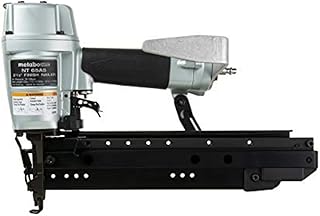


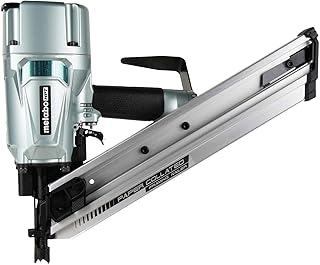
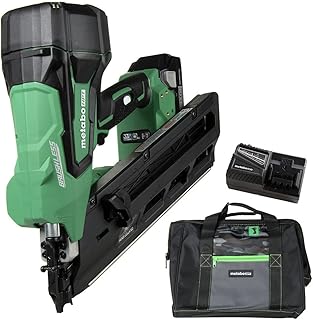


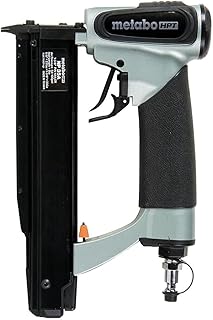


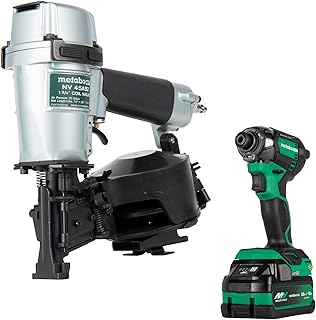


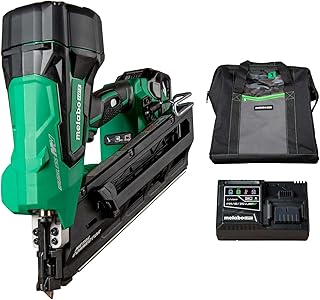
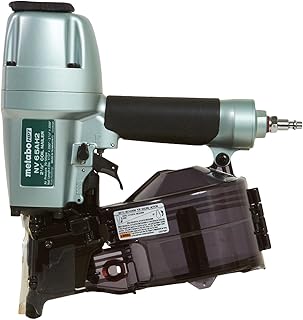
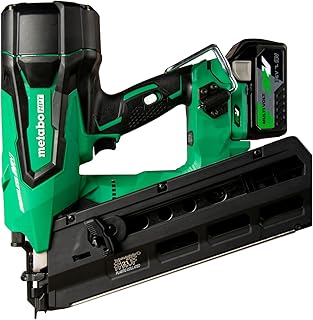
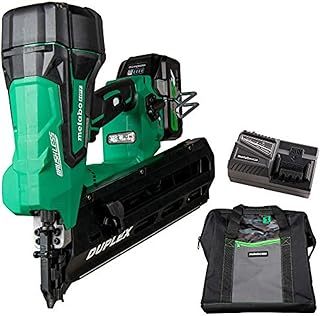

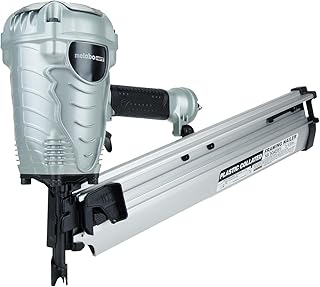
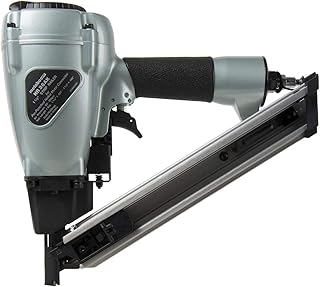
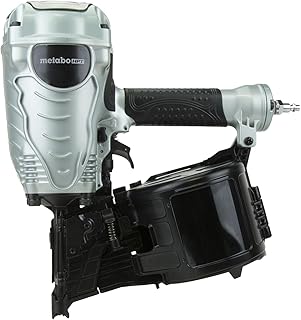

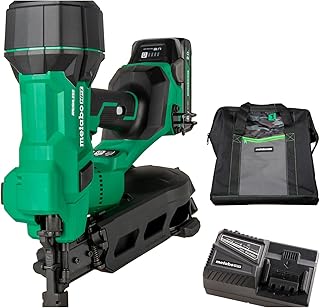
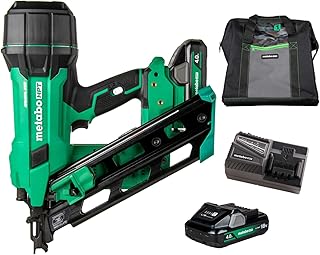
Choosing the best Metabo HPT cordless nail gun in Canada requires more than comparing battery voltage or looking at the number of customer reviews. Metabo HPT offers cordless nailers for very different jobs, including finish work, brad nailing, framing, subflooring, sheathing and other construction applications. The correct model depends mainly on the fastener type, nail length, material, firing mode, battery platform, working environment and frequency of use.
For Canadian buyers, it is also important to verify the exact model number and configuration before ordering. Some Metabo HPT nailers are sold as complete kits with batteries and chargers, while others are bare tools. Specifications, included accessories and regional availability can also differ between configurations.
This buying guide focuses on the information that matters when comparing Metabo HPT cordless nail guns for the Canadian market in 2026. Use the specifications and application guidance below to narrow the choices before checking current retailer pricing, verified customer reviews and availability.
The first decision is not battery size. It is the type of fastening work you need to perform. An 18-gauge brad nailer is designed for very different applications from a 16-gauge finish nailer or a 21-degree framing nailer.
Never select a nailer simply because it has a higher voltage or a larger battery. Fastener compatibility and application suitability are much more important.
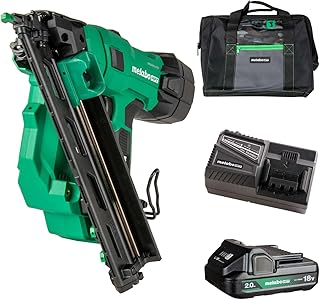
The NT1850DE is an 18-gauge cordless brad nailer intended for applications such as moulding, cabinetry, wainscoting, window casing and decorative trim. Metabo HPT specifies compatibility with 18-gauge brad nails from 5/8 inch to 2 inches. The manufacturer also lists an Air Spring Drive System, selective actuation, tool-less depth-of-drive adjustment and an LED light.
The published specifications make this model particularly relevant when the priority is finish work rather than structural framing. Its 100-nail magazine capacity and 18V platform are useful specifications to compare when evaluating productivity and portability. Metabo HPT's documentation lists a weight of approximately 7.3 pounds including the compact battery configuration.
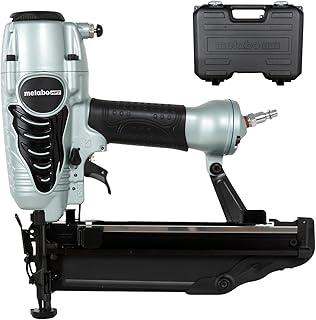
A 16-gauge finish nailer occupies the middle ground between delicate brad work and heavy framing. The NT1865DM family is designed for users who need a larger finish fastener for applications where an 18-gauge brad may not provide the desired holding power.
The current Metabo HPT product range includes MultiVolt versions such as the NT1865DMST. The manufacturer's product information lists 18V battery options and compatibility with several 18V and 18V/36V MultiVolt battery configurations.
When comparing this category, pay close attention to the exact model suffix. Battery and charger inclusion can vary, so two listings carrying similar model names may not represent the same package.
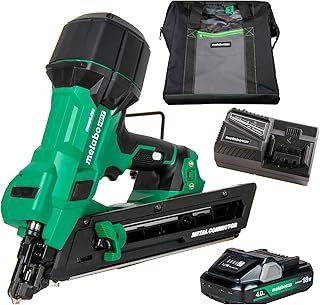
The NR1890DC family is aimed at framing applications rather than fine trim. Metabo HPT documentation specifies 2-inch to 3-1/2-inch fasteners, selective firing modes and a brushless motor platform. The exact configuration determines details such as magazine capacity and weight.
This category makes more sense for construction professionals and serious users who regularly need framing-length nails. It is generally excessive for simple picture-frame trim, cabinetry touch-ups or small interior finishing projects.
The NR1890DR range provides another important framing option. The Canadian Metabo HPT listing for the NR1890DRQ4 specifies compatibility with 21-degree round-head plastic strip nails measuring 2 to 3-1/2 inches, with diameters from .113 to .131 inch. It also lists sequential and bump firing modes, tool-less depth adjustment, a brushless motor, an on-tool battery indicator and compatibility with 18V and 36V lithium-ion batteries.
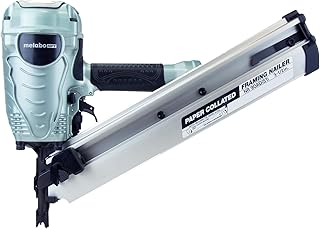
Because fastener collation and angle are critical for framing nailers, verify the nail specification before buying. A nailer designed around 21-degree plastic-collated framing nails should not be treated as interchangeable with every other framing nailer format.
Gauge describes the approximate thickness of the nail. A lower gauge number generally represents a thicker fastener. This distinction is important because the nailer's magazine, nose assembly and driving mechanism are designed around a particular fastener family.
An 18-gauge nailer is usually the better choice when minimizing visible holes and working with relatively delicate trim materials matters. It is commonly considered for decorative trim, cabinet components, moulding and similar finish applications.
The NT1850DE accepts 5/8-inch to 2-inch 18-gauge brads according to Metabo HPT's Canadian product information.
A 16-gauge finish nailer uses a thicker fastener and is appropriate when the project requires more substantial fastening than typical brad-nailing applications. It can be useful for heavier trim, door and window casing and other finish-carpentry tasks, subject to the nailer's specifications and the material being fastened.
Framing nailers are built for substantially larger fasteners. Models in the Metabo HPT NR1890 family accept framing nails in lengths reaching 3-1/2 inches. These machines are intended for construction tasks rather than delicate finishing.
One of the distinctive technologies used in several Metabo HPT cordless nailers is the Air Spring Drive System. Rather than requiring a conventional pneumatic hose and external compressor, the cordless mechanism is designed to provide a driving system based on compressed air within the tool.
Metabo HPT describes this system as providing performance similar to its pneumatic nailers. The company's product information also highlights quick response and zero ramp-up characteristics on applicable models.
For a buyer, the practical point is simple: cordless operation eliminates the need to manage an air hose and compressor. This can make movement around a jobsite easier, particularly when working on ladders, in unfinished buildings or in areas where dragging an air line is inconvenient.
Battery compatibility can significantly affect the total cost of a cordless nailer. Before selecting a kit or bare tool, check whether you already own compatible Metabo HPT batteries and whether the nailer supports the same battery family.
Several Metabo HPT nailers use 18V slide-style lithium-ion batteries, while MultiVolt-compatible models can also support compatible 18V/36V batteries. The manufacturer's current product information identifies a range of compatible battery configurations for the NT1865DMST.
Do not assume that every Metabo HPT cordless tool uses every battery. Confirm compatibility using the exact model number.
Always compare the complete package rather than comparing the advertised tool price alone.
Fastener compatibility is one of the easiest areas to overlook. A nailer is not universal simply because it is cordless.
For example, the NT1850DE is specified for 18-gauge brad nails from 5/8 inch to 2 inches. A Metabo HPT framing model such as the NR1890DRQ4 accepts 21-degree round-head plastic-collated framing nails from 2 to 3-1/2 inches and specifies a .113- to .131-inch diameter range.
Before buying, match four details:
Using an incorrect fastener can cause feeding problems, jams, poor driving performance or an unsafe operating condition. Always follow the specific nailer's manual and approved fastener specifications.
Magazine capacity affects how often you need to stop and reload. It is especially relevant for repetitive production work.
The NT1850DE documentation lists a 100-nail capacity, while the NR1890DRQ4 Canadian specifications list a 37-nail capacity.
A larger magazine does not automatically make a nailer better. Framing nails are considerably larger than brads, so capacity needs to be considered alongside fastener size and application.
Selective actuation can make a cordless nailer more versatile. Sequential firing is generally suited to controlled placement, where the user wants to position the nose and fire one fastener at a time. Contact or bump-style operation can be useful for faster repetitive work when the application permits it.
Metabo HPT lists selectable firing modes on several cordless nailers, including the NT1850DE and NR1890DRQ4.
For precision trim, controlled sequential operation is often the more appropriate starting point. For repetitive framing work, contact operation may improve workflow when permitted by the job and when the operator is trained to use it safely.
Depth adjustment controls how deeply the fastener is driven into the material. This matters because different materials respond differently to the same driving force.
A finish nail driven too deeply can leave an unnecessarily large recess or damage the work surface. A fastener that sits proud can interfere with finishing and create an uneven appearance.
Tool-less depth adjustment is therefore an important feature when moving between materials or fastener lengths. Metabo HPT lists tool-less depth adjustment on models including the NT1850DE and NR1890DRQ4.
Weight matters more than many buyers expect. A cordless nailer may appear manageable during a short test, but repeated overhead fastening can make an unbalanced tool tiring.
When comparing models, consider:
Metabo HPT lists the NR1890DRQ4 at 10.8 pounds with battery, demonstrating why framing users should consider balance and handling as carefully as raw driving performance.
Brushless motors are common in Metabo HPT cordless nailers. The manufacturer describes brushless technology as contributing to runtime, durability and reduced maintenance on applicable framing models.
For occasional DIY work, motor technology may not be the deciding factor. For professional users who operate the tool frequently, durability, battery efficiency and serviceability can become much more important.
An 18-gauge Metabo HPT cordless brad nailer is worth considering when the project involves smaller finish fasteners and portability is valuable.
The NT1850DE specifically lists moulding, cabinetry, wainscoting, window casing and decorative trim among its intended applications.
A framing nailer is a fundamentally different tool. The NR1890DRQ4, for example, is listed for framing, subflooring, roof decking and wall sheathing.
This type of nailer is appropriate when your project calls for long, larger-diameter framing fasteners. It is not a sensible substitute for a brad nailer simply because it offers more driving power.
The main advantage of a cordless nailer is mobility. There is no air hose connecting the tool to a compressor, which can simplify setup and movement.
Pneumatic systems can still make sense in workshops and production environments where a compressor and air distribution system are already available. A cordless system may be more convenient for mobile jobs, punch-list work and locations where transporting an air compressor is inconvenient.
When comparing the two systems, consider the complete setup rather than the nailer alone. For a pneumatic tool, that may include the compressor, hose, fittings and power source. For a cordless tool, consider batteries, charger availability and the number of batteries needed for continuous work.
Higher voltage does not automatically mean a better nailer for every project. A compact 18-gauge tool can be a better choice than a larger framing model if your work involves interior trim.
Framing nailers can use different magazine angles and collation systems. A 21-degree framing nailer must be matched with compatible nails. Metabo HPT lists 21-degree round-head plastic-collated nails for the NR1890DRQ4.
A bare tool and a complete kit can have very different values depending on your existing battery collection. Check the listing carefully for battery, charger, carrying case and other included accessories.
A larger battery may provide more runtime, but it can increase the total weight of a tool used repeatedly throughout the day. Choose battery capacity based on actual workflow rather than automatically choosing the largest available pack.
Gauge, length, head design and collation must all match the nailer. Verify each specification before purchasing large quantities of fasteners.
Model numbers and package configurations can vary by market. The exact Canadian listing should be checked before purchase rather than relying on a similarly named US product page.
For a useful side-by-side comparison, evaluate the following criteria in order:
Canadian users may work across a wide range of conditions, from heated workshops to unfinished construction sites. Cordless tools can be particularly convenient when electrical access or compressor placement is inconvenient.
Temperature can also affect battery behaviour. Follow the battery manufacturer's operating, charging and storage instructions rather than assuming that a battery will perform identically in every environment.
When working outdoors or in unfinished structures, protect the tool from moisture, excessive dust and conditions outside the manufacturer's specified operating range. A cordless nailer should be treated as precision equipment, not as a weatherproof tool unless the manufacturer specifically states otherwise.
A nail gun should always be treated as a high-energy fastening tool. Features such as selective actuation, dry-fire lockout and controlled depth adjustment can improve usability, but they do not replace safe operating practices.
Metabo HPT's Canadian framing nailer specifications include a dry-fire lockout on applicable models, while its product listings also identify safety glasses among certain package contents.
Proper maintenance helps preserve reliable operation. Start with the manufacturer's manual because maintenance requirements differ by model.
Metabo HPT identifies authorized service centres as part of the service process for applicable products.
If your primary work is installing interior moulding and decorative trim, start by comparing 18-gauge brad nailers. The NT1850DE is specifically positioned for applications such as moulding, cabinetry and decorative trim.
If you routinely install heavier finish materials and need a larger fastener, compare the 16-gauge NT1865DM family and verify the precise nail range for the model you intend to purchase.
If you are building walls, framing structures or installing sheathing and subflooring, move to the NR1890 family and compare the exact framing nail angle, fastener diameter, nail length and collation type required for your project.
Metabo HPT should not be evaluated in isolation. Buyers may also compare cordless nailers from brands such as DEWALT, Milwaukee, Makita, Bosch and Ryobi, depending on their existing battery platform and local Canadian availability.
The most useful comparison is not simply brand against brand. Compare the exact model against the exact model using the same criteria: fastener compatibility, driving performance, weight, battery ecosystem, firing modes, magazine capacity, depth adjustment, warranty terms and service support.
For someone already invested in a Metabo HPT battery ecosystem, platform compatibility may make a Metabo HPT nailer more attractive than a competing tool that requires an entirely separate battery and charger system.
Metabo HPT uses detailed model numbers and suffixes to distinguish different configurations. A product may be available as a complete kit, bare tool or Canada-specific configuration.
For example, the Canadian listing for the NR1890DRQ4 explicitly identifies it as a tool-body-only product and states that it includes safety glasses and a pivoting rafter hook but no battery.
Always compare the full model number before relying on a specification found elsewhere. This simple step can prevent purchasing the wrong battery package or fastener configuration.
An 18V Metabo HPT cordless nailer can be a strong fit for users who value mobility and already use compatible batteries. It can also make sense for contractors who frequently move between rooms or jobsites and do not want to manage an air compressor and hose.
For occasional DIY projects, the best choice depends on the type and frequency of work. Buying a specialized framing nailer for a few small trim projects can add unnecessary cost and weight. Conversely, relying on an 18-gauge brad nailer for structural work is inappropriate because the fastener and tool are not designed for that purpose.
The best Metabo HPT cordless nail gun in Canada is the model that matches your fastener requirements and working conditions, not necessarily the most powerful or expensive option. Start with the application, then determine the required nail gauge and length. After that, compare battery compatibility, weight, firing modes, depth adjustment, magazine capacity and package contents.
For fine trim and decorative work, an 18-gauge model such as the NT1850DE deserves attention. For heavier finish carpentry, compare the 16-gauge NT1865DM family. For structural framing, investigate the NR1890DC and NR1890DR families and verify the exact fastener specification for the selected model.
Before purchasing, compare the exact model number, current Canadian retailer availability, verified customer feedback, battery configuration, compatible fasteners and today's price. A careful specification check is more useful than choosing based solely on star ratings or a product headline.
There is no single best model for every buyer. The right choice depends on the application. An 18-gauge model is more appropriate for many trim and decorative applications, a 16-gauge model is suited to heavier finish work, and a framing model is designed for structural construction applications.
Metabo HPT has a broad cordless nailer range covering brad, finish and framing applications. Its cordless products include features such as brushless motors, Air Spring Drive Systems and selective actuation on applicable models.
The NT1850DE is designed for 18-gauge brad nails from 5/8 inch to 2 inches.
The NR1890DRQ4 accepts 21-degree round-head plastic-collated framing nails from 2 to 3-1/2 inches, with a specified diameter range of .113 to .131 inch.
Many Metabo HPT cordless nailers use 18V lithium-ion batteries. Certain MultiVolt models also support compatible 18V/36V battery configurations. Always verify compatibility against the exact model number before purchasing or installing a battery.
The cordless models discussed here are designed to operate without an external air compressor and hose. Metabo HPT's Air Spring Drive System is intended to provide pneumatic-like driving characteristics without the external compressor setup.
Usually, it is better to use a nailer designed for the specific trim fastener required. Framing nailers accept substantially larger fasteners and are designed for construction applications. For decorative trim, an appropriately specified brad or finish nailer is generally the more suitable category.
Choose a bare tool if you already own compatible batteries and a charger. A complete kit can be more convenient when starting a battery platform from scratch. Compare the complete package and not just the advertised tool price.
Weight becomes increasingly important during repetitive or overhead work. Compare the tool with the battery installed because the battery contributes to the actual working weight.
Check the exact model number, nail gauge, nail length, fastener diameter, collation type, magazine angle, battery compatibility, firing modes, weight, package contents, warranty information, current Canadian availability and verified customer feedback.
The strongest way to choose a Metabo HPT cordless nail gun is to match the tool to the job first and the battery ecosystem second. The NT1850DE is focused on 18-gauge brad applications, the NT1865DM family addresses 16-gauge finish work, and the NR1890DC and NR1890DR families target framing applications with substantially larger fasteners.
For Canadian buyers in 2026, verify the exact regional model, fastener compatibility, included battery configuration and current retailer information before making a purchase. That approach gives you a much better chance of selecting a nailer that fits your project, existing tools and long-term workflow.