

♥ Wishlist
We analyzed 45 of the most popular DeWalt Chainsaws available in ca. Compare features, customer reviews, ratings, and expert recommendations to help you choose the best option in 2026.










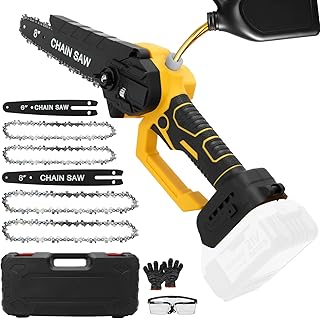


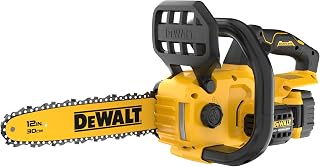


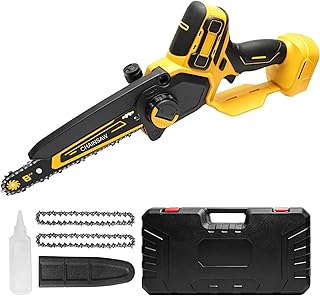


Choosing a DEWALT chainsaw is not simply a matter of selecting the longest bar or the most powerful-looking model. The right chainsaw depends on the type of cutting you expect to do, the size and species of wood, how frequently you will use the saw, and whether battery portability or maximum cutting endurance is more important. Canadian buyers should also consider cold-weather operation, battery availability, replacement chains, maintenance requirements, and the practical differences between electric and gas-powered equipment.
DEWALT has a broad reputation in the power-tool market, particularly among users who already own cordless equipment from the brand. Its chainsaw range can therefore be especially attractive to homeowners, property owners, tradespeople, and outdoor users who want to build around an existing battery platform. However, compatibility is only one part of the buying decision. Bar length, chain speed, motor design, lubrication, chain adjustment, safety controls, weight, and overall handling can have a major effect on how comfortable and productive a saw is during real cutting work.
Battery-powered chainsaws have become a practical option for many cutting tasks that previously required a gas engine. A cordless DEWALT chainsaw can be useful for pruning, cutting branches, preparing firewood, clearing storm-damaged limbs, and handling general property maintenance. The absence of fuel mixing, exhaust emissions at the point of use, and engine warm-up can make battery equipment convenient for occasional users.
The main limitation is energy capacity. Runtime depends on battery capacity, wood density, cutting diameter, chain condition, temperature, operator technique, and the specific saw. A larger battery may provide more usable cutting time, but it can also add weight. For this reason, buyers should evaluate the complete tool-and-battery combination rather than judging a chainsaw solely by its advertised voltage.
One of the strongest reasons to consider a DEWALT cordless chainsaw is compatibility with an existing DEWALT battery ecosystem. If you already own compatible DEWALT batteries and chargers, adding a chainsaw may be more convenient than adopting a completely different platform.
Before purchasing, check the exact battery platform specified for the chainsaw. Do not assume that every DEWALT battery fits every DEWALT cordless tool. Product generations and voltage platforms can differ, and compatibility should always be confirmed against the manufacturer's current specifications.
Battery capacity is normally expressed in amp-hours, while the tool platform is identified by voltage. These figures should not be interpreted as a guaranteed runtime. A chainsaw cutting hardwood continuously will place a much greater demand on the battery than a saw used intermittently for small branches.
For occasional yard work, a smaller battery may offer a useful balance between runtime and weight. For longer cutting sessions, having multiple compatible batteries can be more practical than relying on one very large pack. Canadian users should also remember that cold temperatures can affect battery performance, making storage and operating conditions important during winter.
Bar length is one of the easiest specifications to understand, but it is also one of the most commonly misunderstood. A longer guide bar can provide greater cutting reach, but it can increase weight and make the saw less convenient for smaller jobs. A shorter bar can be easier to control and may be better suited to pruning and light property maintenance.
For typical residential work, choosing a bar that matches the diameter of the material you regularly cut is usually more sensible than buying the largest available option. Oversizing a chainsaw can reduce maneuverability without providing a meaningful benefit for routine jobs.
A compact chainsaw can be suitable for smaller branches, garden maintenance, and occasional firewood preparation. The lower weight can make repeated cuts less tiring, particularly when working from ground level.
A longer bar may be more appropriate when cutting larger logs within the limits specified by the manufacturer. However, bar length should never be treated as a substitute for motor capability. A saw needs sufficient power and the correct chain configuration to operate effectively with a particular bar.
Chain speed can influence how quickly a chainsaw moves through wood. However, a higher published chain-speed figure does not automatically mean that one model will outperform another in every situation. Cutting performance is affected by motor output, chain design, chain sharpness, wood species, moisture, diameter, operator pressure, and lubrication.
A properly sharpened chain on a well-maintained saw can make a substantial practical difference. If the chain becomes dull, the motor may have to work harder while cutting becomes slower and less controlled. Buyers should therefore consider replacement-chain availability and sharpening requirements as part of the overall ownership experience.
Motor design is another specification worth examining when comparing cordless chainsaws. Brushless motors are commonly associated with efficient power delivery, reduced mechanical wear associated with brushes, and modern electronic control systems. Brushed motors use a different construction and can still be suitable for many applications.
For frequent users, a brushless model may be attractive because it is designed around a modern cordless-tool architecture. For occasional users, however, motor type should be considered alongside price, battery compatibility, ergonomics, warranty terms, and the actual workload.
Proper chain lubrication is essential for efficient chainsaw operation. Automatic oiling systems are designed to deliver lubricant to the cutting chain during use, reducing the need for constant manual application.
Automatic lubrication does not eliminate maintenance. The oil reservoir still needs to be checked, the appropriate bar-and-chain oil should be used according to the manufacturer's instructions, and oil passages should be kept clear. A chainsaw that is run with inadequate lubrication can experience excessive friction, heat, and accelerated wear.
Tool-free chain adjustment can make routine maintenance more convenient. Chain tension changes as the saw is used, and a properly tensioned chain is important for safe and effective operation.
A useful buying consideration is not merely whether adjustment is described as tool-free, but whether the tensioning system is straightforward to access and easy to use while wearing appropriate protective equipment. Always follow the specific adjustment procedure supplied with the chainsaw.
Chainsaws are powerful cutting machines and should be treated as serious equipment regardless of whether they use a battery or gasoline engine. A buying decision should therefore include safety features and operating procedures rather than focusing exclusively on cutting performance.
Safety features cannot replace proper training or safe cutting technique. Buyers who have never operated a chainsaw should learn appropriate procedures before attempting substantial cutting work.
Chainsaw weight becomes increasingly important during repeated cuts. A specification sheet may make two saws appear similar, yet their balance, handle position, battery placement, and overall feel can make them behave differently during use.
Consider where you will normally cut. Ground-level firewood work places different demands on the operator than pruning branches or clearing fallen limbs. A compact and well-balanced chainsaw may be preferable for frequent repositioning, while a larger model may be justified when cutting substantial material.
Handle positioning influences control and comfort. The front handle should provide a secure grip while the rear handle should allow the operator to maintain control of the saw's trigger and cutting direction. Grip comfort becomes particularly relevant during longer sessions.
Firewood preparation is a common reason Canadians consider a chainsaw. The best choice depends on the diameter and quantity of wood being processed. A homeowner cutting occasional small logs does not necessarily need the same equipment as someone processing large quantities of hardwood.
When preparing firewood, consider bar length, battery capacity, chain type, sharpening requirements, and the availability of replacement components. If the saw will be used for prolonged cutting sessions, multiple batteries or a different power source may be more practical than a compact battery setup.
Storm cleanup can involve branches, trunks, tangled limbs, and partially fallen trees. These conditions can be considerably more challenging than routine yard maintenance. A chainsaw selected for occasional pruning may not be appropriate for larger storm-damaged timber.
Always assess whether a fallen or damaged tree can be safely handled by the operator. Trees under tension can move unexpectedly when cut, and large or unstable trees may require professional tree-service expertise. A chainsaw should not be selected solely because it appears capable of cutting through a particular diameter.
The choice between cordless electric and gas power depends heavily on the intended workload.
For homeowners and users who already own compatible DEWALT batteries, a cordless model can be an attractive solution for routine property work. For extensive professional forestry work, a purpose-built gas chainsaw may remain more appropriate depending on the application.
A larger saw is not automatically a better saw. Excess size can increase weight and reduce maneuverability. Choose a chainsaw according to the work you actually expect to perform.
A cordless tool may look inexpensive when viewed without its battery and charger. Check whether the configuration you are considering includes the battery and charging equipment you need. If not, include those components when comparing total ownership cost.
Voltage is useful for identifying a battery platform, but it does not provide a complete picture of cutting performance. Motor design, electronics, chain speed, bar configuration, battery capacity, and workload all matter.
Chains are wear components. Before buying, verify that the correct replacement chain is readily identifiable and available for the exact model and bar configuration.
Canadian operating conditions can vary dramatically. Battery-powered equipment may behave differently in cold temperatures, so users should follow the battery manufacturer's storage and operating guidance. Avoid storing lithium-ion batteries in unsuitable conditions.
A properly sharpened chain should produce chips appropriate to the cutting operation. A dull chain may produce excessive fine debris, require more force, cut slowly, or cause the saw to behave differently during the cut.
Repeated sharpening eventually reduces the cutting teeth enough that replacement becomes appropriate. Chain sharpening should be performed using the correct file size, angles, and depth-gauge specifications for the chain. Users who are unfamiliar with chain maintenance should follow the manufacturer's instructions or use a qualified service provider.
Replacement chains are not universal. Pitch, gauge, drive-link count, and bar length all need to correspond to the chainsaw's configuration. Buying a chain based only on bar length can result in an incompatible component.
When purchasing replacement parts, record the exact chainsaw model and inspect the information printed or specified for the original bar and chain. This is more reliable than assuming that a similarly sized chain will fit.
DEWALT is not the only brand worth considering. Buyers may also compare cordless chainsaws from established manufacturers such as Milwaukee, Makita, EGO, Greenworks, Husqvarna, and STIHL, depending on their requirements and the battery ecosystem they already use.
The strongest comparison is not simply brand versus brand. Compare the specific models using bar length, battery platform, chain speed, weight, included equipment, maintenance system, replacement-part availability, safety features, and intended workload.
DEWALT and Milwaukee both have extensive cordless tool ecosystems. For someone already invested in one platform, battery compatibility can be a deciding factor. Compare the exact chainsaw models rather than assuming that one entire brand is superior.
Makita has a long history in cordless power equipment. Buyers comparing it with DEWALT should focus on the battery systems they already own, the intended chainsaw application, ergonomics, available configurations, and replacement components.
EGO focuses heavily on cordless outdoor power equipment. A comparison with DEWALT can be useful for buyers who are deciding whether their priority is integration with a broader power-tool ecosystem or a dedicated outdoor-equipment battery platform.
STIHL and Husqvarna have deep experience in chainsaws and outdoor power equipment. Their product ranges include equipment designed for homeowners as well as demanding forestry applications. DEWALT can be particularly appealing to buyers who prioritize cordless tool-platform compatibility, while STIHL or Husqvarna may deserve consideration for specialized chainsaw applications.
A good purchase is one that matches the equipment to the work. A compact cordless chainsaw can be an excellent choice for a homeowner who needs occasional branch cutting, while a larger model may make more sense for regular firewood preparation.
Look beyond headline specifications. Consider how often you will use the saw, how much wood you normally cut, whether you already own compatible batteries, how much weight you can comfortably handle, and how easily you can obtain replacement chains and other wear components.
Start by defining the job rather than searching for the highest-rated or most powerful model. Identify the typical branch and log diameter, expected cutting frequency, required portability, and available battery platform. Then compare models that fit those requirements.
Once you have narrowed the selection, compare the complete package. Look at whether the product configuration includes a battery and charger, the specified bar and chain, weight, adjustment system, lubrication system, safety controls, and the availability of compatible replacement parts. Prices can change, so checking current retailer listings is important when making a final purchasing decision.
Customer reviews can provide useful information, but they should be interpreted carefully. A reviewer cutting small branches around a suburban property has a different use case from someone processing hardwood firewood every weekend.
Look for reviews that describe the actual application, cutting diameter, operating frequency, battery configuration, and maintenance experience. Pay particular attention to recurring observations rather than isolated comments. Product specifications and manufacturer documentation should remain the primary sources for technical compatibility and safety information.
A DEWALT cordless chainsaw can make sense for homeowners, property owners, DIY users, and tradespeople who need a portable saw for suitable cutting tasks and value compatibility with a DEWALT battery ecosystem.
It may be less appropriate for users who routinely process very large timber for extended periods and need continuous high-output cutting. In those situations, compare the intended application carefully with professional-grade alternatives and consider whether battery charging logistics are practical.
Brand familiarity is useful, but it should not replace application-based selection. Even within one manufacturer's range, different chainsaws can have substantially different capacities, dimensions, battery requirements, and intended uses.
The best approach is to select the required class of chainsaw first and then compare suitable models from DEWALT and competing brands. This prevents a familiar brand name from becoming the only factor in a safety-critical equipment purchase.
The best DEWALT chainsaw depends on the cutting work, bar length required, battery platform, expected runtime, and user preference for size and handling. There is no single model that is ideal for every Canadian buyer.
Suitable DEWALT cordless models can handle appropriate firewood-cutting tasks within their specified capacity. The correct choice depends on log diameter, wood type, cutting frequency, battery capacity, and bar configuration.
A suitable DEWALT chainsaw can cut hardwood when operated within its specified capabilities and fitted with the correct sharp chain. Hardwood can place greater demands on the cutting system, so chain condition and battery capacity are important considerations.
There is no universal runtime figure because battery life varies with battery capacity, wood diameter, species, cutting technique, chain condition, temperature, and the specific chainsaw model. Manufacturer specifications for the exact tool and battery combination should be checked.
They can be a practical option for homeowners who need a cordless chainsaw for suitable property-maintenance tasks. Buyers should select the model according to the work rather than choosing solely on brand reputation.
Chainsaws require appropriate lubrication for the cutting chain and guide bar. The exact oil requirements and maintenance procedure should be confirmed in the instructions for the specific model.
No. Battery compatibility depends on the specific chainsaw and battery platform. Always verify compatibility using the manufacturer's current product information before purchasing or connecting a battery.
Not necessarily. A longer bar can increase cutting reach and capacity, but it can also add weight and reduce maneuverability. The ideal bar length is the one appropriate for the material you normally cut.
Sharpening frequency depends on usage, wood type, chain condition, and whether the chain contacts dirt or other abrasive material. Instead of following an arbitrary schedule, inspect cutting performance and maintain the chain according to the manufacturer's recommendations.
For occasional property maintenance, cordless equipment can offer convenience and easy starting. For prolonged heavy-duty cutting, gas-powered equipment may offer advantages in continuous operation. The appropriate choice depends on workload, maintenance preferences, battery availability, and operating conditions.
The best DEWALT chainsaw for a Canadian buyer is ultimately the model that provides the right combination of cutting capacity, portability, battery compatibility, runtime strategy, ergonomics, maintenance requirements, and safety features for the intended job.
For light property maintenance, compact cordless equipment can provide a convenient alternative to traditional gas saws. For larger firewood tasks or demanding cutting schedules, buyers should look more closely at bar capacity, battery strategy, chain performance, and overall workload. The smartest purchase is not necessarily the biggest or most powerful model. It is the one whose specifications align with the work you actually need to perform.
Before buying, compare the exact model specifications, included accessories, compatible batteries, replacement components, current Canadian pricing, and verified customer feedback. Product configurations and availability can change throughout 2026, so checking the latest information before placing an order is an important final step.