

♥ Wishlist
We analyzed 47 of the most popular Bosch Cordless Impact Wrench available in ca. Compare features, customer reviews, ratings, and expert recommendations to help you choose the best option in 2026.


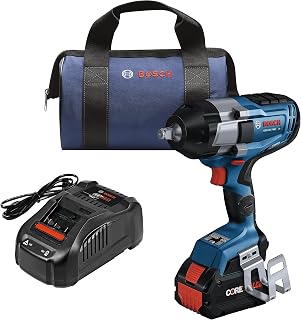


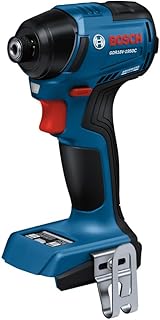


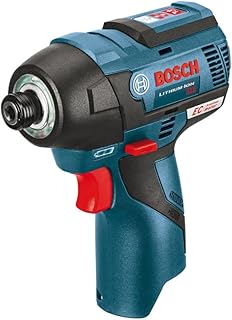


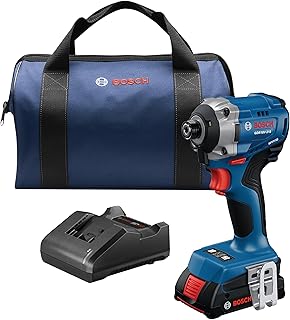


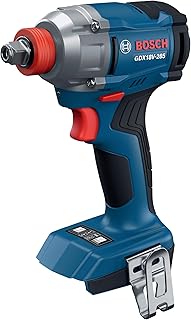


Choosing a Bosch cordless impact wrench is less about finding the tool with the biggest torque number and more about matching the drive size, torque range, battery platform, physical size and control features to the fasteners you actually work with. Bosch's Canadian 18V range includes dedicated impact wrenches as well as GDX two-in-one tools that combine a 1/2-inch square drive with a 1/4-inch hex interface.
For automotive work, equipment maintenance, construction, structural fastening and general mechanical repairs, those differences matter. A compact two-in-one model can be more versatile for mixed fastening jobs, while a dedicated PROFACTOR impact wrench is generally the more appropriate direction when the primary requirement is high torque for larger fasteners.
One of the most important distinctions to understand before buying is the difference between Bosch GDS and GDX models.
For example, Bosch lists the GDX18V-285 as a two-in-one tool with a 1/4-inch hex shank and 1/2-inch square drive, while the GDS18V-770 is a dedicated 3/4-inch impact wrench.
The GDS18V-740 is a dedicated 18V impact wrench with a 1/2-inch drive. Bosch's Canadian specifications list up to 740 ft-lbs of fastening torque and 1,180 ft-lbs of breakaway torque, along with three speed and torque settings. This combination makes it a particularly relevant model for buyers who want substantial mechanical fastening capability without moving to a larger 3/4-inch drive.
A key buying consideration is whether the kit or bare-tool version is being compared. Battery and charger inclusion can materially change the overall value, especially for a buyer who is not already invested in Bosch's 18V battery ecosystem.
The GDS18V-770 is a larger 3/4-inch PROFACTOR impact wrench intended for high-demand fastening. Bosch lists up to 770 ft-lbs of fastening torque and 1,250 ft-lbs of breakaway torque, with three speed and torque settings. The tool is designed around Bosch's BITURBO Brushless system and compatible high-power CORE18V batteries.
The 3/4-inch drive is an important distinction. It is not simply a more powerful substitute for every 1/2-inch wrench. Larger sockets and fasteners are common reasons to choose this format, while its greater physical size and weight can make a 1/2-inch model more practical for routine automotive or lighter mechanical work.
The GDS18V-740CB14 is a PROFACTOR configuration that includes an 8 Ah CORE18V high-power battery. Bosch specifically describes the included battery as providing substantially more runtime and power than its 4 Ah CORE18V counterpart.
This type of kit deserves attention from buyers who need sustained performance rather than simply the lowest initial purchase cost. A larger battery can also affect the tool's overall balance and handling, so battery capacity should be evaluated together with runtime requirements and ergonomics.
The GDX18V-285 is a two-in-one 18V impact driver/wrench. Bosch lists a maximum of 2,500 in-lbs of driving torque and 360 ft-lbs of maximum breakaway torque, with a 1/2-inch square drive and 1/4-inch hex interface. It also provides two speed and torque settings and automatic driving features intended to help with controlled fastening.
This is an especially interesting choice for users who do not want to carry both an impact driver and a mid-torque impact wrench for every job. However, buyers should not automatically compare its in-lbs torque figure with the fastening-torque figures of larger dedicated GDS wrenches without considering the different tool categories and intended applications.
The GDX18V-1860C combines a 1/4-inch hex interface and 1/2-inch square drive while providing up to 1,860 in-lbs of torque. Bosch lists three speed and torque settings, advanced modes, Auto Bolt Release and compatibility with the Bosch PRO360 App when the appropriate connectivity hardware is used.
The connected features can be useful for professional users who want more control over fastening behaviour. This model makes more sense when versatility and adjustable fastening control are important than when the sole requirement is maximum socket-wrench output.
The GDX18V-1800 is another two-in-one Bosch 18V option, with a 1/4-inch hex shank and 1/2-inch square drive. Bosch lists up to 1,800 in-lbs of torque and up to 4,200 impacts per minute, along with electronic cell and motor protection.
Its two-in-one format makes it worth considering for general construction, maintenance and mixed fastening applications where the convenience of switching between bits and sockets is valuable.
The GDX18V-1600 provides the same basic two-in-one concept but is rated at up to 1,600 in-lbs of torque. Bosch specifies a 1/2-inch square drive, 1/4-inch hex interface and hammer-and-anvil impact mechanism.
For buyers who already own Bosch 18V batteries and want a versatile tool rather than a dedicated high-torque wrench, this format can be a sensible middle ground.
Torque is one of the most heavily advertised specifications on an impact wrench, but it is also one of the easiest to misunderstand. A product page may list fastening torque, breakaway torque, maximum torque or driving torque. These figures should not automatically be treated as interchangeable.
A high breakaway rating does not guarantee that every seized bolt will come loose. Rusted, damaged or heavily corroded fasteners can require penetrating fluid, heat, mechanical techniques or a larger tool depending on the application and safety requirements.
Drive size should be selected according to the fasteners and sockets you expect to use, not simply according to the torque number.
The GDS18V-770 illustrates why drive size matters: it uses a 3/4-inch square drive and is designed for large bolts, nuts and anchors.
Bosch's 18V ecosystem gives buyers an important advantage if they already own compatible batteries and chargers. However, not every 18V battery is equally suited to every high-demand application.
High-output impact wrenches can place considerably more demand on a battery than light-duty cordless tools. Bosch identifies recommended battery packs for several of its higher-performance models, including the GDS18V-770.
When comparing a bare tool with a complete kit, check all of the following:
Bosch states that its 18V cordless platform is part of the AMPShare system, which is designed for multi-brand compatibility across participating cordless products. Bosch also identifies AMPShare compatibility on several of its 18V impact tools.
Compatibility should still be checked by exact battery and tool model rather than assumed from the word "18V" alone. Before purchasing a bare impact wrench, verify the manufacturer's listed compatible battery packs and charging equipment.
Brushless motors are common across Bosch's professional cordless range because they can provide an efficient, electronically controlled drive system without conventional motor brushes. Bosch's PROFACTOR tools add BITURBO Brushless technology and are designed to work with high-power CORE18V batteries.
For a buyer, the practical question is not simply whether a tool is brushless. Consider the entire system: motor output, battery capability, thermal management, control electronics, speed settings, tool weight and intended duty cycle.
Maximum power is useful for breaking loose stubborn fasteners, but maximum power is not necessarily desirable during final fastening. A tool with multiple speed or torque settings gives the operator more opportunity to reduce the risk of overdriving a fastener or damaging a workpiece.
Bosch models such as the GDS18V-740 and GDS18V-770 provide three speed and torque settings. The GDX18V-1860C adds multiple control modes and customizable settings when connected features are available.
Even with electronic control, an impact wrench should not automatically be treated as a torque wrench. Where a manufacturer or vehicle specification calls for a precise final torque value, use an appropriate calibrated torque wrench according to the applicable service instructions.
The anvil retention system affects how quickly sockets can be changed and how securely they remain attached. Friction rings are convenient for frequent socket changes, while through-hole or pin-retention arrangements can provide a different style of socket security.
When buying, inspect the exact Bosch model rather than assuming that every wrench in the range uses the same anvil configuration. The GDS18V-770, for example, is specified with a friction ring and thru-hole.
An impact wrench can have impressive specifications and still be the wrong choice if it is unnecessarily heavy or awkward for the work. Weight becomes especially important when the tool is used above shoulder height, at awkward angles or repeatedly throughout a working day.
Look at the complete working weight, including the battery, rather than judging ergonomics from the bare-tool weight alone. Larger-capacity batteries may improve runtime but can change balance and increase fatigue.
Compact GDX models can be attractive where access and versatility are more important than maximum wrench output. Bosch lists the GDX18V-285 at 2.4 lb as a bare tool and the GDX18V-1800 at 2.5 lb, illustrating the relatively compact format of these two-in-one designs.
For automotive work, the ideal Bosch model depends on whether the work is primarily passenger-vehicle maintenance or heavier commercial and equipment applications.
Wheel-lug removal is only one part of automotive use. Suspension fasteners, brake components, engine-bay fasteners and seized hardware can have very different requirements. Always follow the vehicle manufacturer's service specifications for final tightening torque.
Construction users often benefit from versatility rather than maximum torque alone. If a typical workday includes structural fasteners, concrete anchors, bolts and impact-driver tasks, a GDX two-in-one may reduce the need to carry separate tools.
For applications involving large anchors or heavy mechanical fastening, a dedicated GDS model may make more sense. The correct choice depends on fastener size, socket requirements, frequency of use, accessibility and the amount of sustained work expected from the tool.
Heavy-duty users should prioritize drive size, fastening and breakaway capability, battery output, duty cycle, ergonomics and socket availability. The GDS18V-770's 3/4-inch drive and PROFACTOR design place it in a substantially different category from compact two-in-one GDX tools.
Do not select a heavy-duty wrench simply because its specification sheet has the highest number. If most of your work involves smaller fasteners, a large wrench may add unnecessary weight and bulk without improving productivity.
Canadian buyers should evaluate the complete purchase rather than comparing tool-only prices. A seemingly inexpensive bare tool can become less attractive if you also need a compatible battery, charger and suitable sockets.
Cold conditions can affect cordless-tool performance, particularly battery behaviour. A battery that has been stored in a very cold environment may not perform the same way as it does at normal indoor temperatures.
For winter work, avoid making assumptions about battery performance based solely on its nominal amp-hour rating. Follow Bosch's instructions for battery storage, charging and operating temperatures. Keep batteries protected from unnecessary exposure to extreme cold and allow them to reach an appropriate temperature before charging when required by the manufacturer's instructions.
Use sockets designed for impact-tool applications rather than assuming that ordinary chrome hand-tool sockets are suitable. Impact-rated sockets are engineered for the repeated shock loading associated with impact tools.
The socket must also match the wrench's drive size. A 1/2-inch impact wrench requires compatible 1/2-inch-drive sockets, while a 3/4-inch wrench such as the GDS18V-770 requires the appropriate 3/4-inch-drive socket system.
When two Bosch models appear similar, use a structured comparison instead of focusing on one specification.
There is no single Bosch impact wrench that is objectively best for every Canadian buyer. The best choice is the model whose capability matches the work without creating unnecessary size, weight or cost.
An impact wrench is a high-energy fastening tool and should be treated accordingly. Wear appropriate eye protection and use suitable impact-rated accessories. Keep hands clear of moving components and maintain a secure stance when breaking loose heavily loaded fasteners.
For vehicle work, support the vehicle correctly before working underneath it. Do not rely on an impact wrench to determine the final torque of safety-critical fasteners unless the applicable manufacturer procedure explicitly permits that method.
Never use a damaged socket or accessory, and stop using the tool if it shows signs of electrical, mechanical or battery damage. Consult the Bosch operating instructions for model-specific safety requirements.
Bosch model numbers can provide useful clues, but they should not be interpreted without checking the complete product description.
For example, Bosch lists the GDX18V-1860CN as a bare tool and the GDX18V-1860CB25 as a kit that includes two 4 Ah batteries, a charger and other accessories.
The right model depends on the application. For general 1/2-inch socket work, compare Bosch's GDS models. For mixed socket and bit applications, consider a GDX two-in-one. For larger fasteners, a 3/4-inch PROFACTOR model such as the GDS18V-770 may be more appropriate.
It can function as both. Bosch GDX models combine a 1/4-inch hex interface for impact-driving bits with a 1/2-inch square drive for sockets.
A 1/2-inch drive is a practical format for many automotive applications, but the required torque varies considerably by vehicle and fastener. Check the manufacturer's service specifications and choose the Bosch model according to the actual fasteners you need to remove and install.
No. Breakaway torque is useful for comparing loosening capability, but it does not guarantee that a particular seized fastener will come loose. Corrosion, thread condition, joint loading, socket fit and battery condition all influence real-world results.
Bosch 18V impact tools use compatible Bosch 18V batteries, while some higher-performance models have recommended battery packs intended to achieve their stated performance. Always verify the exact model's battery requirements before buying.
Impact wrenches should be used with sockets designed and rated for impact applications. Choose the correct drive size and ensure the socket is properly secured to the anvil.
Battery capacity and battery power capability are related but not identical concepts. A larger amp-hour battery can provide more stored energy, while a high-power battery may also be designed to deliver the output demanded by high-performance tools. Bosch specifies recommended battery packs for some of its PROFACTOR models.
Buyers who already own compatible Bosch batteries and chargers may find a bare tool more practical. New users should compare the complete kit because purchasing the battery and charger separately can change the overall cost and convenience.
No. Although both categories can perform socket-related fastening, they are designed differently. A GDX emphasizes two-in-one versatility, while a dedicated GDS impact wrench is purpose-built around wrenching applications. The appropriate choice depends on the required drive size, torque, access and workload.
Follow the service and inspection recommendations in the manual for the exact model. Routine care should include checking the tool, battery, anvil and accessories for visible damage and keeping the equipment clean and properly stored.
A useful buying guide should not rank impact wrenches by a single headline specification. A meaningful comparison considers torque, drive size, speed control, battery requirements, tool weight, ergonomics, socket compatibility, included equipment and intended application.
Product specifications can also vary by market and kit configuration. For that reason, Canadian shoppers should verify the exact model number, included accessories and current manufacturer information before purchasing. Bosch's Canadian product pages provide model-specific technical information for products such as the GDS18V-740, GDS18V-770, GDX18V-285 and GDX18V-1860C.
The strongest choice is therefore not necessarily the most powerful Bosch impact wrench. It is the one that provides sufficient fastening capability, fits the required sockets, works with the battery system you intend to use, and remains manageable for the jobs you perform in Canadian working conditions.