

♥ Wishlist
We analyzed 3 of the most popular Bosch Cordless Bandsaw available in ca. Compare features, customer reviews, ratings, and expert recommendations to help you choose the best option in 2026.
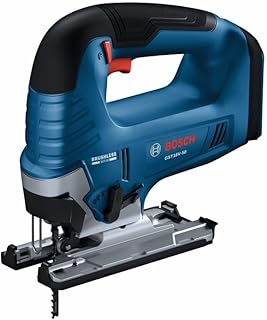
Choosing a Bosch cordless bandsaw is less about finding the most powerful-looking model and more about matching cutting capacity, blade dimensions, battery requirements, ergonomics and intended material to the work you actually perform. For Canadian buyers, it is also important to confirm the exact model number, included accessories, battery configuration and local availability before purchasing because Bosch sells different configurations and related bandsaw models across markets.
Bosch's Canadian power-tool range currently includes cordless bandsaws such as the GCB18V-2N and GCB18V-5N, while Bosch Professional also identifies the GCB 18V-63 as an 18V cordless bandsaw in its Professional system. Specifications and package contents can differ by market and variant, so the model number should always be checked rather than relying only on a product photograph or abbreviated retailer title.
A portable bandsaw uses a continuous loop of toothed blade that travels around wheels inside the housing. Unlike a reciprocating saw, the blade moves continuously in one direction, which can produce controlled cuts through suitable metal, pipe, conduit and profiles while reducing the aggressive back-and-forth movement associated with some other portable saw designs.
The cordless format adds another advantage: there is no power cord running from the workpiece to an electrical outlet. That can be particularly useful for installers, electricians, plumbers, HVAC technicians, fabricators and construction workers who make repeated cuts away from a permanent workshop.
Bosch's 18V ecosystem is also an important consideration. The Canadian Bosch range includes multiple 18V tools and batteries, while Bosch states that its AMPShare-compatible products are designed to work across compatible participating 18V platforms. Compatibility should nevertheless be verified for the specific tool, battery and charger combination before purchase.
Cutting capacity is one of the most important numbers on a portable bandsaw specification sheet. It describes the maximum material dimension the saw is designed to accommodate in a particular configuration. A larger capacity can make the tool more versatile, but it can also mean a larger and heavier machine.
For example, Bosch lists a maximum cutting capacity of 2.5 inches for the Canadian GCB18V-2N compact band saw. Bosch Professional lists a maximum cutting depth of 63.5 mm for the GCB 18V-63. These figures are close enough to be relevant to similar classes of work, but buyers should not assume that every Bosch bandsaw has the same capacity.
When comparing models, consider the largest pipe, conduit, tubing or profile you routinely cut rather than choosing a capacity based solely on occasional maximum-size jobs.
Blade length, width and thickness determine whether a replacement blade is suitable for a particular saw. The Bosch GCB 18V-63, for example, is specified with a 733 × 12.7 × 0.35 mm blade.
Before buying replacement blades, verify all relevant dimensions against the manufacturer's specification. A blade that appears visually similar may still be unsuitable because of differences in length, width, thickness, tooth configuration or intended material.
Tooth count is another major consideration. A higher teeth-per-inch configuration can be appropriate for thinner material, while a coarser blade can be more suitable for thicker sections when the blade and application guidelines permit it.
Do not select a blade solely by asking for the highest or lowest TPI. The correct choice depends on material thickness, material type, tooth geometry and the saw manufacturer's compatibility requirements.
Bosch's GCB 18V-63 documentation identifies an 18 TPI blade in its listed package configuration, illustrating why buyers should check the exact accessory specification for the model they are considering.
Motor design affects cutting behaviour, efficiency and the tool's suitability for demanding applications. Bosch uses different motor and electronic configurations across its cordless portfolio, so it is useful to distinguish between a model designed primarily for compactness and one engineered around higher cutting capacity or heavy-duty performance.
For the GCB18V-2N, Bosch lists a cut rate of 530 surface feet per minute and describes the tool as suitable for common metal materials including conduit, uni-strut, threaded rod, copper pipe and black pipe.
Speed alone should not determine a purchase. A fast blade is not automatically better if the tool's capacity, blade compatibility, handling characteristics or battery setup do not match the work.
Variable-speed control can be useful when working with different materials or when a more controlled cutting approach is preferable. Fixed-speed models can be simpler to operate and may still be highly effective when the tool is designed around a particular range of applications.
The Canadian GCB18V-2N specification currently lists variable speed as unavailable, demonstrating why buyers should check the detailed technical data rather than assuming that every cordless bandsaw includes a variable-speed trigger.
A cordless bandsaw is only as useful as its battery strategy. If you already own compatible Bosch 18V equipment, a bare-tool package can be attractive because you may not need to purchase another battery and charger. If you are entering the Bosch platform for the first time, the total system cost is more important than the advertised tool-only price.
Battery capacity also influences the practical balance between runtime and weight. A larger-capacity battery can provide more stored energy, but it can add weight to a tool that may already be used overhead or at arm's length.
Bosch's Canadian battery range includes multiple CORE18V capacities, including 6 Ah, 8 Ah and 12 Ah options. The appropriate battery should be selected according to the tool's compatibility requirements, expected workload and ergonomic needs rather than simply choosing the largest available capacity.
Compare the complete package rather than the tool price alone.
Compactness is valuable when the saw has to fit between framing members, inside mechanical rooms, around pipework or in overhead positions. A smaller body can also make repeated cuts less tiring.
Bosch describes the GCB18V-2N as a compact 18V band saw designed for tight work areas. Bosch lists a tool weight of 7.3 lb, a 2.5-inch maximum cutting capacity, a centred handle, soft-grip main handle, LED illumination and a tool-free blade guard.
That makes the compact category particularly relevant to buyers who value access and portability over maximum possible material capacity.
A larger-capacity bandsaw can be preferable when the regular workload involves larger profiles or deeper cuts. Bosch Professional's GCB 18V-63, for example, is specified for a maximum cutting depth of 63.5 mm and weighs 3.3 kg excluding the battery in the cited specification.
Portable bandsaws are frequently used while standing, reaching, working around obstacles or making cuts at unusual angles. The physical design therefore matters almost as much as raw motor performance.
A centred or well-positioned handle can make it easier to guide the saw through a workpiece while keeping the user's wrist in a comfortable position. Bosch specifically highlights the centred handle and soft-grip main handle on the GCB18V-2N.
Tool-only weight is not the same as working weight. Always consider the battery as part of the real carrying load.
This is especially important for overhead work. A saw that feels manageable for a few cuts at bench height can become substantially more tiring when repeatedly held above shoulder level.
Good balance can make accurate cuts easier because less effort is required to prevent the tool from twisting or dropping away from the intended cut line. When comparing products, look beyond total weight and consider where the motor, battery and handle are positioned.
An integrated LED can improve visibility of the cutting area in dim workshops, mechanical spaces and construction environments. Bosch includes an LED light on the GCB18V-2N and identifies LED illumination as a feature of the GCB 18V-63.
Blade replacement should not be treated as an afterthought. Portable bandsaws consume blades, particularly when they are used frequently or when unsuitable blades are selected.
Tool-free blade-change mechanisms can reduce downtime and make routine maintenance more convenient. Bosch states that the GCB18V-2N has tool-free blade changing and a tool-free blade guard, while Bosch Professional describes a blade-tension release and protective guard with metal clips on the GCB 18V-63.
When evaluating a model, inspect how easily you can access the blade, release tension, remove the old blade and correctly install the replacement. Convenience is particularly valuable for professionals who change blades according to material or job requirements.
Portable bandsaws are commonly associated with metalworking, but the exact materials permitted by the manufacturer vary by model and blade.
The material list should never be interpreted as permission to cut every material with the same blade. Blade selection, tooth geometry, material thickness and the manufacturer's instructions all matter.
Two users can operate the same bandsaw and experience very different results because the blade is effectively the cutting interface between the machine and the workpiece.
An inappropriate blade can produce poor cut quality, premature tooth wear, overheating, excessive vibration or slow cutting. Selecting the correct blade therefore deserves as much attention as choosing the saw itself.
Common bandsaw blade constructions include carbon-steel and bi-metal designs, with specialised options available for particular materials. The best choice depends on the workpiece and manufacturer's compatibility guidance.
Tooth shape affects how aggressively the blade enters the material and how effectively chips are cleared. Variable-pitch designs can be useful in applications where changing tooth spacing helps manage vibration and cutting behaviour.
As a general selection principle, the workpiece should engage an appropriate number of teeth during cutting. A blade that is too coarse for thin stock can behave poorly, while an excessively fine blade may cut slowly in thicker material.
Bosch has a broad power-tool range, but not every Bosch cordless bandsaw is designed for the same workload. Model number, capacity, dimensions, weight and battery requirements should be compared before making a decision.
A tool-only listing can look less expensive until the cost of a compatible battery and charger is added. Conversely, buying another charger and battery when you already have a compatible Bosch 18V setup may be unnecessary.
Maximum capacity is useful only when you need it. A larger saw can be less convenient in confined spaces and may add unnecessary weight to overhead work.
A bandsaw is a consumable-blade system. Before purchasing, investigate the compatible blade size, tooth options and availability through reputable Canadian retailers.
Cutting speed should be considered alongside blade selection, capacity, ergonomics, battery performance and intended material. A single speed figure does not describe the complete cutting experience.
Retail listings may use similar model names while offering different configurations. Always verify the exact model number and the items included in the box.
A useful comparison should begin with the specifications that affect your actual work rather than with marketing descriptions.
A Bosch cordless bandsaw can be a strong fit for tradespeople and serious DIY users who regularly make controlled cuts through suitable metal or other manufacturer-approved materials and already use, or intend to use, an 18V cordless tool platform.
A portable bandsaw is not a universal replacement for every saw.
If your primary work involves large stationary stock and repeated production cutting, a stationary bandsaw or other workshop machine may be more appropriate. If you need demolition-style cutting through irregular materials, a reciprocating saw may be more versatile. For certain sheet-metal applications, a dedicated metal-cutting saw may provide a better solution.
The right tool depends on the material, thickness, cut geometry, required portability and frequency of use.
A reciprocating saw is often chosen for versatility and demolition. It can cut a wide range of materials with different blades and can reach awkward locations.
A portable bandsaw is more specialised. Its continuous blade path can be advantageous for controlled cuts through suitable pipe, conduit and profiles. It can also produce a different cutting action from a reciprocating saw, which may be desirable for particular metal-cutting tasks.
Choose a bandsaw when controlled metal cutting and repeatability are priorities. Choose a reciprocating saw when broader material versatility and aggressive cutting access matter more.
Metal-cutting circular saws can provide fast cutting and may be particularly attractive for certain sheet, plate, tubing and profile applications. However, their blade geometry, cutting path and operating requirements differ substantially from a bandsaw.
A bandsaw can be especially attractive when the workpiece shape and required cut are better suited to a narrow continuous blade. A circular saw can be preferable when its cutting capacity and blade design better match the job.
Bosch's Canadian range includes both 18V bandsaws and 18V metal-cutting circular saws, reinforcing the importance of choosing the saw type according to application rather than assuming one cordless technology is inherently superior.
Metal chips and dust can accumulate around the blade area, wheels and housing. Follow the manufacturer's cleaning instructions and avoid practices that could force debris deeper into electrical or mechanical components.
Before use, inspect the blade for damaged, missing or excessively worn teeth. A damaged blade should not be treated as a normal maintenance issue; it should be replaced according to the manufacturer's instructions.
Correct blade tension and tracking are essential to proper operation. Do not guess at adjustments if the manual specifies a particular procedure. Incorrect tension can affect cutting performance and may create unnecessary mechanical stress.
Remove loose material and position the workpiece securely. A bandsaw should be allowed to do the cutting rather than being forced through the workpiece.
Replacement blades and other accessories should be checked for correct dimensions and compatibility before installation.
Read the specific Bosch operating instructions before using the tool. The manual takes precedence over generic advice because different models can have different operating requirements.
Metal cutting can generate hot chips and sharp edges. The finished workpiece may also have burrs, so handling precautions remain important after the cut is complete.
Canadian shoppers should verify more than the headline product name. Check that the listing is for the Canadian market, that the exact model number corresponds with the manufacturer's Canadian documentation where applicable, and that the package includes the battery and charger configuration you actually want.
For current specifications, manuals, replacement-part information and product support, Bosch's Canadian website is a useful reference point. Bosch maintains Canadian product pages and a dedicated manuals and parts section for its power-tool range.
When comparing retailers, check the current price, package contents, seller information, delivery terms, return conditions and warranty information independently. These details can change and should not be inferred from an older review or an outdated product listing.
The value proposition of a cordless bandsaw becomes stronger when the battery platform already forms part of your regular toolkit. A single compatible battery ecosystem can reduce the number of different chargers and battery types needed in a workshop or on a jobsite.
Bosch describes its Professional 18V system as a broad platform covering drilling, fastening, cutting and other applications. Its battery range spans multiple capacities, allowing users to balance portability, runtime and power requirements.
However, platform compatibility should never replace tool-specific research. A battery that physically fits is not by itself proof that every feature, performance level or recommended configuration is identical across tools.
For frequent trade use, prioritise durability and workflow efficiency rather than cosmetic features.
These factors often have more practical value over the life of a tool than a single headline performance number.
Customer reviews can help identify recurring usability concerns, packaging problems or compatibility questions, but they should be interpreted carefully.
Look for patterns rather than relying on a single highly positive or negative comment. Reviews are more useful when they describe the material being cut, blade configuration, battery used, workload and operating conditions.
A review saying that a saw is "powerful" is less informative than one that explains the size and type of material being cut and whether the user was satisfied with handling, runtime and cut control.
Also separate reviews of the tool itself from reviews of the retailer, shipping experience or packaging. Those are different purchasing considerations.
For most buyers, the decision can be simplified into five stages.
This approach is generally more reliable than selecting a model from a ranked list without considering your actual applications.
There is no single best Bosch cordless bandsaw for every Canadian buyer. The right choice depends on required cutting capacity, material, frequency of use, battery platform, desired portability and budget. Bosch's Canadian lineup includes more than one 18V bandsaw, so comparing the exact specifications is more useful than choosing solely from a generic "best" ranking.
Yes. Bosch describes the GCB18V-2N as an 18V compact band saw intended for tight work areas. Its Canadian specification lists a 2.5-inch maximum cutting capacity and a 7.3 lb tool-only weight.
Bosch Professional lists a maximum cutting depth of 63.5 mm for the GCB 18V-63. The cited specification also lists an 18V battery system and a 733 × 12.7 × 0.35 mm saw blade.
Several Bosch cordless bandsaws are built around the company's 18V systems. The exact compatible battery families depend on the specific model, so buyers should verify the manufacturer's compatibility information for the saw they intend to purchase.
Bosch's Professional 18V system is designed around battery compatibility across its 18V tool range, subject to the specific product's compatibility requirements. Bosch also describes AMPShare compatibility for participating 18V products. Always verify compatibility before purchasing or mixing batteries and tools.
Not necessarily. A bandsaw is particularly useful for controlled cutting of suitable pipe, conduit and profiles, while a reciprocating saw is generally more versatile for demolition and irregular-access applications. Many professional tool collections benefit from having both.
No. Extra capacity can be useful if you regularly cut larger material, but it may come with additional size or weight. For overhead work and confined spaces, a compact model can be more practical.
It depends on the package. Some products are sold as bare tools, while other configurations can include batteries and chargers. The exact package contents should be checked before purchasing. Bosch's Canadian GCB18V-2N product page, for example, identifies the product as a bare tool.
It is extremely important. Blade dimensions, tooth count, tooth geometry and blade material all influence whether a blade is appropriate for a particular workpiece. Always use blades compatible with the saw and intended for the material being cut.
There is no universal replacement interval. Blade life depends on the material, thickness, cutting frequency, blade quality, operating technique and maintenance. Replace a blade when it becomes damaged, excessively worn or no longer performs correctly according to the manufacturer's guidance.
The manufacturer's Canadian product pages and manuals are the best starting points for model-specific specifications, compatibility and safety information. Retail listings can then be used to compare current package contents and purchasing terms.
The best Bosch cordless bandsaw for a Canadian buyer is the model that fits the work rather than the model with the most impressive specification on paper. Start with the material and workpiece size, then consider cutting capacity, blade compatibility, weight, balance, battery requirements and maintenance.
If compactness and access are priorities, Bosch's GCB18V-2N is worth examining because Bosch positions it specifically around compact operation and lists a 2.5-inch cutting capacity. If your work calls for a different capacity or configuration, compare it against the other Bosch bandsaw options available in Canada rather than assuming the compact model is automatically the best choice.
Before ordering, verify the current model number, Canadian package contents, battery configuration, blade specification and retailer terms. Prices, stock status and package combinations can change, so current purchasing information should always be checked at the time of purchase.