

♥ Wishlist
We analyzed 18 of the most popular Milwaukee Cordless Drywall Cutter available in ca. Compare features, customer reviews, ratings, and expert recommendations to help you choose the best option in 2026.


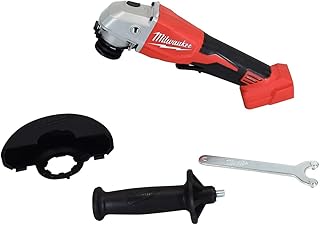

Choosing the right cordless drywall cutter is about more than battery voltage or motor speed. For drywall installation, electrical cut-ins, renovation work and finishing tasks, the ideal tool should offer controlled cutting, convenient depth adjustment, comfortable handling and enough runtime for the job. Milwaukee has several cordless tools that can be useful for drywall-related work, but they are not all designed for the same application.
The Milwaukee M18 Cut Out Tool 2627-20 is the model most directly associated with dedicated cut-out work. It uses a 4-pole motor rated at 28,000 RPM, provides tool-free depth adjustment and is compatible with M18 batteries and chargers. Milwaukee also offers the 2627-22 and 2627-22CT configurations, which package the same basic cut-out tool with different battery and accessory combinations.
This guide focuses on the factors Canadian buyers should evaluate before choosing a Milwaukee cordless drywall cutter, including tool type, battery platform, cutting control, ergonomics, accessories, dust management, maintenance and total ownership considerations.
A cordless drywall cutter is a compact rotary cutting tool designed to make controlled openings and cut-outs in drywall and similar sheet materials. Unlike a conventional circular saw, it is typically easier to manoeuvre around electrical boxes, outlets, fixtures, openings and irregular shapes.
A dedicated cut-out tool uses a small rotating bit rather than a large circular blade. This design allows the operator to guide the tool around a template, box or marked opening while removing material efficiently.
For renovation work, cordless operation is particularly useful because there is no power cord crossing the floor or restricting movement around walls and ceilings. The trade-off is that battery capacity, charging time and platform compatibility become important buying considerations.
The M18 Cut Out Tool 2627-20 is the most directly relevant Milwaukee option when the primary requirement is making drywall cut-outs. Milwaukee specifies a 28,000 RPM 4-pole motor, tool-free depth adjustment, an LED light, REDLINK overload protection and compatibility with the wider M18 battery system.
The tool-only configuration makes particular sense for buyers who already own compatible M18 batteries and a charger. It avoids paying for another battery kit when the required power platform is already available.
The 2627-22 is a kit configuration built around the 2627-20 cut-out tool. Milwaukee lists two M18 REDLITHIUM XC extended-capacity battery packs, a multi-voltage charger, contractor bag and belt clip in the kit.
This configuration can be more appropriate for someone entering the M18 platform or for a professional who wants additional batteries for continuous work. The main advantage is convenience: the buyer does not need to source the basic battery and charging equipment separately.
The 2627-22CT packages the M18 Cut Out Tool with two compact M18 batteries, a multi-voltage charger and a contractor bag. It uses the same 2627-20 tool platform, so the major difference is the included battery configuration rather than a fundamentally different cutting mechanism.
Compact batteries can be attractive when tool weight and manoeuvrability are more important than maximum battery capacity. For extended drywall work, however, buyers should consider whether compact packs provide the runtime they need.
The M18 FUEL Drywall Screw Gun should not be confused with a drywall cut-out tool. It is designed for driving drywall screws rather than cutting openings. Nevertheless, it belongs in a broader drywall-tool comparison because installers often need both cutting and fastening equipment.
The 2866-20 uses a POWERSTATE brushless motor rated at 4,500 RPM and includes Auto Start functionality. Milwaukee also specifies compatibility with M18 batteries.
If your main task is fastening drywall sheets, this is a more appropriate tool category. If you need to cut around electrical boxes or create openings, a dedicated cut-out tool is the better match.
The 2866-22 is a kit version of the M18 FUEL Drywall Screw Gun. It includes the 2866-20 tool, two M18 REDLITHIUM XC5.0 batteries, a charger, contractor bag, PR2 bit and belt clip.
It is best considered a complementary drywall installation tool rather than a substitute for the M18 Cut Out Tool. Understanding this distinction prevents a common purchasing mistake: selecting a drywall screw gun when the actual requirement is precision cut-out work.
The M12 FUEL 3-Inch Compact Cut Off Tool is another Milwaukee cutting tool, but it is not a dedicated drywall cut-out tool. It is designed for multi-material cutting and uses a 20,000 RPM POWERSTATE brushless motor. Its accessory package includes cutting options for several materials.
Its compact size can make it useful for selected renovation tasks, but buyers should not automatically treat a cut-off tool as equivalent to a rotary drywall cutter. Blade-based cutting and rotary bit cutting have different handling characteristics and application strengths.
The 2522-21XC includes the M12 FUEL compact cut-off tool, an M12 XC 4.0 battery, charger, cutting accessories and a contractor bag.
This can be worth considering when a buyer needs a compact multi-material cutting tool and already has reasons to invest in the M12 platform. It should still be evaluated according to the actual cutting task rather than simply being labelled a drywall cutter.
An oscillating multi-tool can handle certain drywall plunge-cutting and trimming applications, particularly where access is restricted. Milwaukee also offers an adjustable depth stop for compatible M12 FUEL and M18 FUEL oscillating multi-tools. The accessory provides adjustable cutting depth from 0 to 35 mm.
This category is particularly useful when versatility matters. However, a multi-tool and a dedicated cut-out tool provide different cutting motions, ergonomics and workflow advantages.
The M18 FUEL oscillating multi-tool can be a strong alternative for users who need one cordless platform for multiple renovation applications. It can be used for selected plunge-cutting tasks when fitted with a suitable accessory and controlled according to the material and required depth.
The main advantage is versatility rather than specialization. A dedicated cut-out tool remains easier to justify when drywall cut-outs represent a large portion of the workload.
The M18 FUEL SAWZALL is another broader cutting option that may be useful during demolition and renovation. It is not a direct replacement for a drywall cut-out tool, but it can perform rough cutting where precision and edge finish are less important.
Milwaukee's current M18 FUEL SAWZALL range includes models with features such as adjustable shoes, LED lighting and selectable cutting controls depending on the specific version.
The biggest distinction is specialization. The M18 Cut Out Tool was designed around compact, controlled cutting rather than general-purpose material removal.
Its 28,000 RPM motor is paired with a small cutting bit, allowing the user to guide the tool through the material. Tool-free depth adjustment is especially useful because drywall thickness and cutting requirements can vary between applications.
The top-mounted ventilation design also directs debris away from the user, while the integrated LED can improve visibility around darker work areas. These details are easy to overlook when comparing tools solely by battery voltage or motor speed.
Think about the openings you normally create. Cutting around electrical boxes, recessed fixtures and other installed components requires control. Large demolition cuts have different requirements.
A dedicated rotary cut-out tool is generally more suitable when clean, controlled openings are the priority. A reciprocating saw may be more useful for rough removal, while an oscillating multi-tool can be advantageous in confined areas.
Battery compatibility can be one of the most important considerations. If you already own several M18 tools, an M18 cut-out tool can reduce the need to maintain another battery ecosystem.
Buyers starting from scratch should compare the complete system cost rather than the bare-tool price. A tool-only model may appear cheaper but can require a battery and charger purchase.
Higher-capacity batteries can provide longer working sessions, but they can also add weight. Compact batteries can make a handheld tool easier to manoeuvre, especially when working overhead or in tight areas.
The best battery is therefore not automatically the largest one. Match capacity to workload, working position and the number of batteries available for rotation.
Depth control is important when cutting drywall near cavities containing electrical cables, plumbing or other concealed components. A tool with convenient depth adjustment gives the operator greater control over how deeply the cutting accessory enters the material.
Depth adjustment should be considered alongside safe working practices. No depth setting eliminates the need to understand what may be behind the drywall before making a cut.
Drywall work often involves repetitive movements and awkward positions. Handle shape, tool balance, overall weight and access to the controls can affect comfort over a long installation session.
For overhead work, a lighter configuration may be easier to control. For demanding continuous work, a balanced tool and suitable battery combination can matter more than a small difference in headline specifications.
Do not assume that every rotary bit or cutting accessory is appropriate for every application. Check the tool's instructions and accessory requirements before use.
It is also worth considering how easily replacement bits can be obtained in Canada. A tool is less convenient if compatible consumables are difficult to source when a job is underway.
A tool-only package is usually the logical choice for an existing Milwaukee M18 user who already has suitable batteries and a charger. The 2627-20 is designed around this type of purchase.
A complete kit can be more practical for someone building an M18 collection. The 2627-22 includes batteries and a charger, while the 2627-22CT uses compact battery packs and includes a multi-voltage charger.
Before buying, calculate the complete ownership cost. Include batteries, charger, spare bits and other consumables rather than comparing only the advertised tool price.
Milwaukee's M18 and M12 platforms serve different priorities. M18 is the larger platform and includes the dedicated 2627 Cut Out Tool. M12 tools can be attractive when compact dimensions and lower overall tool size are priorities.
For a dedicated drywall cut-out requirement, the M18 Cut Out Tool has a clear advantage because it is specifically designed for the application. For broader renovation work, an M12 or M18 oscillating multi-tool can provide greater application flexibility.
The best platform is often the one that matches the rest of your tool collection. Battery interchangeability can simplify charging, storage and job-site logistics.
A drywall screw gun drives fasteners. It does not replace a dedicated cut-out tool. Milwaukee's M18 FUEL Drywall Screw Gun 2866-20, for example, is engineered around screw installation and Auto Start operation.
A compact cut-off tool can cut many materials, but that does not make it equivalent to a drywall cut-out tool. The cutting method, accessory and handling characteristics are different.
A bare tool may be the best value for an existing Milwaukee user. For a new user, however, the required battery and charger can substantially change the overall investment.
High rotational speed is only one specification. Controlled depth, comfortable handling, bit compatibility and visibility can be equally important when making precise openings.
Cutting bits wear over time. Before buying, identify the correct replacement accessories and determine whether they are readily available through Canadian retailers.
Drywall can conceal electrical wiring, plumbing and other building components. Before cutting, identify the location of concealed services and understand the structure behind the panel.
Drywall produces fine dust during cutting. Good workspace preparation can make cleanup easier and reduce airborne dust.
Where appropriate, consider compatible dust-management equipment and follow the tool manufacturer's recommendations. Keep the work area ventilated when practical and avoid allowing accumulated dust to interfere with the tool's ventilation openings.
Dust control is especially important in occupied homes, finished rooms and renovation projects where cleanup time matters.
Mark the opening carefully before cutting. If the opening needs to accommodate an electrical box or fixture, measure from reliable reference points rather than relying on visual estimation.
Use the correct depth setting and avoid forcing the tool. Let the cutting accessory perform the work while maintaining a controlled feed rate.
For repeated openings, a consistent marking method can improve accuracy. Templates can also help when multiple openings need to match, provided they are appropriate for the application.
Routine maintenance helps keep a cordless cutting tool ready for the next job. After use, inspect the cutting bit, collet area, ventilation openings, battery contacts and exterior housing.
Do not continue using a tool that shows unusual vibration, damage, electrical problems or other signs of malfunction. Refer to the manufacturer's instructions and service information for appropriate action.
The Milwaukee M18 Cut Out Tool is particularly relevant to drywall installers, electricians, remodelers, contractors and serious DIY users who regularly create controlled openings in drywall.
It can also make sense for an existing M18 user who wants a specialised tool without adding another battery platform. Milwaukee states that the 2627-20 is compatible with all M18 batteries and chargers.
For occasional DIY cutting, however, a multi-purpose tool may provide better overall value if the buyer does not frequently perform drywall cut-outs.
An oscillating multi-tool can be a better choice when versatility is more important than specialised drywall productivity. One tool can potentially handle trimming, plunge cuts, renovation work and other tasks when fitted with appropriate accessories.
Milwaukee's adjustable depth stop for compatible oscillating multi-tools is specifically designed to help control plunge-cut depth in drywall and other materials.
A compact cut-off tool makes more sense when the workload extends beyond drywall. The Milwaukee M12 FUEL 3-Inch Compact Cut Off Tool, for example, is designed for multi-material cutting and includes accessories intended for different cutting applications.
It is therefore better suited to a buyer who wants a general cutting tool rather than a dedicated drywall cut-out machine.
Canadian buyers should compare the exact model number rather than relying on product names alone. Tool-only and kit versions can have similar titles but substantially different included equipment.
Check the current Canadian retailer listing for the exact configuration, battery contents, charger, included accessories, replacement consumables and applicable seller terms before ordering.
Availability can change during the year, so it is sensible to compare multiple Canadian sources before making a purchase. Do not assume that a particular kit configuration is always stocked simply because the model exists in the manufacturer's catalogue.
Milwaukee should not be evaluated in isolation. Buyers can compare equivalent cordless cut-out tools from brands such as DEWALT, Makita, Bosch and RIDGID.
The most meaningful comparison is not simply the brand name. Look at motor performance, battery ecosystem, tool weight, depth control, accessory availability, ergonomics, warranty terms, service options and total ownership cost.
For users who already own several tools from one battery ecosystem, platform compatibility can outweigh small differences in individual specifications.
For buyers specifically looking for a dedicated Milwaukee drywall cut-out tool, the M18 Cut Out Tool 2627-20 is the most directly relevant model. It is designed for cut-out applications and includes tool-free depth adjustment, LED lighting and a 28,000 RPM 4-pole motor.
Yes. The M18 Cut Out Tool 2627-20 is designed for cut-out work and is the Milwaukee model most directly aligned with drywall cutting applications.
The 2627-20 is a tool-only configuration, so buyers should already have a compatible M18 battery and charger or budget for them separately.
The core cut-out tool is the same 2627-20 platform, while the 2627-22 is a kit that adds two M18 REDLITHIUM XC batteries, a charger, contractor bag and belt clip.
Both are kit configurations based on the M18 Cut Out Tool. The principal difference is the battery package: the 2627-22 uses extended-capacity M18 batteries, while the 2627-22CT includes compact M18 batteries.
Some M12 tools can perform selected drywall-related tasks, but the specific tool must be appropriate for the application. Milwaukee's M12 FUEL 3-Inch Compact Cut Off Tool is a multi-material cutter rather than a dedicated drywall cut-out tool.
No. A drywall screw gun is designed to drive drywall screws, while a cut-out tool is designed to remove material and create openings. Milwaukee's M18 FUEL Drywall Screw Gun 2866-20 is a fastening tool rather than a cutting tool.
No. Motor speed should be considered alongside cutting-bit design, depth control, ergonomics, visibility and the operator's ability to guide the tool accurately.
Choose a tool-only model if you already own compatible Milwaukee batteries and a charger. A kit may be more practical if you are new to the platform or need additional batteries for job-site use.
Check the exact model number, package contents, battery platform, battery capacity, included accessories, replacement-bit availability, current Canadian pricing and retailer terms. Specifications and kit contents should always be verified against the current product listing before purchase.
The best Milwaukee cordless drywall cutter is not necessarily the most powerful Milwaukee cutting tool. The right choice depends on whether you need dedicated drywall cut-outs, broader renovation versatility or a complete drywall installation setup.
For dedicated cut-out work, the M18 Cut Out Tool 2627-20 stands out as the most directly relevant Milwaukee option. Its dedicated design, 28,000 RPM motor, tool-free depth adjustment and M18 compatibility make it a logical starting point for comparison.
The 2627-22 and 2627-22CT are worth comparing when batteries and charging equipment are also required. Meanwhile, M12 cut-off tools, oscillating multi-tools and M18 drywall screw guns may be better choices when the buyer needs a different type of renovation capability.
Before purchasing in Canada, compare the exact configuration, battery requirements, accessories and current retailer information. Most importantly, choose the tool based on the work you actually perform rather than selecting solely from headline specifications.