

♥ Wishlist
We analyzed 45 of the most popular Makita Cordless Sanders available in ca. Compare features, customer reviews, ratings, and expert recommendations to help you choose the best option in 2026.










Choosing the right Makita cordless sander is less about finding the most powerful model and more about matching the sanding mechanism, pad design, speed control, dust collection and battery platform to the work you actually do. A compact random orbital sander can be an excellent all-purpose choice for woodworking, refinishing and surface preparation, while a finishing sander is better suited to controlled work over larger flat surfaces. A cordless belt sander serves a different purpose again, particularly when faster material removal or work in narrow areas is required.
For Canadian buyers, the decision also involves battery ownership, replacement abrasives, seasonal workshop conditions, dust management and the difference between a tool-only package and a complete kit. Makita's Canadian range includes several 18V LXT sanding tools, with different designs intended for different applications. The current Canadian catalogue includes models such as the DBO180, DBO480, DBO380 and DBS180, as well as specialised sanding and polishing tools.
Before comparing individual models, identify the type of sander you need. This single decision can prevent one of the most common buying mistakes: purchasing a well-equipped tool that is simply unsuitable for the intended job.
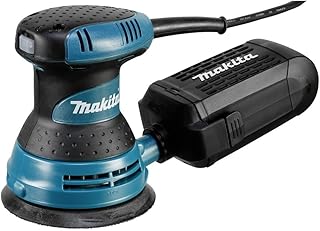
A random orbital sander moves the abrasive in an orbital pattern while the pad also rotates. This action helps produce a relatively consistent finish and reduces the risk of obvious repetitive sanding marks when the tool is used correctly. The Makita DBO180 is a 5-inch 18V LXT random orbital sander with a 123 mm pad, 125 mm abrasive disc size and three electronic speed settings covering 7,000 to 11,000 OPM.
This format is particularly versatile for woodworking, furniture preparation, removing old finishes, smoothing filler and preparing surfaces before painting or coating. A 5-inch disc is also a practical size for general workshop use because compatible abrasives are widely used for random orbital sanding.
Finishing sanders are designed around controlled, even sanding rather than aggressive stock removal. Their rectangular or sheet-style abrasive arrangements make them useful when working across broad flat surfaces and when a predictable finishing pattern is important.
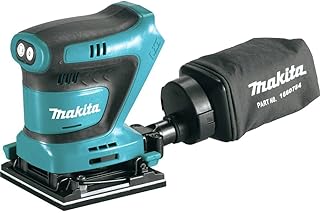
The Makita DBO480 is an 18V LXT 1/4-sheet finishing sander with two speed settings. Depending on the pad configuration, it can accept square, triangular or rectangular sanding arrangements, giving it more flexibility than a basic single-format finishing sander.
A 1/3-sheet design is useful when you prefer traditional sheet abrasives and want a larger rectangular sanding area. The Makita DBO380 is an 18V LXT brushless 1/3-sheet finishing sander designed with three speed ranges and dust-extraction provisions. Makita's Canadian catalogue continues to list the DBO380 family, although specific package and availability status should be checked before purchase because listings and inventory can change.
A cordless belt sander is not a direct substitute for a random orbital or finishing sander. It is designed for a different class of work. The Makita DBS180 is an 18V LXT brushless 3/8 x 21-inch belt sander with variable belt speed from 1,970 to 5,600 feet per minute. Its narrow belt format is especially relevant when sanding edges, narrow components, metalwork or confined areas.
Makita also offers compact sanding and polishing tools intended for applications that do not fit conventional palm-sander categories. These can be useful for detail work, fabrication, automotive applications or awkward surfaces. They should not automatically be ranked above a general-purpose sander simply because they offer a specialised feature set.
The sanding motion determines how the tool behaves on the workpiece. Random orbital action is versatile and suitable for general surface preparation. Finishing-sander motion is more controlled and works well on flat surfaces. Belt sanding is considerably more aggressive and should be selected when rapid material removal or narrow-area sanding is a priority.
Orbits per minute, or OPM, describe the frequency of orbital movement. A higher number is not automatically better. Different materials and abrasives respond differently to sanding speed.
Lower settings can be useful when greater control is required, while higher settings can improve productivity during appropriate stock-removal or finishing tasks. The DBO180, for example, provides three electronic speed levels within a 7,000 to 11,000 OPM range.
Variable speed is particularly valuable if one tool will be used on several materials. It gives the operator more control over heat generation, material removal and surface finish.
Pad size affects coverage and abrasive availability. A 5-inch random orbital sander offers a useful balance between manoeuvrability and surface coverage. Finishing sanders use different sheet or rectangular formats, so replacement-paper compatibility should be checked before buying.
Do not assume that all sanding discs or sheets are interchangeable. Confirm the exact dimensions, hole pattern, attachment method and intended pad configuration.
Hook-and-loop abrasives are convenient for quick disc changes and are common on random orbital sanders. Sheet-style finishing sanders may use clamps, hook-and-loop systems or support multiple paper arrangements depending on the model.
If you sand frequently, abrasive-change speed becomes a practical consideration. If you already have a supply of a particular abrasive format, compatibility may be more important than a small difference in headline specifications.
Brushless motor technology is particularly attractive for users who expect to operate a cordless tool regularly or for extended periods. Makita describes brushless motors on models such as the DBO380 and DBS180 as being designed to provide a high power-to-weight ratio and reduced heat buildup during prolonged applications.
However, a brushless motor should not be treated as the only indicator of overall suitability. Pad design, speed control, ergonomics, dust extraction and battery compatibility can have a greater effect on the experience for a particular job.
Battery compatibility is one of the strongest reasons to remain within a cordless tool platform. If you already own compatible Makita 18V LXT batteries and a charger, a tool-only sander may be much more practical than buying another complete kit.
Makita's compatibility information identifies the DBO180 among tools compatible with several 18V LXT battery capacities. Always verify the exact battery and charger requirements for the model and package being considered rather than assuming that every Makita battery is interchangeable with every Makita cordless product.
A tool-only package generally makes more sense for an existing Makita 18V LXT user who already has suitable batteries and a charger. A complete kit can be more convenient for someone entering the platform or adding a separate battery setup.
Battery capacity affects how long a cordless sander can operate before the battery needs charging, but runtime is not a fixed number. It varies with sanding pressure, material, abrasive condition, speed setting, battery capacity and work pattern.
A larger battery can extend operating time, but it can also add weight. This matters on a palm sander because the tool is often held directly over the workpiece for extended periods.
For prolonged horizontal sanding, additional capacity may be useful. For detailed or overhead work, a lighter battery may improve handling. The best choice depends on whether runtime or manoeuvrability is the higher priority.
Sanding produces fine airborne particles as well as larger dust. Effective extraction helps keep the work area cleaner and can make it easier to see the surface being sanded.
The Makita DBO180 uses dust extraction through holes beneath the pad and can be connected to compatible Makita vacuum systems using appropriate accessories.
The DBO480 also supports through-the-pad dust extraction and can be used with Makita cordless backpack or canister dust extractors.
When comparing models, look beyond the phrase “dust collection.” Check how the dust is captured, whether a dust bag is supplied, whether a vacuum connection is available and whether the required hose or adapter is included.
A sander may appear simple, but ergonomics can strongly affect productivity. Sanding often involves repetitive movement and prolonged contact with the workpiece, so grip shape, balance, weight and vibration matter.
Makita lists soft rubber grip designs on several cordless sanding models to help absorb vibration and improve handling. The DBO180 is also designed with a compact body and low centre of gravity for manoeuvrability.
When comparing two otherwise similar sanders, pay attention to where the battery is positioned and how the tool feels when held with one or two hands. A technically capable sander that is tiring to control may be less useful for long jobs than a lighter and better-balanced alternative.
The DBO180 is one of the most relevant Makita models to consider when looking for a general-purpose cordless random orbital sander in Canada. It uses the 18V LXT platform, a 5-inch abrasive disc and a 123 mm pad. Its stated operating range is 7,000 to 11,000 OPM, with a 1/8-inch, or 2.8 mm, orbit diameter.
Its three-stage electronic speed selection makes it adaptable to different sanding applications. Makita also specifies a pad brake, hook-and-loop pad and dust-collection capability.
For a buyer seeking one cordless Makita sander for general woodworking and surface preparation, these characteristics make the DBO180 a logical model to investigate. It should not, however, be treated as the correct choice for every application.
The DBO480 takes a different approach. It is an 18V LXT 1/4-sheet finishing sander with a compact design and two operating speeds of 11,000 and 14,000 OPM. Its standard pad is approximately 112 x 102 mm, while the design supports additional sanding configurations.
This model is worth considering when controlled finishing work is more important than the versatility of random orbital sanding. Its multiple pad configurations can also be useful when working on different shapes or edges, provided the appropriate abrasive arrangement is available.
The DBO380 family is designed around 1/3-sheet finishing sanding. Makita describes its brushless motor as providing a high power-to-weight ratio and reduced heat buildup for prolonged applications. It also features three speed ranges, a removable front handle for corner work and provisions for dust extraction.
This format can appeal to users who prefer traditional finishing-sander geometry and sheet abrasives. Before selecting a DBO380 package, check its current Canadian status, included accessories and exact package configuration because availability and product listings can change.
The DBS180 is fundamentally different from the palm and finishing sanders above. It is an 18V LXT brushless belt sander using a narrow 3/8 x 21-inch belt. Makita specifies a variable belt speed of 600 to 1,700 metres per minute.
The sanding arm can be adjusted through a broad range of positions, and the design includes belt tracking adjustment, quick belt changes, a dust port and an electric brake. Optional sanding arms can broaden the tool's application range.
This is a specialist choice. It can be particularly attractive for narrow surfaces, metal fabrication and situations where the footprint of a conventional sanding pad is too large.
A 5-inch random orbital model is often the most versatile starting point. It can handle surface preparation, smoothing and finishing across many woodworking tasks while remaining relatively compact.
Look for controlled speed adjustment, good dust extraction and comfortable handling. A random orbital sander can be useful for broad areas, while a finishing sander may provide better control in specific finishing stages.
A finishing sander can be attractive when the work involves broad, relatively flat surfaces and controlled abrasion. Abrasive availability and the cost of replacement sheets should be included in the purchase decision.
A narrow belt sander such as the DBS180 can reach applications where a conventional 5-inch sanding pad is impractical. Its narrow belt format and adjustable sanding arm are important advantages for this type of work.
Consider a compact finishing configuration or specialised sanding tool rather than automatically choosing the largest available sander. Smaller contact areas can improve control around edges, corners and intricate components.
Create a short specification checklist before opening retailer listings. This prevents marketing language from dominating the decision.
The sander is only one part of the sanding system. Abrasive selection has a major influence on the final result.
Coarser abrasives are generally used when more material must be removed or a rough surface needs significant correction. They can leave deeper scratches, so a finer progression is normally required afterward.
Medium grits are useful for smoothing surfaces after coarse sanding and for general preparation work. They are often the transition between aggressive correction and final finishing.
Fine abrasives are used for final surface refinement and preparation before many coatings. Excessive pressure can reduce the benefit of using a fine abrasive because it can cause unnecessary heat and uneven wear.
More pressure does not necessarily mean faster sanding. Modern power sanders are designed to maintain their sanding action under normal operating conditions. Excessive downward force can slow the tool, increase abrasive wear and create an inconsistent surface.
Allow the abrasive and machine to perform the work. Move the sander steadily, keep the pad or sanding surface flat where appropriate and avoid lingering in one location.
Woodworkers should consider versatility, surface finish, dust extraction and control before raw power. A random orbital sander is often a strong general-purpose option because it can be used across a broad range of woodworking preparation tasks.
A finishing sander becomes more attractive when the job requires controlled sanding over broad flat surfaces. The right abrasive progression is just as important as the tool itself.
Metal sanding introduces different considerations, including abrasive compatibility, heat management, spark control and workpiece geometry. A narrow belt sander can be more appropriate than a conventional random orbital design for certain fabrication tasks.
The DBS180's narrow belt format, adjustable sanding arm and variable belt speed make it a specialised option worth evaluating for suitable metalworking and narrow-surface applications.
Always use abrasives and protective equipment appropriate for the material being worked. Follow the instructions for the specific sander and abrasive, particularly when producing sparks or fine particulate.
Start with a clean workpiece and select the abrasive appropriate for the material and task. Use a progressive grit sequence rather than trying to eliminate deep scratches with an excessively fine abrasive.
Keep the sander moving at a controlled pace. Random orbital sanders should generally remain flat against the workpiece unless the manufacturer's instructions specify otherwise. Avoid tipping the tool onto an edge because this can change the contact pattern and produce uneven results.
Inspect the surface frequently under suitable lighting. A surface can appear smooth while still retaining scratches from a previous coarse grit. Checking between stages is usually easier than discovering defects after applying paint, stain or another finish.
Wear appropriate eye protection when sanding. Respiratory protection may also be necessary depending on the material and dust-control system being used. Hearing protection can be appropriate for prolonged power-tool operation.
Secure the workpiece before sanding and keep hands away from moving components. Never force an abrasive that is damaged, incorrectly fitted or incompatible with the sander.
When sanding painted, coated or treated materials, determine what the material contains before beginning. Some older coatings and manufactured materials can create hazardous dust when mechanically abraded.
The biggest advantage of cordless sanding is mobility. There is no power cord crossing the work area, and the tool can be used where mains power is inconvenient. This is valuable for installation work, mobile workshops and jobsites.
A corded sander can still be preferable when the tool will be used continuously in one workshop location and uninterrupted mains operation is more important than portability.
The choice therefore depends on workflow rather than the assumption that cordless is always superior.
Canadian listings can differ in model suffix, included accessories, battery configuration and package contents. Before ordering, check the exact model number and package description rather than relying only on a product photograph.
Also compare current Canadian retailer listings because pricing and stock can change independently of the underlying tool specifications. Manufacturer documentation should be used to verify technical details, while current customer feedback can help identify practical concerns with a particular package or accessory combination.
If you already own several Makita 18V LXT tools, staying on the same battery platform can simplify charging and battery management. In that situation, compare tool-only versions first and then determine whether a kit provides meaningful additional value.
If you are new to the platform, calculate the complete cost of ownership. Include the sander, battery, charger, abrasives and any dust-extraction accessories required for your intended work.
For occasional woodworking, a versatile random orbital model can be a sensible starting point. For controlled finishing, investigate the finishing-sander range. For narrow and aggressive sanding applications, consider the belt-sander category instead.
There is no single best model for every Canadian buyer. A 5-inch random orbital sander such as the Makita DBO180 is a strong model to investigate when general-purpose woodworking and surface preparation are the priorities. Its 18V LXT platform, three speed levels and 5-inch abrasive format give it broad utility.
Yes. The DBO180 is an 18V LXT 5-inch random orbital sander with a 125 mm abrasive disc specification and 7,000 to 11,000 OPM operating range.
Yes. The DBO480 is an 18V LXT 1/4-sheet finishing sander with two speed settings and multiple supported pad configurations.
No. The DBS180 is a cordless narrow belt sander. It uses a 3/8 x 21-inch sanding belt and has variable belt speed.
It depends on the package. Many Makita cordless sanding tools are available as tool-only products, while other listings are complete kits containing a battery and charger. Always verify the exact package contents before purchasing.
Compatible Makita 18V LXT tools can share the appropriate 18V LXT battery platform, but compatibility should always be confirmed for the exact model and battery. Makita publishes battery compatibility information for its tools.
A 5-inch random orbital sander is a practical general-purpose size for many woodworking and surface-preparation tasks. Larger sanding formats can cover more area, while smaller formats may provide better control for particular applications.
Brushless technology can offer useful advantages, especially for frequent or prolonged operation. Makita specifically describes the brushless motors used in models such as the DBO380 and DBS180 as designed for a high power-to-weight ratio and reduced heat buildup.
If you already own compatible Makita 18V LXT batteries and a charger, a tool-only version can be the logical choice. If you do not have the required battery system, compare the total cost of a complete kit before deciding.
It is highly important for many sanding applications. Good extraction can reduce airborne dust, improve visibility and help keep the work area cleaner. Check whether the particular model supports a dust bag, vacuum extraction or both.
Suitability depends on the specific model and application. Professional users should evaluate duty cycle, motor design, ergonomics, abrasive compatibility, dust extraction, battery logistics and manufacturer specifications rather than relying on the brand name alone.
Before selecting a Makita cordless sander in Canada, confirm these points:
The best Makita cordless sander for your needs is the one whose sanding mechanism, size, speed range, battery system and dust-management features match the work you actually perform. The DBO180 deserves attention as a versatile 5-inch random orbital option, while the DBO480 and DBO380 serve finishing-oriented applications. The DBS180 belongs in a different category, providing narrow belt sanding for specialised work.
Rather than choosing solely from a “top 10” ranking, compare the exact model, package contents and current Canadian specifications. Check verified customer feedback, confirm replacement-abrasive compatibility and calculate the total cost of the battery system if you are not already invested in Makita 18V LXT. That approach makes it much easier to select a cordless sander that remains useful beyond the initial purchase.