

♥ Wishlist
We analyzed 29 of the most popular Makita Cordless Mitre Saws for Precision Cutting available in ca. Compare features, customer reviews, ratings, and expert recommendations to help you choose the best option in 2026.




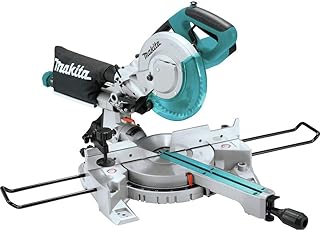

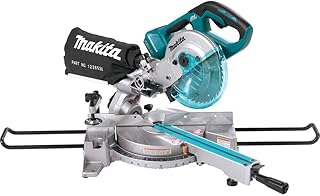


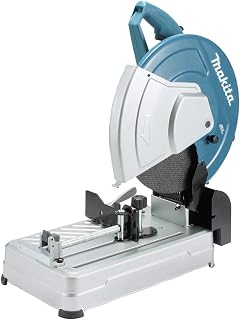
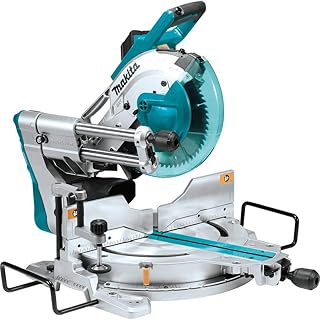
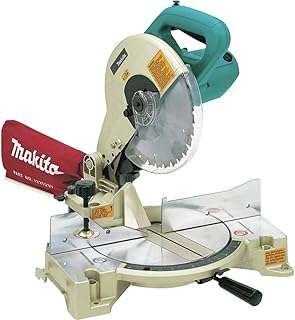


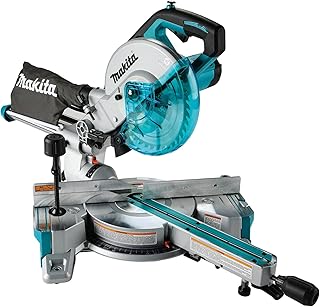
Choosing the right cordless mitre saw is about more than selecting the largest blade or the newest battery platform. The best Makita cordless mitre saw for a Canadian workshop, renovation project, framing application or professional jobsite depends on cutting capacity, portability, battery compatibility, material requirements, workspace limitations and the type of cuts you make most often.
Makita's cordless mitre saw range spans compact models for trim and small stock through larger sliding compound saws designed for demanding crosscuts and wider material. Its cordless lineup has also included both the 18V LXT platform and the 40V max XGT platform, giving buyers different ways to balance existing batteries, power requirements and portability.
For example, Makita Canada identifies models such as the DLS600Z, DLS714Z, DLS111Z and DLS211Z within its cordless mitre saw family. Makita's documentation also identifies the LS002G, LS004G and LS003G as 40V max XGT cordless sliding mitre saws. Model status can change, however, so Canadian buyers should always confirm the current product listing, included accessories and retailer availability before ordering.
The DLS211Z is aimed at users who need substantial cutting capacity without moving to a corded saw. It uses two 18V LXT batteries to provide a 36V system and has a 12-inch blade. Makita specifies up to 14-1/4-inch cutting capacity in 2x material, along with capacity for large crown moulding and vertical baseboard applications. Its published specifications include a 4,400 RPM no-load speed, 60-degree maximum mitre adjustment in both directions and 48-degree maximum bevel adjustment in both directions.
This model makes the most sense for demanding trim work, renovation work, carpentry and applications where a large sliding cutting envelope is more important than minimum weight. The trade-off is size and mass. A 12-inch cordless saw is considerably less convenient to carry than a compact model.
Makita also lists AWS compatibility on the DLS211Z, allowing compatible wireless dust-extraction equipment to communicate with the saw. The Canadian specification lists a net weight of approximately 67.7 pounds, so this is best treated as a substantial jobsite machine rather than an ultra-portable saw.
The DLS111Z occupies a useful middle ground. Its 10-inch blade provides considerably more capacity than a compact trim saw while avoiding some of the bulk associated with a 12-inch machine. Makita Canada specifies a two-battery 18V LXT configuration, a 4,400 RPM no-load speed and a brushless motor.
The DLS111Z also incorporates Makita's Deep and Exact Cutting Technology, commonly identified as DXT. Makita states that the design can handle cuts in 2x material, nested crown moulding and vertical baseboard within its specified capacities.
One important consideration for Canadian shoppers is model status. Product catalogues and current Canadian listings should be checked carefully because Makita's range can include older and newer variants simultaneously. Do not assume that an older model number represents the newest option simply because it remains visible in search results.
The DLS212Z is another 12-inch, two-18V LXT cordless sliding compound mitre saw. Makita Canada lists a 305 mm blade, 4,400 RPM no-load speed and a 36V configuration created by using two 18V LXT batteries.
Its design is intended for users who want large cutting capacity combined with cordless operation. Makita specifies cutting capability up to 14-1/4 inches in 2x material, as well as large crown moulding and baseboard capacity. Dual dust-collection ports are also identified in the Canadian product information.
For buyers comparing the DLS212Z with other 12-inch Makita models, the important question is not simply which model has the larger specification sheet. Compare the exact version, included blade, dust-collection configuration, wireless features, battery requirements, current Canadian availability and intended application.
The DLS600Z is fundamentally different from the larger sliding saws. Its 6-1/2-inch blade and compact format are intended for smaller materials such as moulding, casing, trim, flooring, dowels and similar work.
Makita Canada describes the DLS600Z as a cordless dual compound mitre saw with a brushless motor, laser and DXT cutting technology. Its compact dimensions make it much easier to consider when portability is a priority.
This is not the model to choose simply because it is smaller. A compact saw becomes a poor choice when the material routinely exceeds its cutting capacity. Conversely, buying a large 10-inch or 12-inch saw for delicate trim work can add unnecessary weight and reduce portability.
The DLS714Z is designed around a 7-1/2-inch blade and uses two 18V batteries in series to create a 36V system. Makita describes it as a cordless dual sliding compound mitre saw with a brushless motor.
This size can be attractive for users who need more flexibility than a compact trim saw but do not regularly require a 10-inch or 12-inch blade. It can also be easier to transport between work areas than a large professional sliding saw.
When considering a model such as the DLS714Z, focus on the dimensions of the material you actually cut. Blade diameter is only one part of the equation. Sliding travel, bevel range, mitre range, fence design and the manufacturer's stated cutting capacities are equally important.
The LS002G belongs to Makita's 40V max XGT platform rather than the two-battery 18V LXT system. Makita's Canadian materials identify the LS002G as an 8-1/2-inch cordless dual compound sliding mitre saw.
This makes the model particularly relevant to buyers already invested in XGT batteries. The platform decision should be made before comparing individual saw features because LXT and XGT batteries are different systems.
An 8-1/2-inch blade can provide an attractive compromise between portability and cutting capacity. It is worth considering for finish carpentry, renovation work and other applications where a full-size 10-inch or 12-inch saw would be excessive.
The LS004G is a 40V max XGT cordless 10-inch dual compound sliding mitre saw. Makita's Canadian materials identify it as part of the XGT cordless mitre saw range and associate the platform with AWS functionality.
For an XGT user, a 10-inch saw such as the LS004G can be a logical choice when the work requires more capacity than a compact saw but does not justify a 12-inch machine. The XGT platform is also relevant for buyers building a cordless workshop around newer high-performance Makita tools.
Before purchase, check whether the particular Canadian package is tool-only or includes batteries and a charger. Cordless power-tool listings often use the same base model name with different kit configurations.
The LS003G is the large-blade member of Makita's XGT cordless mitre saw family. Makita's Canadian documentation identifies it as a 40V max XGT 12-inch dual compound sliding mitre saw with AWS.
A 12-inch saw is most appropriate when large crosscut capacity is genuinely required. It can be useful for professional carpentry, construction, renovation and applications involving wider or thicker stock.
The disadvantage is straightforward: larger cutting capacity normally means a larger and heavier machine. Buyers should therefore consider transportation, storage, bench space and setup time rather than judging the saw only by its maximum capacity.
The DLS112Z is a 10-inch, two-18V LXT brushless sliding compound mitre saw. Makita Canada's current search listings identify the model within its cordless tool range.
It is worth comparing this model with other 10-inch Makita saws rather than assuming that two products with the same blade diameter will perform identically. Features such as wireless dust extraction, laser guidance, adjustment mechanisms, cutting geometry and included accessories can materially affect how a saw fits a particular workflow.
Buyers should also pay attention to product status. Some Canadian catalogues may contain older models alongside current products. A model appearing in a search result does not automatically mean that it is the newest or most readily available choice.
The DLS110Z represents an earlier generation of Makita's two-18V LXT cordless 10-inch sliding compound saw design. Manufacturer documentation identifies a 10-inch blade, 36V operation through two 18V batteries and a 4,400 RPM no-load speed.
Its published cutting specifications show why a 10-inch sliding saw can be useful for substantial trim and dimensional-lumber work. However, buyers considering an older model should pay particular attention to current stock, replacement parts, battery compatibility, included accessories and whether a newer model offers a better overall value.
For a new purchase in 2026, an older model can make sense only when its current condition, specification and price provide a clear reason to choose it over newer alternatives.
The battery platform is one of the most important decisions when buying a cordless Makita mitre saw.
Makita's LXT cordless mitre saws can use two 18V LXT batteries to create a 36V system. This is useful for users who already own a collection of compatible LXT tools and batteries.
The XGT range uses Makita's 40V max XGT battery platform. Models such as the LS002G, LS004G and LS003G belong to this newer platform family.
Neither platform is automatically the right choice for every buyer. Someone with several LXT batteries may find an LXT saw more practical because the batteries can be shared across compatible tools. Someone building a newer XGT tool collection may prefer an XGT saw.
Battery compatibility can have a major effect on the real cost of cordless equipment. If you already have suitable LXT batteries and chargers, a compatible LXT mitre saw can reduce the number of additional components required.
XGT can make more sense for buyers who want to establish a high-performance cordless tool system around the 40V max platform. The important point is to consider the entire tool collection rather than purchasing a single saw in isolation.
A 12-inch saw is not automatically better than a 10-inch saw. It simply provides a different combination of cutting capacity, physical size and weight.
Look at the manufacturer's actual cutting-capacity chart rather than relying on blade diameter alone. The same nominal blade size can be paired with different slide mechanisms and fence designs, producing different usable capacities.
A sliding mitre saw allows the blade assembly to travel through the workpiece, increasing crosscut width. This is particularly useful when cutting wider boards and moulding.
A non-sliding design can be more compact and mechanically simpler, but it has less capacity for wide stock. For small trim, dowels and similar materials, the reduced size can be an advantage.
If your projects regularly involve wide boards, a sliding model is generally the more flexible configuration. If you mostly cut narrow trim, portability may matter more than maximum width.
Many Makita cordless mitre saws use brushless DC motors. A brushless motor eliminates conventional motor brushes and is designed to reduce heat buildup while providing a high power-to-weight ratio.
Makita also uses technologies such as Automatic Torque Drive Technology, or ADT, on selected models. ADT is designed to adjust torque and speed according to load conditions.
These technologies should be considered useful engineering features rather than guarantees of a specific cutting result. Actual performance depends on the blade, material, battery condition, cutting technique and maintenance.
When comparing cordless mitre saws, buyers often focus too heavily on blade diameter. A larger blade can provide greater cutting capacity, but it also contributes to a larger machine.
Blade diameter should be evaluated alongside:
The mitre adjustment determines how far the saw can rotate horizontally for angled crosscuts. A broad mitre range is useful for complex framing, trim and joinery.
The bevel adjustment tilts the blade relative to the table. This is essential for compound cuts, where both the mitre and bevel angles are changed.
Do not evaluate these numbers in isolation. The quality of the locking mechanism, visibility of angle markings and ease of adjustment can be just as important during repetitive work.
Canadian woodworking and renovation projects can involve everything from small interior trim to dimensional lumber and substantial moulding. The correct saw therefore depends on the material rather than the tool's headline specification.
Before buying, measure the widest and tallest material you realistically expect to cut. Then compare those measurements with the manufacturer's cutting-capacity chart for the exact model.
Leave practical room for the way the material is positioned. A theoretical maximum capacity does not mean every piece of stock can be cut comfortably at that dimension.
Battery runtime cannot be reduced to a single number because cordless mitre saw usage varies dramatically. A saw making occasional cuts through thin trim consumes power differently from one repeatedly cutting large dimensional lumber.
Runtime is affected by:
For heavy daily work, having additional compatible batteries can be more useful than focusing on theoretical runtime claims.
Higher-capacity batteries can be attractive for demanding workloads, but they may also add weight. On a portable mitre saw, battery weight can matter when transporting the machine or moving it repeatedly around a jobsite.
Consider how often the saw will be moved. A stationary workshop user may value longer runtime more highly, while a finish carpenter who carries the saw between rooms may prefer a lighter overall setup.
Dust management is an important consideration for indoor renovation and workshop work. Makita offers cordless mitre saw models with dust-collection features, while selected models support Auto-Start Wireless System, commonly called AWS.
AWS is designed to allow compatible Makita tools and dust extractors to communicate wirelessly. This can reduce the need to manually start and stop a compatible extractor during tool operation.
However, buyers should confirm that the exact saw, extractor and required accessories are compatible. Wireless compatibility should never be assumed simply because two products carry the Makita name.
The blade has a major influence on cutting performance. Makita offers cordless-optimised mitre saw blades designed with features intended to reduce cutting resistance.
Makita's Canadian information describes its Max-Efficiency cordless mitre saw blades as using ultra-thin kerf designs and tooth geometries intended to improve cutting efficiency. The range includes blades in several diameters.
When selecting a blade, consider the material and desired finish. A fine-tooth blade can be appropriate for finish work, while a different tooth configuration may be better for faster construction cuts.
Never assume that any blade can be installed on any Makita mitre saw. The blade diameter and arbor specification must match the saw's requirements.
More teeth can support smoother cuts in appropriate materials, while fewer teeth may prioritise cutting speed and chip clearance. The correct choice depends on the stock and the finish required.
A 12-inch saw can look like the obvious premium choice, but extra capacity has little value if your projects involve small trim. A larger machine can be harder to transport and store.
Do not buy an LXT or XGT saw without checking your existing battery collection. The two platforms are not interchangeable simply because both are made by Makita.
Many cordless power tools are sold as tool-only packages. Other packages include batteries and chargers. Always compare like-for-like configurations before deciding which listing offers better value.
Makita model suffixes can indicate differences in kit configuration or regional versions. Read the complete product description rather than relying only on the basic model number.
Customer reviews can reveal useful information about usability and ownership, but reviews should be evaluated alongside manufacturer specifications. A saw that works well for trim may not be appropriate for heavy construction work simply because it has a high average rating.
Sliding mitre saws need room for material support and movement. Measure your available bench or stand area before buying. A saw that fits physically may still be awkward if the surrounding workspace is too restricted.
A practical comparison should begin with the job rather than the product name.
Trim specialists should usually prioritise precision, visibility, portability and blade quality over maximum cutting capacity. A compact model such as the DLS600Z can be attractive for small moulding and casing applications, while a 7-1/2-inch, 8-1/2-inch or 10-inch model can provide additional capacity when larger stock is involved.
The right choice depends on the largest material you handle regularly. Buying a much larger saw than necessary can make repetitive movement and setup less convenient.
Renovation work often requires flexibility because material sizes vary. A 10-inch sliding compound mitre saw can provide a practical balance between capacity and portability.
The DLS111Z, DLS112Z and LS004G are examples of models that can be investigated in this category, subject to current Canadian product status and availability.
For users regularly cutting large boards, substantial moulding or other wide stock, a 12-inch sliding compound model deserves consideration. The DLS211Z, DLS212Z and LS003G represent larger-capacity cordless options within Makita's LXT and XGT families.
The important distinction is that large capacity should be purchased because the work requires it, not simply because the specification looks more impressive.
Portability favours smaller machines. The DLS600Z is particularly compact compared with Makita's larger sliding models, while the DLS714Z provides a middle ground for users who need additional capacity.
Consider the complete carrying weight, including batteries and accessories, rather than the bare-tool weight alone.
Canadian buyers should think about where the saw will be used throughout the year. Outdoor construction environments can expose tools to cold temperatures, dust and moisture. Batteries and electronic equipment should be handled according to the manufacturer's instructions and kept within appropriate operating and storage conditions.
For indoor renovation work, dust extraction and workspace ventilation become particularly important. For mobile jobsites, transportability and battery management may be more important than maximum cutting capacity.
A good mitre saw setup is not just the saw itself. Stable support on both sides of the cutting area can make long material easier to manage and can reduce the temptation to hold unsupported stock during a cut.
A dedicated mitre saw stand can improve mobility, while a permanent bench can be better for a workshop. Before buying accessories, verify mounting-hole compatibility and the manufacturer's recommendations for the exact model.
A cordless motor does not make a mitre saw inherently safe. The blade remains capable of causing serious injury, so safe operating practices are essential.
Regular maintenance helps preserve accuracy and reliable operation.
Remove accumulated dust and chips from the table, fence, guards and moving areas. Excessive debris can interfere with smooth movement and visibility.
A dull, damaged or inappropriate blade can reduce cutting quality and increase resistance. Replace blades when they are no longer suitable for the intended work.
Periodically verify common 90-degree and 45-degree settings using an appropriate measuring method. If cuts are consistently inaccurate, inspect the adjustment mechanism, fence alignment and workpiece support before assuming the motor is at fault.
Use and store batteries according to Makita's instructions. Avoid exposing batteries to inappropriate temperatures, impact, moisture or conditions outside their intended operating environment.
Clean cuts depend on more than the saw. Use an appropriate blade, support the workpiece correctly and avoid excessive feed pressure.
For finish carpentry, test the setup on scrap material before cutting expensive moulding. This allows you to verify the angle, blade condition, workpiece orientation and support arrangement.
Tear-out can be affected by blade selection, cutting direction, material support and blade sharpness. A suitable fine-finish blade can help with appropriate materials, while controlled feed pressure can reduce unnecessary damage to the workpiece.
When appearance is critical, always make a test cut before beginning the final sequence.
A cordless Makita mitre saw is particularly attractive to users who value mobility, already own compatible Makita batteries or work where running a power cord is inconvenient.
Professional carpenters, renovators, contractors, finish workers and serious DIY users can all benefit from cordless operation when the selected model matches the material requirements.
Cordless is not automatically superior. If the saw will remain permanently in a workshop near a reliable electrical supply and operate for long periods, a corded model may be worth comparing.
Cordless models are strongest when mobility and freedom from extension cords provide meaningful advantages. If those benefits are irrelevant to your workflow, compare total ownership cost and operating requirements before choosing.
Customer feedback can be useful, but read reviews according to your application. Look for recurring comments about accuracy, dust collection, portability, adjustment controls, battery use and long-term usability.
Be cautious about reviews that discuss a different model, different package or different market. Marketplace listings sometimes combine multiple configurations, so confirm that the review actually relates to the exact product you are considering.
Power-tool product ranges change over time. Older models may remain visible on search engines, marketplace listings and retailer pages after newer products have entered the market. A model can also appear in a manufacturer's database while being less relevant to a new purchase.
That is why a 2026 comparison should distinguish between current models, older models and listings whose availability needs confirmation. This is particularly important for Makita cordless mitre saws because several LXT generations and XGT models can appear in Canadian search results.
There is no single best model for every buyer. A 12-inch model is appropriate when maximum cutting capacity matters, while a smaller saw can be better for trim, portability and limited workspace. Existing battery ownership is also a major factor.
A 12-inch model can be worthwhile when your projects require its additional cutting capacity. If you mainly cut narrow trim, a smaller model may be easier to transport and more practical.
LXT and XGT are separate battery platforms. Do not assume that an LXT battery can be installed directly into an XGT tool or vice versa. Always verify platform compatibility for the exact tool and battery.
Some listings are tool-only, while other packages can include batteries and chargers. Always read the complete Canadian product listing before comparing prices.
A 10-inch saw can be an excellent general-purpose choice, while a 12-inch model is preferable when larger cutting capacity is genuinely required. The better size is the one that matches your typical material dimensions.
Makita cordless mitre saws include models based on the two-18V LXT configuration, which produces a 36V system, as well as models based on the 40V max XGT platform.
Brushless motors are designed to provide efficient cordless performance and reduce the heat associated with conventional brushed motor designs. They are particularly relevant for users who expect frequent or demanding operation.
If you regularly cut wider boards or moulding, sliding capability can be valuable. If your work is limited to narrow trim, a compact non-sliding design may be sufficient.
Focus on cutting capacity, blade size, battery platform, bevel and mitre range, sliding travel, weight, dust collection, blade compatibility, included accessories and the type of material you expect to cut.
They can be, particularly when the specification matches your needs and the price is attractive. However, check current availability, replacement parts, battery compatibility and the condition of the specific product before buying.
The best Makita cordless mitre saw is the model that fits your actual workflow. Start with the material dimensions, then decide how much portability you need. After that, choose the blade size, sliding configuration and battery platform that make sense for your work.
For maximum capacity, investigate Makita's 12-inch cordless options. For balanced general-purpose work, 10-inch models deserve close attention. For portable trim applications, compact models such as the DLS600Z can be more practical. If you are already invested in Makita's XGT platform, the LS-series cordless saws provide another route worth comparing.
Before purchasing in Canada, verify the exact model, current Canadian product status, package contents, battery requirements, specifications and retailer terms. Product names and availability can change, so the most useful buying decision is always based on the current exact listing rather than an old headline or generic model description.
A careful comparison of cutting capacity, battery ecosystem, portability, accuracy features, dust management and long-term practicality will make it much easier to choose a Makita cordless mitre saw that suits your projects rather than simply buying the largest or newest model.